CPT Code 19361: Latissimus dorsi flap breast reconstruction
CPT code 19361: Official descriptor and payment basics CPT code 19361 is the Cat...

Last Updated: Nov 18, 2026
S5532 is the CCSD code for dressing of burn of skin or subcutaneous tissue – less than 2%. UK private medical insurers use it when a clinician dresses a burn covering under 2% of total body surface area.
It is the first of four burn-dressing bands. S5533 covers 2% to 10%, S5534 covers 10% to 25%, and S5535 covers burns greater than 25%.
Let Pabau's smart automation suggest the right codes, reduce claim denials, and keep your practice compliant—effortlessly.
Automate repetitive tasks and focus on what matters most—your patients.
Reduce coding errors and ensure compliance with the latest regulations.
Clean claims, fewer denials, and faster reimbursements.
Powerful insights and reporting to help your practice thrive.
HIPAA compliant SOC 2 certified GDPR-compliant Trusted by 4,000+ clinics worldwide

CCSD code S5532 covers dressing of a burn of skin or subcutaneous tissue affecting less than 2% of total body surface area (TBSA).
The CCSD schedule bands burn dressings by TBSA: S5532 under 2%, S5533 2% to 10%, S5534 10% to 25%, and S5535 over 25%.
Record the TBSA figure and the estimation method in every procedure note, because that number decides which band you bill.
UK private insurers such as Bupa, AXA Health, Aviva and Vitality use CCSD codes, and each sets its own fees and authorisation rules.
Pair S5532 with a WHO ICD-10 burn code from T20 to T25 that names the body region and the depth of the burn.
CCSD code S5532 is the UK private-insurance code for dressing of burn of skin or subcutaneous tissue, less than 2%. It sits in the CCSD schedule, the procedure code set that UK private medical insurers use to price and pay specialist treatment.
The CCSD Group maintains the schedule. Its members are Bupa, AXA Health, Aviva and Vitality, and other UK insurers bill against the same codes. Practices usually submit CCSD claims electronically through Healthcode. Our CCSD code guides cover other codes in the schedule, including skin procedures from the same chapter.
S5532 is the lowest of four burn-dressing bands. The share of total body surface area (TBSA) the burn covers sets the band, not the dressing you choose.
Plastic surgeons, dermatologists and emergency medicine consultants bill S5532 most often. Each insurer decides which clinicians it recognises for CCSD procedure fees, so confirm recognition before the appointment.
S5532 covers the full wound-care episode for a minor burn. The procedure note should show each of the following steps the clinician carried out.
Burn depth guides the dressing, while the TBSA band and the tissue layer decide the code. Superficial epidermal burns rarely need a formal dressing and are usually managed with simple advice. Superficial and deep partial-thickness burns stop within the dermis, and they are the wounds most often dressed under S5532.
A small full-thickness burn can also fall under S5532. It destroys the dermis and reaches the subcutaneous tissue the descriptor names. Contact burns often stay under 2% TBSA, but they usually warrant referral to a burns service, since they may need excision and grafting. When a full-thickness graft later covers a burn on the trunk or limbs, each additional 25 cm² is coded CCSD code S3623. If a split-thickness autograft of up to 25 cm² covers a burn on the trunk or limbs, it falls under code S3500.
The 2% TBSA threshold is the defining criterion for S5532. Without a documented TBSA calculation, the insurer cannot confirm you chose the right band, and the claim is likely to be queried.
The Wallace Rule of Nines divides the adult body surface into regions of 9%, or multiples of 9%. Use it as the default estimate for adults with straightforward burn patterns.
The patient’s palm and fingers together cover about 1% TBSA, which makes the hand a useful bedside reference for small burns. For S5532, every affected site added together must stay under 2%.
The Lund-Browder chart suits paediatric patients, whose head and leg proportions differ from adults, and burns with an irregular spread. Record the method alongside the TBSA figure, whichever one you use.
A worked note might read: Burn to dorsum of right hand and distal forearm. TBSA estimated at 1.5% using the palm method. Superficial partial-thickness. S5532 applicable.
The S5532 descriptor names skin or subcutaneous tissue as the affected layers. That qualifier sets the deepest layer the code covers.
Burns that reach fascia, muscle or bone usually need theatre debridement, grafting or inpatient care. Billing S5532 for those wounds misuses the code and creates audit risk. Document the depth carefully and choose the code that matches the layers treated. Reconstruction after a deep burn can involve a staged distant flap, and each of its later stages is coded S1700.
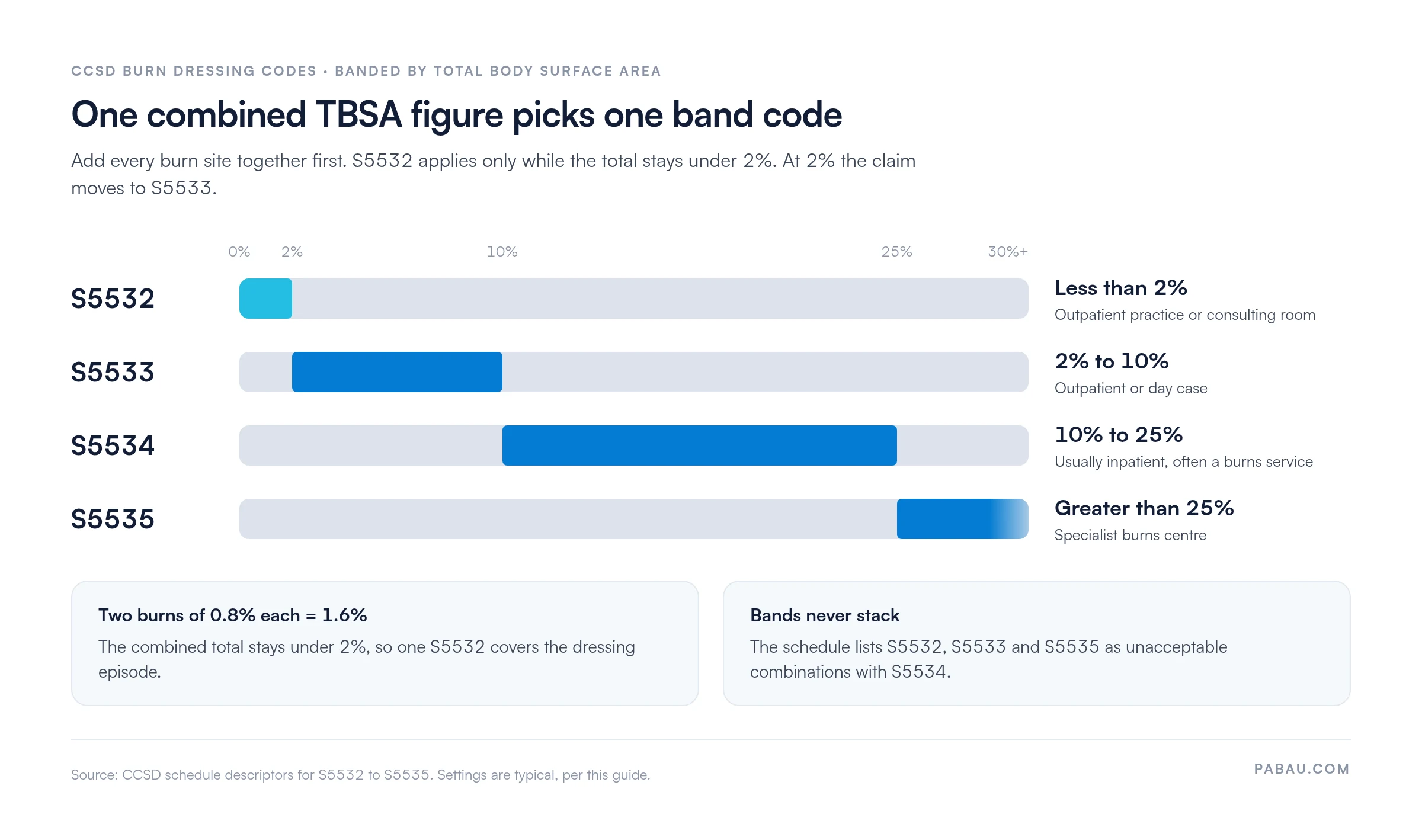
The CCSD schedule splits burn dressings into four TBSA bands. Bill the one code whose band matches the TBSA documented for that encounter.
The bands do not stack. The CCSD schedule lists S5532, S5533 and S5535 as unacceptable combinations with S5534, so one dressing episode carries one band code.
With several separate burns, add the TBSA of every site before you choose the code. Two burns of 0.8% each total 1.6%, which stays within S5532. Once the combined total reaches 2%, S5533 applies.
CCSD codes carry no CPT-style modifiers. The claim rests on the code, the diagnosis code and the notes behind them.
UK insurers expect a diagnosis code from the WHO ICD-10 classification alongside the CCSD procedure code. For a burn, that means a code from T20 to T25, which names the body region and the depth.
Use the most specific code the notes support. In WHO ICD-10 the fourth character carries the depth, so T23.2 is a second-degree burn of the wrist and hand. Avoid T30.0, burn of unspecified body region, when the note names the region.
S5532 is billed per dressing episode. A later dressing change can be billed again if the wound still qualifies and the insurer has authorised the visit. Document each visit with its own TBSA assessment and procedure note.
Insurers may limit the number of outpatient dressing changes they fund. Check the patient’s authorisation before you book a series of visits.
Audit your S5532 claims every quarter. Pull the last three months and spot-check each note for an explicit TBSA figure, a specific ICD-10 code and an authorisation number. Fixing a missing figure before the insurer finds it saves a resubmission.
Debridement and dressing often happen in the same burn appointment. Debridement is separately billable only when it is a distinct, documented procedure beyond routine wound preparation.
Removing loose, non-adherent tissue while cleaning the wound is part of the dressing procedure. Billing a separate debridement code for that work on the same date counts as unbundling, and insurers reject it.
Sharp or surgical removal of necrotic eschar or adherent slough may be separately billable when it needs extra time, instruments or skill. The note must separate it from the dressing. Record the method, the extent of tissue removed and the time taken.
Insurers apply the CCSD coding principles and their own bundling rules, so check before you co-bill. Our guide to Bupa CCSD codes explains how the schedule handles code combinations.
Most UK private medical insurers ask the patient to get pre-authorisation before planned treatment. The patient contacts the insurer, which issues an authorisation number for the agreed procedure codes.
Rules vary by insurer and by policy, so treat the table below as a starting point.
Self-pay patients need no authorisation, but quote the fee before treatment. Keeping the authorisation number on the patient record lets your team match each claim to its approval.
A complete procedure note is the first defence against a rejected S5532 claim. Every S5532 encounter needs the elements below.
Build an S5532 procedure note template with TBSA, burn depth, dressing materials and the ICD-10 code as required fields. A note that cannot be saved without them stops the most common documentation error at the point of care.
S5532 claims are rejected for predictable reasons. Each one below has a fix you can build into the billing workflow before submission.
Insurer queries and rejections come back through Healthcode or the insurer’s provider portal. Correct the code or add the missing detail, then resubmit. If you disagree with a decision, raise it with the insurer’s provider team and send the procedure note as evidence.
Most rejections in the table above trace back to the procedure note. Pabau, the practice software we build for private practices, keeps the burn assessment, the authorisation number and the insurer claim on one patient record.
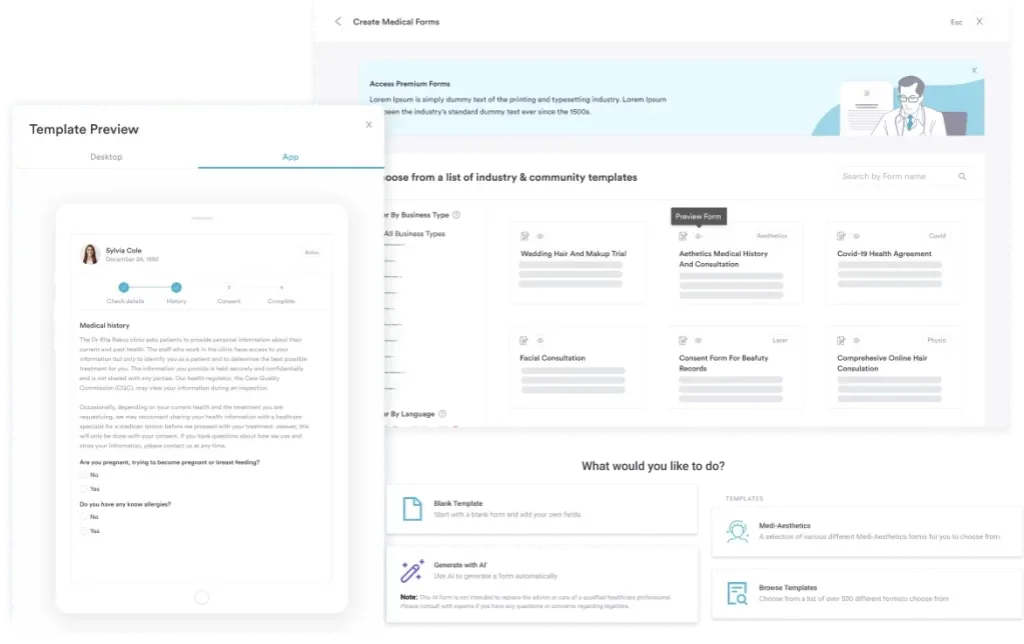
With Pabau’s digital forms, you can build a burn assessment form with TBSA, estimation method, depth and dressing as required fields. Completed forms sit in the patient’s medical records, ready for any insurer query.
Pabau’s claims management sends CCSD claims to Healthcode and Bupa, then tracks each one through to payment. A queried S5532 claim is flagged for follow-up instead of sitting unpaid.
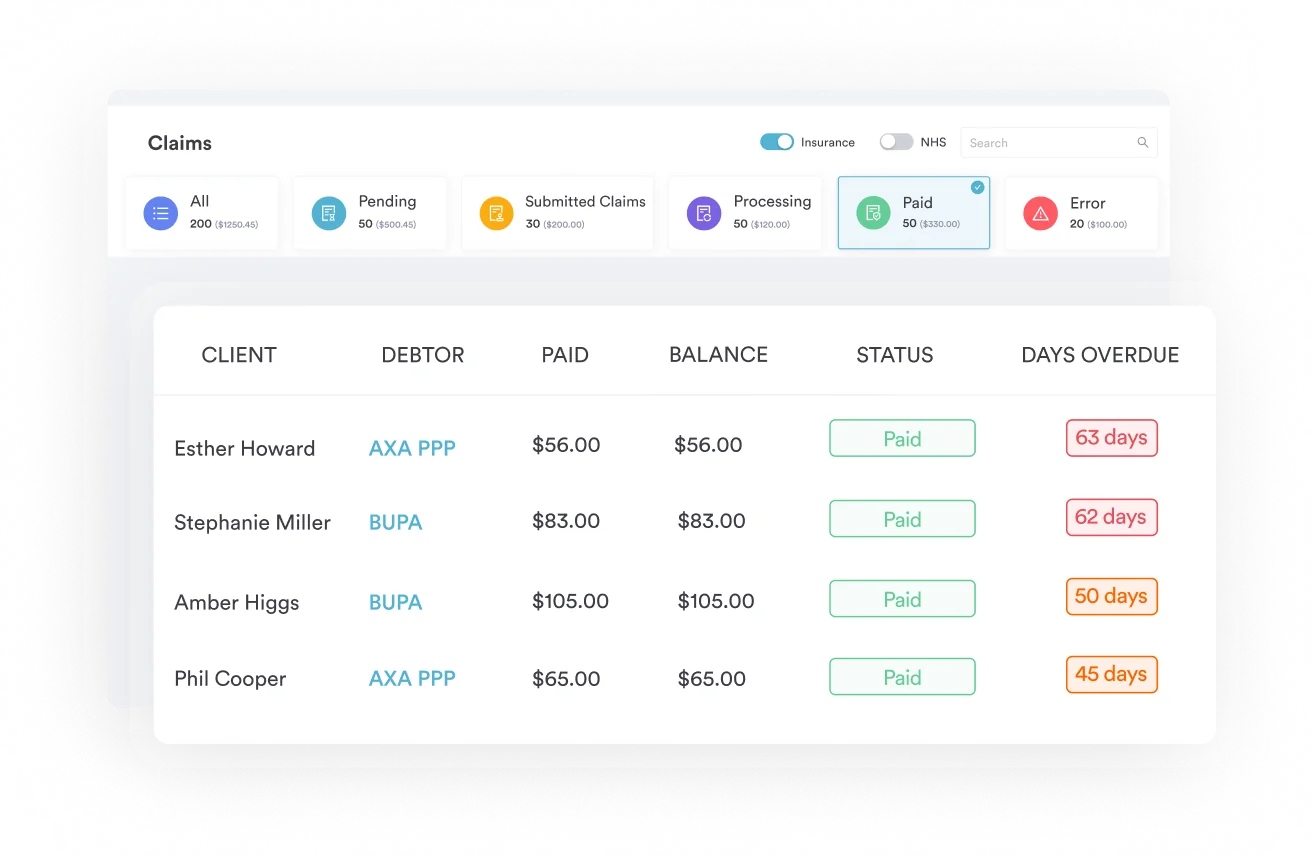

Pabau keeps the burn assessment, the authorisation number and the Healthcode or Bupa claim on one patient record. Your team submits each S5532 claim with the evidence behind it.

S5532 is a narrow code with one deciding number. A burn under 2% TBSA, confined to skin or subcutaneous tissue, takes S5532, and a larger burn moves up a band.
An S5532 claim holds up when the note records that number, the method behind it, the depth and a specific ICD-10 code. Add the insurer’s authorisation number before the appointment, and the claim carries what the insurer needs to pay it.
Book a demo to see how Pabau links burn assessment forms to Healthcode and Bupa claims.

Need a broader CCSD billing reference? Bupa CCSD codes overview covers how the CCSD schedule is structured and how insurer fee schedules use it.
Looking to reduce claim errors across your practice? Claims management software from Pabau sends claims to Healthcode, tracks their status and flags rejections for follow-up.
Removing necrotic tissue and closing the wound in one sitting? CCSD code S4183 covers wound debridement with primary suture, a different procedure from a burn dressing.
CCSD code S5532 covers dressing of a burn of skin or subcutaneous tissue affecting less than 2% of total body surface area. UK private medical insurers use it for minor burns dressed in an outpatient setting. The combined TBSA of every burn site must stay below 2%.
S5532 covers burns under 2% TBSA, and S5533 covers burns from 2% to 10%. The documented TBSA decides the code. Once the combined figure reaches 2%, S5533 applies instead of S5532.
Usually, yes. Most UK private medical insurers ask the patient to get an authorisation number before planned treatment. Repeat dressing changes may need the authorisation extended, so check how many visits the insurer has approved.
The most common reasons are a missing TBSA figure, a non-specific ICD-10 code and a missing authorisation number. Debridement billed without separate documentation and the wrong TBSA band also cause rejections. Making TBSA and the diagnosis required fields in the note prevents most of them.
Only when debridement is a distinct, separately documented procedure. Removing loose tissue while cleaning the wound is part of the dressing. For sharp or surgical debridement, record the method, extent and time, then check the insurer’s bundling rules.
Use a WHO ICD-10 code from T20 to T25 that names the body region, with the fourth character showing the depth. For example, T23.2 is a second-degree burn of the wrist and hand. Add T31 for burn extent where the insurer asks for it.
The CCSD Group maintains the schedule. Its members are Bupa, AXA Health, Aviva and Vitality. Practices usually send claims that use CCSD codes to insurers electronically through Healthcode.