CCSD Code X1420: Billing guide for UK private practice
CCSD Code X1420: Definition and clinical description CCSD Code X1420 is a proced...

Last Updated: Nov 23, 2026
S0632 is the CCSD code for excision of lesion of skin or subcutaneous tissue, up to three, in the head and neck region, excluding lipoma. It covers removing one to three lesions from the face, scalp, ears or neck at one operation.
CCSD, the UK Clinical Coding & Schedule Development Group, maintains the procedure schedule that UK private medical insurers use. Trunk and limb lesions are billed as S0633, and lipomas have their own codes.
Let Pabau's smart automation suggest the right codes, reduce claim denials, and keep your practice compliant—effortlessly.
Automate repetitive tasks and focus on what matters most—your patients.
Reduce coding errors and ensure compliance with the latest regulations.
Clean claims, fewer denials, and faster reimbursements.
Powerful insights and reporting to help your practice thrive.
HIPAA compliant SOC 2 certified GDPR-compliant Trusted by 4,000+ clinics worldwide

CCSD code S0632 covers excision of up to three skin or subcutaneous lesions on the head and neck, excluding lipoma.
Its sibling S0633 covers the same excision on the trunk and limbs. Both replaced the older S0630 when CCSD split it by site in 2014.
Lipomas are excluded and coded as S0656 or S0657 by size. Four or more head and neck lesions go to S0642.
UK private medical insurers such as Bupa, AXA Health and Aviva use the CCSD schedule, but each insurer sets its own fee.
Most insurers expect planned treatment to be pre-authorized, so get the authorization number before the operation date.
CCSD code S0632 is the UK private insurance code for excising up to three lesions of skin or subcutaneous tissue from the head and neck. The Clinical Coding & Schedule Development Group publishes it in the CCSD Schedule, the standard procedure code set for UK private healthcare. Its official narrative reads: Excision of lesion of skin or subcutaneous tissue – up to three, Head & Neck (excluding lipoma).
The head and neck site takes in the face, scalp, ears and neck. Lipomas are excluded by name and carry their own codes. Lesions on the trunk or limbs are billed under S0633 instead.
CCSD maintains the procedure schedule that UK private medical insurers, such as Bupa, AXA Health and Aviva, use to identify treatment on a claim. S0632 is an active code in the current schedule.
CCSD updates its narratives over time, so check the edition of the schedule your insurer works from. Our index of CCSD codes lists the other procedure codes we cover.
S0632 and S0633 describe the same operation on different parts of the body. S0632 is for the head and neck, and S0633 is for the trunk and limbs. Both stop at three lesions, and both exclude lipoma.
The pair has a short history. A single code, S0630, once covered skin lesion excision wherever the lesion sat. CCSD split it into the two site-specific codes, and in January 2014 both narratives gained the words “(excluding lipoma)”.
S0630 no longer appears in the current schedule. Any billing template that still lists it needs updating before the next claim goes out.
Three facts in the operation note settle the code: the site, the number of lesions and whether any of them is a lipoma. If one session covers the cheek and the forearm, check CCSD’s coding principles before S0632 and S0633 share a claim. The insurer’s own rules apply too.
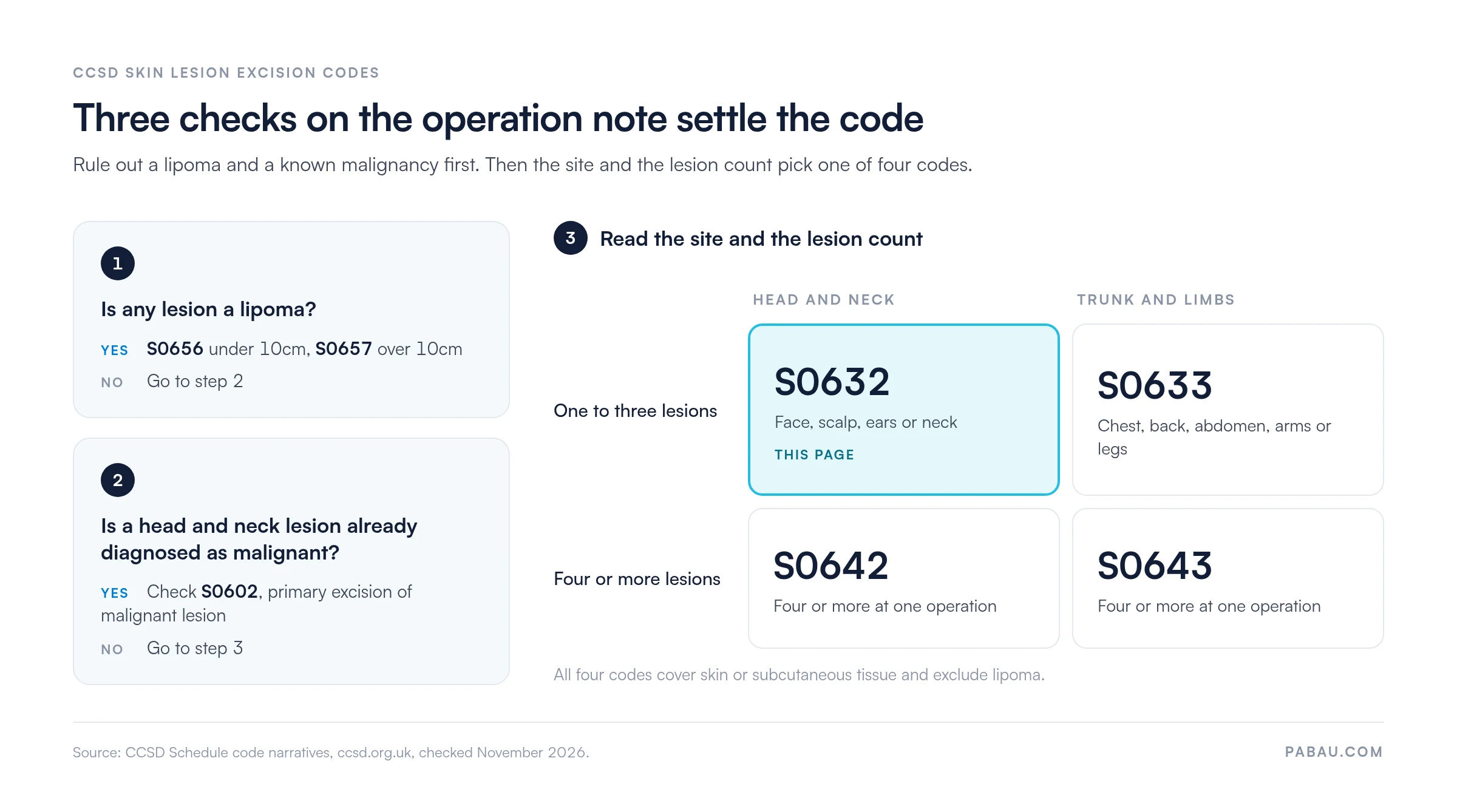
Our guides to CCSD code S0642 and CCSD code S0602 cover the four-or-more and malignant-lesion codes in more depth.
The surgeon removes each lesion in full with a margin of surrounding tissue, usually under local anesthetic. When the lesion sits below the skin, the dissection continues into the subcutaneous layer.
Lesions commonly removed this way on the head and neck include epidermoid cysts, benign nevi, seborrheic keratoses and dermatofibromas. A lipoma never goes under S0632, whatever its size.
Insurers want to know why each lesion came off, and the diagnosis on the claim carries that reason. Many UK practices record it as a WHO ICD-10 code, which you can check in the WHO ICD-10 browser.
Match the diagnosis to the site in the note. A scalp cyst on the claim and a forearm lesion in the note will draw a query from the insurer.
UK private medical insurance policies generally exclude cosmetic treatment. An S0632 claim therefore stands on why the lesion was removed, and the clinical note has to say so.
A lesion that bleeds, catches, becomes infected or grows quickly has a clinical reason behind its removal. So does a lesion with a suspicious appearance, or one on an eyelid that blocks vision. Removal for appearance alone usually falls outside cover.
If a patient wants a lesion removed for appearance only, treat it as self-pay. Agree the fee in writing before the operation, so nobody waits on an insurer decision that will not come.
Most UK insurers ask the patient to pre-authorize planned treatment, then give the practice an authorization number. Get that number before the operation date, because the claim needs it.
Some insurers, Bupa among them, only pay consultants they recognize for the specialty. Check recognition before you book the patient, not after the claim comes back. Our guide to Bupa CCSD codes explains how Bupa’s procedure list and claims work.
A complete operation note answers the insurer’s questions before they are asked. Pabau, a practice management platform, lets you build clinical forms with a field for each item below. That makes the note hard to leave incomplete.
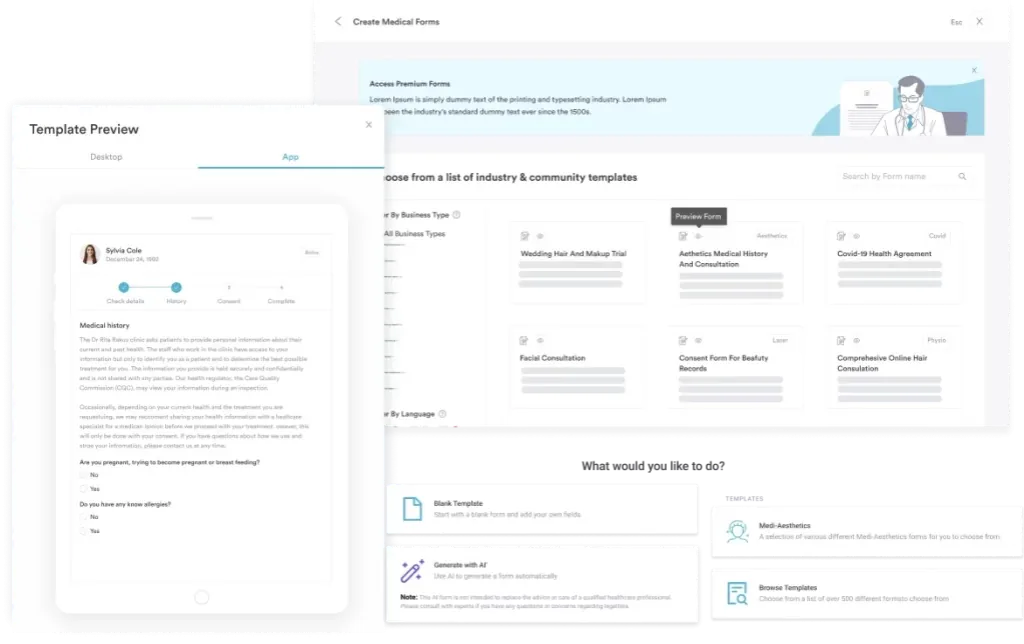
Pabau’s patient record keeps operation notes, photographs and consent forms in one file. When an insurer asks for supporting notes, you send them from that file.
Most queried S0632 claims trace back to a short list of slips. Each one shows up in the note before the claim leaves the practice.
Audit your last ten S0632 claims. Check that each note records the site, size, depth and number of lesions. Then confirm none of them was a lipoma or sat on the trunk or limbs.
In many dermatology and minor surgery practices, the authorization sits in an email and the operation note in another system. Then someone keys the claim in by hand, and each handoff risks a lost reference or the wrong site code.
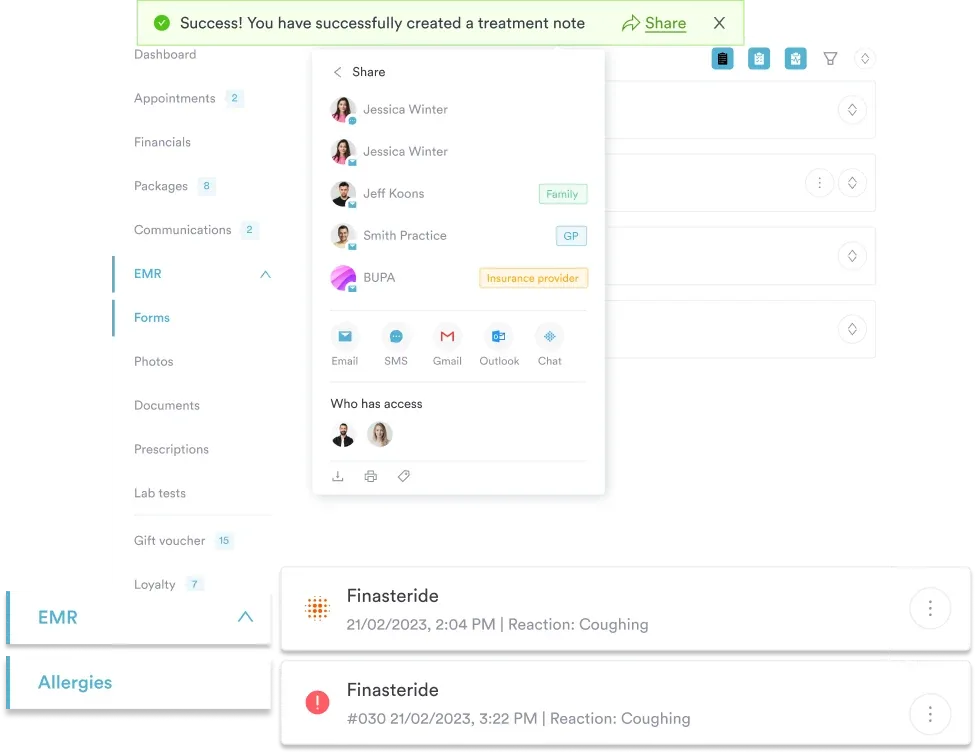
Pabau keeps those steps on one patient record. Its claims management software sends claims electronically through Healthcode and to Bupa. The authorization code and dates are stored on the patient’s case, next to the operation note.
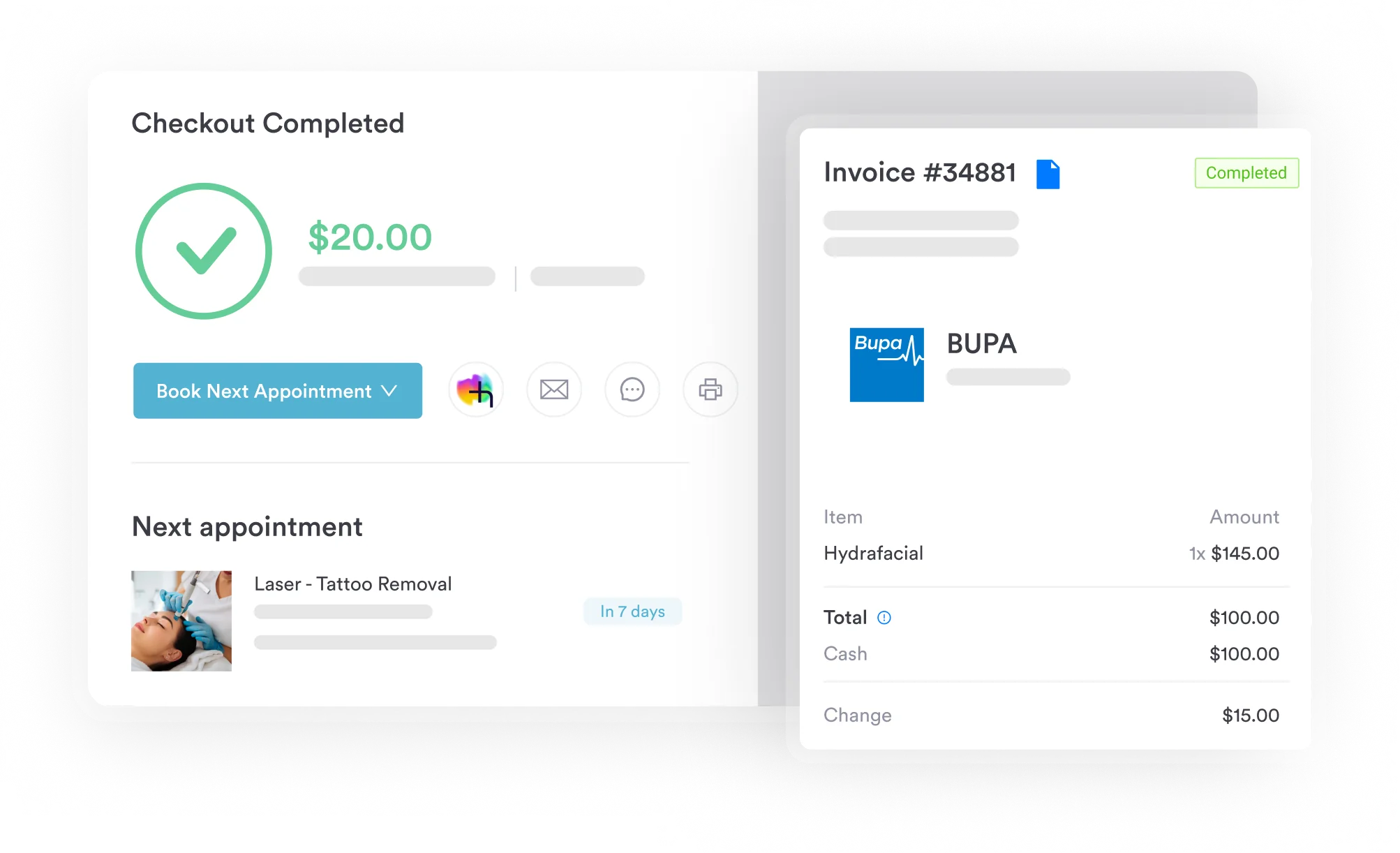
The result is fewer claims bounced for a missing reference, and a clear view of what each insurer still owes.

Pabau keeps authorization codes, operation notes and lesion photos on the patient record. Claims go electronically through Healthcode and to Bupa, and you see each one’s status without phoning the insurer.

S0632 is a narrow code, and that makes it easy to bill well. When the note confirms a head and neck site, three lesions or fewer and no lipoma, the code is settled.
The errors to watch are a site mix-up with S0633, a lipoma coded under S0632 and a missing authorization. Each one is visible in the note before the claim leaves. Book a demo to see how Pabau tracks authorizations and sends your Healthcode claims from one patient record.

Need a full Bupa CCSD billing reference? Bupa CCSD codes covers Bupa’s procedure list and how its claims work.
Removing four or more head and neck lesions? CCSD code S0642 covers the four-or-more excision code and how it differs from S0632.
Excising a lesion already diagnosed as malignant? CCSD code S0602 covers primary excision of a malignant head and neck lesion.
Want to reduce claim rejections across your practice? Claims management software outlines how Pabau sends claims, tracks their status and helps practices recover revenue.
Closing a benign head and neck lesion with a flap? CCSD code S0655 covers removal of a benign head and neck lesion that needs flap closure.
CCSD code S0632 covers excision of up to three lesions of skin or subcutaneous tissue on the head and neck, excluding lipoma. UK private medical insurers use it to identify the operation on a claim, and each insurer sets its own fee for it.
S0632 and S0633 differ only by site. S0632 covers up to three lesions on the head and neck, and S0633 covers up to three on the trunk and limbs. Both exclude lipoma, and both replaced the older S0630 when CCSD split it by site in 2014.
No. The S0632 narrative excludes lipoma by name. Lipoma removal has its own CCSD codes, S0656 for a lipoma under 10cm and S0657 for one over 10cm.
Use CCSD code S0642 when four or more lesions of skin or subcutaneous tissue are excised from the head and neck. Its trunk and limb counterpart is S0643, and both also exclude lipoma.
Most UK private medical insurers expect planned treatment to be pre-authorized, and the claim needs the authorization number. Requirements vary by insurer and policy, so confirm with the insurer before the operation date.
Usually not. UK private medical insurance policies generally exclude cosmetic treatment, so the note has to record a clinical reason. Symptoms, a suspicious appearance or a functional problem support the claim, while removal for appearance alone usually does not.