HCPCS Code V2199: Spectacle lens billing guide
HCPCS Code V2199: Definition and Classification HCPCS Code V2199 is a Level II H...

Last Updated: Nov 18, 2026
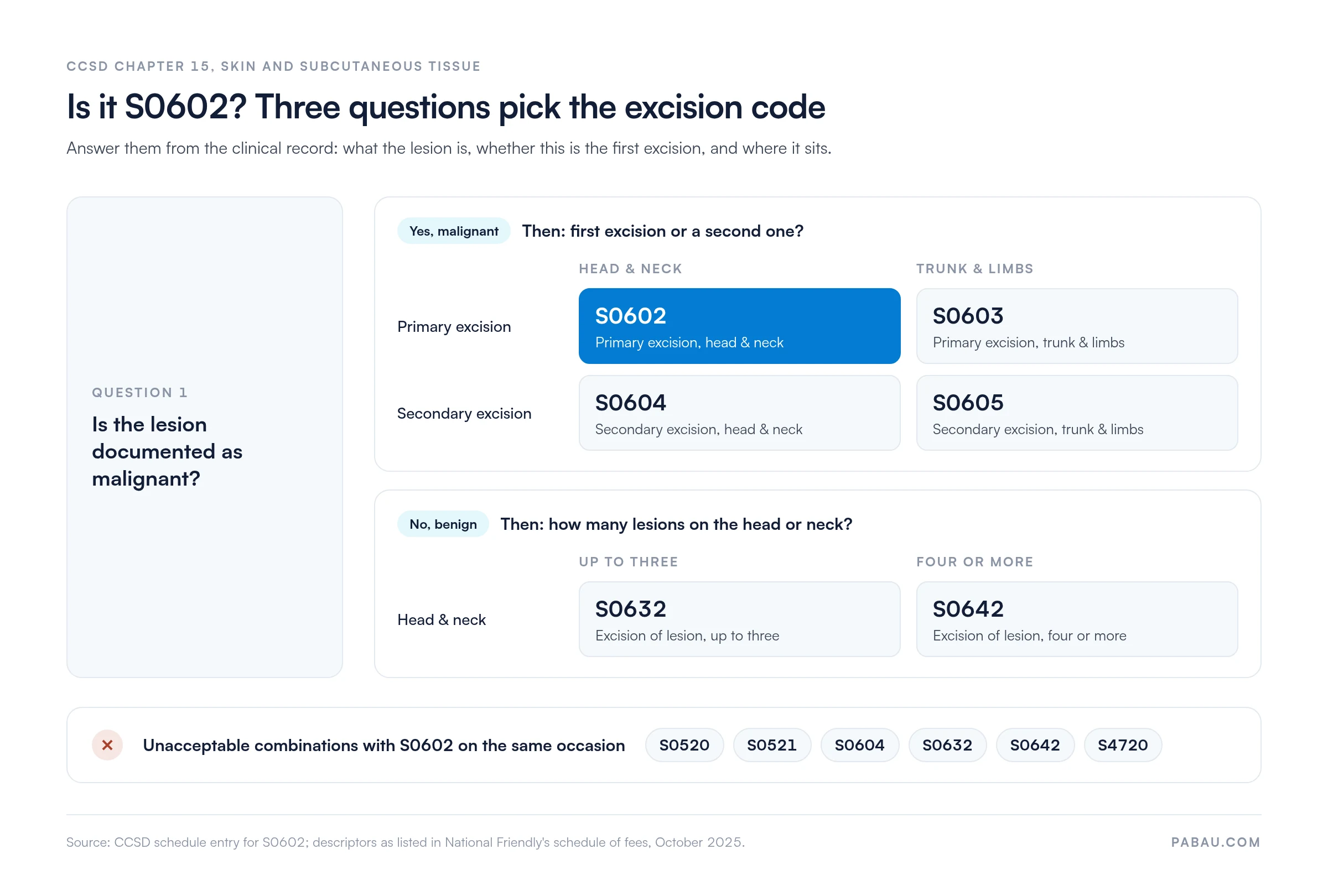
S0602 is the CCSD code for primary excision of a malignant skin lesion on the head or neck. Its official descriptor is "Primary excision of malignant lesion - Head & Neck", in chapter 15, skin and subcutaneous tissue.
Use it for the first excision of the lesion. A wider re-excision at the same site is S0604, and the same procedure on the trunk or limbs is S0603. Published insurer schedules place S0602 in the Intermediate complexity band.
Let Pabau's smart automation suggest the right codes, reduce claim denials, and keep your practice compliant—effortlessly.
Automate repetitive tasks and focus on what matters most—your patients.
Reduce coding errors and ensure compliance with the latest regulations.
Clean claims, fewer denials, and faster reimbursements.
Powerful insights and reporting to help your practice thrive.
HIPAA compliant SOC 2 certified GDPR-compliant Trusted by 4,000+ clinics worldwide

S0602 is the CCSD code for primary excision of a malignant skin lesion on the head or neck.
A re-excision at the same site is S0604, and a malignant lesion on the trunk or limbs is S0603.
The CCSD schedule lists S0520, S0521, S0604, S0632, S0642 and S4720 as unacceptable combinations with S0602.
Each insurer sets its own fee, so check the current schedule in your provider agreement before you invoice.
Record the authorization code, the lesion site and the diagnosis before the claim leaves the practice.
CCSD code S0602 is the procedure code for primary excision of a malignant skin lesion on the head or neck.
National Friendly’s 2025 schedule of fees lists it as “Primary excision of malignant lesion – Head & Neck” in the Intermediate complexity band. It sits in chapter 15 of the schedule, skin and subcutaneous tissue, under Lesions of Skin.
“Primary” means the first time the lesion is excised. A second, wider excision at the same site is billed as S0604 instead. The descriptor doesn’t name a cancer type, so a basal cell carcinoma and a melanoma on the face both start from S0602. A sentinel lymph node biopsy for melanoma is a separate procedure, billed under its own code, CCSD code S0608.
The CCSD (Clinical Coding and Schedule Development) group maintains the schedule. Its full S0602 entry, with the coding principles, sits behind a login, so check it there before you rely on any summary.
Three facts in the clinical record decide the code. Is the lesion malignant, is this the first excision, and where does it sit? The diagram walks through them in that order.
The table gives each neighbor’s descriptor and band, and whether it can share a claim with S0602. A lesion destroyed by laser rather than cut out takes a destruction code instead, such as CCSD code S0922 for areas up to 25 cm².
A re-excision on the trunk or a limb is billed as S0605, not S0604. For codes outside the skin chapter, start from our library of CCSD codes.
The CCSD schedule aims for one code to describe the whole clinical activity in most cases. The CCSD technical guide enforces this through “unacceptable combinations”, codes that shouldn’t be billed together.
The S0602 entry lists these as unacceptable combinations on the same occasion:
Public sources don’t spell out which steps the S0602 descriptor bundles in, such as anesthesia or wound closure. Check the S0602 entry on the CCSD schedule before you add a second code for either.
Histology on the excised tissue is a separate pathology service, so it isn’t part of S0602. The technical guide also calls the combination lists guidelines, and each insurer decides what it reimburses.
Run through this list before the invoice goes out. Each item answers a question an insurer can ask when it queries the claim.
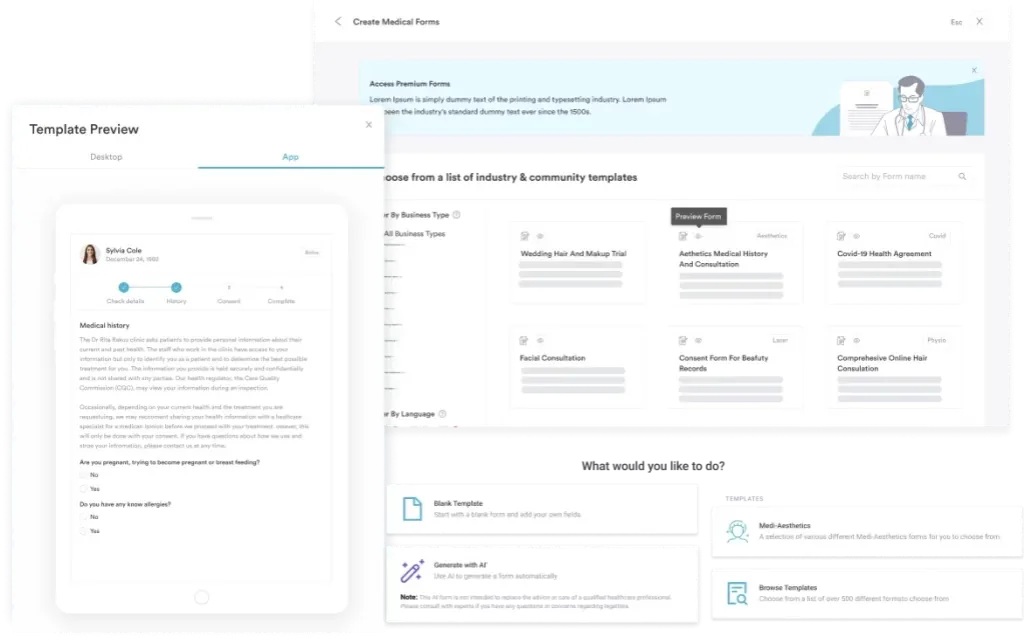
Keep these where you can find them fast. Insurers can ask for notes during an audit, and a correctly coded claim can still be challenged if the notes can’t be produced.
Whether S0602 needs pre-authorization depends on the patient’s policy and the insurer. Check before you book, not after the histology comes back.
Each insurer runs its own process. Our guide to Bupa CCSD codes shows how Bupa’s code search and fee schedule fit together.
Most practices send S0602 claims electronically through Healthcode, or through an insurer’s own provider portal. The invoice carries the fields below, and each one has a classic way to go wrong.
Then the claim waits. When the remittance arrives, match it to the invoice line by line, because a part-payment is easy to miss. Submission deadlines differ, so check each insurer’s deadline in your provider agreement.
Fees for S0602 are set by each insurer and change over time. As one published example, National Friendly’s 2025 schedule lists £348, the same as S0603 and S0604.
Run a weekly check on CCSD claims still unpaid after 30 days. A claim that old may have been queried, and catching it early leaves time to respond before the insurer’s appeal window closes.
Here’s how one illustrative case codes out. A consultant dermatologist sees a patient whose GP referral describes a biopsy-confirmed basal cell carcinoma on the left cheek.
The practice requests authorization for S0602 and records the code on the case. The excision goes ahead on the authorized date. The note records the site, lesion size, margins taken and closure.
A week later, histology shows one margin isn’t clear. The consultant books a wider excision, billed as S0604 on its own claim with its own authorization. The two codes never share an occasion, because S0604 is an unacceptable combination with S0602.
These are the patterns behind most queries on this code family. Each one has a fix you can build into the workflow.
In many practices, the authorization code lives in one place and the procedure note in another. The invoice then gets typed up from both, and that’s where a transposed code or a missing authorization slips in.
Pabau, the practice management platform we build, keeps those pieces on one patient record. With Pabau’s claims management, UK claims go to Healthcode and Bupa from that record. The authorization code, dates and sessions are tracked on the case, and Pabau warns you when one is missing.
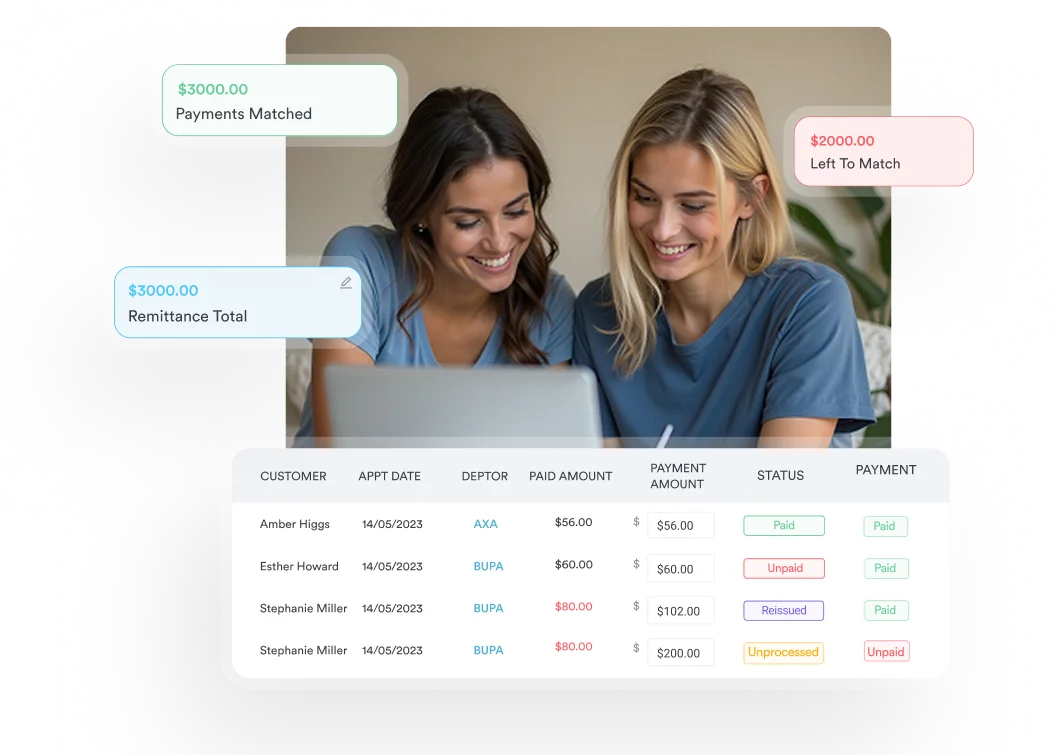
Consent forms and procedure notes are completed on the same record. When an insurer asks for evidence, you send it from the file instead of chasing paper.

Pabau tracks authorization codes on the case, warns you when one is missing and sends UK claims through Healthcode and Bupa. Your S0602 invoices go out complete.

S0602 is a narrow code. It describes the first excision of a malignant lesion on the head or neck, and the schedule blocks the obvious add-ons on the same occasion.
So the work that protects the claim happens before the procedure. Confirm the diagnosis in the notes, get authorization for S0602 itself, and decide early how a re-excision will be coded. Do that, and the invoice becomes a formality rather than a negotiation.
Book a demo to see how Pabau tracks authorizations on the case and sends S0602 claims through Healthcode.

Billing a Bupa member? Bupa CCSD codes guide explains how Bupa’s code search and fee schedule fit together.
Re-excising a lesion on the trunk or a limb? CCSD code S0605 covers secondary excision of malignant lesions at those sites.
Treating superficial skin cancer without surgery? CCSD code S0606 covers photodynamic therapy to up to three malignant skin lesions.
Removing small lesions by curettage instead? CCSD code S1110 covers curettage or cryotherapy of up to three skin lesions.
No. Mohs surgery has its own codes, S0520 and S0521, for microscopically controlled excision of a skin lesion. Both are unacceptable combinations with S0602, so bill one technique per occasion.
S0608 covers sentinel lymph node biopsy for melanoma. It’s a separate procedure from the excision, so check the S0608 entry for its own combination rules before billing it with S0602.
No. S0602 describes an excision. Curettage and cryotherapy of skin lesions have their own codes, such as S1110 for up to three lesions.
Yes. S0606 covers photodynamic therapy to up to three malignant skin lesions, and S0607 covers four or more. Use them when the lesion is treated with light rather than cut out.
Each insurer sets its own fee. National Friendly’s 2025 schedule lists £348, but rates differ and change, so check the current schedule in your provider agreement.