HCPCS code K0552: Infusion pump supplies billing guide
HCPCS code K0552: Official description and code category HCPCS code K0552 belong...

Last Updated: Nov 23, 2026
X0002 is the CCSD code for clinical supervision and planning of chemotherapy or systemic anti-cancer therapy (SACT) over a regimen of 1-14 days. It pays the consultant oncologist for prescribing the regimen, supervising its delivery and managing expected side effects. The drugs and the infusion are charged separately.
X0002 is one of five time bands, from X0001 to X0005, and the length of the regimen decides which one applies. Insurers such as Cigna pay one supervision fee per course, so the bands are treated as alternatives. Pick the band once, then bill it once.
Let Pabau's smart automation suggest the right codes, reduce claim denials, and keep your practice compliant—effortlessly.
Automate repetitive tasks and focus on what matters most—your patients.
Reduce coding errors and ensure compliance with the latest regulations.
Clean claims, fewer denials, and faster reimbursements.
Powerful insights and reporting to help your practice thrive.
HIPAA compliant SOC 2 certified GDPR-compliant Trusted by 4,000+ clinics worldwide

CCSD code X0002 is the supervision and planning fee for a chemotherapy or SACT regimen that runs 1-14 days.
It sits in a family of five time bands, X0001 to X0005, and Cigna, for one, pays only one band per course.
The fee covers prescribing the regimen, supervising its delivery and managing expected side effects, and Cigna bars further consultation fees during the course.
Authorization requirements differ by insurer, and Cigna asks for the authorization number against each code, so confirm each insurer’s rules before billing.
Pabau’s claims management software pre-fills X0002 claims from the patient record and validates them for missing or invalid details before they go to Healthcode.
CCSD code X0002 is the consultant’s fee for clinical supervision and planning of chemotherapy or systemic anti-cancer therapy (SACT) over a regimen of 1-14 days. It isn’t a procedure code, and it doesn’t cover the drugs. Cigna’s UK provider terms list X0002 as one of five supervision codes and explain what the fee includes.
According to those terms, the supervision fee covers four parts of the oncologist’s work:
In plain terms, X0002 pays for the thinking and the oversight. The infusion itself, the drugs and the day-unit costs are charged separately, usually by the hospital. Get that split straight before you raise an invoice.
X0002 is the second of five supervision codes in Chapter 18 of the CCSD schedule. Their descriptors are identical apart from the regimen length. Cigna asks you to use the code that matches the regimen length.
Every band starts at day 1, so the bands overlap at the bottom, as the chart below shows. The deciding question is the regimen’s length, not how many days the patient spends in the unit. Two weeks of oversight belongs on X0002, even if the patient attends only once.
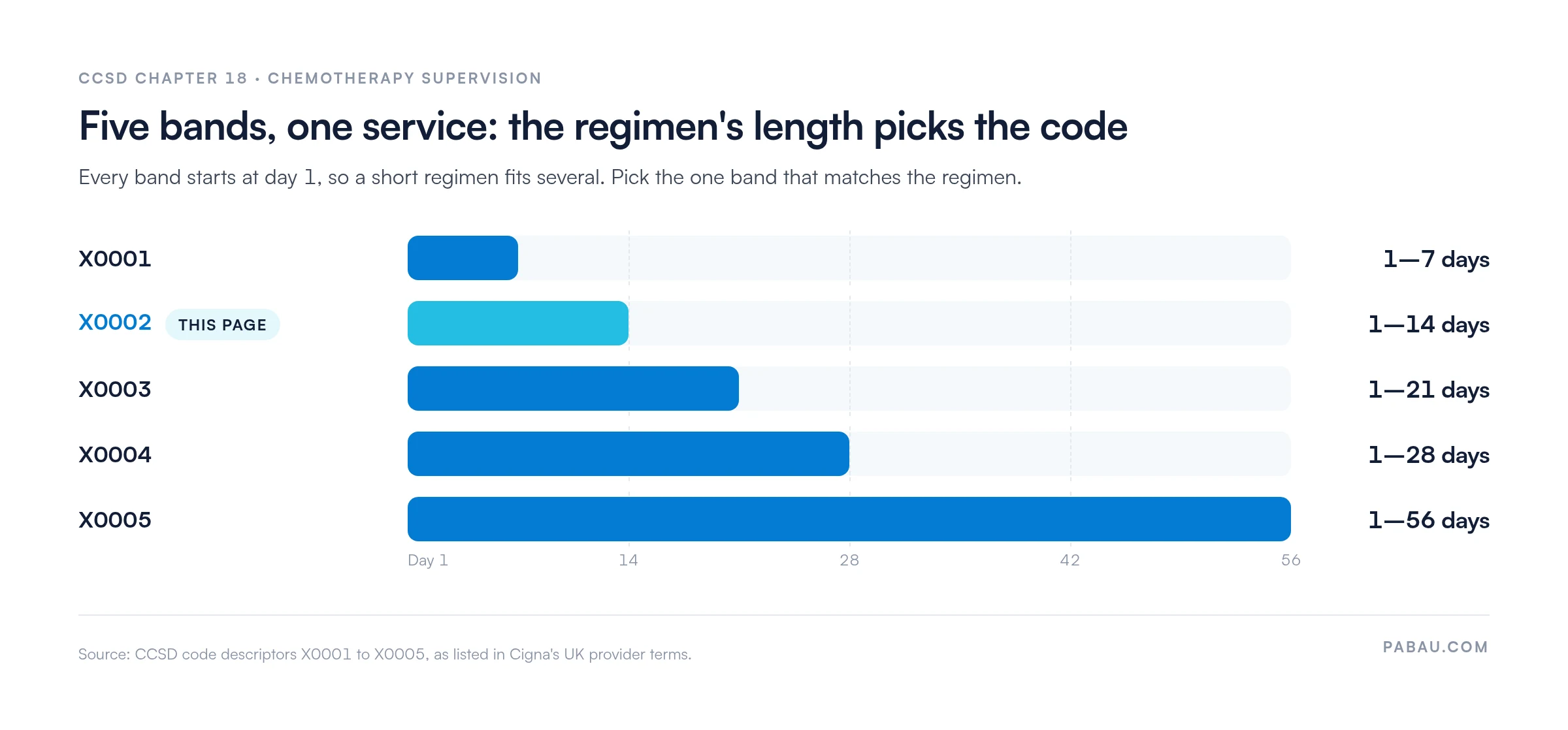
Where the length is open to reading, such as cycle length against the whole course, settle it with the insurer before the first invoice. Agreeing the reading up front saves a query later. Codes from the schedule’s other chapters sit in our UK private billing reference.
Supervision claims follow the treatment, not a single appointment. Here’s the usual path, step by step.
Cigna treats the time bands as alternatives and pays one supervision fee for any course of treatment. Billing two bands for the same regimen invites a query. Check the insurer’s own guidance if a case seems to need more than one.
The fee also absorbs work that would otherwise look billable. Consultant advice during the treatment cycle is included. So is managing expected side effects and complications from the treatment, including a switch to another regimen.
Cigna is explicit on two points. Further consultation fees shouldn’t be charged during the course, and one supervision fee is paid however many drugs the regimen combines. Check whether your insurer applies the same rules.
Cigna pays one supervision fee per course, however many drugs the regimen combines. Billing X0002 once per drug won’t earn a second fee.
The CCSD group sets the code and its wording. Each insurer sets its own fees, authorization steps and invoicing rules. Authorization requirements differ by insurer, and Cigna asks for the authorization number against each code, so confirm each insurer’s rules before billing.
If treatment wasn’t pre-authorized, Cigna wants the invoice to say so rather than leave the field blank. A quick call to the insurer settles it before you bill. For Bupa patients, our guide to Bupa CCSD codes covers finding codes and pre-authorization.
An insurer querying X0002 wants to see that supervision happened across the regimen. Keep these on the record before you invoice:
Run through these five checks before an X0002 invoice leaves the practice. Each one answers a question the insurer would otherwise send back.
Most queried supervision claims trace back to a handful of habits. These are the ones worth watching.
In many oncology practices, the regimen sits in one system and the invoice in another. Someone retypes the authorization number at the end of each cycle, and that’s where errors creep in.
Pabau, a practice management platform, keeps the regimen and the invoice on the same patient record. Its claims management software pre-fills the claim from that record. It then validates the claim for missing or invalid details before it leaves Pabau.
Claims go out through the clearinghouse for your region, with Healthcode in the UK. Your team spends less time retyping invoices and more time answering the queries that matter.

Pabau pre-fills insurer claims from the patient record, validates them for missing or invalid details and submits through Healthcode in the UK.

X0002 rewards billers who think in courses rather than visits. Get the band right once, bill it once, and leave mid-course consultations off the invoice.
The trade-off is patience. Waiting for the cycle to end and confirming each insurer’s rules feels slow, but it’s faster than answering a query weeks later. Book a demo to see how Pabau keeps chemotherapy supervision claims complete from treatment plan to submission.

Need the wider picture on CCSD billing? Bupa CCSD codes guide covers how Bupa uses the CCSD schedule and how claims are submitted.
Billing chemotherapy for US patients too? CPT code 96413 explains how a US chemotherapy infusion is coded and billed.
Patient paying for part of the course? Patient self-pay guide sets out deposits, payment policies and how to chase balances.
SACT stands for systemic anti-cancer therapy. It covers drug treatments that travel through the bloodstream to reach cancer cells, including cytotoxic chemotherapy, targeted therapies and immunotherapy. The X0002 descriptor names both chemotherapy and SACT.
The Clinical Coding and Schedule Development group, whose members are Aviva, AXA Health, Bupa and Vitality. It sets the codes and their wording for UK private healthcare. Each insurer still sets its own fees.
No. CCSD codes are used for private medical insurance claims. NHS hospitals record chemotherapy with OPCS-4 procedure codes instead.
It depends on the insurer. Each one publishes its own fee or guideline maximum for the code. Check the patient’s insurer’s fee schedule or provider terms before you invoice.
Yes, for the initial consultation before treatment starts. Once the course begins, Cigna’s terms say further consultation fees shouldn’t be charged, because the supervision fee covers them. Check each insurer’s current rules.