HCPCS code P9058: Red blood cells, leukocytes reduced, CMV-negative, irradiated
HCPCS code P9058: Official descriptor and key attributes HCPCS code P9058 report...

Last Updated: Oct 26, 2026
L3380 is the CCSD code for reinforcement of aneurysm of cerebral artery. It covers open wrapping of an intracranial aneurysm with muslin, gauze or mesh through a craniotomy, when the surgeon cannot clip it safely.
Clipping (L3320) and endovascular treatment are billed under other CCSD codes. UK private medical insurers commonly require pre-authorisation, and claims usually reach them through Healthcode.
Let Pabau's smart automation suggest the right codes, reduce claim denials, and keep your practice compliant—effortlessly.
Automate repetitive tasks and focus on what matters most—your patients.
Reduce coding errors and ensure compliance with the latest regulations.
Clean claims, fewer denials, and faster reimbursements.
Powerful insights and reporting to help your practice thrive.
HIPAA compliant SOC 2 certified GDPR-compliant Trusted by 4,000+ clinics worldwide

CCSD code L3380 covers reinforcement (wrapping) of a cerebral artery aneurysm. Clipping (L3320) and endovascular treatment are billed under other CCSD codes.
L3380 sits in Chapter 2 of the CCSD schedule, section 2.5 Vessels, and UK private medical insurers use it to pay surgeons and anaesthetists.
I67.1 (cerebral aneurysm, nonruptured) and the I60 subarachnoid haemorrhage codes are the usual ICD-10 pairings for an L3380 claim.
UK private medical insurers commonly require pre-authorisation for L3380. A missing authorisation number and a thin operative note are the usual causes of declined claims.
Pabau, the practice software we build, sends CCSD invoices through Healthcode and tracks their status, using the codes your team records.
CCSD code L3380 is the UK private-insurer code for reinforcement of aneurysm of cerebral artery. It covers open wrapping of an intracranial aneurysm through a craniotomy. The surgeon wraps the aneurysm with muslin, gauze or synthetic mesh when clipping is unsafe or impossible.
The L prefix comes from the arteries and veins chapter of OPCS-4, the classification CCSD codes are built on. CCSD files L3380 under section 2.5 with the other open cerebrovascular procedures. CCSD has no modifiers or sub-codes for side or vessel. The operative note and the ICD-10 code carry those details instead.
Neighbouring brain and cranium procedures each have their own entry among our private practice CCSD codes.
Reinforcement is a wrapping technique for an intracranial aneurysm that cannot be clipped. The neurosurgeon performs a craniotomy, usually a pterional or frontal approach, to expose the aneurysm.
A sheet of muslin, gauze or synthetic mesh then goes around the dome and neck. The wrap supports the weakened arterial wall and reduces the stress that leads to rupture.
The technique differs from the two definitive treatments. Clipping places a titanium clip across the aneurysm neck and excludes it from the circulation. Endovascular coiling fills the sac with platinum coils delivered through a catheter.
Reinforcement leaves the aneurysm open to blood flow but mechanically supported. Its long-term rupture risk differs from both definitive techniques. The operative note must state which technique was used, so the insurer can match it to L3380 rather than a clipping or endovascular code.
Neurosurgeons choose reinforcement when they cannot safely exclude the aneurysm from the circulation. UK private insurers expect the clinical supporting letter and the operative note to name the specific indication.
A claim that says only “reinforcement performed”, without the anatomical or clinical reason, invites a query from the insurer.
Every L3380 claim needs a paired ICD-10 diagnosis code, and UK private insurers use WHO ICD-10. Check each descriptor in the WHO ICD-10 browser. Insurers may query or decline a claim where the diagnosis does not support the procedure.
The presenting condition decides the principal diagnosis. After an emergency admission for rupture, an I60 code usually leads. For elective reinforcement of an unruptured aneurysm, I67.1 is the principal diagnosis. Confirm the sequence with the operating neurosurgeon before you submit the invoice.
The diagram below shows how the technique and the rupture status together set both codes on the claim.
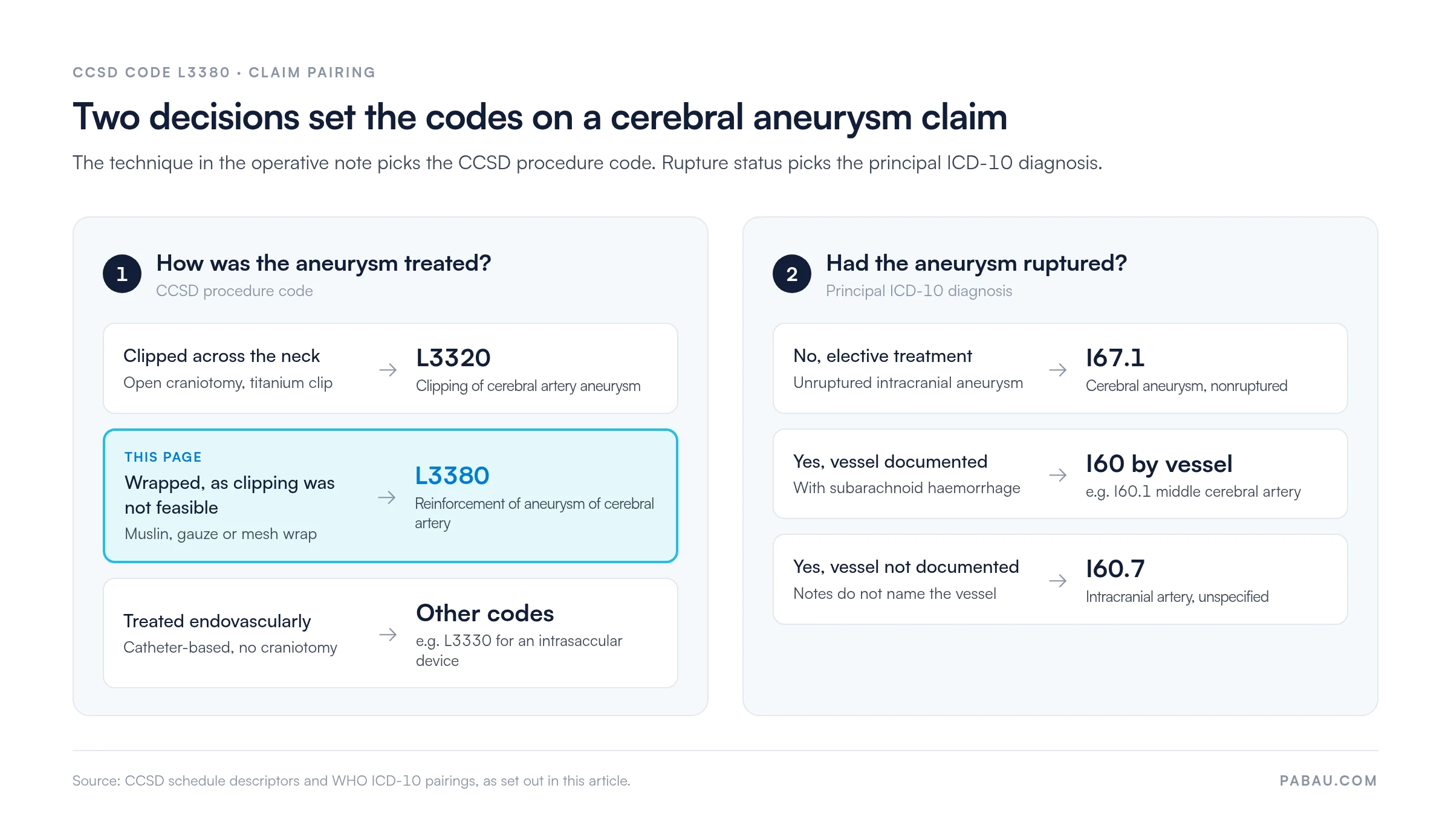
Use the most specific I60 code the notes support. I60.1 (middle cerebral artery) tells the insurer more than I60.7 (unspecified intracranial artery). On a high-value neurosurgical claim, an unspecified code often prompts a request for the clinical notes.
Section 2.5 of the CCSD schedule groups L3380 with the other open procedures on brain vessels. The Bupa CCSD codes guide explains how CCSD codes work and how to look them up.
The CCSD schedule lists unacceptable combinations for each code. Check the L3380 entry before you add clipping, craniotomy or dural repair lines to the same claim. The CCSD code A0260 entry, for example, lists L3380 as an unacceptable combination.
Where one aneurysm is clipped and a separate aneurysm is wrapped in the same session, the operative note must describe each one. Ask the insurer at pre-authorisation how it wants that session claimed.
UK private medical insurers commonly require pre-authorisation before a planned L3380 procedure. That includes Bupa, AXA Health, Vitality Health, Aviva, WPA, Allianz Care and H3 Insurance. Policies differ by insurer and by the patient’s cover, so check the policy before booking theatre.
The pre-authorisation request for L3380 generally includes these items:
Keep each authorisation number on the patient record next to the theatre booking, so the invoice can carry it. Our medical billing compliance guide covers the documentation standards that reduce claim risk.
Request authorisation as soon as the decision to operate is made, not on the day of surgery. After emergency surgery for a ruptured aneurysm, contact the insurer promptly and follow its retrospective authorisation process.
UK private insurers may ask for the operative note to validate an L3380 claim, especially given its value. Have complete documentation ready before you submit the invoice, and keep it for insurer audit.
Patient records that hold this detail are health data under UK GDPR and the Data Protection Act 2018. Store them securely and share them with the insurer only for the claim.
UK insurer fee schedules list a specialist fee and a separate anaesthetist fee against each CCSD code. The consultant anaesthetist invoices the insurer for L3380 under their own name and provider number. The neurosurgeon does not include the anaesthetic on their invoice.
Most declined L3380 claims trace back to a small set of avoidable problems, each with a fix to make before resubmission. Claims management software that keeps codes and authorisation numbers on the patient record makes each check quicker.
Neurosurgical billing teams often hold the authorisation letter, the operative note and the invoice in separate places. When one reference goes missing, the claim stalls while someone chases it.
In Pabau, the codes, authorisation number and clinical notes your team records sit on the patient’s record. Its claims management sends the invoice to the insurer through Healthcode and shows each claim’s status, so a declined claim surfaces quickly.
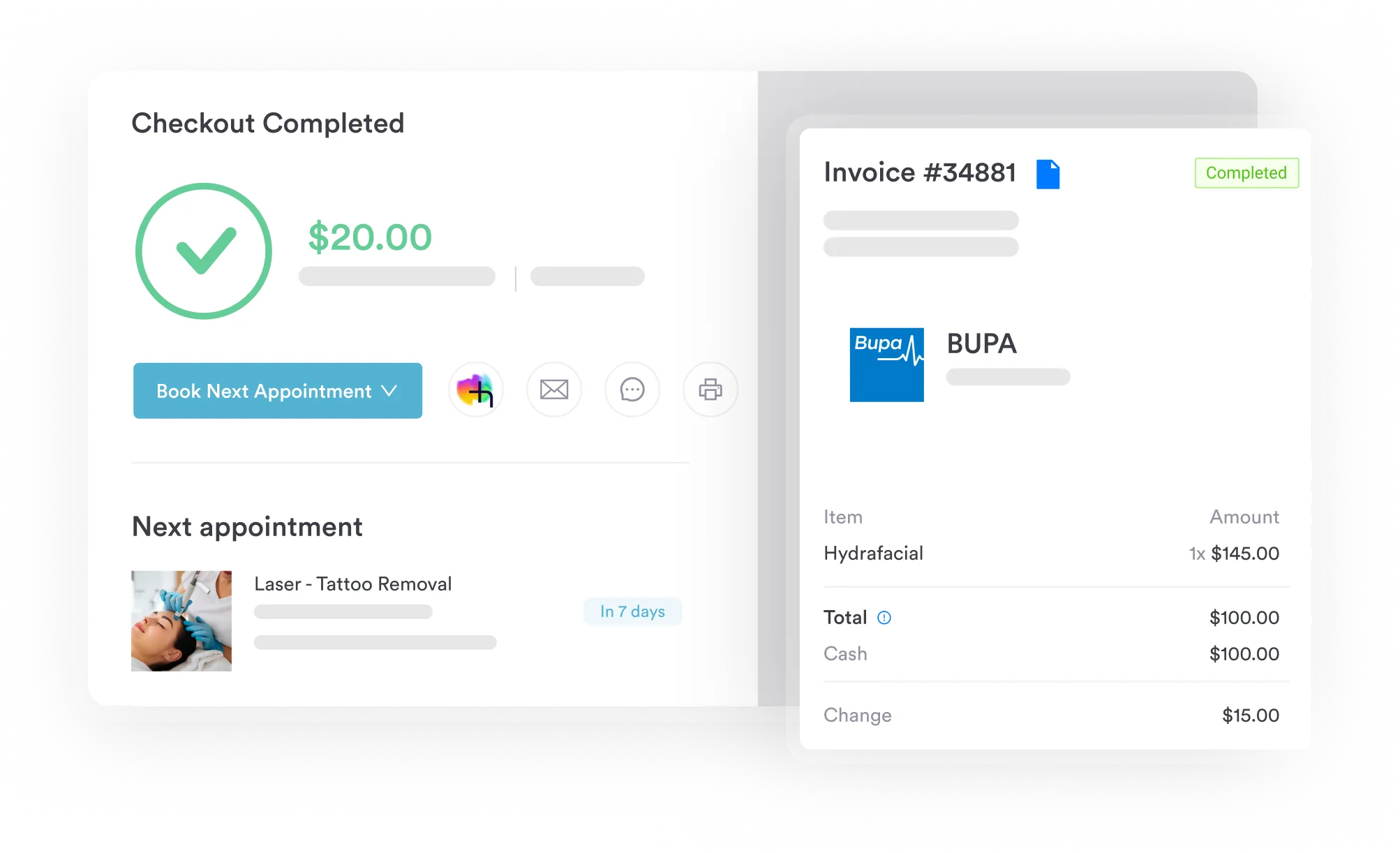
Pabau does not choose codes or obtain authorisations. Your neurosurgeon and billing team make those decisions, and Pabau carries their work through to a submitted, tracked claim.

Pabau sends CCSD invoices to UK private insurers through Healthcode and tracks their status. Codes, authorisation numbers and operative notes stay on one patient record, so billing staff spend less time chasing missing details.

CCSD code L3380 pays for one specific choice in theatre: wrapping an aneurysm that the surgeon could not clip. The claim stands or falls on whether the paperwork shows that choice.
Pair it with I67.1 or the right I60 code, and keep unacceptable combinations off the claim. Then make sure the authorisation number and an operative note explaining why clipping was not possible travel with the invoice.
Those checks take minutes before submission, while a declined high-value claim can take weeks to reverse. Book a demo to see how Pabau keeps CCSD codes, authorisation numbers and claim follow-up on one patient record.

Returning to theatre after a craniotomy bleed? CCSD code A4080 covers craniotomy for post-operative haemorrhage.
CCSD code L3380 covers reinforcement of aneurysm of cerebral artery. The neurosurgeon wraps an intracranial aneurysm with muslin, gauze or mesh through a craniotomy when clipping is not feasible. Clipping and endovascular treatment have their own CCSD codes.
CCSD stands for Clinical Coding and Schedule Development. Its schedule of procedure codes is used by UK private medical insurers, such as Bupa, AXA Health and Aviva, to pay consultants and anaesthetists.
Reinforcement wraps the aneurysm to support its wall and leaves it open to blood flow. Clipping places a titanium clip across the neck and excludes the aneurysm from the circulation. CCSD codes them separately, as L3380 and L3320.
I67.1 (cerebral aneurysm, nonruptured) is the usual code for elective reinforcement. After a rupture, use the I60 code for the affected vessel, such as I60.1 for the middle cerebral artery. Avoid I60.9 when the vessel is documented.
The usual causes are a missing authorisation number and a diagnosis code that does not support the surgery. An unacceptable code combination on the same claim is another. So is an operative note without the wrapping material or the reason for not clipping.
Yes. Wrapping and reinforcement describe the same technique, and both are claimed under CCSD code L3380. Either term in the operative note supports the claim, provided the other documentation is complete.
Yes. Insurer fee schedules list an anaesthetist fee against each CCSD code. The anaesthetist invoices the insurer separately for L3380, under their own name, and the neurosurgeon does not include the anaesthetic.