

HCPCS Code Q4185: Cellesta flowable amnion billing guide
HCPCS Code Q4185: definition and official descriptor HCPCS Code Q4185 is the Lev...

Last Updated: Nov 20, 2026
CCSD code K4902 covers percutaneous transluminal angioplasty of one or more coronary arteries with intravascular ultrasound (IVUS). Access is through the femoral or brachial artery. In plain terms, a cardiologist opens a narrowed heart artery with a balloon or laser. An ultrasound catheter measures the vessel from inside. No stent goes in. If one does, the case moves to K4912.
UK private medical insurers use the code for specialist cardiology claims. The CCSD schedule bars billing K4902 alongside K4900, K4910 or K4912. So the procedure report has to confirm three facts: IVUS was used, no stent was placed, and access was femoral or brachial.
Let Pabau's smart automation suggest the right codes, reduce claim denials, and keep your practice compliant—effortlessly.
Automate repetitive tasks and focus on what matters most—your patients.
Reduce coding errors and ensure compliance with the latest regulations.
Clean claims, fewer denials, and faster reimbursements.
Powerful insights and reporting to help your practice thrive.
HIPAA compliant SOC 2 certified GDPR-compliant Trusted by 4,000+ clinics worldwide

CCSD code K4902 covers coronary angioplasty guided by intravascular ultrasound (IVUS), laser included, through femoral or brachial access.
K4902 is a heart code in Chapter 8 of the CCSD schedule, with no connection to dental treatment.
Never bill K4902 alongside K4900, K4910 or K4912. The CCSD schedule lists each one as an unacceptable combination.
If a stent goes in during the IVUS-guided procedure, the case belongs on K4912, so the report must state stent status.
The descriptor names femoral or brachial access, so the report must record the access route to support K4902.
CCSD code K4902 covers percutaneous transluminal angioplasty of one or more coronary arteries with intravascular ultrasound (IVUS). Access is through the femoral or brachial artery. The descriptor adds “including laser”, so a laser-assisted angioplasty with IVUS guidance stays on the same code.
An interventional cardiologist bills K4902 to the patient’s private medical insurer after treating a narrowed coronary artery. The ultrasound run is what separates it from plain balloon angioplasty.
CCSD stands for Clinical Coding & Schedule Development. Its schedule gives UK private medical insurers one shared set of procedure codes. K4902 sits in Chapter 8, thorax and intra-thoracic organs, under Heart – Cardiology. Our CCSD procedure codes guides cover the rest of the schedule.
The CCSD descriptor for K4902 reads: Percutaneous transluminal angioplasty of coronary artery(ies) with intravascular ultrasound (including laser) – femo brachial access.
Each part of that wording rules out a neighbouring code. That’s why the procedure report has to match it.
The K prefix follows Chapter K of OPCS-4, the UK procedure classification, which covers the heart. Dental procedures sit elsewhere, in the F codes.
Coronary angioplasty widens a narrowed heart artery from inside. A balloon catheter travels up from an artery in the leg or arm. IVUS adds a miniature ultrasound probe on a catheter, which images the artery wall from within. An angiogram alone can’t show that.
A K4902 report should cover these steps:
Whether a stent was placed decides the code. The schedule lists angioplasty with stent insertion and IVUS separately, as K4912.
K4902 belongs to a small family of coronary angioplasty codes. Read the table by what happened in the lab. Then pick the one code that matches the whole procedure. Every code in that table is a catheter procedure. A repeat bypass in open surgery falls outside it, so that claim takes K4410 instead.
The CCSD website marks K6511, K6513 and K6514 as “Pre 2025” entries, so their status may have changed. Recheck them before you rely on that part of the table. K6510 sits next to those catheterisation entries, and its narrative is login-gated, so check that entry too.
K4902’s descriptor names femoral or brachial access only. If the cardiologist went in through the radial artery, confirm in the current CCSD schedule which code applies to a radial IVUS angioplasty.
The CCSD schedule lists K4900, K4910 and K4912 as unacceptable combinations with K4902. Each one describes an overlapping coronary angioplasty. Claiming two of them would bill the same procedure twice.
So the quickest check comes down to two questions. Was IVUS used, and did a stent go in? The grid below maps each answer to one code.
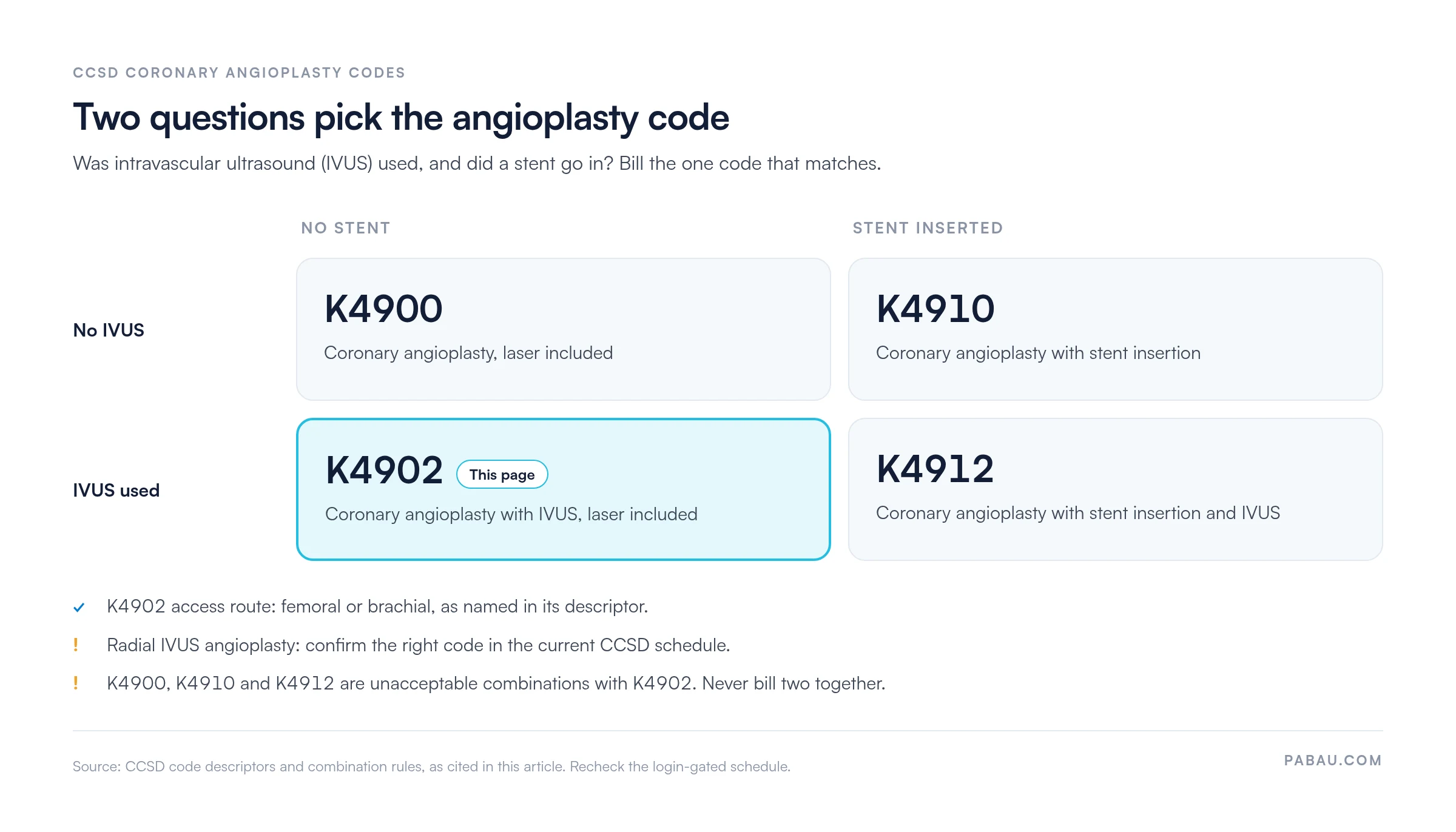
No IVUS run means the case moves to K4900. A stent without IVUS moves it to K4910. Both IVUS and a stent point to K4912.
Registered users can read each code’s combination rules on the CCSD website, which requires a login. Recheck them whenever the schedule is updated.
K4902 is billed to a private medical insurance policy, so authorisation runs through the patient’s medical insurer. UK insurers generally ask the patient to get authorisation before planned treatment.
That authorisation is tied to the procedure planned at the time. If the lab changes the plan, say by inserting a stent, the claim no longer matches. Tell the insurer once the procedure is done, before the invoice goes in.
Get the authorisation reference before the cath lab booking is confirmed. Record the planned code next to it, so whoever raises the invoice can see whether the procedure matched the approval.
Insurers can ask for the procedure report when they query a K4902 claim. Each element of the descriptor rules out a neighbouring code, so the report needs all of them.
Here’s the usual path from procedure to payment, and where each step can stall.
Tick each line against the signed report before the claim goes out. One unticked line usually means a query later.
Watch for these six slips. Each one has a simple fix.
The CCSD schedule defines the procedure, not the fee. Each insurer sets its own benefit for K4902. It publishes that figure through a fee schedule or provider portal, such as the Bupa fee schedule.
Where the consultant’s fee is higher than the insurer’s benefit, the patient may owe a shortfall. Explain that in the fee estimate before the procedure, so the invoice doesn’t come as a surprise.
A K4902 claim depends on the cath lab report, the consent form and the insurer’s authorisation. When those sit in separate systems, the authorisation reference is the easiest one to lose.
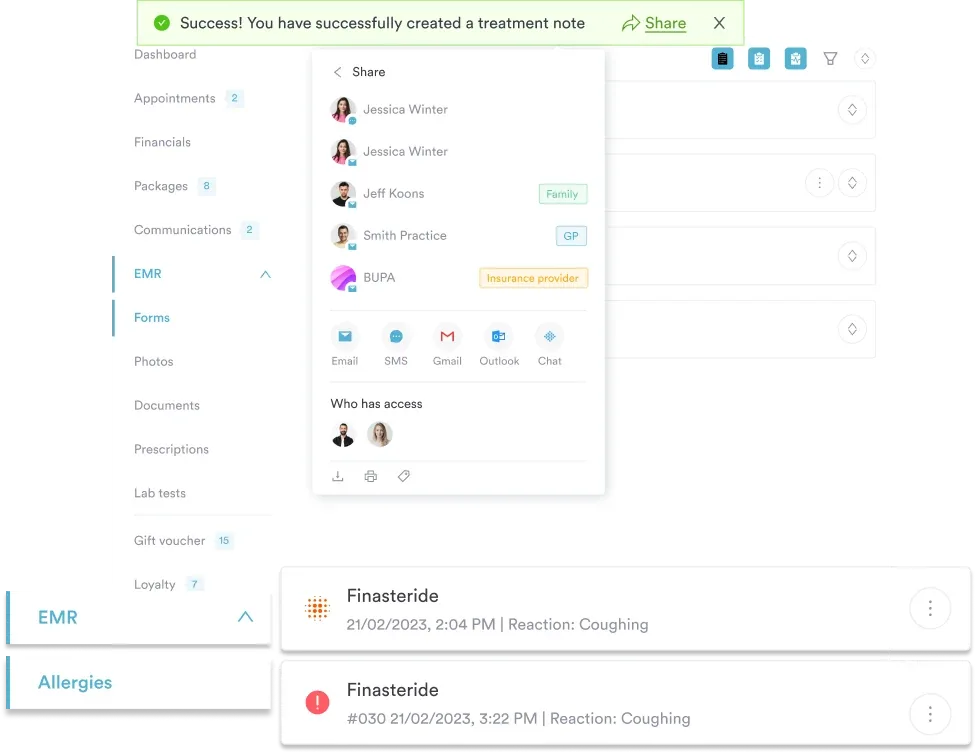
Pabau, the practice management software we build for private practices, raises each invoice from the patient’s record. The CCSD code, provider number and authorisation reference travel with it. Its medical billing software sends UK claims through Healthcode and checks required fields first.
Billing staff then see submitted, pending, paid and rejected claims in one view. A rejected K4902 claim shows up quickly, so the reply goes out with the report attached.
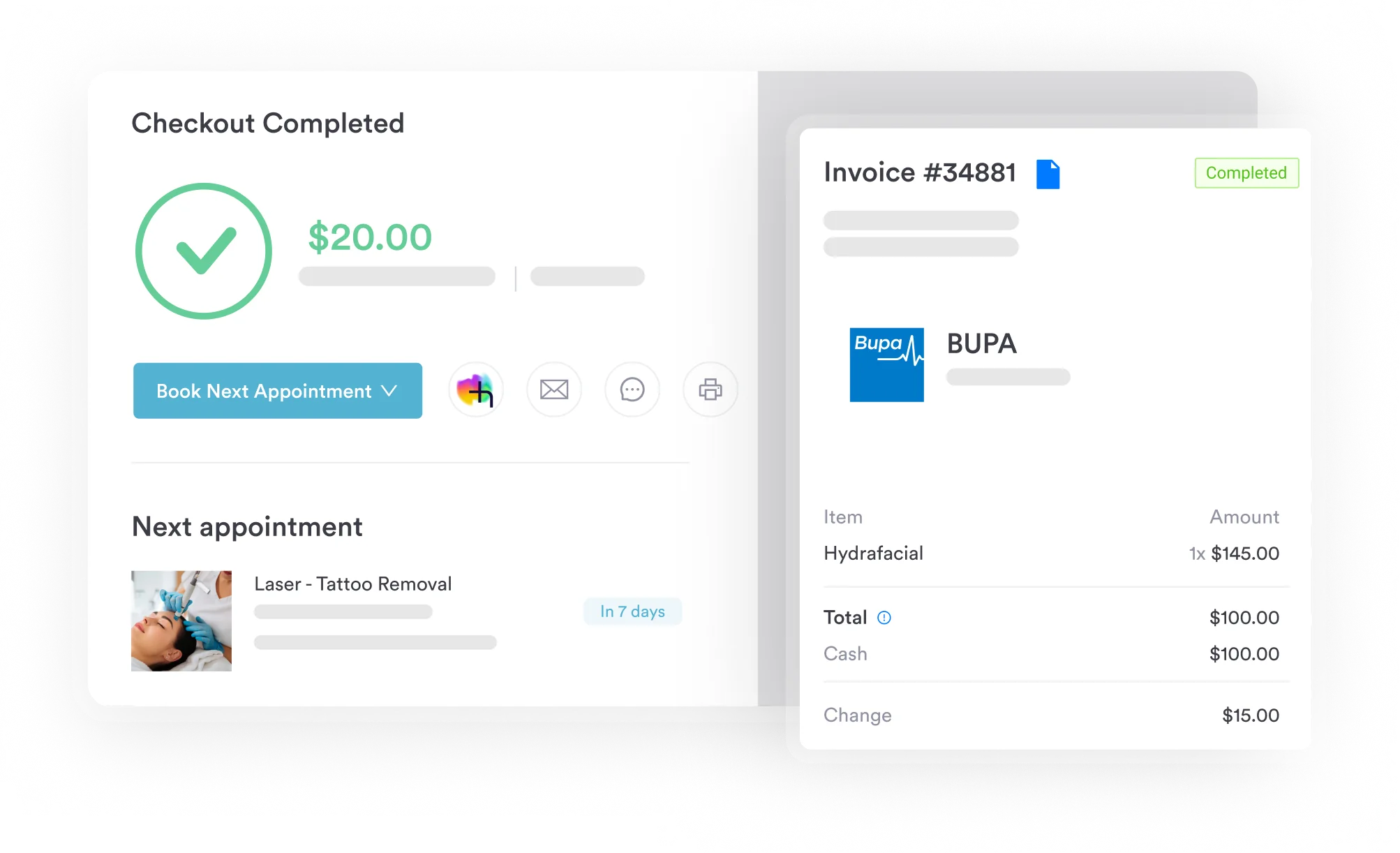

Pabau raises CCSD-coded invoices from the patient record and carries the authorisation reference onto each claim. Claim status through Healthcode sits in one view.

K4902 rests on three facts in the report. IVUS was used, no stent went in, and access was femoral or brachial. Get one wrong and the claim belongs on a neighbouring code.
So the work that matters happens before the invoice. Agree the planned code with the insurer, and make sure the report names the IVUS findings and access route. If the lab changes the plan, update the authorisation first.
Book a demo to see how Pabau keeps CCSD codes, authorisation references and claim status in one place.

Billing balloon angioplasty without IVUS? CCSD code K4900 covers coronary angioplasty without a stent or ultrasound guidance.
Stent inserted during the procedure? CCSD code K4910 explains the stent code and the access rules that come with it.
Billing other procedures to Bupa? Bupa CCSD codes walks through the chapter structure and the submission rules Bupa applies.
Need the fee behind the code? Bupa procedure codes fee schedule explains how benefit maximums are set per code and where shortfalls come from.
K4902 covers coronary angioplasty with intravascular ultrasound, laser included, through femoral or brachial access. No stent is placed. UK private medical insurers use it for specialist cardiology claims.
No. CCSD codes are for private medical insurance claims. NHS hospitals record the same procedure in OPCS-4, the UK’s national procedure classification.
K4902’s descriptor names femoral or brachial access only. For a radial IVUS angioplasty, confirm in the current CCSD schedule which code applies.
Check K5050 first. It covers angioplasty following same-day angiography, with IVUS, with or without a stent. Confirm the combination rules in the CCSD schedule before you bill.
No. The K4902 descriptor includes laser, so an IVUS-guided laser angioplasty without a stent stays on K4902. Record the laser catheter in the procedure report.





