CCSD code G6500 – Diagnostic oesophago-gastro-duodenoscopy with biopsy and urease test
Code Definition
G6500 is the CCSD code for a diagnostic oesophago-gastro-duodenoscopy (OGD) that includes forceps biopsy, biopsy urease test and dye spray. The descriptor names all three, so none of them is billed separately alongside G6500.
The code applies when the scope reaches the duodenum for inspection and sampling only. Once the endoscopist performs a therapeutic intervention, such as dilatation or polypectomy, the therapeutic CCSD code replaces G6500.
Related Information
Group
10 Endoscopic gastrointestinal procedures
Category
10.0.0 Endoscopic GIT Procedures
Includes
Forceps biopsy, biopsy urease test and dye spray
Code also known as
OGD, gastroscopy, upper GI endoscopy, upper endoscopy, oesophagogastroduodenoscopy
Save time. Improve accuracy. Get paid faster.
Automate coding with Pabau
Let Pabau's smart automation suggest the right codes, reduce claim denials, and keep your practice compliant—effortlessly.
Diagnostic oesophago-gastro-duodenoscopy with biopsy and urease test
Codes
Suggested by Pabau AI
G6500Diagnostic oesophago-gastro-duodenoscopy with biopsy and urease test
CCSD Code Suggestion
AI
Suggested code
G6500Diagnostic oesophago-gastro-duodenoscopy with biopsy and urease testHigh match
Confidence score
98%
Why this code?
Matches patient diagnosis
Supported by clinical notes
Commonly used for this condition
Why practices choose Pabau
Save hours every week
Automate repetitive tasks and focus on what matters most—your patients.
Improve accuracy
Reduce coding errors and ensure compliance with the latest regulations.
Get paid faster
Clean claims, fewer denials, and faster reimbursements.
Grow with confidence
Powerful insights and reporting to help your practice thrive.
HIPAA compliant•SOC 2 certified•GDPR-compliant•Trusted by 4,000+ clinics worldwide
Key takeaways
CCSD Code G6500 covers a diagnostic OGD that includes forceps biopsy, biopsy urease test and dye spray in one fee.
The descriptor names all three components, so billing any of them separately alongside G6500 is unbundling and gets rejected.
G6500 is diagnostic only, so a polypectomy, dilatation or hemostasis is billed with the therapeutic code alone, without G6500.
Most major UK insurers require pre-authorization before the procedure, and a claim without it is hard to recover.
Pabau supports UK insurance claims through Healthcode and Bupa, so practices can submit G6500 claims digitally.
CCSD Code G6500: Definition and official descriptor
CCSD Code G6500 covers a diagnostic oesophago-gastro-duodenoscopy (OGD) that includes forceps biopsy, biopsy urease test and dye spray. The Clinical Coding and Schedule Development Group maintains the CCSD procedure code schedule for UK private healthcare. It defines this code with a single bundled descriptor. The word “diagnostic” separates G6500 from the therapeutic OGD codes. It limits the code to procedures whose purpose is inspection and sampling rather than intervention.
The G6500 descriptor names all three components, so none is billed separately. Adding any of them as a second line item alongside G6500 is unbundling. The full code schedule sits behind a login on the CCSD website, so confirm the current descriptor there before you bill.
UK private practice only (CCSD is not used in NHS settings)
What the OGD procedure involves: Step by step
Understanding the clinical steps an OGD involves helps coders confirm that G6500 is the right code for the episode documented in the endoscopy report.
Patient preparation: The patient fasts per the unit’s protocol, typically around six hours for food. Throat spray or intravenous sedation is given, and sedation is coded separately from G6500.
Scope insertion: A flexible videoendoscope is passed through the mouth and pharynx into the oesophagus.
Oesophageal inspection: The endoscopist advances the scope under direct vision, inspecting the oesophageal mucosa for inflammation, strictures, varices, or Barrett’s changes.
Gastric inspection: The scope enters the stomach; the antrum, body, fundus, and cardia are systematically examined.
Duodenal inspection: The scope is advanced into the first and second parts of the duodenum, completing the upper GI survey.
Forceps biopsy: Where indicated, biopsy forceps are passed through the instrument channel to sample mucosa at one or more sites. This step is bundled within G6500.
Biopsy urease test: A biopsy specimen may be placed into a rapid urease test (CLO test) to detect Helicobacter pylori at the point of care. This is also bundled within G6500. Note: Laboratory histopathological processing of biopsy specimens is a separate charge under a distinct pathology code.
Dye spray: Chromoendoscopy via mucosal dye spray may be applied to highlight mucosal architecture. Dye spray is bundled within G6500 and cannot be billed additionally.
Withdrawal and reporting: The scope is withdrawn. A structured report records the anatomy visualized, findings, biopsy sites, the urease test result and any dye spray.
What is included in G6500: Bundled components
Three clinical components are named in the G6500 descriptor and are included in the single procedure fee. None of these may be billed separately alongside G6500. For clinicians new to private practice, this bundling can feel counterintuitive, because each component carries its own consumable or reagent cost.
Component
Clinical role
Separately billable?
Forceps biopsy
Tissue sampling via endoscopic biopsy forceps for histological analysis
No, bundled
Biopsy urease test (CLO test)
Rapid point-of-care test on biopsy tissue for H. pylori detection
No, bundled (laboratory histopathology of the same tissue is separate)
Dye spray (chromoendoscopy)
Mucosal dye spray to enhance visualization of surface architecture
No, bundled
Important nuance: Inclusion in the descriptor does not mean the component must be performed for G6500 to apply. Say a diagnostic OGD needed no forceps biopsy or dye spray. G6500 remains the correct code, provided the procedure stayed diagnostic in scope. The descriptor lists the maximum coverage, not the mandatory checklist.
What is NOT included: Exclusions and add-on codes
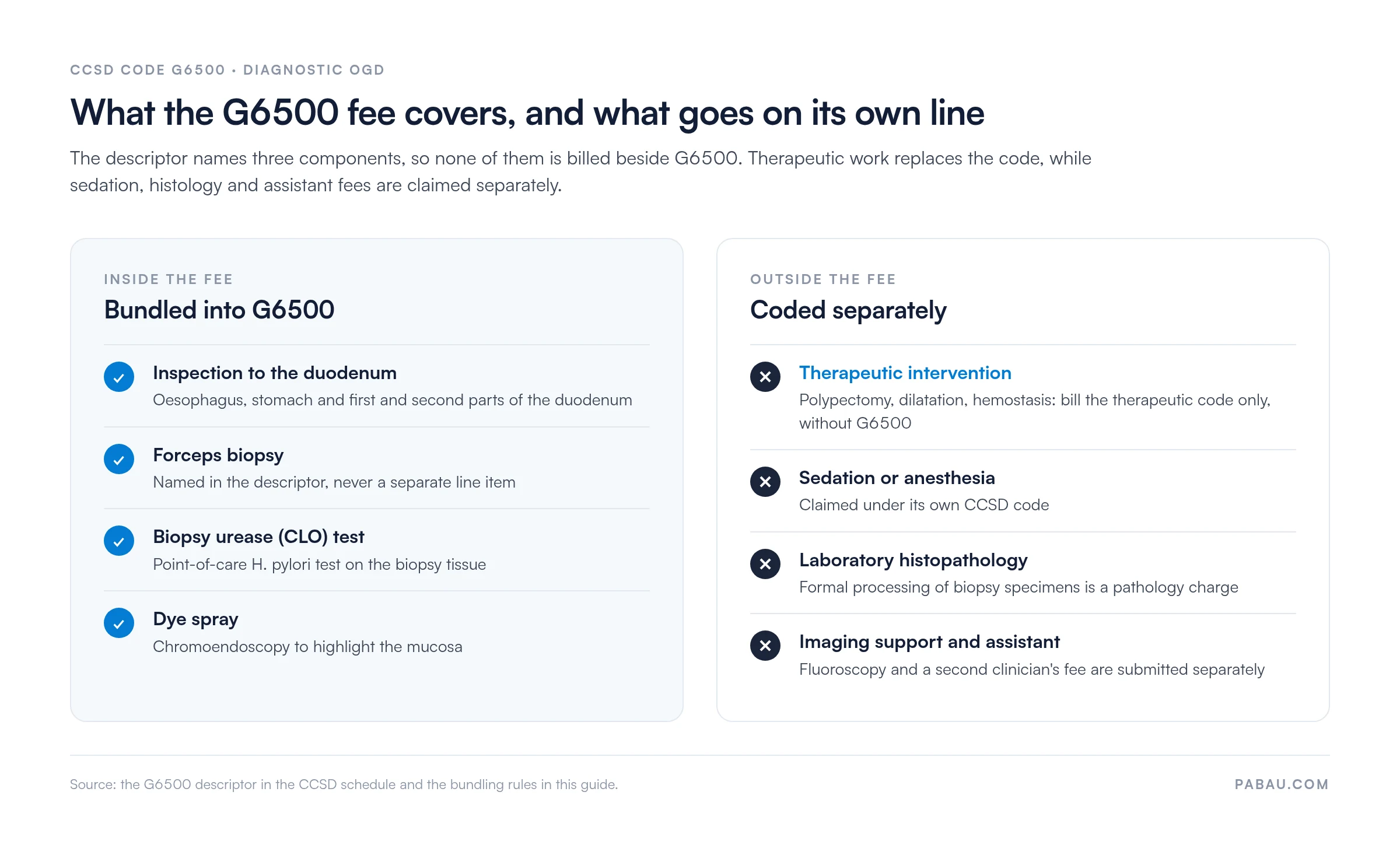
G6500 covers only diagnostic work. Once a therapeutic intervention is performed during the same episode, the therapeutic code replaces G6500. Sedation, histology and assistant fees are claimed under their own codes, and the panel after this list sets them against the bundled components.
Therapeutic interventions: Polypectomy, hemostasis, dilatation of strictures, argon plasma coagulation, variceal banding, and foreign body removal all fall under separate therapeutic OGD codes. Billing G6500 when a therapeutic procedure was performed understates the work.
Sedation and anesthesia: Conscious sedation and anesthesia are separately coded under their own CCSD code families. Neither is included in G6500. The sedation agent and monitoring are charged independently.
Histopathology processing: Laboratory processing and reporting of biopsy specimens by a histopathologist carries a separate CCSD laboratory code. Only the point-of-care urease test is bundled, and formal histology is always separate.
Radiological assistance: Fluoroscopy or other imaging support during endoscopy uses an additional imaging code.
Assistant surgeon fees: Where a second clinician assists, their fee is submitted separately.
Items in the left column ride on the G6500 fee, while the right column goes on its own claim line or replaces G6500. The panel follows the CCSD descriptor and this guide’s bundling rules.
Related and neighboring CCSD codes
Choosing the right diagnostic OGD billing code means matching the clinical scope of what was done. Three rules cover most G6500 decisions.
Diagnostic OGD to the duodenum: The scope reaches the second part of the duodenum for inspection and sampling only, so G6500 applies.
Therapeutic work in the same session: A polypectomy, dilatation or hemostasis moves the episode to the matching therapeutic OGD code.
A more limited endoscopy: If the scope stopped short of the duodenum, a different CCSD code for a more limited endoscopy applies. Confirm it in the CCSD schedule.
Diagnostic vs therapeutic billing in practice: A diagnostic session that ends with an incidental polyp removed takes the therapeutic code only. The diagnostic endoscopy is included in the therapeutic fee, so do not add G6500. Coders should review the endoscopy report rather than the booking description to confirm the final scope of work.
Neighboring codes change between schedule updates, so check the exact code in the CCSD schedule or the insurer’s fee schedule before you submit. Our CCSD codes reference lists the other CCSD codes we cover, grouped for UK private billing.
Clinical indications: When G6500 is appropriate
G6500 is appropriate when a clinician performs a diagnostic upper GI endoscopy extending from the oesophagus through to the duodenum. Common indications include:
Persistent dyspepsia unresponsive to empirical treatment
Dysphagia or odynophagia requiring structural assessment
Investigation of upper GI bleeding (hematemesis, melena, iron-deficiency anemia)
Suspected celiac disease (duodenal biopsy for villous atrophy)
Barrett’s oesophagus surveillance (where the procedure remains diagnostic in that session)
H. pylori investigation via CLO test where breath test results are inconclusive
Unexplained weight loss in adults where upper GI pathology is clinically suspected
Nausea and vomiting requiring structural exclusion
Where an insurer asks for a diagnosis code alongside G6500, it should match the indication in the endoscopy report. Unspecified gastrointestinal hemorrhage is coded K92.2, and unspecified iron-deficiency anemia is coded D50.9.
The British Society of Gastroenterology (BSG) publishes clinical guidelines on OGD indications, and insurers judge the appropriateness of G6500 claims against accepted practice. An OGD ordered for an indication outside that practice may be challenged even when the code is correct. When unexplained weight loss prompted the referral, R63.4 records the abnormal weight loss on the claim.
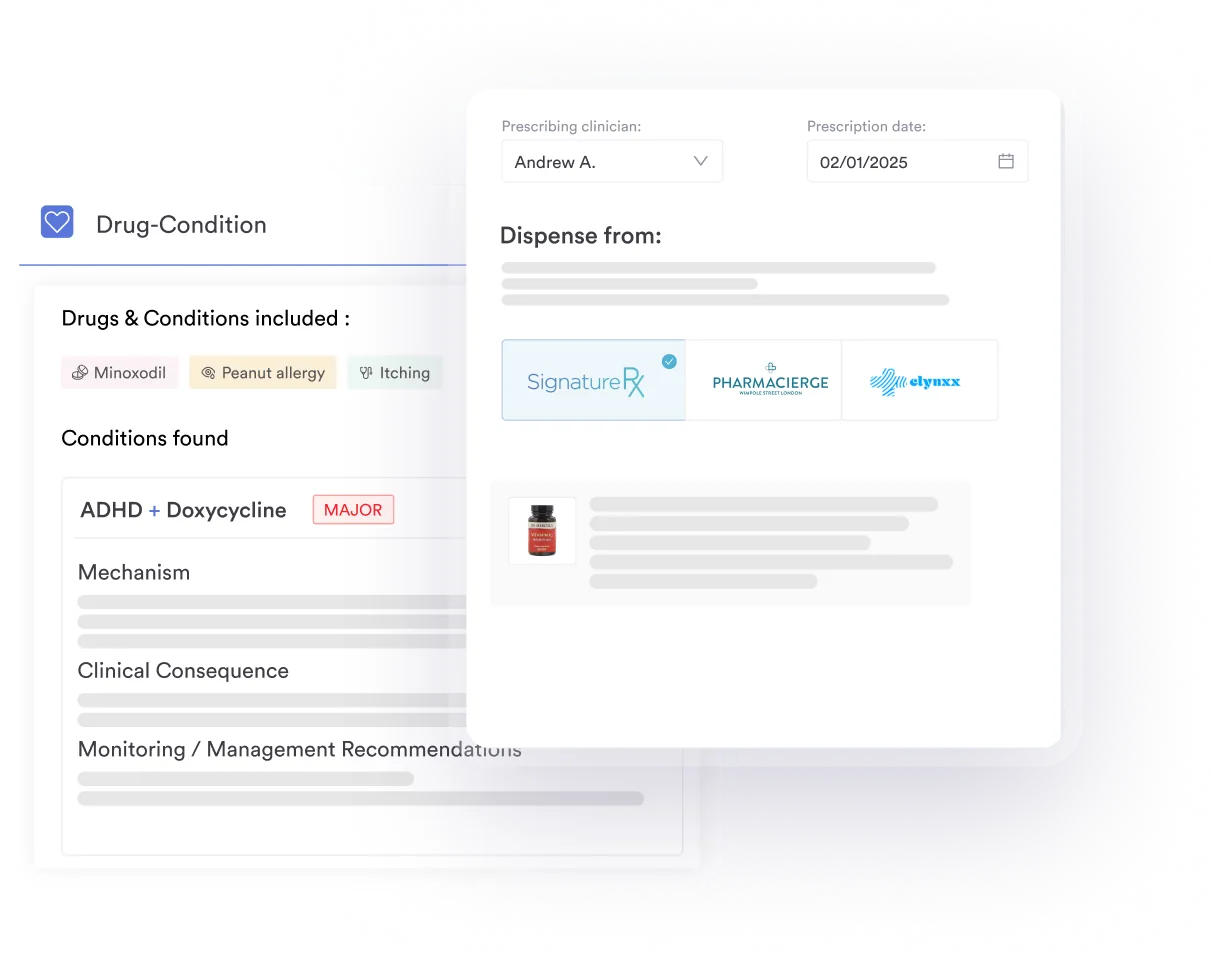
Pabau’s prescribing screen checks contraindications as the clinician prescribes, so medication history is on record before a sedated OGD.
Documentation requirements for a valid G6500 claim
Poor documentation is the most controllable driver of G6500 claim rejection. A complete endoscopy report must accompany or be referenced in every G6500 submission. Billing teams should check the following before submitting.
Procedure date and patient identifiers: Name, date of birth, and PMI membership number must match the insurer’s records exactly.
Clinical indication: The report must state the reason the procedure was clinically necessary. Vague indications such as “routine check” are inadequate. The documented reason should match an indication the insurer accepts.
Anatomical extent: The report must confirm the scope reached the second part of the duodenum. If it states only “oesophagus and stomach,” G6500 may not apply. A different CCSD code for a more limited endoscopy may fit, so confirm it in the CCSD schedule.
Biopsy record: Site(s) biopsied, number of specimens taken, and forceps used must be documented. Even if biopsy is not performed, noting “no biopsy taken” confirms the diagnostic scope.
Urease test: Where performed, record the CLO test result as positive or negative. Where not performed, a brief note suffices. Note that laboratory histopathology requests for biopsy samples should reference a separate pathology code.
Dye spray: Record agent used and sites where chromoendoscopy was applied, or note it was not performed.
Procedure code: G6500 must be explicitly stated on the invoice or claim form submitted to the insurer.
Referring clinician: Most insurers require the GP or specialist who initiated the referral to be identified.
UK data protection obligations require that patient records supporting private healthcare claims are retained securely.
Pro Tip
Before submitting a G6500 claim, check the endoscopy report against a short list. Confirm the extent to the duodenum, the biopsy sites, the urease test result and the clinical indication. A 60-second check by the billing coordinator prevents the most common rejection reasons before the claim leaves the practice.
Pre-authorization: What UK insurers require before billing G6500
Most major UK PMI providers require pre-authorization before a diagnostic OGD is performed. Failure to obtain it before the procedure is one of the most common and least recoverable causes of G6500 claim rejection. For detailed Bupa-specific CCSD billing rules, see the Bupa CCSD billing guide.
Insurer
Pre-auth typically required?
GP referral usually needed?
Primary submission route
Bupa
Yes, in most cases
Usually required
Healthcode / Bupa provider portal
AXA Health
Yes, for most members
Usually required
Healthcode / AXA portal
Aviva
Policy-dependent; often required
Often required
Healthcode / Aviva portal
Vitality Health
Yes, for most members
Usually required
Healthcode / Vitality portal
WPA
Often required
Often required
Healthcode
Pre-authorization requirements are policy-specific and change periodically. Always verify against the insurer’s current benefit schedule before the procedure is booked. Aviva’s current fee schedule and Vitality’s procedure fee finder are the primary sources for current reimbursement and eligibility rules. Healix publishes its CCSD-based fee schedule online, including the unacceptable combinations for each code.
Why G6500 claims get rejected and how to avoid it
G6500 rejections cluster around five causes. Each has a straightforward fix once the billing team knows the pattern.
Rejection reason
What goes wrong
Fix
Missing pre-authorization
OGD performed before insurer approval was obtained
Obtain pre-authorization before the procedure date, since some insurers allow retrospective approval only in emergencies
Unbundling of included components
Forceps biopsy, CLO test, or dye spray billed separately on the same claim
Remove the separately coded components and submit G6500 as the single code covering all three
Wrong code selection
Therapeutic OGD code used for a diagnostic procedure, or G6500 used when a therapeutic intervention was performed
Code from the endoscopy report, not the booking, and re-code if the report shows therapeutic work
Incomplete documentation
Report does not confirm anatomical extent to duodenum, or clinical indication is missing
Use a structured endoscopy report template and bill only after the report is complete and signed
Time-limit breach
Claim submitted outside the insurer’s billing window (varies by insurer; check each insurer’s provider terms)
Set a billing prompt at procedure date plus 30 days and submit within the insurer’s stated window
Common coding errors with G6500
Beyond the structural rejection causes above, four coding errors appear repeatedly in CCSD endoscopy billing.
Separately charging for forceps biopsy: Some practices carry over NHS coding habits, where biopsy attracts an additional code. In CCSD private billing, the forceps biopsy is named in the G6500 descriptor and cannot be added as a line item.
Separately charging for the CLO test: The biopsy urease test (CLO test) is similarly named and bundled. Charging a consumable fee or a procedural code for it alongside G6500 will be rejected or adjusted by any insurer audit.
Using G6500 when a therapeutic intervention was performed: Say the endoscopist took a surveillance biopsy and then treated a bleeding vessel with hemostatic therapy. The therapeutic code describes that encounter, not G6500. Using G6500 alone understates the procedure. Adding it alongside the therapeutic code is unbundling, because the therapeutic fee already includes the diagnostic endoscopy.
Not distinguishing histopathology from the CLO test: The CLO urease test is bundled. Sending biopsy specimens to an external laboratory for formal histopathological analysis is a separate charge under a pathology CCSD code. These two are not the same and must not be conflated.
How to bill G6500 in practice management software
Healthcode is the main electronic claims platform for UK private insurer submissions, and billing G6500 through it follows a consistent workflow. Practices using purpose-built claims management software can automate much of this process and reduce manual keying errors.
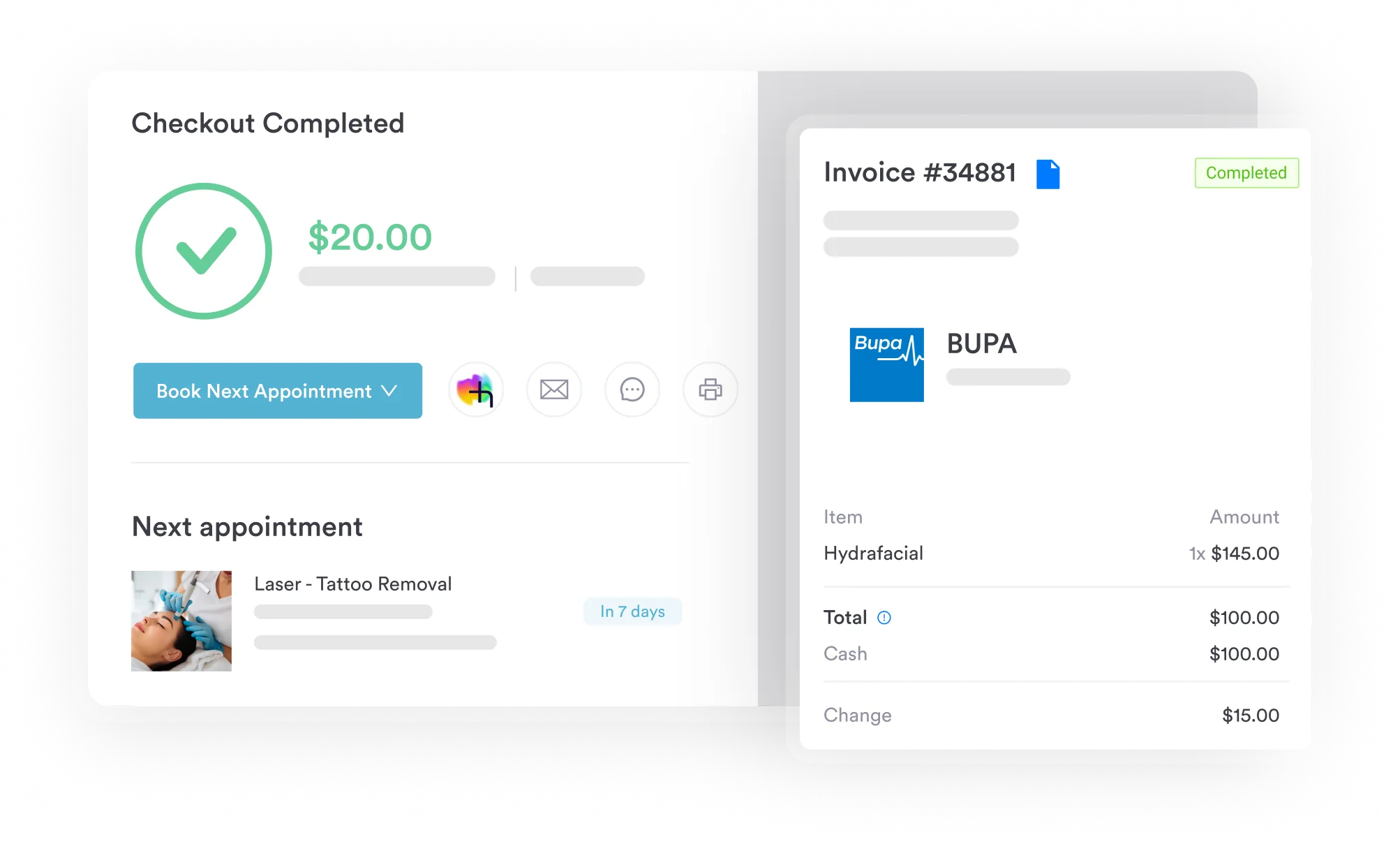
Pabau sends insurer claims through Healthcode, so a G6500 invoice reaches the insurer without a second round of manual data entry.
Open the invoice or claim record for the patient episode and confirm the procedure date, insurer membership number, and pre-authorization reference.
Enter G6500 as the primary procedure code. Do not add separate line items for forceps biopsy, CLO test, or dye spray.
Add accompanying codes where applicable. These include the sedation or anesthesia code and an assistant surgeon code if a second clinician was present. Add the histopathology laboratory code if specimens went for formal analysis.
Attach or reference the endoscopy report in the claim record. Some insurers (particularly Bupa) may request the report during adjudication; having it linked in the system means it can be supplied promptly.
Submit via Healthcode and record the submission timestamp. Set a follow-up prompt for 14 days to check for rejection notices or requests for further information.
Reconcile payment against the submitted fee when the insurer remittance arrives. Any partial payment or adjustment should be queried with the insurer’s provider helpdesk within the allowed timeframe.
Done by hand, those six steps mean rekeying the membership number, pre-authorization reference and code into an insurer portal for every episode. Pabau, a practice management platform, supports UK insurance claims through Healthcode and Bupa, so practices can submit G6500 claims digitally.
With the endoscopy report stored in the same patient record, the billing team can answer an insurer query without searching shared drives. Fewer manual steps leave fewer places for a G6500 claim to go wrong.
Submit G6500 claims without rekeying
Pabau supports UK insurance claims through Healthcode and Bupa, so your team can submit G6500 claims digitally. The endoscopy report stays in the patient record, ready if an insurer queries the claim.
G6500 rewards billing discipline more than coding knowledge. The code itself is simple, but each claim succeeds or fails on whether the endoscopy report, the pre-authorization and the invoice tell the same story.
Code from the signed report, keep the three named components off the invoice, and send the therapeutic code alone when the endoscopist intervened. The trade-off is a slower billing step on procedure day in exchange for fewer queried claims later.
If your team still rekeys every endoscopy claim, that manual step is the easiest one to remove. Book a demo to see how Pabau handles Healthcode and Bupa claims for private endoscopy practices.
Continue your research
Need a billing overview for all your Bupa CCSD codes?Bupa CCSD codes billing guide covers the full schedule of Bupa-recognized procedure codes and their submission requirements.
Looking for a faster way to manage private practice invoicing?Claims management software from Pabau handles Healthcode submission and remittance reconciliation in one workflow.
Frequently asked questions
What does CCSD Code G6500 include?
CCSD Code G6500 is a single bundled code for a diagnostic oesophago-gastro-duodenoscopy (OGD). It includes three named components: forceps biopsy, biopsy urease test (CLO test) and dye spray. The G6500 descriptor names all three, so none is billed separately.
Is forceps biopsy separately billable alongside G6500?
No. Forceps biopsy is named in the G6500 descriptor and is included in the bundled fee. A separate biopsy code on the same claim will be adjusted or rejected by an insurer applying CCSD unbundling rules.
Does G6500 include the biopsy urease (CLO) test?
Yes, the biopsy urease test (CLO test) for Helicobacter pylori is bundled within G6500. Laboratory processing of biopsy specimens sent to an external laboratory is a separate charge under a distinct pathology code.
What is the difference between G6500 and therapeutic OGD CCSD codes?
G6500 covers diagnostic work only: inspection, biopsy, urease testing and dye spray. Therapeutic OGD codes cover interventions such as polypectomy, dilatation, hemostasis and variceal banding. When a therapeutic procedure is performed, bill the therapeutic code alone, without G6500.
Which insurers require pre-authorization for G6500?
Most major UK private medical insurers, including Bupa, AXA Health, Aviva and Vitality, require pre-authorization before a diagnostic OGD. Requirements are policy-specific, so check the insurer’s current benefit schedule before booking the procedure.
Can G6500 and a more limited endoscopy code be billed on the same episode?
No. G6500 covers a full diagnostic OGD reaching the duodenum. A more limited endoscopy carries a different CCSD code, confirmed in the CCSD schedule, and both codes cannot apply to one episode. Code from the anatomical extent documented in the endoscopy report.