HCPCS code G0257: Unscheduled or emergency dialysis billing guide
HCPCS code G0257: Official descriptor and code overview HCPCS code G0257 is defi...

Last Updated: Oct 27, 2026
F5510 is the CCSD code for dilatation of parotid duct. The surgeon widens a narrowed parotid duct, also called Stensen's duct, which carries saliva from the parotid gland into the cheek. It's used when a stricture causes swelling and pain at mealtimes.
The code sits in Chapter 6, section 6.6.0 Salivary Glands, of the schedule UK private medical insurers use to price procedures. The schedule lists eight codes that can't share a claim with it, including F5010, F5110 and F5610. Below, we cover the indications, the operative note, pre-authorization and the checks that keep a claim clean.
Let Pabau's smart automation suggest the right codes, reduce claim denials, and keep your practice compliant—effortlessly.
Automate repetitive tasks and focus on what matters most—your patients.
Reduce coding errors and ensure compliance with the latest regulations.
Clean claims, fewer denials, and faster reimbursements.
Powerful insights and reporting to help your practice thrive.
HIPAA compliant SOC 2 certified GDPR-compliant Trusted by 4,000+ clinics worldwide

CCSD code F5510 covers dilatation of parotid duct, in section 6.6.0 Salivary Glands of the schedule UK private insurers use.
Common indications are ductal stricture, narrowing after a salivary stone and recurrent obstructive sialadenitis.
K11.5, K11.2 and K11.8 are common diagnosis choices, but the code must match the finding in the patient record.
Most UK private insurers expect pre-authorization for planned surgery, and the reference belongs on the claim.
The CCSD schedule lists eight unacceptable combinations with F5510, including F5010, F5110 and F5610.
CCSD code F5510 is the code UK private medical insurers use for dilatation of parotid duct. The surgeon widens a narrowed parotid duct, also called Stensen’s duct, so saliva drains from the gland into the mouth again.
The code sits in chapter 6 (Face, mouth, salivary and thyroid), under section 6.6.0 Salivary Glands. It was added to the schedule on January 20, 2010. The descriptor names the parotid duct only, so a procedure on the submandibular duct takes a different code.
CCSD stands for Clinical Coding and Schedule Development, the group behind the schedule of CCSD codes. Its members are Aviva, AXA Health, Bupa and Vitality. The group sets the codes and their descriptors, while each insurer sets its own fees.
The descriptor doesn’t name a technique, so the operative note should say which method the surgeon used. Check the current entry in the CCSD schedule too, since entries are reviewed over time.
The parotid duct, also called Stensen’s duct, is about 5–7 cm long. It runs from the parotid gland across the masseter muscle, then pierces the buccinator. It opens into the cheek opposite the upper second molar, at a small papilla.
Saliva travels a long course through a muscular wall to reach that opening. Strictures can form at the papilla or at any point along the duct, and each one slows drainage from the gland.
Three mechanisms commonly cause the narrowing that justifies a parotid duct dilatation:
Insurers pay for F5510 when the record shows a clinical reason for it. A vague entry such as “parotid duct problem” won’t support the claim. These indications come up most often:
Dilatation without documented narrowing, or without a record of failed conservative care, is hard to justify to an insurer. It may also be queried after payment.
Parotid duct dilatation can be done under local anesthesia in an outpatient procedure room. Where the patient needs sedation or general anesthesia, it takes place in a day-surgery theater. The core steps are the same in either setting:
Bougie and balloon dilatation are both described in the published literature. Whichever method is used, the operative note should name it, list the instruments and record the findings before and after dilatation.
UK insurers expect a diagnosis on the claim, and an ICD-10 code is the usual way to give it. The CCSD schedule doesn’t tie diagnosis codes to F5510, so treat the table below as suggestions. The right code is the one that matches the finding in the patient record.
Where a stone caused the stricture, K11.5 can be listed first even if the stone has already gone. Confirm the code against the current ICD-10 edition before you submit. An unspecified code such as K11.9 says little about why the duct needed widening, so pick the most specific code the record supports.
Most UK private insurers expect written pre-authorization before planned surgery, and the rules vary by insurer and policy. Contact the patient’s insurer with F5510 and the diagnosis code before you book the procedure. Each insurer publishes its own code and fee lookup:
Have these ready when you request authorization. Our guide to Bupa CCSD codes shows how one insurer applies the schedule.
Record the insurer’s authorization reference on the patient file as soon as you get it. If the planned procedure changes, ask the insurer to update the authorization before surgery, not after the claim is queried.
The salivary codes sit close together in section 6.6.0, and their descriptors often differ by one word. Two questions settle the code: which duct or gland was treated, and what the surgeon did to it. A surgeon who moves the duct opening instead of widening the duct is working under F5010.
Sialendoscopy, where the surgeon examines or treats the duct through a fine scope, isn’t described by the F5510 descriptor. If the surgeon used a sialendoscope, look up the matching code and its combination rules in the schedule. Then decide what goes on the claim.
Most F5510 procedures involve more than one bill, and the schedule also names codes that can’t sit alongside it. Knowing both prevents lost income and denials, and the chart below sets them side by side.
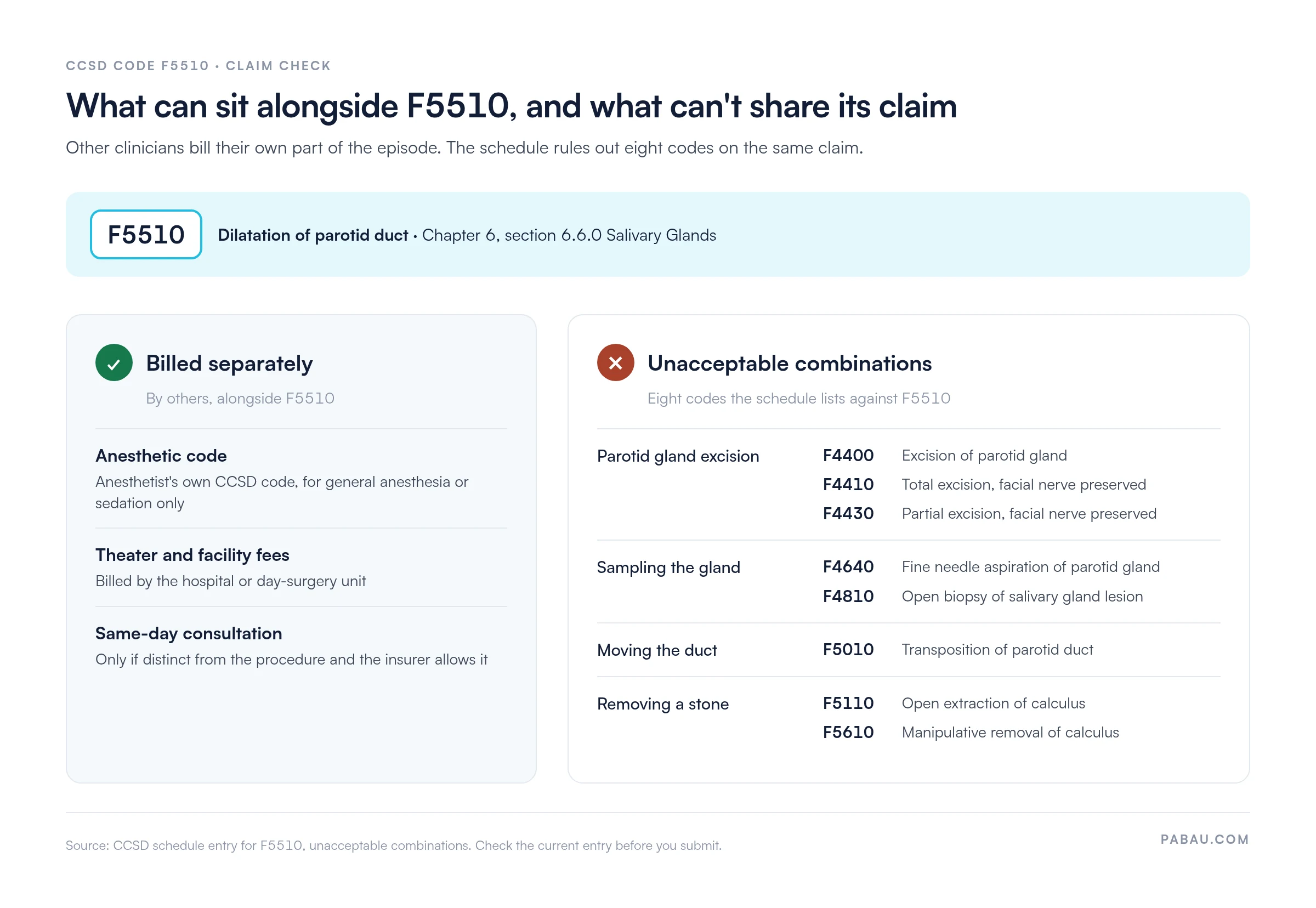
The CCSD schedule lists eight unacceptable combinations with F5510:
Leave these codes off the same claim as F5510 unless the current schedule entry says otherwise. If the surgeon removed a stone and widened the duct in one session, check the entry before you choose which code to submit.
Insurers that audit an F5510 claim look for three points in the record. The indication was appropriate, the procedure matches the code, and the outcome was assessed. Structured digital forms, such as those in Pabau’s practice management software, keep each record complete.
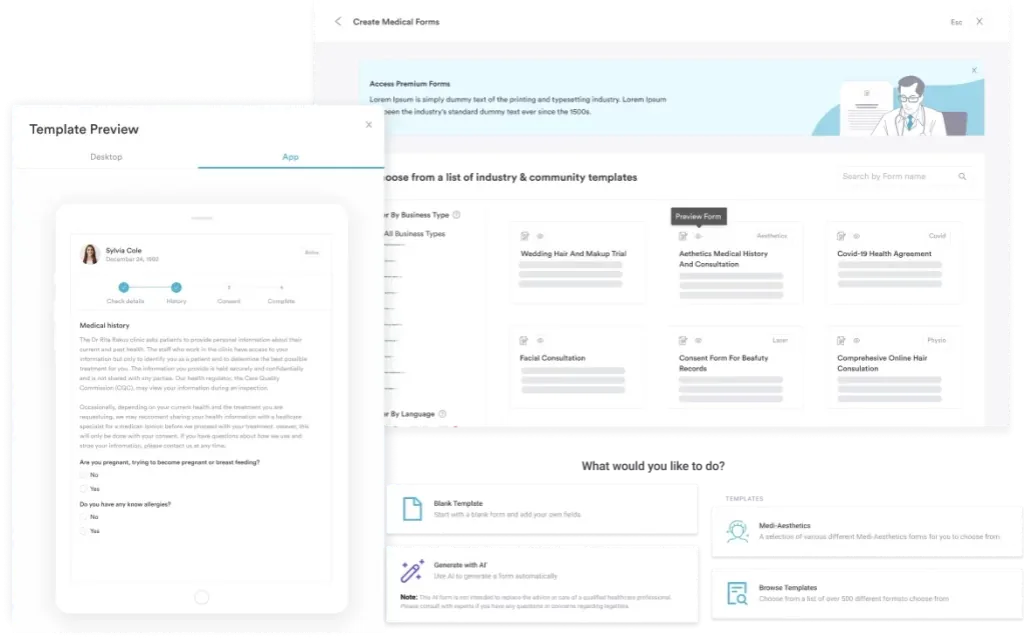
A complete F5510 operative note should include the following:
Most F5510 denials trace back to a missing document or a coding mismatch. Checking each cause below before submission prevents most of them.
Before you resubmit a denied F5510 claim, get the insurer’s written reason. Answer each point in the resubmission, or the claim is likely to come back with the same denial.
For a short procedure like F5510, the paperwork can take longer than the dilatation. The referral arrives by email, the authorization reference by phone and the imaging report as a scan. When they live in different places, one of them goes missing at claim time.
Pabau keeps those pieces on the patient record. You store the insurer’s authorization reference against the patient and attach the referral, imaging report and operative note. Pabau’s claims tools for private practices then pre-fill the claim from that record.
Before the claim goes to Healthcode, Pabau flags missing required fields, such as the membership number or authorization reference. Your team answers fewer insurer queries, while coding decisions stay with your coder.
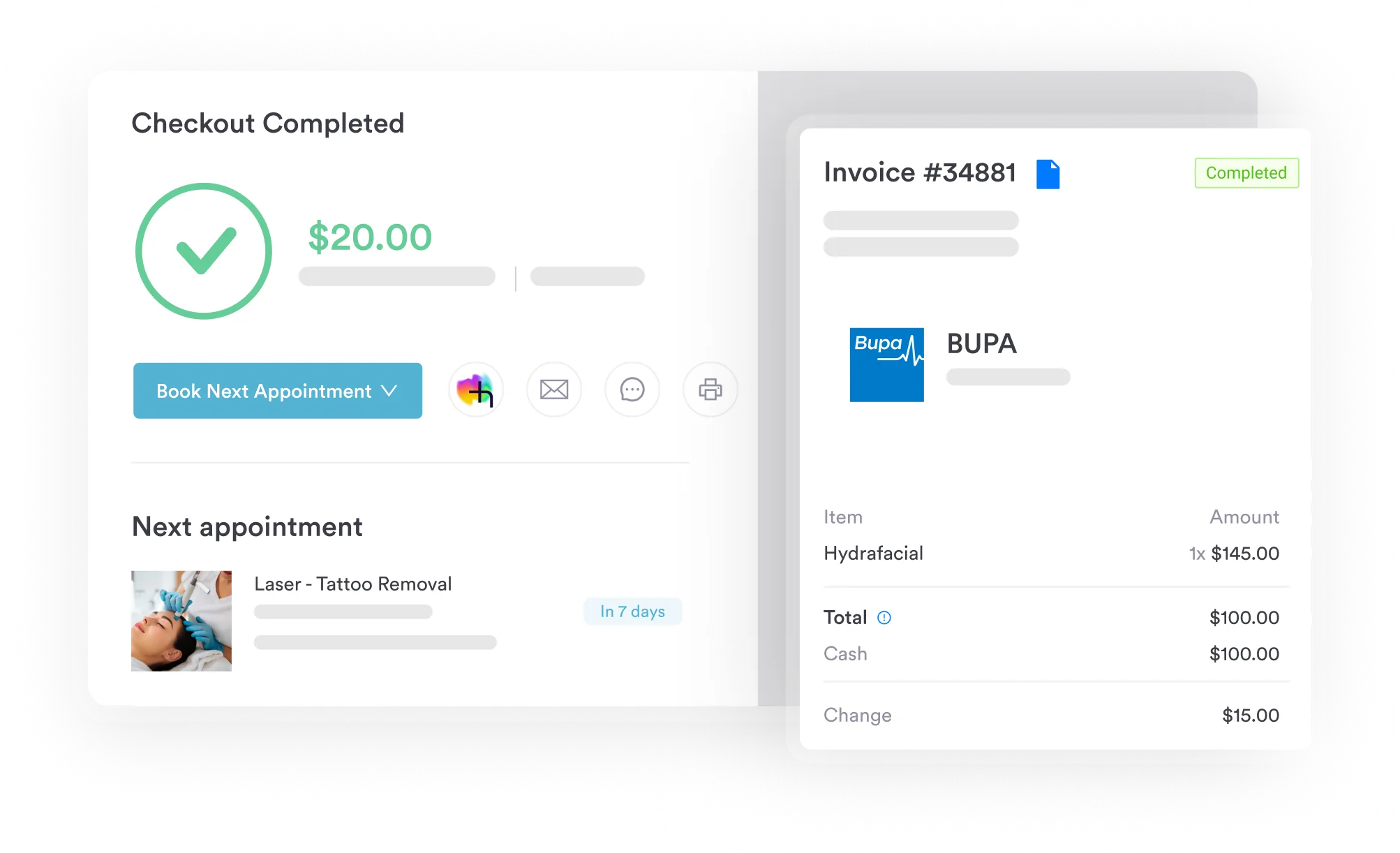
Keeping the authorization reference, referral and operative note together saves your team from chasing missing details. If you want to see how that works for your own CCSD claims, book a short demo below.

Pabau stores the insurer’s authorization reference on the patient record, pre-fills the claim and flags missing required fields before it goes to Healthcode. See how it fits your practice.

F5510 is a short procedure with a clear descriptor, so it rarely fails on the code itself. It fails when the claim can’t show why the duct needed widening, or when it carries a code the schedule won’t accept alongside it.
So settle both points before the patient reaches theater. Confirm the diagnosis and the authorization at booking. Then check the claim against the eight listed combinations before it leaves the practice.
Book a demo to see how Pabau keeps authorization references, notes and claim fields together for your CCSD billing.

Billing a parotid duct transposition instead? CCSD code F5010 covers moving the parotid duct opening, one of the codes the schedule won’t accept with F5510.
Coding a biopsy of a salivary gland lump? CCSD code F4810 covers open biopsy of a salivary gland lesion, from the same section of the schedule.
Want the insurer’s view of the schedule? Bupa CCSD codes explains how Bupa applies CCSD codes and what it expects on a clean claim.
Coding a parotidectomy? CCSD code F4400 covers excision of the parotid gland, another code the schedule won’t accept with F5510.
F5510 covers dilatation of the parotid duct, also called Stensen’s duct. The surgeon widens a narrowed duct when a stricture causes recurrent swelling and pain. It doesn’t cover stone removal, duct transposition or a submandibular duct procedure, which have their own codes.
The CCSD schedule doesn’t link diagnosis codes to F5510, but K11.5 (sialolithiasis), K11.2 (sialoadenitis) and K11.8 (other diseases of salivary glands) are common choices. Pick the code that matches the finding in the patient record.
Most UK private insurers expect authorization before planned surgery, and the rules vary by insurer and policy. Contact the patient’s insurer, such as Bupa, AXA Health, Aviva or Vitality, with the procedure and diagnosis codes before booking. Record the authorization reference and put it on the claim.
F5510 describes dilatation of the parotid duct and names no technique. Sialendoscopy means the surgeon examines or treats the duct through a fine scope. If a sialendoscope was used, check the schedule for the matching code and its combination rules before adding F5510.
The CCSD schedule lists eight unacceptable combinations with F5510: F4400, F4410, F4430, F4640, F4810, F5010, F5110 and F5610. They cover parotid gland excision, needle aspiration, open biopsy, duct transposition and parotid stone removal.
The usual causes are missing pre-authorization, a non-specific diagnosis code and thin clinical justification. Wrong code selection, an unacceptable code combination and duplicate submissions come up too. Checking each one before submission prevents most denials.
When an anesthetist gives general anesthesia or sedation, they bill their own CCSD anesthetic code. F5510 covers the surgeon’s part only. When the surgeon gives local anesthetic alone, no separate anesthetic code is added.