HCPCS code Q4154: Biovance billing, Medicare rate and denial guide
HCPCS code Q4154: definition and code details HCPCS code Q4154 is a Level II cod...

Last Updated: Oct 6, 2026
C7181 is the CCSD code for cataract anaesthetic standby.
Let Pabau's smart automation suggest the right codes, reduce claim denials, and keep your practice compliant—effortlessly.
Automate repetitive tasks and focus on what matters most—your patients.
Reduce coding errors and ensure compliance with the latest regulations.
Clean claims, fewer denials, and faster reimbursements.
Powerful insights and reporting to help your practice thrive.
HIPAA compliant SOC 2 certified GDPR-compliant Trusted by 4,000+ clinics worldwide

CCSD code C7181 covers the consultant anaesthetist’s standby role during cataract surgery, not active sedation or GA
The code applies most often to phacoemulsification under topical or regional block where no active anaesthetic agent is administered by the anaesthetist
Documentation must explicitly record the anaesthetist’s attendance and standby role; records showing active sedation or GA delivered will invalidate the code
Pre-authorisation is typically required before the anaesthetist bills C7181 separately from the surgeon’s claim; check each insurer’s current policy
Pabau’s claims management tools can store CCSD codes, automate pre-authorisation workflows, and attach clinical documentation before submission
CCSD code C7181 describes “cataract anaesthetic standby” as defined by the CCSD Schedule. It applies when a consultant anaesthetist attends a cataract procedure specifically to monitor the patient and stand ready to intervene, but does not administer an active anaesthetic agent such as propofol sedation or a general anaesthetic.
The code reflects the resource and risk associated with having a dedicated anaesthetist present, even when the surgeon proceeds under topical drops or a regional block placed by the ophthalmologist.
The distinction matters because C7181 sits in a category of its own within the CCSD ophthalmology codes. It is not interchangeable with codes for performed sedation or for full general anaesthesia, and it is not a downgrade of those codes. It describes a specific, defined clinical role.
During a C7181 standby, the anaesthetist performs several active duties despite not administering a primary anaesthetic agent.
These include: continuous monitoring of vital signs (heart rate, blood pressure, oxygen saturation), managing patient anxiety, administering supplemental oxygen where indicated, and remaining immediately available to convert to intravenous sedation or general anaesthesia if the patient becomes uncooperative, the procedure is complicated, or a medical emergency arises.
The procedures most commonly associated with C7181 are phacoemulsification with intraocular lens implantation under topical anaesthesia, and cataract procedures under peribulbar block or sub-Tenon block where the block is administered by the ophthalmologist.
In both scenarios the surgeon manages the anaesthetic agent while the anaesthetist maintains the monitoring and safety role.
Standby differs from monitored anaesthesia care (MAC) as used in US coding. In the UK private system, C7181 is a discrete code with its own fee; it does not scale with time the way MAC coding does in the American CPT system. The anaesthetist either attended in a standby role for the procedure or did not.
Standby anaesthesia is clinically indicated, and C7181 therefore billable, in a range of situations. No single rule governs every case; the decision rests on clinical judgment documented before or during the procedure.
The Royal College of Anaesthetists and the Royal College of Ophthalmologists both recognise the role of the anaesthetist in ophthalmic procedures under local or regional anaesthesia. Guidance from the Association of Anaesthetists of Great Britain and Ireland (AAGBI) supports documenting the clinical rationale for anaesthetist attendance as part of the pre-assessment record.
The most common miscoding errors involve billing a sedation or general anaesthetic code when C7181 is correct, or billing C7181 when the anaesthetist actually administered active sedation. The table below summarises the key distinctions. Specific descriptors for C7180 and C7182 should be verified against the current CCSD Schedule, as descriptors are subject to revision.
Billing error to avoid: if your anaesthetic record shows that propofol, midazolam, or another sedative agent was administered by the anaesthetist, C7181 is not the correct code regardless of the original intention. Code the service that was actually delivered.
Insufficient documentation is the single most preventable cause of C7181 denials. The clinical record must contain four specific elements for the claim to be defensible.
The surgeon’s operative note should confirm the procedure performed (e.g. phacoemulsification with IOL implantation) and the anaesthetic technique used (e.g. topical drops placed by surgeon). This corroborates the anaesthetist’s record and establishes that the procedure is one for which standby is clinically appropriate.
Using digital clinical forms that include a structured anaesthetic standby field prevents the most common documentation failure: the anaesthetist’s role is ambiguous because the record template never prompted them to record it clearly.
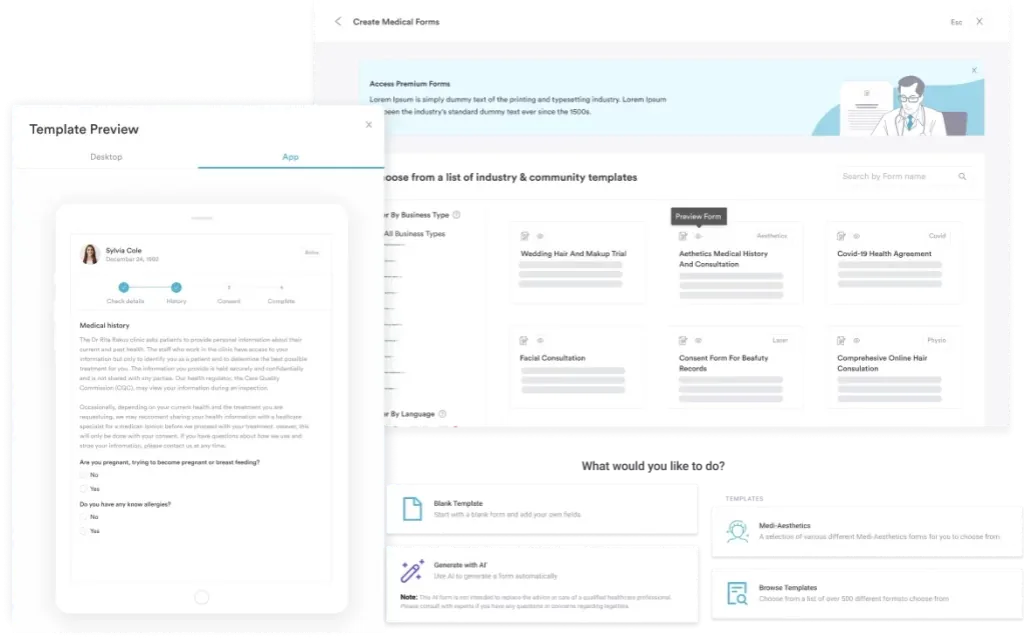
Create a dedicated anaesthetic standby note template that includes five fixed fields: anaesthetist name, procedure attended, technique used by surgeon, standby role confirmed (yes/no), and no agent administered (yes/no). Completing five checkboxes takes 30 seconds and closes the documentation gap that causes the majority of C7181 denials.
The anaesthetist submits C7181 independently. It is not bundled into the surgeon’s claim and does not share a pre-authorisation reference with the surgical code unless the insurer specifically instructs otherwise.
The four major UK private medical insurers each handle C7181 claims, but their pre-authorisation requirements and fee schedules differ. All figures below are indicative; verify current schedules directly with each insurer before invoicing, as fee schedules are updated annually and sometimes mid-year. You can also check the Bupa CCSD procedure codes guide for additional Bupa-specific coding context.
Pre-authorisation requirements are the element most likely to change without notice. Build a standing practice of confirming coverage before each booking rather than relying on a previous authorisation for another patient’s procedure.
Denials for anaesthetic standby claims follow a recognisable pattern. Each cause has a practical mitigation.
The most consequential of these is the documentation failure. An insurer reviewing a denied C7181 claim will request the anaesthetic record. If that record does not clearly state that the anaesthetist was present in a standby capacity without administering an agent, the claim will not be overturned on appeal regardless of what actually occurred during the procedure.
C7181 is an anaesthetist-side code. It sits alongside, not within, the surgeon’s claim. Understanding how the two submissions relate prevents bundling errors and duplicate-billing flags.
The ophthalmologist billing for phacoemulsification with IOL implantation will typically use the relevant CCSD surgical codes for those procedures. The anaesthetist submits C7181 as a separate claim against the same pre-authorisation episode. Neither code replaces or bundles the other; insurers receive two distinct invoices for the same surgical episode.
Set up a brief pre-procedure communication protocol between the surgeon’s practice manager and the anaesthetist’s billing team. Confirming the pre-authorisation reference number, the CCSD surgical codes being used, and the agreed date of service before the operation date eliminates the most common concurrent-billing conflicts before they reach the insurer.
Private anaesthesia practices billing C7181 across multiple hospitals and insurers face a recurring administrative challenge: pre-authorisation references expire, fee schedules update without notice, and documentation gaps surface only when a claim bounces. Practice management software addresses each of these failure points.
Pabau’s claims management software allows anaesthetic practices to store CCSD codes against specific procedure types, attach clinical documentation to claim records before submission, and track outstanding pre-authorisations by patient and insurer. This reduces the manual cross-referencing that generates most standby billing errors.
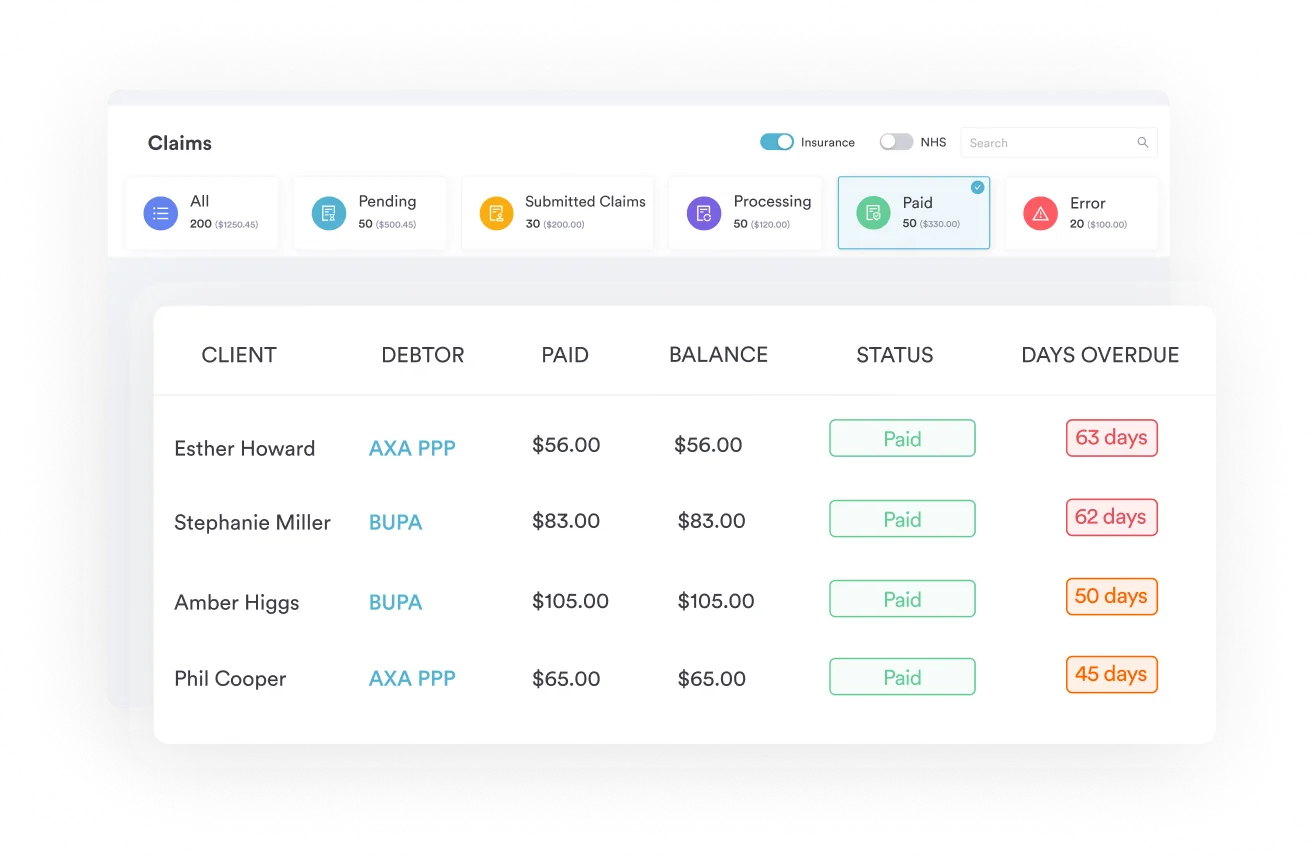
Practices focused on private practice management also benefit from automated workflows that flag when a booking lacks a pre-authorisation reference, prompting the team to obtain one before the procedure date rather than discovering the omission at claim submission.
Combined with digital clinical forms that include structured anaesthetic standby fields, the documentation and billing cycle becomes a single connected workflow rather than a series of manual steps.
The time-saving features for private practices that matter most for anaesthetic billing are the ones that prevent rework: claim submission with documentation attached, pre-auth tracking, and CCSD code validation before the invoice leaves the practice. Catching an error before it reaches the insurer is materially cheaper than managing a denial and resubmission cycle.
If you would like to see how Pabau handles CCSD billing workflows for anaesthetic and ophthalmology practices, book a demo and we can walk through the setup for your practice type.
CCSD code C7181 is a specific, well-defined code for a specific clinical role. The code works when the documentation is right, the pre-authorisation is in place, and the submitted service matches what actually occurred. Where claims fail, it is almost always because one of those three conditions was not met.
For anaesthetic practices managing several private ophthalmology lists each week, that discipline is easiest to maintain through structured templates and an integrated billing workflow. Pabau’s practice management platform is built to support exactly that. Book a demo to see how it fits a private anaesthesia or ophthalmology billing setup.

Need a comprehensive reference for Bupa billing? Bupa CCSD codes guide covers the structure of the Bupa procedure schedule, recognition requirements, and how to look up codes for private billing.
Looking to reduce billing errors across your private practice? Claims management software from Pabau tracks CCSD codes, pre-authorisations, and documentation attachments in one place.
Want to understand how digital forms reduce documentation denials? Digital forms for clinical practices explains how structured templates capture the fields insurers require at claim review.
CCSD code C7181 is the UK private healthcare billing code for cataract anaesthetic standby, covering the consultant anaesthetist’s attendance in a monitoring and readiness role during cataract surgery without the administration of an active anaesthetic agent such as sedation or general anaesthesia.
Yes. C7181 is specifically designed for procedures where topical or regional anaesthesia is used by the surgeon and the anaesthetist attends in a standby capacity. The code does not require the anaesthetist to have administered any agent; it covers their attendance, monitoring, and readiness to intervene.
The anaesthetic record must confirm: the anaesthetist’s attendance, that the role was standby rather than active sedation or GA, the clinical rationale for anaesthetist presence, and the duration of attendance. The surgeon’s operative note should corroborate the procedure performed and the anaesthetic technique used.
Bill C7181 when the anaesthetist attended in a standby role only and did not administer an active anaesthetic agent. Bill the appropriate sedation or GA code when an active agent was administered. If the procedure converted from standby to active anaesthesia during surgery, bill the code that reflects the service actually delivered.
The most common denial reason is inadequate documentation of the standby role. If the anaesthetic record does not explicitly state that the anaesthetist was present in a standby capacity without administering an agent, insurers will not accept the claim on appeal. Missing pre-authorisation and incorrect code selection (billing a sedation code instead of C7181) are the next most frequent causes.
Yes. C7181 is an anaesthetist-side code submitted independently of the surgeon’s claim. Both claims reference the same pre-authorisation episode and date of service, but they are submitted as separate invoices. Confirm the shared pre-authorisation reference with the surgeon’s billing team before submission to avoid conflicts.