CPT Code 69610: Tympanic membrane patch repair (myringoplasty)
CPT code 69610: official descriptor and procedure overview CPT code 69610 descri...

Last Updated: Oct 19, 2026
A7620 is the CCSD code for thoracic sympathectomy therapeutic (neurolytic under X-ray control). It covers a chemical block of the thoracic sympathetic chain. Phenol or ethanol is injected under fluoroscopy to interrupt sympathetic activity for the long term.
The code sits in the Sympathetic Nerves category of Chapter 3 of the CCSD schedule, at the Major complexity band. A diagnostic block with local anesthetic is A7520, and surgical resection of the chain takes a different code. Fluoroscopy is part of the descriptor, so a procedure done without X-ray guidance falls outside A7620.
Let Pabau's smart automation suggest the right codes, reduce claim denials, and keep your practice compliant—effortlessly.
Automate repetitive tasks and focus on what matters most—your patients.
Reduce coding errors and ensure compliance with the latest regulations.
Clean claims, fewer denials, and faster reimbursements.
Powerful insights and reporting to help your practice thrive.
HIPAA compliant SOC 2 certified GDPR-compliant Trusted by 4,000+ clinics worldwide

CCSD Code A7620 covers thoracic sympathectomy with a neurolytic agent, performed under X-ray (fluoroscopy) control.
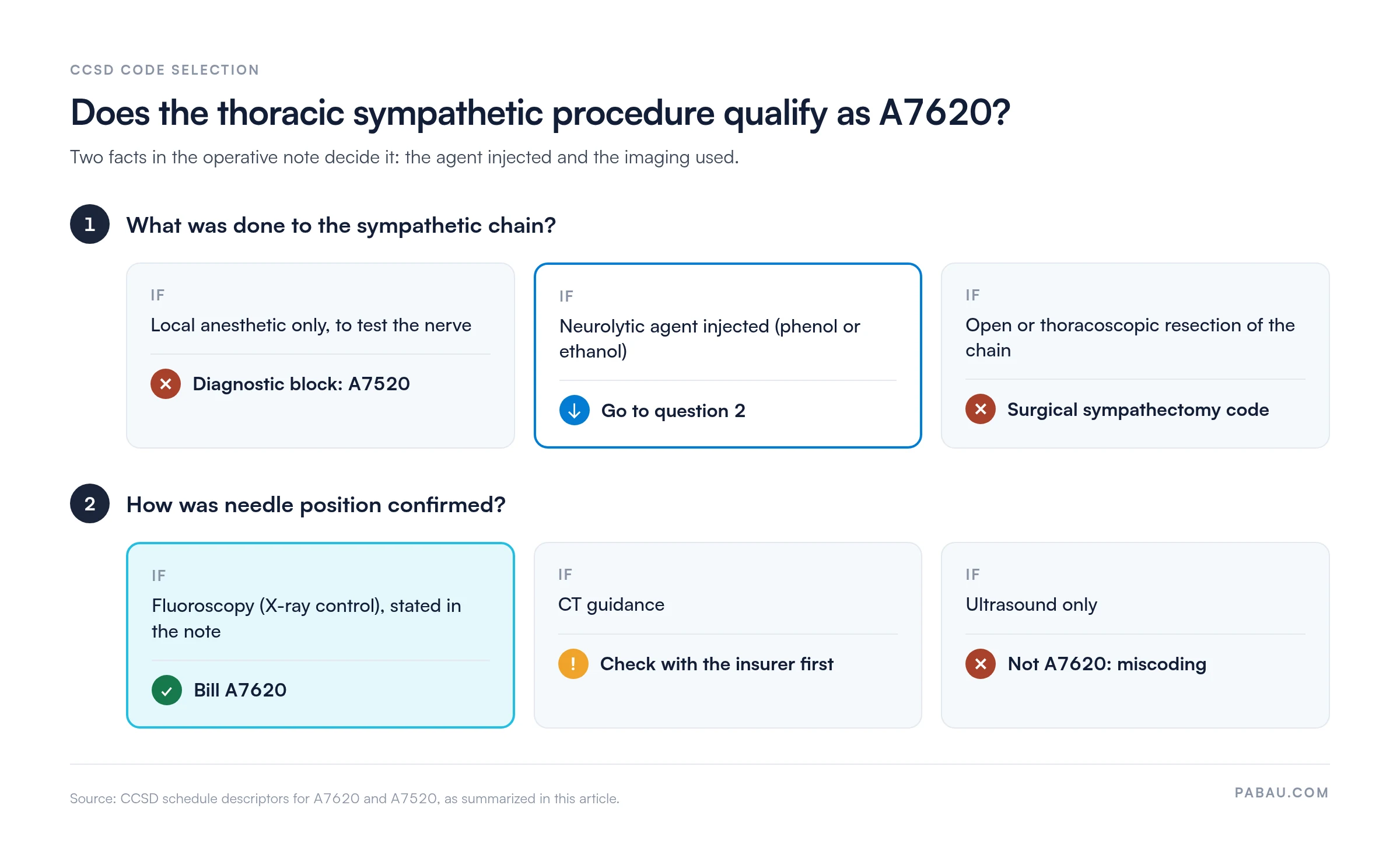
A diagnostic block with local anesthetic bills as A7520, and open or thoracoscopic resection takes a surgical code.
Fluoroscopy is written into the A7620 descriptor, so a procedure without documented X-ray control can’t be billed under it.
UK private insurers typically require pre-authorization, a confirmed refractory diagnosis and a recognized consultant before the procedure.
Practice management software like Pabau checks for membership numbers and authorization codes before an A7620 claim reaches the insurer.
CCSD Code A7620 is the CCSD coding schedule entry for a therapeutic thoracic sympathectomy, performed with a neurolytic agent under X-ray control. The consultant injects phenol or ethanol into the thoracic sympathetic chain under fluoroscopy to interrupt the nerves for the long term.
Two neighboring procedures often get confused with it. A diagnostic sympathetic block uses local anesthetic to test whether the nerve drives the patient’s symptoms, and it bills as A7520. Surgical sympathectomy, an open or thoracoscopic resection of the chain, falls under a separate CCSD code. When that resection is keyhole surgery on one side, the code is A7560.
If the keyhole resection covers both sides in one session, the code is A7561. The number of sides treated decides which of the two surgical codes the claim carries.
A7620 sits in the Sympathetic Nerves category of Chapter 3, “Spine, spinal cord and peripheral nerves,” at the Major complexity band. UK private medical insurers reimburse it when a recognized consultant performs it, typically a pain medicine specialist, anesthetist or thoracic surgeon. The setting must be a private hospital or day-case unit regulated by the Care Quality Commission (CQC) in England.
A7620 covers chemical ablation of the thoracic sympathetic chain, typically at one or more levels between T2 and T5. The consultant guides a needle under fluoroscopy to the paravertebral gutter beside the sympathetic ganglia. A neurolytic agent is then injected to interrupt sympathetic tone for the long term.
The operative note needs to record each of these steps:
Each step feeds the documentation behind a valid A7620 claim. If the note skips fluoroscopy or omits the agent and its volume, the insurer has grounds to query or deny the claim. A procedure note template with a required field for each step stops those omissions at the source.
Private insurers expect the clinical indication to be documented before they authorize A7620. The British Pain Society and published pain medicine literature support these indications for thoracic neurolytic sympathectomy:
Before granting pre-authorization, insurers commonly ask for a GP or specialist referral letter, confirmation of the diagnosis, and evidence that conservative options have been exhausted.
The phrase “under X-ray control” is written into the official A7620 descriptor, so fluoroscopy guidance is a condition of the code. A thoracic sympathectomy performed without X-ray imaging can’t be billed as A7620.
That wording creates three billing risks to manage:
The safest approach is one explicit statement in the operative note. For example: “The procedure was performed under continuous fluoroscopic guidance. Needle position was confirmed under X-ray control before injection.” That wording answers the most common documentation query on A7620 claims before the insurer raises it.
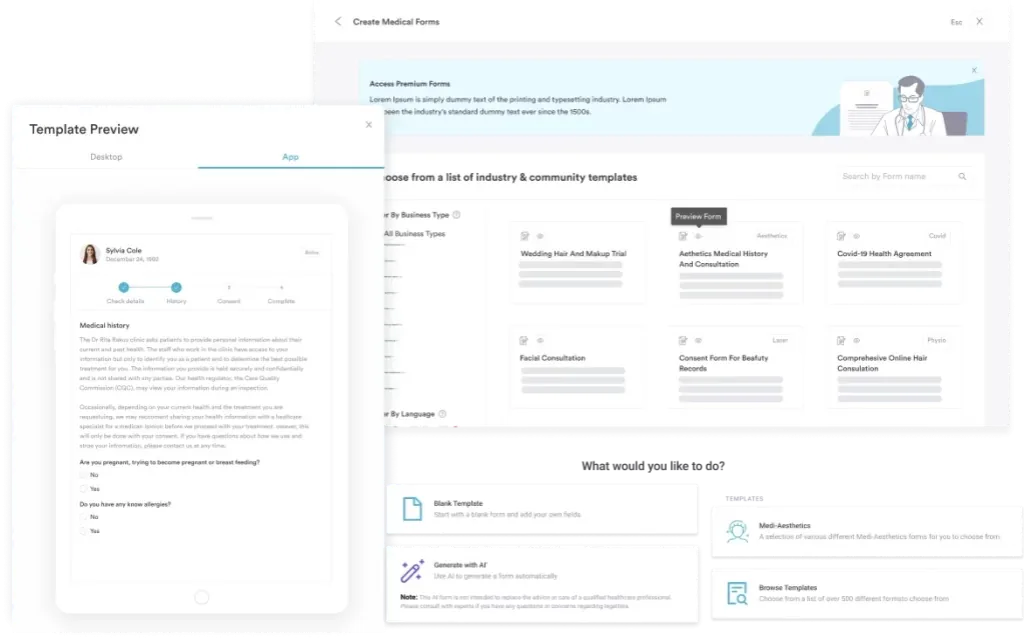
Build an A7620 procedure note template with required fields for imaging modality, needle level, neurolytic agent, volume and concentration. Add a checkbox confirming X-ray control. Used consistently across your team, it prevents the most common documentation errors without adding consultation time.
Billing A7620 in a UK private practice follows the same sequence every time. Getting each step right before the procedure prevents most claim delays.
All four major UK private medical insurers typically require pre-authorization before a neurolytic sympathectomy. Typical requirements from Bupa, AXA Health, Aviva and Vitality Health include:
Authorization requirements vary by insurer and change periodically. Treat this list as typical practice rather than policy, and confirm current rules with each insurer before the procedure date.
The operative note submitted with an A7620 claim should confirm each element below. An invoice without supporting documentation is a common cause of delayed payment or outright denial.
Digital clinical forms can make each of these fields mandatory before the note is finalized. That matters most in high-volume interventional pain units, where documentation errors build up quickly.
A7620 belongs to a family of CCSD codes for neurolytic and sympathetic nerve procedures. Phenol, radiofrequency or cryoprobe destruction of a named peripheral nerve is coded as A7300. Knowing the adjacent codes reduces unbundling errors and prevents upcoding or downcoding.
Three coding errors come up repeatedly in A7620 billing audits:
The decision below runs both tests from the operative note, the agent injected and the imaging used, before you commit to a code.
A7620 claims are denied for a predictable set of reasons, and each one is preventable with a pre-procedure checklist.
Appeals against A7620 denials usually succeed when the denial is about documentation rather than eligibility. Keep supporting documents, authorization references and imaging reports in the patient record, so they can go out with an appeal without delay.
Many private practices still prepare A7620 invoices by hand, copying authorization references and consultant details from emails and paper notes. Each copy is a chance for a transcription error or a missing attachment, and the insurer sends the claim back.
Practice management software like Pabau links each patient to their insurer and pulls the membership number and authorization code into the invoice. Its medical claims management tools send the claim through Healthcode or by email, straight from the patient record.
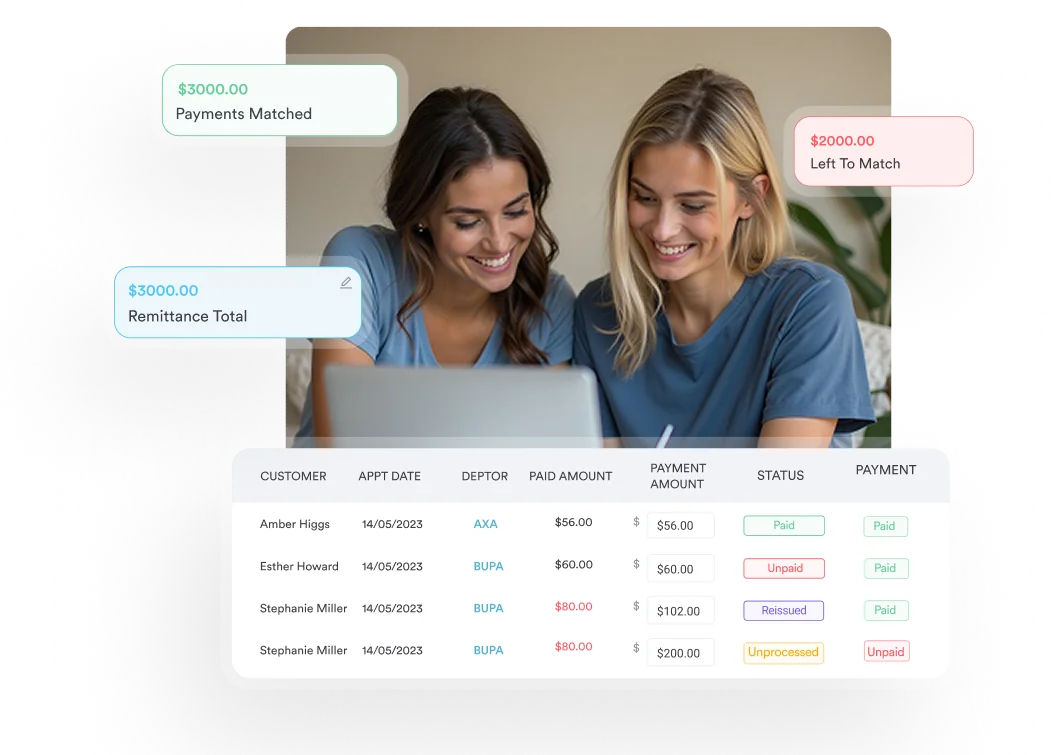
Before a claim goes out, Pabau runs validation checks for the details insurers need, like membership numbers and authorization codes. If something’s missing, Pabau flags it before the claim is sent. A typical A7620 billing workflow in Pabau runs in five steps:
Keeping the clinical documentation and the billing record together makes appeals simpler if a claim is queried. That helps most when one consultant performs A7620 for several insurers with different submission rules.
Review your A7620 claim acceptance rate every quarter. If denials cluster around one insurer or consultant, compare the authorization, grade recognition and documentation steps for that combination. A run of denials from one payer usually traces back to how that payer’s claims are prepared.

Raise CCSD-coded invoices for A7620, attach the operative note and authorization, and send claims to UK insurers through Healthcode without leaving Pabau.

A7620 pays reliably for the practices that settle the code before the needle goes in. Confirm the agent, the imaging and the authorization reference at booking, and the operative note becomes a formality instead of a rescue job.
The cost is a few minutes of setup per note template and per insurer. Skip it, and each denied claim costs a resubmission, an appeal letter and a delayed payment.
Book a demo to see how Pabau checks A7620 claims for missing authorization codes before they reach Bupa, AXA Health, Aviva or Vitality.

Billing A7620 to Bupa? Bupa CCSD codes covers Bupa’s code requirements, consultant recognition and submission expectations in one place.
Checking what Bupa pays for a CCSD code? Bupa procedure codes fee schedule explains how Bupa sets reimbursement for covered procedures.
Comparing billing systems for a UK practice? Best medical billing software in the UK ranks the platforms that handle insurer claims for private practices.
CCSD Code A7620 covers a therapeutic thoracic sympathectomy. A neurolytic agent such as phenol or ethanol is injected into the thoracic sympathetic chain under X-ray (fluoroscopy) control. The aim is a lasting interruption of sympathetic signaling. Diagnostic blocks bill as A7520, while surgical resection and lumbar or celiac plexus procedures have their own codes.
Yes, in practice. Bupa, AXA Health, Aviva and Vitality typically require pre-authorization before a neurolytic sympathectomy is performed. They expect a referral letter, a confirmed diagnosis and evidence of failed conservative treatment. Performing the procedure before you have an authorization reference number is the most common reason for outright denial.
No. The A7620 descriptor specifies “under X-ray control,” which here means fluoroscopy. Ultrasound-guided sympathetic blocks are a different technique and don’t meet that requirement, so submitting A7620 for one is a miscoding error. If you use another imaging modality, check the CCSD schedule and talk to the insurer before choosing a code.
It depends on the insurer and the patient’s policy terms. Hyperhidrosis is a recognized indication for thoracic sympathectomy. Some insurers still ask for evidence of significant functional impairment and documented failure of topical aluminum chloride, iontophoresis and botulinum toxin. Confirm coverage and pre-authorization requirements with the insurer before scheduling.
The three most frequent are a missing authorization reference, fluoroscopy not confirmed in the operative note, and a diagnostic block miscoded as neurolytic. Next come an unrecognized consultant grade, a missing referral letter and an undocumented clinical indication. A pre-procedure checklist and a standard procedure note template prevent all six.