

HCPCS code E0198: Water pressure pad billing guide
HCPCS code E0198 is a water pad for a standard mattress HCPCS code E0198 is the ...

Last Updated: Oct 13, 2026
A7520 is the CCSD code for a thoracic sympathectomy diagnostic block, performed with local anaesthetic under X-ray control. It is a temporary, prognostic procedure used to confirm that symptoms are sympathetically mediated before definitive treatment is planned.
The code sits in the sympathetic nerves category of chapter 3 of the CCSD schedule, at the Intermediate complexity band. Fluoroscopic guidance is part of the descriptor, so a block performed without imaging falls outside A7520.
Let Pabau's smart automation suggest the right codes, reduce claim denials, and keep your practice compliant—effortlessly.
Automate repetitive tasks and focus on what matters most—your patients.
Reduce coding errors and ensure compliance with the latest regulations.
Clean claims, fewer denials, and faster reimbursements.
Powerful insights and reporting to help your practice thrive.
HIPAA compliant SOC 2 certified GDPR-compliant Trusted by 4,000+ clinics worldwide

CCSD Code A7520 covers a diagnostic thoracic sympathetic block using local anaesthetic under X-ray control.
Fluoroscopic guidance is part of the code descriptor, so a missing confirmation line in the operative note is the leading cause of rejection.
Clinical indications include primary hyperhidrosis, Raynaud’s phenomenon, and complex regional pain syndrome where the clinician suspects sympathetic mediation.
The neighbouring codes A7500, A7530 and A7600 are all lumbar, so none of them covers a thoracic block.
Pabau’s procedure documentation and pre-authorisation tracking help private practice teams submit clean A7520 claims.
CCSD Code A7520 sits in the sympathetic nerves category of the UK private practice coding schedule maintained by the Clinical Coding and Schedule Development group. Its official descriptor is: Thoracic sympathectomy diagnostic (local anaesthetic under X-ray control). Every word in that descriptor carries billing significance.
The CCSD official schedule groups A7520 with the lumbar sympathectomy codes, both diagnostic and therapeutic. Knowing where A7520 sits in that family matters when the clinical picture moves from a diagnostic block to definitive treatment. A keyhole sympathectomy on one side of the chest carries its own code, A7560.
The procedure targets the thoracic sympathetic chain, a paired structure running lateral to the vertebral bodies along the posterior mediastinum. Under CCSD Code A7520, the clinician performs the block with fluoroscopic imaging active throughout needle placement to confirm accurate positioning before injection.
Fluoroscopic guidance forms part of the code descriptor itself, so the procedure billed as A7520 is the imaging-guided version of the block. A clinician performing a thoracic sympathetic block without radiological guidance is performing a different procedure and should not use this code.
A7520 is appropriate when a clinician needs diagnostic confirmation that sympathetic activity drives the patient’s symptoms before committing to a definitive procedure. The block provides a temporary, reversible sympatholysis that serves as a prognostic test. Accepted clinical indications in UK private practice include:
Insurers will look for a documented indication on every A7520 claim. A vague entry such as “upper limb pain” without a confirmed or working diagnosis will trigger a clinical review request and may result in rejection.
The distinction between diagnostic and therapeutic sympathectomy codes is the most common source of miscoding in this procedure family. A7520 is a diagnostic code only. Using it when the clinician employed a therapeutic agent or ablative technique is incorrect, and auditors will reject the claim.
On the thoracic chain, that separate therapeutic code is A7620, which covers a neurolytic block under X-ray control.
Did the session include both a diagnostic block and a therapeutic injection on the same day? Seek guidance from the insurer before submitting dual codes. Most UK private medical insurers will not fund both on a single date of service without specific policy provision.
A7520 sits within a small family of sympathectomy codes in the CCSD schedule. Knowing the adjacent codes reduces the risk of under- or over-coding when the site, agent, or approach differs from the A7520 descriptor.
Two traps sit in that short list. A7500 and A7600 are lumbar codes, so neither one covers a thoracic block, and A7530 describes a laparoscopic operation rather than an injection under imaging.
Check the wider CCSD procedure codes reference and the CCSD technical guide (updated October 2025) before you submit, since CCSD revises the schedule annually.
Missing or incomplete documentation is the primary reason UK private medical insurers reject A7520 claims. Every operative note submitted with this code must contain a specific set of elements. Structured procedure documentation beats a free-text note here, because the template prompts each mandatory element instead of relying on memory.
For practices running several interventional lists a week, procedure-specific documentation templates make sure the team completes every mandatory field before the claim reaches billing. Once an incomplete note reaches the billing stage, the practice often cannot correct it inside the insurer submission window.
Most UK private medical insurers require pre-authorisation before they will fund procedures billed under A7520. Insurers use it to assess clinical appropriateness before the procedure takes place. Performing the block without approval exposes the practice to outright rejection on clinical grounds.
Standard pre-authorisation requirements across major UK insurers (Bupa, AXA Health, Vitality, Aviva, Cigna) for interventional sympathectomy procedures typically include:
Some insurers will not fund a diagnostic block unless there is an explicit plan for definitive treatment if the block is positive. A pre-auth request for A7520 without a documented treatment pathway invites a policy-coverage query.
Check the Bupa CCSD codes guide and the Bupa code search portal to confirm policy requirements before you submit. Fee bands differ between insurers, so confirm the band that applies to this patient’s policy at the same time.

Pabau helps UK private practice teams track pre-authorisation, generate structured procedure documentation, and submit clean CCSD claims. See how it works for interventional pain and surgical practices.

Insurers reject A7520 claims for a predictable set of reasons, and each one has a matching preventive step. Use the following as a pre-submission audit checklist for every A7520 claim your practice sends.
Each of those failures belongs to a single stage of the claim, from the referral letter through to submission.
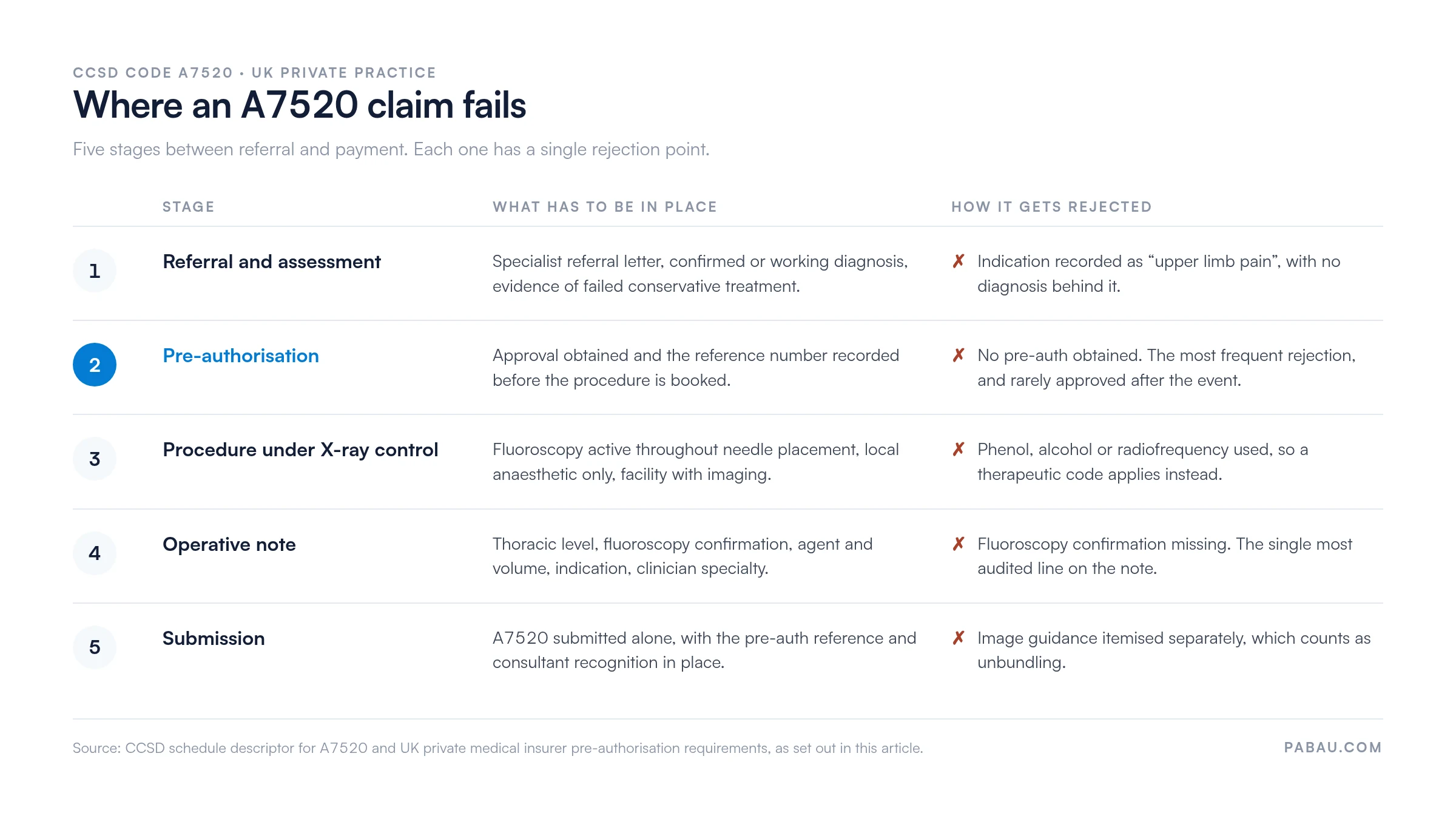
The phrase “under X-ray control” in the A7520 descriptor means fluoroscopic guidance is a bundled component of the code, not a separately billable item. Billing a standalone image-guidance code alongside A7520 constitutes unbundling, and insurers applying CCSD bundling rules will reject it or flag it for audit.
Bundling rules vary by insurer. Several publish their own unbundling guidance for CCSD-coded procedures, so check the current fee schedule for this patient’s insurer before submitting combination codes. Treating one insurer’s rule as universal is a common billing error.
Submitting an A7520 claim with a secondary code? Ask the insurer for a written statement on whether the patient’s policy permits that combination. Verbal approvals from pre-auth teams are not binding at the claims adjudication stage. Document every insurer contact, including the agent name, date, and reference number.
UK private medical insurers restrict A7520 payment to clinicians holding recognised specialties for interventional sympathectomy procedures. Performing the procedure outside a recognised specialty will result in claim rejection, regardless of the clinical quality of the work.
Recognised specialties for A7520 billing typically include neurosurgery, thoracic surgery, pain medicine (including consultant anaesthetists with a pain subspecialty), and interventional radiology. Specialty credentialing requirements vary by insurer: Bupa, AXA Health, and Vitality each maintain their own provider recognition frameworks. Verify that the performing consultant holds current recognition with each insurer before billing.
Setting requirements are equally strict. A7520 requires a facility with fluoroscopy capability, such as a hospital theatre suite, a catheter laboratory, or a dedicated interventional radiology suite. You cannot bill the procedure as A7520 if the clinician performs it in a consulting room without radiological equipment.
Document the facility type and the fluoroscopy unit used in the operative note. Care Quality Commission registration requirements apply to private hospitals and practice sites in England delivering interventional procedures at this level. Keep the facility compliance records alongside the clinical documentation, so you can answer an insurer audit from one place.
A correctly performed A7520 block still goes unpaid when the pre-auth reference is missing or the note omits the fluoroscopy line. Practice management software like Pabau tracks each stage of the billing pathway, from the pre-auth request through to submission. Our claims software for consultants holds that trail in one patient record.
Practices managing several interventional specialists use Pabau’s multi-location capability, which keeps pre-auth records, procedure notes, and billing data consistent across hospital sites and consulting rooms. A consultant operating at three sites bills from one patient record rather than three.
CCSD Code A7520 is a precise code with a precise descriptor: a diagnostic thoracic sympathetic block using local anaesthetic under confirmed fluoroscopic guidance. Every element of that descriptor has a billing consequence. Miss the fluoroscopy documentation and the claim fails. Use the wrong agent and the wrong code applies. Skip pre-authorisation and the insurer has grounds to reject regardless of clinical appropriateness.
Pre-authorisation tracking, structured documentation templates, and CCSD code management belong in one system rather than three. That is what turns correct clinical work into a paid claim. To see how Pabau handles CCSD billing workflows end to end, book a demo.

Need guidance on Bupa-specific CCSD code submission? Bupa CCSD procedure codes covers the Bupa code schedule, fee structure, and submission requirements for UK private practice.
Checking what a CCSD-coded procedure pays? Bupa procedure codes fee schedule explains how the published fee bands work and where to confirm the rate before you invoice.
Seeing the same rejections come back? Denial codes in medical billing sets out the common denial reasons and the correction each one needs before resubmission.
CCSD Code A7520 covers a thoracic sympathectomy diagnostic block performed with local anaesthetic under X-ray (fluoroscopic) control in UK private practice. It is a temporary, prognostic procedure that confirms whether sympathetic activity drives a patient’s symptoms before the clinician plans a definitive therapeutic intervention. It does not cover therapeutic neurolysis, radiofrequency ablation, or surgical sympathectomy.
A7520 is a diagnostic code. The CCSD descriptor explicitly states “diagnostic (local anaesthetic)” to distinguish it from therapeutic sympathectomy codes that use neurolytic agents such as phenol or radiofrequency energy. Billing A7520 for a therapeutic procedure is a miscoding error, and UK private medical insurers will reject it.
Bupa may fund A7520 when the patient’s policy covers the clinical indication and the practice has obtained pre-authorisation beforehand. Bupa typically requires a specialist referral, evidence of failed conservative treatment, and a documented pathway to definitive treatment if the diagnostic block is positive. Funding is not automatic: check the current Bupa CCSD fee schedule and obtain pre-auth before scheduling.
The closest codes all sit in the lumbar group. A7500 covers lumbar sympathectomy diagnostic with local anaesthetic under X-ray control, and A7600 covers the therapeutic neurolytic version. A7530 is laparoscopic lumbar sympathectomy, a surgical procedure rather than an injection. None of the three covers a thoracic block, so check the current CCSD schedule before substituting one.



