ICD-10 Code S42.444P: Medial epicondyle fracture, right humerus
ICD-10 Code S42.444P: full descriptor and code validity ICD-10 Code S42.444P car...

Last Updated: Oct 13, 2026
Billable Code Specific Code
Z51.6 is the billable ICD-10-CM code for encounter for desensitization to allergens.
Allergy immunotherapy documentation errors cause a large share of claim denials in allergy and immunology practices. The wrong diagnosis code — or the right diagnosis paired with the wrong CPT code — sends a clean encounter straight to the rejection queue. ICD-10 Code Z51.6 is the right diagnosis for any encounter where the primary reason for the visit is allergen desensitization, and getting it right starts with understanding exactly what it covers and what it does not.
Z51.6 is a billable, specific ICD-10-CM code with the official description “Encounter for desensitization to allergens.” It sits within category Z51, inside the Z40-Z53 block (Encounters for other specific health care). Both fall under Chapter 21 (Factors influencing health status and contact with health services, codes Z00-Z99). Its scope covers allergen immunotherapy and desensitization visits only — allergy testing is a different encounter reason and is coded separately, to Z01.82.
Let Pabau's smart automation suggest the right codes, reduce claim denials, and keep your practice compliant—effortlessly.
Automate repetitive tasks and focus on what matters most—your patients.
Reduce coding errors and ensure compliance with the latest regulations.
Clean claims, fewer denials, and faster reimbursements.
Powerful insights and reporting to help your practice thrive.
HIPAA compliant SOC 2 certified GDPR-compliant Trusted by 4,000+ clinics worldwide

ICD-10 Code Z51.6 is a billable ICD-10-CM diagnosis code for encounters where a patient presents only for allergen desensitization — allergy shots (SCIT) and immunotherapy, including sublingual immunotherapy (SLIT). Allergy testing is coded separately, to Z01.82
The 2026 edition (FY2026) became effective October 1, 2025 and is valid for HIPAA-covered electronic claims submission
Both subcutaneous immunotherapy (SCIT) and sublingual immunotherapy (SLIT) fall under Z51.6 as the supporting diagnosis; CPT codes 95115 and 95117 are the primary paired procedure codes for allergy shot encounters
Practice management software like Pabau supports structured encounter documentation for allergy immunotherapy series, pairing Z51.6 with the correct CPT code at the point of care so the diagnosis and procedure stay aligned all the way to billing handoff
The quick-reference table below shows the core code details coders and billers need at a glance, using the CMS ICD-10-CM code files and the CDC/NCHS ICD-10-CM web tool.
Z51.6 does not carry an official “Applicable To” note in the ICD-10-CM Tabular List. The code title itself defines its scope: encounters where allergen desensitization — allergen immunotherapy — is the primary reason for the visit. That covers two delivery routes:
Allergy testing is not part of Z51.6’s scope. When the primary reason for the encounter is allergen testing — skin prick, intradermal, or in vitro testing to identify specific sensitivities — the right diagnosis code is Z01.82, Encounter for allergy testing, not Z51.6. Confusing the two is one of the more common errors in this area, since testing and immunotherapy often happen at the same allergy practice, and sometimes within the same treatment series.
SLIT is not called out as a separate line item in the ICD-10-CM tabular list. But it still falls within Z51.6’s scope as a form of allergen desensitization. The code title covers the encounter reason (desensitization), not the delivery route. SLIT lacks a dedicated CPT administration code (see the table below), so coders should check current payer billing rules before reporting it, but the diagnosis code itself, Z51.6, applies no matter the delivery route. For the current official scope of a US ICD-10-CM code, refer to the CDC/NCHS ICD-10-CM tabular list rather than the WHO’s international ICD-10 browser, which covers a different classification system used outside the US.
Allergy immunotherapy is often provided in integrative medicine practices and specialist allergy practices, where accurate encounter documentation across a multi-visit series is key for clean claim submission. A common error in this area is using a condition code (such as the patient’s allergy diagnosis) as the primary code for an immunotherapy visit, or using Z51.6 on a testing-only encounter that should be coded to Z01.82 instead.
Both SCIT and SLIT share Z51.6 as the supporting diagnosis code when a coder checks that the visit qualifies as an allergen desensitization encounter. The key difference between the two routes lies in the CPT procedure codes listed with Z51.6, not in the ICD-10-CM diagnosis code itself.
A practice with 30+ allergy shot encounters per week will have different documentation workflows for SCIT vs. SLIT visits. For SCIT, the workflow is clear: CPT 95115 or 95117 for the injection administration, with a vial preparation code (95144 or 95165) billed separately in the same claim or as a separate encounter. For SLIT, coders should check the payer’s local coverage determination (LCD) before reporting Z51.6, as some payers do not yet have clear SLIT billing pathways.
With software built for GP clinics, screening and check-up encounters are documented as you consult.
Z51.6 is a diagnosis (ICD-10-CM) code, not a procedure code. It must always appear with the right CPT procedure code on a claim. The table below lists the CPT codes most often paired with Z51.6 for immunotherapy encounters, using AAPC’s CPT-to-ICD-10 crosswalk and standard allergy immunotherapy billing advice. The AMA sets CPT code descriptions; check current descriptions against the current AMA CPT codebook before submitting claims. The allergy testing codes (95004, 95024, 95027) are included for reference, but they pair with Z01.82, not Z51.6.
CPT codes 95115 and 95117 are the primary procedure codes for allergy shot (SCIT) encounters. The difference between them is simple: 95115 covers a single injection and 95117 covers two or more injections at the same visit. Both use Z51.6 as the supporting diagnosis on the same claim line. Coders often bill vial preparation codes (95144, 95165) on a separate date of service or as a separate line item, depending on the payer’s billing rules. Coders working in dermatology and allergy settings should check payer-specific bundling rules before separating injection administration from vial preparation on the same claim.
Check your payer’s LCD before billing vial preparation codes (95144, 95165) with injection administration codes (95115, 95117) on the same date of service. Some Medicare Administrative Contractors bundle these, while others require separate dates. Confirm the specific bundling rules for each contracted payer to avoid automatic denials.
The ICD-10-CM Official Guidelines for Coding and Reporting, published annually by CMS and the National Center for Health Statistics (NCHS), set the conventions that govern when and how Z51.6 may be listed. Key coding rules for this code include the following.
In the outpatient and office settings where allergy immunotherapy encounters often happen, Z51.6 is coded first on the professional (CMS-1500) claim when allergen desensitization is the sole reason for the visit. “First-listed diagnosis” and “principal diagnosis” are not the same. Principal diagnosis is an inpatient concept. CMS lists Z51.6 as unacceptable as a principal diagnosis on inpatient claims. It covers the encounter reason, not a condition needing admission.
If the patient presents for desensitization but also has an active condition managed during the same visit, the condition being managed may be listed as an added code.
Z51.6 does not require a mandatory secondary diagnosis code. However, coders often add the exact allergy condition code (such as J30.1 for allergic rhinitis due to pollen or J30.9 for allergic rhinitis, unspecified) as an added code for clinical context. This is permitted but not required by the Official Guidelines. Payer policies vary: some commercial insurers need the patient’s allergy diagnosis to support medical necessity, while Medicare often accepts Z51.6 alone for immunotherapy encounters.
The Z51.6 code entry itself does not carry its own Excludes1 or Excludes2 note, but it inherits the notes attached to its parent category. Category Z51 has an Excludes1 note for follow-up examination after treatment (Z08-Z09): an encounter coded within Z51, including Z51.6, should not also be coded within the Z08-Z09 follow-up range for the same visit. Z51 also has a Code Also note telling coders to also code the condition that needs the care, when noted.
There’s also a boundary worth flagging in the other direction: Z29 (Encounter for other prophylactic measures) has a Type 1 Excludes note pointing at Z51.6. In practice, this means Z29 and Z51.6 are not coded together for the same encounter — if the visit is only for allergen desensitization, code it to Z51.6, not Z29.
Where Z51.6 does not apply: if a patient presents primarily for an office visit to review allergy test results, manage an active allergic condition, or adjust medication, the primary code should show the condition being treated, not Z51.6. And if allergen testing itself is the primary reason for the visit, the correct code is Z01.82, not Z51.6.
Coders should check current exclusion notes against the CDC/NCHS ICD-10-CM tool each fiscal year. This same specificity rule holds broadly across ICD-10-CM.
Z51.6 sits within the Z51 category alongside codes for other types of aftercare and medical care encounters. The table below lists sibling codes within Z51 and adjacent codes in the Z40-Z53 block that coders may encounter when working with allergy and immunotherapy cases. See the full AAPC code range lookup for the complete Z51 group details.
When selecting between Z51.6 and Z51.89, specificity wins: the Official Guidelines instruct coders to select the most specific code that accurately shows the encounter. An allergen desensitization visit always takes Z51.6 over the non-specific Z51.89, and a testing-only visit takes Z01.82 over either one. The same specificity principle applies across other ICD-10-CM chapters, including D81.0 and J22, which follow the same first-listed-diagnosis rule.
Reference sites give you the code card. What they do not cover is how to get Z51.6 onto the encounter record without toggling between four tools. Integrating diagnosis coding directly into the allergy immunotherapy encounter workflow means the clinician attaches the code at the point of care, rather than a biller who wasn’t in the room adding it later.
Practice management software like Pabau lets clinicians attach Z51.6 as the diagnosis code within the encounter record. They then pair it with the right CPT code before finalizing the note. That’s 95115 or 95117 for SCIT, or the right testing code with Z01.82 for testing-only visits. This happens inside the same workflow where the clinician documents the treatment, keeping the encounter reason and the procedure code aligned from the point of care through to the billing handoff. The key workflow steps for an allergy immunotherapy series using practice management software follow a consistent pattern.
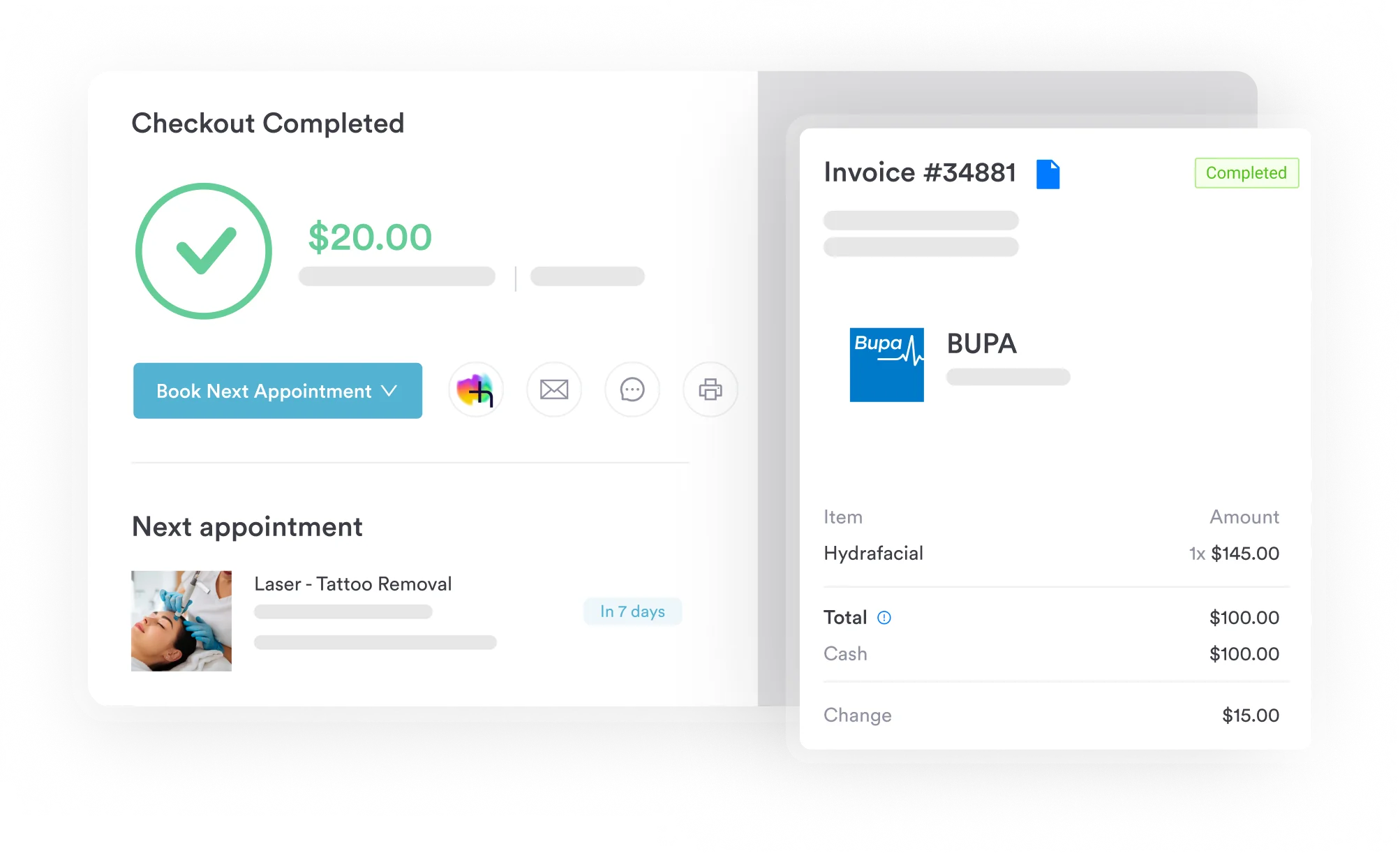
Pabau’s patient record management system keeps the full immunotherapy series history in one place: vial preparation dates, injection dates, dosage changes, and the diagnosis codes tied to each encounter. This is very valuable for allergy series that run over months, where the billing team needs to review the encounter history quickly if a payer audits a claim.
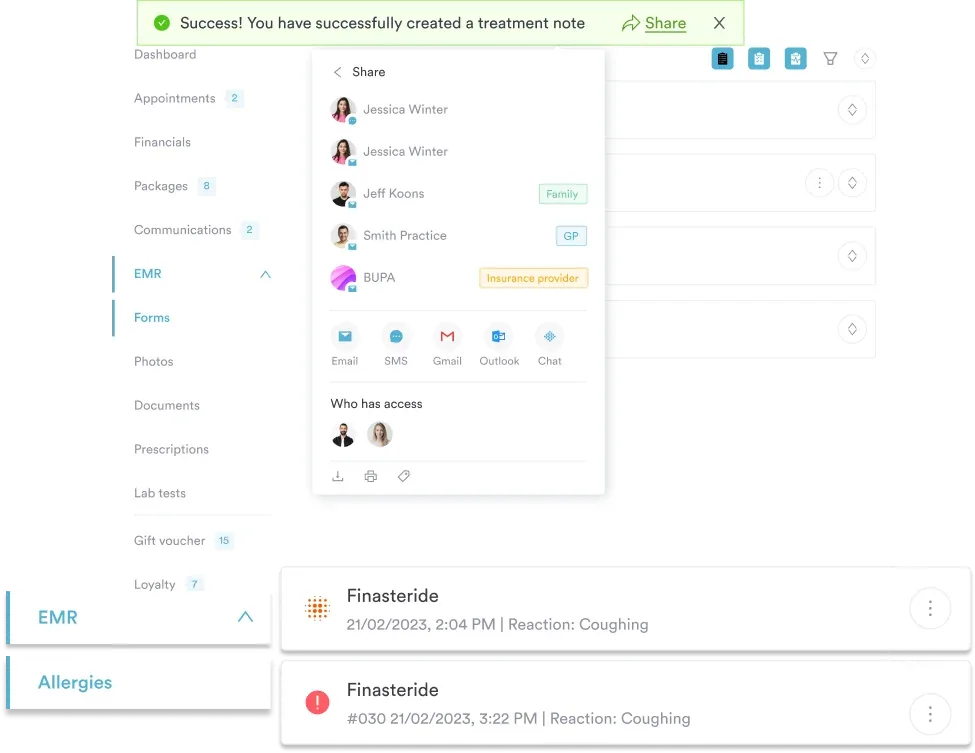
Practices with high-volume allergy immunotherapy series gain from scheduling allergy immunotherapy appointments in a system that links the appointment directly to the encounter template. When an allergy shot appointment is booked, the encounter is pre-structured with the correct diagnosis code, the right CPT template, and the patient’s vial details, so the clinical and billing workflow begins before the patient walks in the door.

Pabau helps allergy and immunology practices structure Z51.6 encounters, pair the correct CPT codes, and move completed notes to billing automatically. See how it works in a live demo.

Build a dedicated encounter template for allergy immunotherapy visits with Z51.6 pre-loaded as the primary diagnosis. For a practice with 40 allergy shot encounters per week, this single setup eliminates the per-visit code selection step for the majority of encounters and reduces the risk of a coder substituting the wrong Z51-group code.
ICD-10 Code Z51.6 is the billable, specific ICD-10-CM diagnosis code for any encounter where allergen desensitization is the primary reason for the visit. It covers allergy shots (SCIT) and immunotherapy for allergies, including sublingual immunotherapy (SLIT) — allergy testing is a separate encounter reason, coded to Z01.82. Z51.6 is valid for FY2026 claims submission under HIPAA-covered electronic transactions. Coders make four common mistakes with Z51.6. The first is using it on a testing-only encounter that should be coded to Z01.82. The second is using a condition code (such as J30.1) as the primary code for an immunotherapy visit. The third is mixing up the 95115 and 95117 CPT pairing. The fourth is relying on Z51.89 instead of the more specific Z51.6. The Medicare Benefits Schedule sets its own item structure, so a US code has no direct Australian counterpart. Accounts receivable aging shows which codes are slow to pay long before anyone calls it a denial problem.
If your practice runs allergy immunotherapy series and the billing team is still adding diagnosis codes by hand post-visit, that’s a workflow worth automating. See how Pabau’s encounter documentation tools keep diagnosis and procedure codes together from the point of care through to the billing handoff.

Need structured documentation templates for clinical encounters? Pabau’s letters and dictation tools let allergy practices capture encounter-specific clinical documentation that links directly to billing records.
Looking for a full picture of ICD-10 coding for specific conditions? ICD-10 Code E28.9 walks through the same first-listed-diagnosis rules and documentation requirements for a different diagnosis.
Billing a radiopharmaceutical agent? Radiopharmaceutical billing code guide explains when HCPCS code A4641 applies and the claim details that prevent denials.
ICD-10 Code Z51.6 is a billable ICD-10-CM diagnosis code used to report encounters where the primary reason for the visit is allergen desensitization — allergy shots (SCIT) and immunotherapy, including sublingual immunotherapy (SLIT). Allergy testing is coded separately, to Z01.82. In the outpatient setting, Z51.6 is reported as the first-listed diagnosis when no other condition is being actively managed during the same encounter.
Yes, Z51.6 is a billable, specific ICD-10-CM code valid for claim submission. It is valid under HIPAA-covered electronic transactions for FY2026 (effective October 1, 2025). Coders should pair it with the appropriate CPT procedure code (such as 95115 or 95117 for allergy shots) on the same claim.
Both SCIT and SLIT use Z51.6 as the diagnosis code, but they differ significantly on the CPT procedure code side. SCIT has established CPT codes (95115, 95117, and vial preparation codes). SLIT lacks a standard CPT code for the administration itself; billing rules for SLIT vary by payer and are governed by individual local coverage determinations. Verify SLIT billing with each payer before submission.
Documentation must establish that allergen desensitization is the primary reason for the encounter. The medical record should include the type and number of injections performed, the antigens involved, clinician oversight notation, and the patient’s allergy history supporting the treatment. This documentation supports both the ICD-10-CM diagnosis code and the paired CPT procedure code on the claim.