ICD-10 Code R34: Anuria and oliguria
ICD-10 Code R34 is the billable ICD-10-CM diagnosis code for anuria and oliguria...

Last Updated: Oct 6, 2026
Billable Code Specific Code
T86.828 is the billable ICD-10-CM code for other complications of skin graft (allograft) (autograft).
The code is widely misread as a catch-all for other transplanted organs. In fact, T86.828 belongs to skin grafts alone, and the general other-tissue bucket sits at T86.89-. To that end, this reference covers the hierarchy, sibling codes, clinical scenarios, documentation, MS-DRG mapping, and paired CPT codes for FY2026.
Let Pabau's smart automation suggest the right codes, reduce claim denials, and keep your practice compliant—effortlessly.
Automate repetitive tasks and focus on what matters most—your patients.
Reduce coding errors and ensure compliance with the latest regulations.
Clean claims, fewer denials, and faster reimbursements.
Powerful insights and reporting to help your practice thrive.
HIPAA compliant SOC 2 certified GDPR-compliant Trusted by 4,000+ clinics worldwide

T86.828 is the billable ICD-10-CM code for other complications of skin graft (allograft) (autograft), valid for FY2026 from October 1, 2025.
It is a child of T86.82, the skin graft subcategory. However, it is not a catch-all for other transplanted organs, and that role belongs to T86.89-.
Use it only when the documented skin graft complication is not rejection (T86.820), failure (T86.821), or infection (T86.822). Notably, there is no T86.823.
Overall, practice management software like Pabau keeps graft documentation and treatment notes organized and audit-ready for claims submission.
T86.828 is a valid, billable ICD-10-CM diagnosis code. Consequently, it can go on a claim as it stands, because no more specific code sits beneath it. The Centers for Medicare and Medicaid Services (CMS) places it in category T86, complications of transplanted organs and tissue. Specifically, within that category it belongs to subcategory T86.82, which covers skin allografts and autografts. Claim accuracy is cheaper to build at entry than to repair in an appeal. Where a payer still requires a paper claim, the practice needs the current revision of the form.
The code is six characters long. It takes no seventh character and no placeholder X, so nothing is added to the end of it. Specifically, assign it when a skin graft complication is documented and named, but does not match the sibling codes for rejection, failure, or infection.
The ancestry runs from T86 to T86.8, then to T86.82, and finally to T86.828. T86.8 is the umbrella for transplanted organs and tissues that sit outside the major solid organs. In other words, it is not a single code with one meaning. Instead, it splits by tissue type, and skin grafts get their own subcategory at T86.82.
The sixth character carries the complication type. The 8 in T86.828 means other specified, which is the ICD-10-CM convention for an NEC entry. In short, the treating clinician has identified the complication, but no narrower sibling code describes it. As a result, recognizing this NEC pattern prevents a default to the unspecified code. Similarly.
The tissue-type split under T86.8 is where most T86.828 errors begin. For example, bone, corneal, and intestine grafts each have a subcategory of their own. Every one of them has its own other-complications code, so none of them should ever be coded to T86.828.
T86.898 covers other complications of other transplanted tissue, the residual code when the tissue has no subcategory of its own. It belongs to T86.89-, so it never stands in for a skin graft complication.
Before you assign T86.828, confirm the graft is skin. Then confirm the documented complication is not rejection, failure, or infection. If the tissue is bone, cornea, or intestine, move to T86.83-, T86.84-, or T86.85-. Otherwise, if the transplanted tissue has no subcategory of its own, the correct other-complications code is T86.898.
Subcategory T86.82 holds five codes. Choosing between them depends entirely on what the clinician documented. In particular, note that there is no T86.823. Instead, skin graft infection is T86.822, and a claim carrying a .823 code will be rejected as invalid.
T86.82 also carries an Excludes2 note for complication of artificial skin graft (T85.693). In other words, Excludes2 means the two conditions are distinct, so both codes can appear on one claim when both are documented. Mechanical complications of artificial skin and decellularized allodermis belong to T85.693, not to this subcategory.
An EMR designed for physical therapy ties each T-code diagnosis to its treatment plan and outcome measures.
T86.828 covers documented complications of a skin allograft or autograft that are not rejection, failure, or infection. In other words, the graft is still in place and still functioning as a graft. Something else has gone wrong with it, and the clinician has said what.
The complication type has to be named in the clinical note. Consistent with sound medical documentation workflows, a vague entry will not support the code. For instance, scenarios that commonly map to T86.828 include:
This list reflects common clinical usage, not a payer-approved set. Importantly, every scenario needs documentation that links the complication to the graft. Without that link, the code will not survive an audit.
The ICD-10-CM Official Guidelines for Coding and Reporting govern how T86.828 is assigned and sequenced. CMS and the NCHS publish them for each fiscal year. Specifically, three areas matter most here. They are the NEC rule, the sequencing logic, and the additional code for the complication itself.
T86.828 is an NEC code, not an NOS code. NEC means the clinician specified the complication, but ICD-10-CM has no dedicated code for it. In contrast, NOS means the clinician did not specify, and that result belongs to T86.829. Assigning T86.828 to a vague note is a coding error, and T86.829 is the honest choice when specificity is missing.
When the graft complication is the reason for the encounter, T86.828 is sequenced first. Next, a code for the complication itself follows as a secondary diagnosis. As an example, for a hematoma under a skin graft, T86.828 comes first, then the code describing the hematoma. Payers check principal-diagnosis logic during processing, so a reversed sequence surfaces quickly as a denial.
The most common reason a T86.828 claim fails on audit is thin clinical documentation. Specifically, three elements have to be present in the record:
Using structured patient records with templated graft follow-up fields keeps vague documentation away from the billing team. When a note is unclear, query the treating clinician rather than defaulting to T86.829. A query is always cheaper than a coding error that triggers a payer audit. In addition.
Build a graft follow-up template that asks the clinician to select the complication type and name the site. In addition, add a field confirming the graft is an allograft or autograft, and one attesting to the causal link. As a result, four fields on an existing note template cut T86.828 query volume sharply and keep the record audit-ready.
For hospital inpatient billing, T86.828 groups under MDC 21 to the complications-of-treatment DRGs. Specifically, under MS-DRG v43.0, it maps to DRG 919 with MCC, DRG 920 with CC, and DRG 921 without CC or MCC. Which of the three applies depends on the comorbidities documented on the claim.
The final grouping also reflects the principal diagnosis and any procedures billed. For example, an admission for graft debridement or revision can group elsewhere once the procedure codes are added. Therefore, verify the assignment against the CMS MS-DRG grouper in force for the admission date, since grouper logic changes every October 1.
T86.828 is valid for HIPAA-covered electronic transactions. Specifically, CMS accepts it on Medicare and Medicaid claims, and most commercial payers follow the same annual ICD-10-CM release files. Therefore.
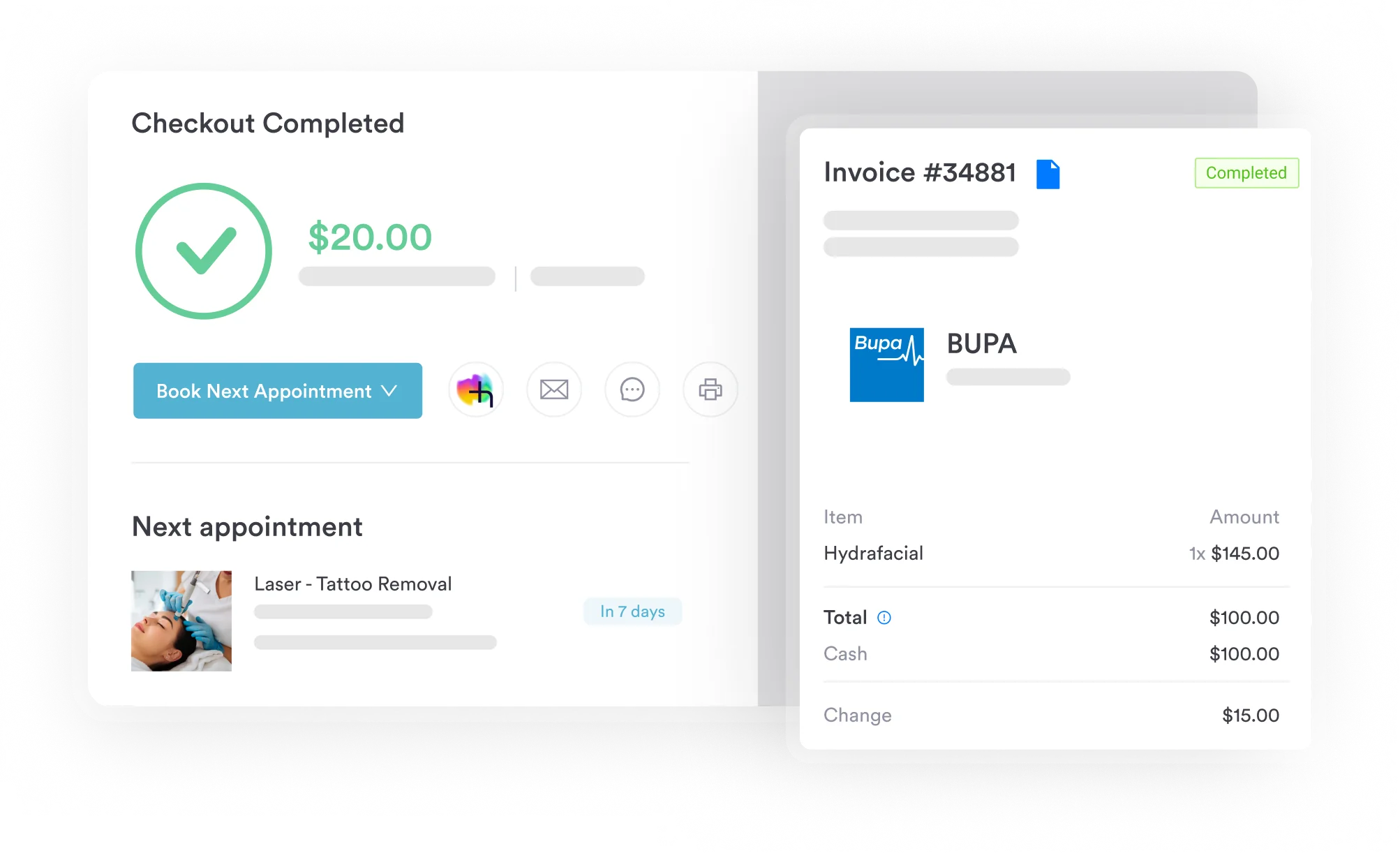
Practices managing HIPAA-compliant billing workflows should note that T86.828 carries no age or sex edits under standard CMS National Correct Coding Initiative guidance. However, payer-specific Local Coverage Determinations can still add documentation requirements. Therefore, verify with individual payers rather than assuming universal coverage. Key submission considerations include:
T86.828 is a diagnosis code and describes no procedure. Therefore, a claim needs at least one CPT code alongside it. The right one depends on what the clinician did at the encounter. The table below lists pairings that fit skin graft complication care. These are common examples, not guaranteed payer-approved pairings, so verify medical necessity with individual payers first. In addition.
Dermatology. Consequently, the note written at that visit is what the coder reads weeks later. If it does not name the complication, T86.828 cannot be defended.
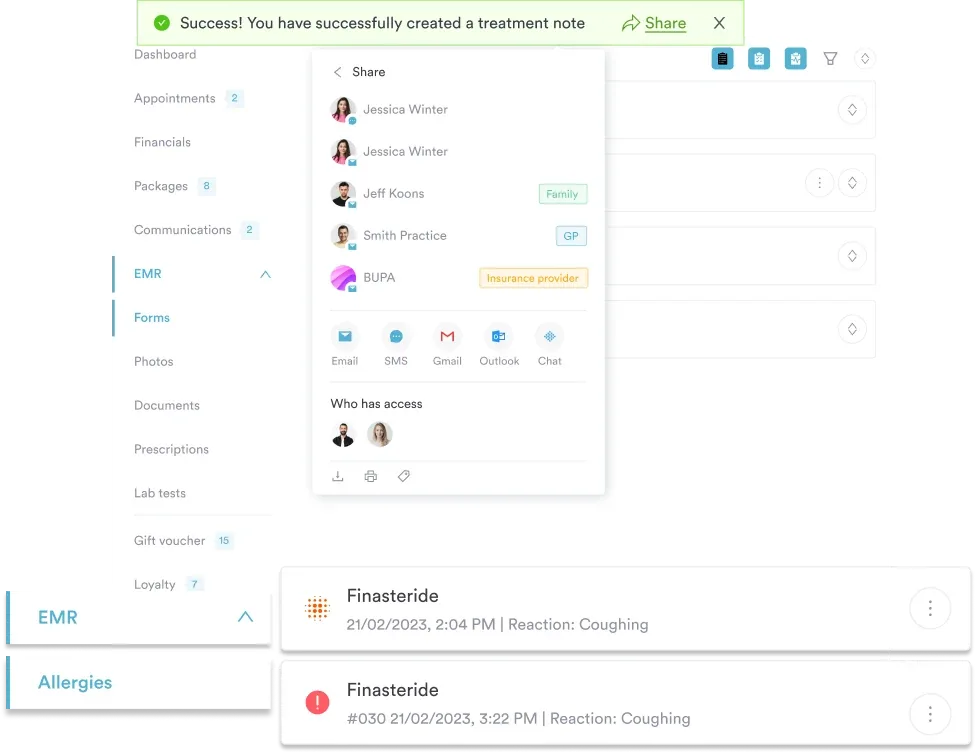
Practice management software like Pabau keeps that evidence in one place. For instance, the operation note, wound photos, consent forms, and every follow-up entry sit on the same patient timeline. As a result, a coder can see the graft date next to the follow-up findings without chasing paper, so the record is ready before the claim goes out.
Key workflow considerations for practices billing this code:

Pabau keeps wound photos, treatment notes, and consent forms on one patient record. Your billing team has the documentation it needs for each claim.

Skin graft complication coding goes wrong in two places. The first is the tissue. Specifically, T86.828 belongs to skin grafts alone, while bone, corneal, and intestine grafts hold subcategories of their own. The second is the documentation, which has to name the complication before an NEC code can be defended.
Get both right and the claim holds up. First, confirm the graft is skin. Next, confirm the complication is specified and is not rejection, failure, or infection. Then sequence T86.828 ahead of the code describing the condition itself.
Pabau keeps documentation and treatment notes organized and audit-ready, so your billing team works from a complete record. Book a demo to see how Pabau supports accurate ICD-10 code T86.828 coding, from the follow-up note through to submission.

Coding a neighboring graft complication family? T86.832 walks through the bone graft subcategory and the documentation it needs.
Repairing the wound at a graft site? 13100 covers complex repair of the trunk and how the length tiers are billed.
Closing a graft margin in layers? 12036 explains intermediate repair and the measurements that decide the code.
Billing a home infusion visit? Home infusion billing guide CPT code 99601 covers home infusion administration and the common errors that trigger denials.
T86.828 is the billable ICD-10-CM code for other complications of skin graft (allograft) (autograft). It applies when a clinician documents a specific complication of a skin allograft or autograft that is not rejection, failure, or infection. For example, graft displacement, shearing, seroma under the graft, and margin dehiscence without infection are typical examples.
No. T86.828 sits in subcategory T86.82, which covers skin grafts only. Bone graft complications belong to T86.83-, corneal transplant to T86.84-, and intestine transplant to T86.85-. Instead, the general bucket for other transplanted tissue is T86.89-, and its other-complications code is T86.898.
No. Subcategory T86.82 contains five codes. They are T86.820 for rejection, T86.821 for failure, T86.822 for infection, T86.828 for other complications, and T86.829 for an unspecified complication. Specifically, skin graft infection is coded to T86.822, and T86.823 does not exist.
No. Section I.C.19 of the ICD-10-CM Official Guidelines rules this out. Instead, a Z94 transplant status code is not reported alongside a T86 complication code for the same transplant. The complication code already establishes that the graft is present, so the status code is redundant.