ICD-10 Code S42.444P: Medial epicondyle fracture, right humerus
ICD-10 Code S42.444P: full descriptor and code validity ICD-10 Code S42.444P car...

Last Updated: Oct 13, 2026
Billable Code Specific Code
S52.356C is the billable ICD-10-CM code for nondisplaced comminuted fracture of shaft of radius, unspecified arm, initial encounter for open fracture type IIIA, IIIB, or IIIC.
Let Pabau's smart automation suggest the right codes, reduce claim denials, and keep your practice compliant—effortlessly.
Automate repetitive tasks and focus on what matters most—your patients.
Reduce coding errors and ensure compliance with the latest regulations.
Clean claims, fewer denials, and faster reimbursements.
Powerful insights and reporting to help your practice thrive.
HIPAA compliant SOC 2 certified GDPR-compliant Trusted by 4,000+ clinics worldwide

ICD-10 Code S52.356C covers a nondisplaced comminuted fracture of the radial shaft, arm unspecified. It applies at the initial encounter for an open fracture of type IIIA, IIIB, or IIIC.
This is a billable, HIPAA-valid code effective October 1, 2025 under the 2026 ICD-10-CM edition.
The 7th character C causes the most denials. It applies only to initial encounters with Gustilo Type III open wounds, never to follow-up visits or closed fractures.
When the record names the side, code S52.354C for the right radius or S52.355C for the left.
Practice management software like Pabau helps orthopedic and emergency teams document encounter types accurately and reduce denials on fracture codes.
S52.356C sits in the S52 category, which covers fractures of the forearm. The 2026 edition took effect on October 1, 2025 and is valid for HIPAA-covered electronic transactions. The CMS ICD-10-CM codes page publishes the current code set and its annual updates.
Breaking down the code’s components clarifies when it applies versus closely related codes in the S52.356 family.
Practice management software like Pabau lets orthopedic and emergency practices attach the correct diagnosis code to each encounter. That cuts the manual keying errors behind denials on S52.356C and similar fracture codes. Teams handling HIPAA-compliant clinical documentation can also validate the code with claims management software before the claim goes out.

The 7th character is where most coding errors on this code happen. Character C encodes three things at once. It means an initial encounter, an open fracture, and a Gustilo Type III wound. The CDC/NCHS ICD-10-CM tool confirms that reading. Use A when the initial encounter involves a closed fracture. Reserve C for wounds that meet Gustilo IIIA, IIIB, or IIIC criteria on the first visit. Coding names the service; medical billing gets it submitted, adjudicated and paid. A quick reference sheet cuts lookup time on codes a practice bills every week.
The ICD-10-CM Official Guidelines define an initial encounter as any visit where the patient receives active treatment. That can mean several visits while the fracture is still being managed. A subsequent encounter starts once the patient moves into routine healing care.
That B-versus-C decision repeats across the injury chapter, as it does for the open acetabular fracture coded S32.492B.
The Gustilo-Anderson classification underpins the 7th character selection for all open fracture codes in the S52 family. For S52.356C, the wound must meet one of the three Type III criteria at presentation.
Clinical documentation must name the Gustilo type at the initial encounter to justify S52.356C. A note that says only “open fracture” does not support the C designation. Payers reading that record see an unsupported claim, and that is what triggers an audit.
Structured safer clinical notes put the wound classification prompt in front of the clinician at the point of care.
S52.356C sits inside a strict hierarchy under the injury chapter. Reading down from the category to the billable code is the quickest way to confirm you have the right one. The WHO ICD-10 browser and the ICD-10-CM tabular list share that structure, though the US version adds further clinical granularity.
The “unspecified” designation at S52.356 means laterality was not documented, or is genuinely unknown when the claim is coded. S52.354 covers the right radius and S52.355 covers the left. Both describe nondisplaced comminuted shaft fractures, so the only difference is the side.
S52.351 and S52.352 look like the lateralized pair, but they describe displaced comminuted fractures instead. Reaching for S52.356C when the record clearly names the side is a specificity error, and payers query it. Unspecified laterality carries the same exposure elsewhere in the injury chapter, as with the nondisplaced acetabular wall fracture coded wall fracture coded S32.416A.
The S52.356 family covers the primary encounter-type variants for a nondisplaced comminuted radial shaft fracture, arm unspecified. Each 7th character maps to a distinct clinical status. Picking the right sibling for a follow-up visit matters as much as the initial S52.356C assignment. The AAPC Codify ICD-10-CM lookup lists the full set.
The table shows the characters coders reach for most often. The subcategory also carries H, J, M, N, Q, and R for delayed healing, nonunion, and malunion of open fractures.
Once active treatment ends and the patient moves into healing-phase follow-ups, the code shifts from S52.356C to S52.356F. That sibling covers open Type IIIA, IIIB, and IIIC fractures healing routinely. Holding on to S52.356C past the active phase is a common error, and payers flag it on review.
Physical therapy teams handling post-fracture rehabilitation planning track the same transition in their own notes. S52.356S closes the file as a sequela, the same job the S character does in S33.8XXS.
Clinical documentation uses varied wording for the same injury. Any of the descriptions below should send a coder to S52.356C, provided laterality is unspecified and the wound is Gustilo Type III.
In the Alphabetic Index, the path runs fracture, traumatic, then radius, shaft, comminuted, nondisplaced, and open type IIIA, IIIB, or IIIC. The “NOS” variant, meaning not otherwise specified, maps to unspecified laterality when the record does not say left or right.
Four errors account for most claim denials on ICD-10 Code S52.356C. Catching them before submission beats appealing a denial.
Document the Gustilo wound classification in the operative note or ED record at the initial encounter. Do not add it later. Payers reviewing S52.356C claims look for contemporaneous evidence of Type III wound characteristics. An addendum written weeks afterward may not satisfy an audit.
Teams using patient record management tools that support structured note-taking can reduce these errors. Building a Gustilo classification prompt into the clinical documentation template is the practical fix.
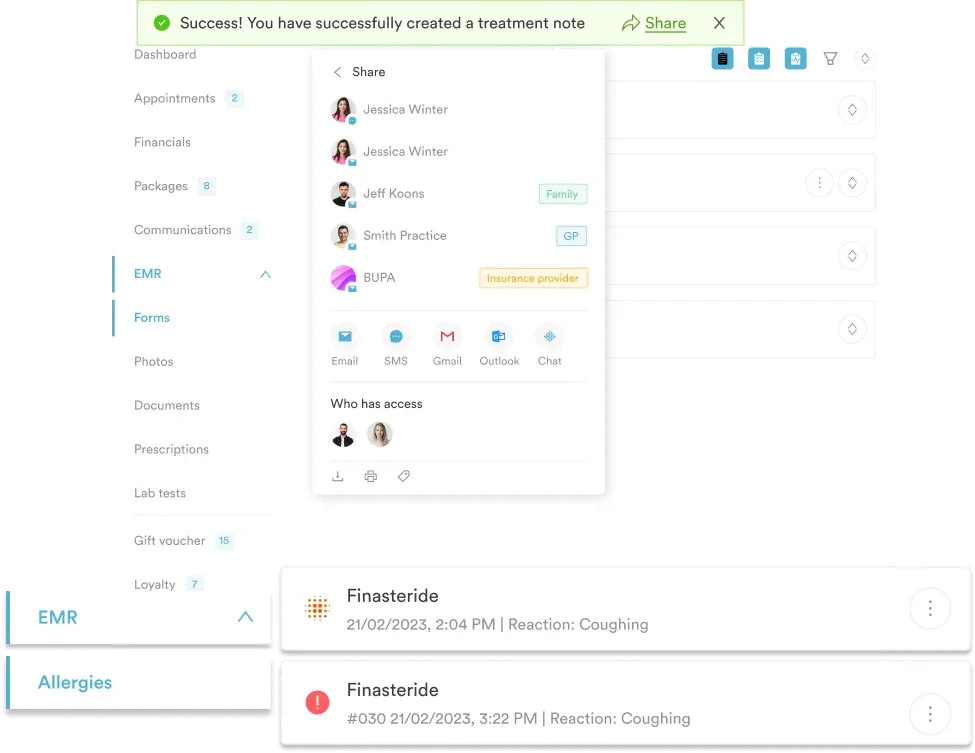
In most orthopedic and emergency practices, the diagnosis code is chosen at billing, days after the visit. The coder works from a note written by someone else, and the Gustilo classification is often missing from it.
Pabau puts that decision inside the clinical note instead. You can make the Gustilo classification a required field on your initial encounter form, so the note cannot be signed without it. When the patient returns for healing-phase care, the encounter type prompts the switch from S52.356C to S52.356F.
For teams running sports medicine clinic software, that means fewer queries back to the clinician and fewer denials to appeal. The record already holds the evidence a payer asks for.

Pabau keeps the wound classification, the diagnosis code, and the encounter type in one clinical record. Your coders stop chasing missing detail, and fewer fracture claims come back denied.

S52.356C is a narrow code, and that is the point of it. If the record does not name the arm and the wound meets Gustilo Type III, this is the code. Anything vaguer in the note earns a query to the clinician.
The fix sits upstream of billing. Build the Gustilo prompt into the initial encounter template, and the specificity question answers itself before the claim exists. Book a demo to see how Pabau ties fracture documentation to the code that gets billed.

Coding a follow-up visit after arm trauma? S58.022D shows how the subsequent-encounter character works on a partial traumatic amputation.
Need the initial-encounter rules when the side is unspecified? S61.059A walks the same laterality question through a hand wound.
Pairing a fracture diagnosis with a surgical code? CPT 21470 breaks down open fracture treatment billing from the procedure side.
Billing extra area on a skin substitute graft? CPT code 15272 is the add-on code for each extra 25 square centimeters of skin substitute graft on the trunk or limbs.
Billing a larger skin substitute graft? CPT code 15273 covers the first 100 square centimeters of a skin substitute graft on the trunk, arms, or legs.
ICD-10 Code S52.356C is a billable ICD-10-CM diagnosis code for a nondisplaced comminuted fracture of the shaft of radius, unspecified arm. It applies at the initial encounter for an open fracture classified as Gustilo Type IIIA, IIIB, or IIIC. It took effect on October 1, 2025 under the 2026 ICD-10-CM edition.
Yes, S52.356C is a billable, specific ICD-10-CM code valid for HIPAA-covered electronic transactions. It can be used directly on claims for reimbursement purposes without requiring a more specific code.
Gustilo Type IIIA has extensive soft tissue damage but adequate bone coverage is achievable after debridement. Type IIIB involves periosteal stripping severe enough to require a local or free flap for coverage. Type IIIC is any open fracture with an arterial injury that requires vascular repair, regardless of soft tissue damage extent.
For S52 fracture codes, the 7th character sets both the encounter type and the fracture status. A is an initial encounter with a closed fracture. B is an initial encounter with an open Type I or II wound. C is an initial encounter with an open Type III wound. Characters D through R cover subsequent encounters, from routine healing through nonunion and malunion. S marks a sequela. Choosing the wrong character is the most common denial trigger on fracture claims.
Open reduction and internal fixation of the radius shaft usually pairs with CPT codes in the 25500-25526 range. The exact code depends on the fixation method and the complexity of the repair. External fixation uses CPT 20690 or 20692. The operative report drives the CPT selection, while S52.356C establishes medical necessity.
Use S52.356C only when the operative note or ED record does not name the left or right arm. S52.354C covers the right radius and S52.355C covers the left. Defaulting to “unspecified” when the side is clearly documented is a specificity error that payers flag on audit.