ICD-10 Code S66.308A: Extensor muscle injury, other finger
ICD-10 Code S66.308A: Definition and code hierarchy ICD-10 Code S66.308A is the ...

Last Updated: Oct 14, 2026
Billable Code Specific Code
S46.329A is the billable ICD-10-CM code for laceration of muscle, fascia and tendon of triceps, unspecified arm, initial encounter.
Coders assign it when the note confirms a traumatic triceps laceration but never names the right or left arm. It is correct only where the arm is genuinely undocumented. Where the chart does name a side, payers read the unspecified code as a documentation failure and return the claim.
Let Pabau's smart automation suggest the right codes, reduce claim denials, and keep your practice compliant—effortlessly.
Automate repetitive tasks and focus on what matters most—your patients.
Reduce coding errors and ensure compliance with the latest regulations.
Clean claims, fewer denials, and faster reimbursements.
Powerful insights and reporting to help your practice thrive.
HIPAA compliant SOC 2 certified GDPR-compliant Trusted by 4,000+ clinics worldwide

S46.329A is the billable ICD-10-CM code for a triceps laceration at shoulder and upper arm level, initial encounter, laterality unspecified.
Use the unspecified variant only when the affected arm is genuinely undocumented, never as a shortcut when the chart names a side.
The 7th character A marks active treatment. Switch to D for routine follow-up after repair, and S for residual pain or weakness.
Most denials on this code trace back to laterality, the wrong 7th character, or a missing external cause code.
Pabau checks laterality and 7th-character agreement against the note before the claim is transmitted.
ICD-10 Code S46.329A reports a traumatic laceration of the triceps muscle, fascia and tendon when the record never names the injured arm.
It is billable, it carries the 7th character A for active treatment, and it sits in the S46 category. The table below collects the fields coders and billers check most often, drawn from the CDC/NCHS ICD-10-CM web tool.
S46.329A describes a traumatic laceration of the triceps brachii at shoulder and upper arm level. It reaches three structures: the muscle belly, the surrounding fascia, and the tendinous portion that inserts at the olecranon. All three sit under a single code, because the ICD-10-CM tabular list treats the musculotendinous unit as one coding entity at this level.
“Unspecified arm” means the laterality was not documented at the time of coding. Two clinical situations justify this:
It does not mean the coder can elect the unspecified code when right or left arm appears in the chart. Doing so in the presence of documented laterality is a coding error and a common audit trigger.
Correct assignment starts with knowing where S46.329A sits in the ICD-10-CM code set. The S46 category covers all injuries to muscle, fascia, and tendon at shoulder and upper arm level. S46.3 narrows to the triceps specifically. S46.32 narrows further to lacerations of the triceps, and S46.329 carries the laterality-unspecified designation before the 7th character is applied.
The 7th character on any injury code tells the payer which phase of care the claim represents. Getting this wrong is one of the fastest routes to a denial on S46.329A claims, per CMS ICD-10 coding guidance.
The 7th character A applies to every encounter where the provider is actively managing the acute injury. Physical therapy visits after a completed surgical repair use character D, not character A. Auditors flag that substitution consistently across workers’ compensation and Medicare claims.
Laterality is the most common selection error, but it is not the only one. Three other code families are regularly confused with S46.329A. The table below sets each against the code and says when to pick it instead.
The laceration-vs-strain distinction matters clinically and financially. Laceration codes (S46.32x) imply disruption of tissue continuity requiring repair. Strain codes (S46.31x) imply overstretching or partial tearing without complete fiber disruption. Pairing S46.329A with a CPT code for tendon repair is clinically logical. Pairing a strain code with the same CPT is a medical-necessity mismatch that edits will catch.
The S46 category carries several instructional notes that apply to every code within it, including S46.329A. Coders must check these before claim submission.
The operative or clinical note must carry four elements to support ICD-10 Code S46.329A without triggering a query or a denial. Capturing them in structured fields at the point of care is what prevents a coding error later. The same four apply when a physical therapist treats an active triceps laceration under 7th character A.
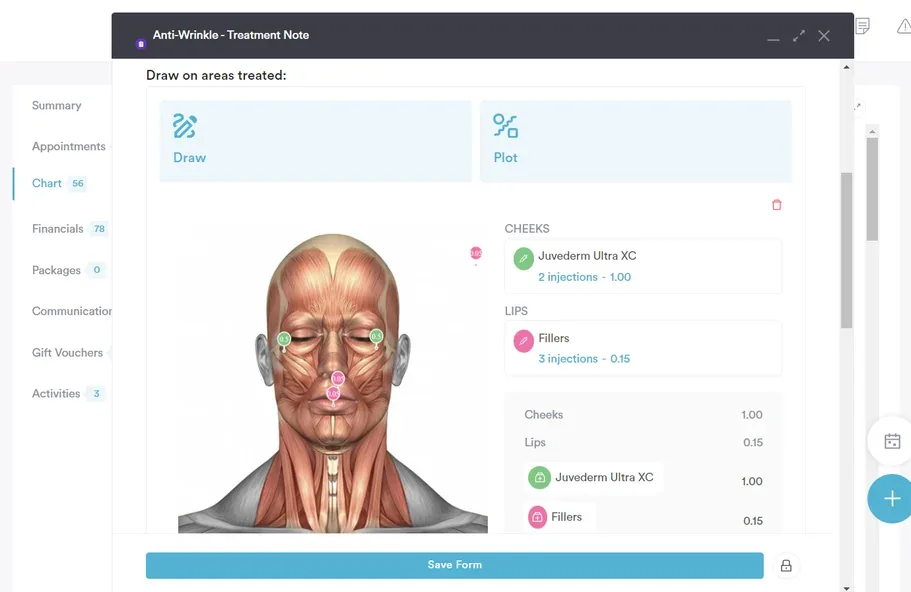
Vague documentation is the root cause of most laterality-based denials on this code. Querying the provider before coding is always preferable to guessing and generating an avoidable appeal.
Pairing accuracy decides whether a triceps repair claim is paid on the first pass. The table below lists the CPT codes most often reported with S46.329A. Verify each one against the current AAPC Codify ICD-10-CM lookup before submission, because CPT codes are updated annually.
One pairing error shows up more than any other. Reporting CPT 97110 (therapeutic exercise) with S46.329A on the same date mixes two phases of care. Therapy during the healing phase belongs with S46.329D. The combination generates an edit, because the diagnosis signals active injury management while the CPT signals routine rehabilitation.
Claim acceptance for S46.329A varies by payer type. Billing teams meet that variation across Medicare, commercial, and workers’ compensation lines, and each line sets its own external cause rule.
Denials on S46.329A cluster around five root causes. Each has a clear corrective action, and most are preventable at the coding stage. Proactive claims management catches the majority before they ever reach a payer. A structured denial management process handles the rest after the fact.
Run a pre-submission laterality audit on every S46.32x code in your weekly claim batch. Flag any claim where S46.329A sits alongside a note that mentions the right or left arm. Catching that before transmission costs seconds. Correcting it after a denial costs days.
The base code S46.329 generates three billable variants, depending on where the patient sits in the recovery arc. Knowing the transition points prevents the 7th-character errors described above. The same encounter-phase logic governs every injury code in the S00-T88 chapter.
A typical triceps repair case runs in four steps. S46.329A covers the day of injury and the surgical repair date. It also covers immediate post-op care inside the active treatment window. S46.329D takes over from the first therapy visit onward. S46.329S applies if the patient returns six months later with documented residual weakness.
In most practices the laterality check happens twice, and both times too late. A coder reads the note days after the visit. A biller reads the denial weeks after that, by which point the provider has seen dozens of other patients.
Practice management software like Pabau moves that check to the point of care. The treatment note captures the injured structure and the side as structured fields rather than free text. If the side is missing when a coder reaches for S46.329A, the query goes back to the provider while the encounter is still fresh.
Pabau then submits claims electronically to more than 4,000 US payers through its Claim.MD integration, and validates payer-specific edits before transmission. A 7th character that disagrees with the date of service is caught in the same step. The result is fewer appeals on a code where appeals are slow and the documentation has long gone cold.

Pabau checks laterality and 7th-character agreement on ICD-10 injury codes before submission. Your team spends less time on appeals and more on patient care.

ICD-10 Code S46.329A is a narrow, specific code, and correct use turns on two things the chart must establish. The first is a confirmed traumatic laceration of the triceps musculotendinous unit. The second is a genuine absence of laterality documentation. Where either is unclear, query the provider rather than defaulting to the unspecified code.
Build the laterality check into the coding step rather than the appeals queue, and the rework on this code mostly disappears. Book a demo to see how Pabau validates ICD-10 injury codes before a claim is transmitted.

Need the procedure side of a laceration claim? CPT code 12002 covers simple wound repair, the procedure code that most often sits opposite a skin-level laceration diagnosis.
Want to streamline the entire claim submission process? What is revenue cycle management explains how integrated RCM workflows reduce denial rates across injury code categories.
Looking for denial prevention guidance beyond individual codes? Denial codes in medical billing covers the CARC and RARC codes most commonly returned on musculoskeletal injury claims.
ICD-10 Code S46.329A is the billable diagnosis code for laceration of muscle, fascia and tendon of the triceps, unspecified arm, initial encounter. It covers traumatic lacerations of the triceps brachii at shoulder and upper arm level. The clinical record does not identify the affected arm as right or left.
S46.321 specifies the right arm, S46.322 specifies the left arm, and S46.329 is used when the affected arm is not identified. All three describe lacerations of the same musculotendinous structure. Laterality codes (S46.321 or S46.322) should always be selected when the chart documents which arm is involved.
Use A during active treatment of the acute injury. That covers the day of injury, the surgical repair, and every encounter where the wound is still being managed. Switch to D for routine follow-up and rehabilitation once active treatment is complete. Use S when the original injury has resolved but a residual condition remains. Examples include chronic triceps weakness and persistent posterior arm pain.
Yes, S46.329A is appropriate when the clinical record genuinely does not specify right or left arm. However, it is not appropriate to use the unspecified code as a default when the arm is mentioned elsewhere in the note. Coders should query the provider before assigning the unspecified code. The arm may simply have been omitted from the note, where the provider can still add it.
CPT 24342 (reinsertion of ruptured triceps tendon) is the primary procedure code paired with S46.329A for surgical repair. Intermediate repair codes 12031-12037 apply when the injury is limited to skin and subcutaneous tissue and needs a layered closure. ED evaluation codes (99282-99285) are paired on the initial encounter. PT codes such as 97110 must be reported with S46.329D (subsequent encounter), not with S46.329A.
Four reasons account for most denials. The chart documents an arm but the claim carries the unspecified code. The 7th character does not match the encounter phase. A required external cause code is missing. Or the CPT describes a strain or overuse treatment rather than a laceration repair. Each has a clear corrective action before resubmission.