

ICD-10 Code S42.444P: Medial epicondyle fracture, right humerus
ICD-10 Code S42.444P: full descriptor and code validity ICD-10 Code S42.444P car...

Last Updated: Oct 13, 2026
Billable Code Specific Code
F05 is the billable ICD-10-CM code for delirium due to known physiological condition.
Dementia codes like F02.80 share similar documentation traps, but F05 carries its own sequencing rules that catch coders off guard.
Let Pabau's smart automation suggest the right codes, reduce claim denials, and keep your practice compliant—effortlessly.
Automate repetitive tasks and focus on what matters most—your patients.
Reduce coding errors and ensure compliance with the latest regulations.
Clean claims, fewer denials, and faster reimbursements.
Powerful insights and reporting to help your practice thrive.
HIPAA compliant SOC 2 certified GDPR-compliant Trusted by 4,000+ clinics worldwide

ICD-10 Code F05 is a billable, specific ICD-10-CM diagnosis code for delirium due to a known physiological condition, valid for FY2026 (effective October 1, 2025).
F05 covers eight included terms: acute confusional state, sundowning, delirium superimposed on dementia, infective psychosis, and more – but excludes delirium NOS (R41.0) and substance-withdrawal delirium.
Always sequence F05 as a secondary code after the underlying physiological cause; documentation must explicitly link the two conditions.
Practice management software like Pabau helps clinicians capture the physiological linkage, onset details, and DSM-5 criteria needed to support F05 coding at audit.
ICD-10 Code F05 describes Delirium due to known physiological condition. It sits within the F01-F09 block (“Mental disorders due to known physiological conditions”) of Chapter 5 in ICD-10-CM.
The code is billable and specific – it can be submitted directly for reimbursement without a more detailed subcode. Per the CMS ICD-10 codes page, the FY2026 edition of F05 became effective on October 1, 2025.
F05 has a broad scope. The CMS tabular list includes eight official terms under this code, all representing delirium arising from a physiological cause. Coders who miss these synonyms may query whether a separate code exists when F05 already covers the presentation.
The “acute or subacute” qualifier in the first five terms matters clinically. Delirium can persist for days to weeks.
When the onset is gradual or the course is prolonged, it may be tempting to reach for a dementia or encephalopathy code – but F05 remains correct as long as an underlying physiological cause drives the presentation. The CDC/NCHS ICD-10-CM lookup tool confirms all eight terms under a single F05 entry for FY2026.
Excludes1 means the excluded code and F05 cannot be reported together for the same encounter. Excludes2 means the excluded condition is not part of F05, but both codes can coexist if both are present and documented.
The R41.0 exclusion catches the most coding errors. When the admitting diagnosis is “altered mental status” or “confusion” and the workup is still in progress, R41.0 may be appropriate at admission. Once the physiological cause is identified – sepsis, post-operative state, metabolic derangement – the coder should update the record to F05 with the cause coded first.
Psychologists code these diagnoses daily, and psychology practice software keeps session notes, assessments, and billing together.
F05 is a manifestation code. Per the ICD-10-CM Official Guidelines for Coding and Reporting, the underlying physiological condition drives the principal diagnosis – F05 follows as an additional code.
Clinicians who document “delirium” without linking it to a cause give coders no basis to sequence correctly, which creates both undercoding and audit exposure.
Sequencing rules can vary by payer. Some Medicare Advantage plans and state Medicaid programs have supplemental guidelines. Verify against the applicable payer’s LCD/LCA before finalizing the claim.
Without adequate documentation, even the correct code selection becomes indefensible at audit. Clinicians using safer clinical note practices build the evidentiary chain reviewers look for. A structured psychiatric evaluation template speeds up this process considerably.
The record must capture four elements to fully support F05:
Using digital intake forms pre-configured with CAM or 4AT screening fields ensures the assessment data is captured at the bedside and flows directly into the clinical record, rather than being reconstructed from memory later.
This is especially useful in high-volume environments like post-surgical units – including after anesthesia-heavy procedures such as 00192 – or geriatric wards where F05 is frequently applicable.
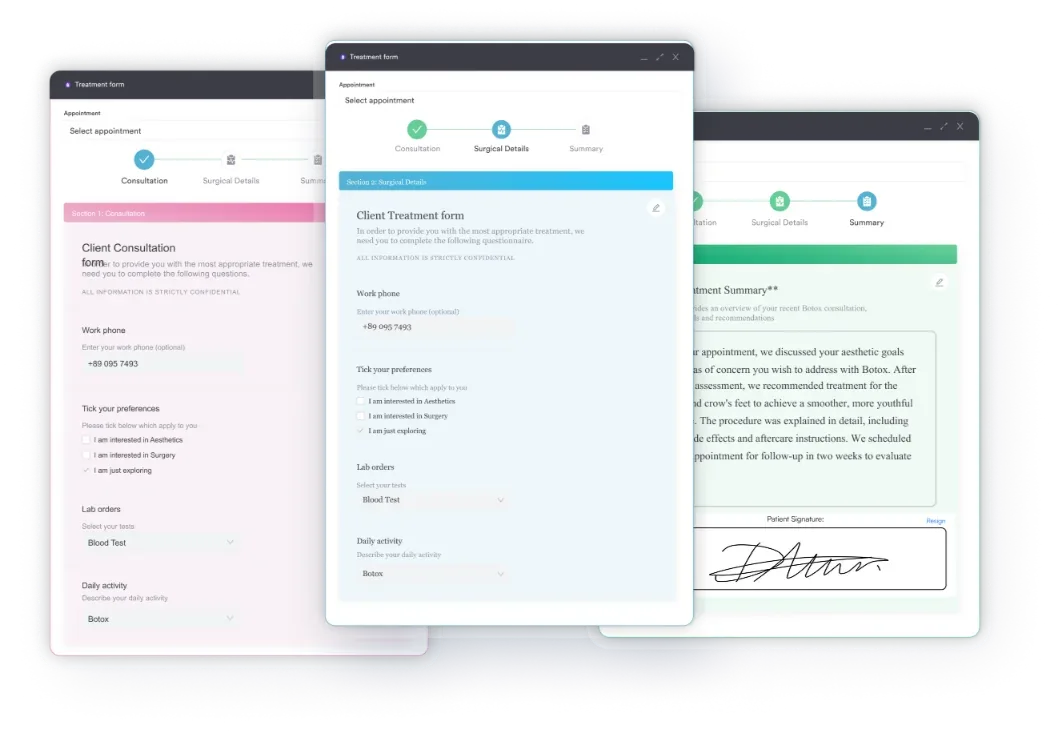
Document the specific physiological cause using its own code-level language in the assessment note – not just the chief complaint. Write ‘delirium due to Escherichia coli urosepsis’ rather than ‘confusion with concurrent UTI.’ Coders need the causal verb, not just co-existing conditions.
Delirium and dementia overlap in presentation, and the distinction changes both the diagnosis code and sequencing. Getting this wrong at coding risks DRG miscalculation and clinical record inaccuracy.
The “both present” scenario is the most clinically common and the most frequently miscoded. Dementia patients are disproportionately affected by delirium – sundowning is its clearest expression. When both are documented, two codes are required. The dementia code goes first; F05 follows. Omitting F05 understates case complexity and can affect DRG assignment.
All three motor subtypes of delirium are coded as F05 – there is no ICD-10-CM subcode for hyperactive versus hypoactive presentation. The distinction matters clinically and for documentation, but not for code selection.
Hypoactive delirium is the most clinically dangerous from a documentation standpoint. Its quiet presentation means it’s often attributed to fatigue, post-sedation, or depression.
Clinicians unfamiliar with the subtype may not use delirium language in the note – meaning coders have no basis for F05. Resources on healthcare burnout highlight how cognitive load affects documentation accuracy across specialties. Formal screening tools (CAM, 4AT) catch hypoactive delirium before it disappears from the record.
F05 applies across a wide range of settings. The unifying requirement is an identified physiological cause – not the care environment or the patient’s age.
These two included terms under F05 generate more coding questions than all others combined. Both involve elderly patients with underlying cognitive conditions, and both are frequently undercoded because clinicians treat them as expected features of dementia rather than separately billable complications.
Sundowning refers to the late-afternoon and evening exacerbation of confusion, agitation, and disorientation seen in dementia patients. It is an official included term under F05, not a standalone code. To code it correctly:
When delirium develops in a patient with established dementia, both conditions are coded. This is not a situation where one replaces the other. The sequencing follows the same rule: dementia first (F01.xx-F03.xx), then F05. The documentation must state the delirium is acute and represents a change from the patient’s cognitive baseline – not just worsened chronic confusion.
Key documentation tip: include a sentence comparing current cognition to the patient’s known baseline. “Patient’s family reports she is significantly more confused than her usual dementia presentation over the past 48 hours” gives coders the acute-on-chronic distinction they need to apply F05 on top of the dementia code. A dated MoCA score makes that baseline concrete; our guide to MoCA score interpretation explains the bands. What a superbill includes decides whether the patient insurer processes or rejects the reimbursement request. Practices that bill a narrow set of services keep a coding guide covering that set rather than the whole schedule.
For clinicians seeking a reference framework, Pabau’s psychiatric evaluation template includes a baseline-versus-current cognitive comparison section.
Several codes are commonly confused with F05, used alongside it, or serve as the correct alternative when F05’s conditions are not met. The AAPC ICD-10-CM code search and the WHO ICD-10 browser are the primary references for navigating the full classification hierarchy.
For related psychiatric coding, see F32.9 and F10 for sequencing parallels.
Delirium documentation fails most often not because clinicians don’t know the diagnosis, but because the note structure doesn’t capture what coders need. Pabau’s mental health EMR and psychiatry EMR software include structured assessment templates that can be configured to capture the four F05 documentation requirements at the point of care.
Pabau’s client record management system timestamps all clinical entries, providing an audit trail that supports the acute-onset documentation DSM-5 requires.
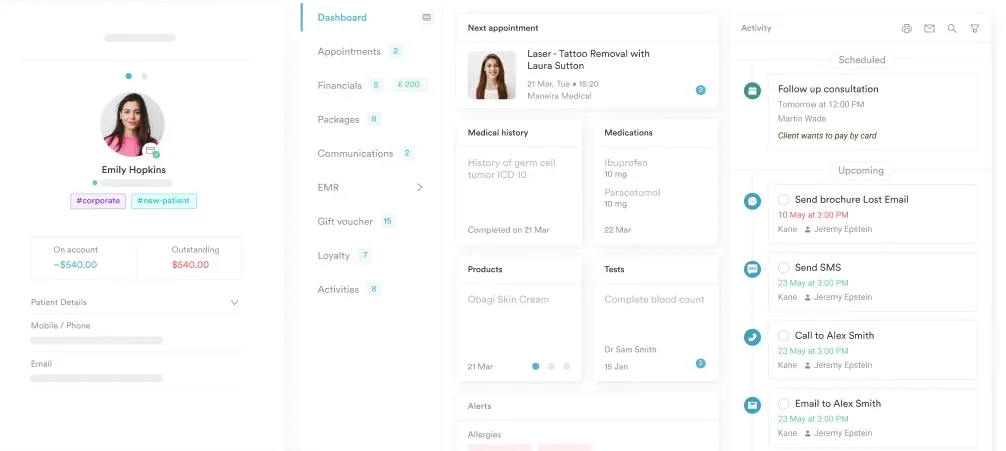
For geriatric and post-acute settings where sundowning and delirium superimposed on dementia are most common, pre-configured digital forms can include CAM screening fields and a baseline-versus-current cognition comparison prompt, ensuring every F05 encounter has the documentation to survive payer review.

Pabau helps clinicians capture the diagnosis linkage, onset timeline, and screening data needed to support accurate ICD-10 Code F05 coding – all within a structured clinical record that’s audit-ready from the moment the consultation ends.

Flag encounters where an ICD-10 Code F05 is assigned but the underlying cause code does not appear in the same claim. Most billing software can run a code-pair audit – configure it as a routine pre-submission check to catch sequencing errors before the payer does.
F05 is a deceptively simple code – one descriptor, eight included terms, and a clear sequencing rule. The failure points are documentation, not code selection: missing the causal linkage, skipping the underlying condition code, and leaving hypoactive delirium undocumented as depression. Each error affects DRG accuracy, case mix index, and payer audit exposure.
Pabau’s structured clinical notes, configurable screening forms, and AI-assisted documentation capture the four elements needed to support F05 at audit. To see how Pabau handles clinical documentation for behavioral health and neuropsychiatric diagnoses, explore Pabau’s psychiatry EMR software or speak with the team.

Need to code a negative dementia screening result? G9920 is the companion HCPCS code often billed alongside geriatric encounters where F05 also applies.
Not sure the record supports delirium yet? R41.82 covers altered mental status before a specific cause is confirmed.
Ruling out psychiatric causes before coding delirium? F20.9 is the code when symptoms point to schizophrenia rather than a physiological or substance-induced cause.
ICD-10 Code F05 is a billable, specific diagnosis code for Delirium due to known physiological condition, valid for FY2026. It covers acute and subacute confusional states, sundowning, delirium superimposed on dementia, and other presentations where an identified underlying medical cause drives the delirium. It sits in the F01-F09 block of Chapter 5 of ICD-10-CM.
F05 (Delirium due to known physiological condition) requires an identified underlying cause; R41.0 (Delirium NOS) is used when the cause is unidentified or unspecified. These are Excludes1 codes – they cannot be reported together for the same episode of delirium. Once the physiological cause is determined, update to F05.
Code the dementia first (F01.xx, F02.xx, or F03.xx depending on type and behavioral disturbance), then add F05 as an additional code. The documentation must note that the delirium represents an acute change from the patient’s cognitive baseline – not simply progression of the dementia.
The only Excludes1 note for F05 is R41.0 (Delirium NOS) – these two codes cannot be used together. Substance-induced delirium, such as alcohol withdrawal delirium (F10.231, F10.921) and opioid intoxication delirium (F11.121, F11.221, F11.921), is an Excludes2 note instead, meaning both F05 and the substance-related code may be reported together for the same encounter when clinically documented.
The ICD-9-CM equivalents are 293.0 (Acute delirium due to conditions classified elsewhere) and 293.1 (Subacute delirium). Both map to F05 in the General Equivalence Mappings (GEMs) used for crosswalk purposes.
No. Encephalopathy is coded under G93.40 (encephalopathy, unspecified) or a more specific G93.4x code depending on type. Encephalopathy and delirium can coexist and both may be coded in the same encounter, but F05 describes the psychiatric manifestation (disturbed consciousness and attention) while G93.4x describes the neurological pathology.




