

HCPCS code E0198: Water pressure pad billing guide
HCPCS code E0198 is a water pad for a standard mattress HCPCS code E0198 is the ...

Last Updated: Oct 13, 2026
G9920 is the HCPCS Level II code for screening performed and negative.
HCPCS code G9920 documents that a clinician screened a patient with dementia for behavioral and psychiatric symptoms and the result was negative.
Let Pabau's smart automation suggest the right codes, reduce claim denials, and keep your practice compliant—effortlessly.
Automate repetitive tasks and focus on what matters most—your patients.
Reduce coding errors and ensure compliance with the latest regulations.
Clean claims, fewer denials, and faster reimbursements.
Powerful insights and reporting to help your practice thrive.
HIPAA compliant SOC 2 certified GDPR-compliant Trusted by 4,000+ clinics worldwide

HCPCS code G9920 (‘Screening performed and negative’) is a quality-data code for MIPS Quality Measure #283: Dementia-Associated Behavioral and Psychiatric Symptoms Screening and Management.
G9920 is one of three outcome codes for Measure #283: G9919 (positive screen with documented recommendations), G9920 (negative screen), and G9921 (measure not met).
As a quality-data code, G9920 carries $0.00 direct Medicare fee-for-service reimbursement; its value comes from MIPS Quality performance category scoring, not a paid claim line.
California Medi-Cal separately repurposes G9919 and G9920 (never G9921) to bill ACEs screening under its Prop 56 ACEs Aware initiative.
Practice management software like Pabau helps clinicians track quality-data codes like G9920 against qualifying encounters, so a dementia screening doesn’t fall out of a MIPS reporting period.
HCPCS code G9920 is an HCPCS Level II G-code with the official descriptor: “Screening performed and negative.” It’s a quality-data code (QDC) used to report the numerator for MIPS Quality Measure #283: Dementia-Associated Behavioral and Psychiatric Symptoms Screening and Management, part of the Merit-based Incentive Payment System (MIPS) under CMS’s Quality Payment Program (QPP).
The code itself is part of the CMS HCPCS Level II code system, maintained annually by the Centers for Medicare and Medicaid Services (CMS).
G9920 isn’t a billable clinical service the way a CPT procedure code is. It’s a status flag: it tells CMS that a clinician screened an eligible dementia patient for behavioral and psychiatric symptoms during a qualifying encounter, and the screen came back negative, satisfying the quality action for that patient in that performance period.
Behavioral and psychiatric symptoms of dementia (BPSD) – agitation, depression, anxiety, apathy, sleep disturbance, and psychosis such as delusions or hallucinations – affect most people living with dementia at some point in the disease course.
They’re also one of the biggest drivers of caregiver burden and a leading reason people with dementia move into residential care, so identifying and managing them is a genuine clinical priority, not just a reporting exercise.
MIPS Measure #283 operationalizes that priority. It asks whether a clinician documented a screen, using a validated instrument or direct examination of the patient or a knowledgeable informant, across three symptom domains: activity disturbances, mood disturbances (including depression), and thought or perceptual disturbances, at least once in the 12 months following a qualifying encounter.
CMS’s measure specification names the Neuropsychiatric Inventory and, for nursing-home residents, the Minimum Data Set (MDS), while also allowing other reliable and valid instruments that assess the same three domains.
The measure applies to mental and behavioral health practices as well as geriatrics, neurology, and primary care; anywhere a clinician regularly sees patients with a diagnosed dementia. Measure #283 covers behavioral symptoms rather than cognition, which is where MoCA score interpretation applies.
For practices reporting several MIPS quality measures at once, practice management software like Pabau can help flag which patients are due a screening before their measurement window closes, instead of catching the gap at year-end reporting.
Only G9919 and G9920 represent a completed quality action. G9921 exists to flag that the measure wasn’t met – it isn’t an alternate way of documenting “no ACEs” or any other negative finding outside Measure #283, and it plays no role in California’s ACEs billing program covered later in this guide.
Comparing the best EHRs for primary care matters here, since G-code services live or die on documentation quality.
Report G9920 when all of the following are true for the encounter:
Do not report G9920 for a positive screen – use G9919 if management recommendations were documented, or G9921 if they weren’t. Do not report G9920 when no screen was performed at all, or only a partial screen was completed – that’s also G9921.
Do not use G9920 as a general-purpose “negative screening” code outside Measure #283; it has no defined meaning for any other quality measure or clinical scenario, including primary ACEs screening outside California’s Medi-Cal program (see below).
MIPS Measure #283 is reported once per performance period for each dementia patient a clinician saw, through whichever collection type the practice uses for the measure – Medicare Part B claims, a qualified registry, or a QCDR.
Using dedicated claims management software to track quality-data codes alongside qualifying E/M and behavioral health claims reduces the risk of a dementia patient falling out of the reporting period unscreened.
Because G9920 is a quality-data code, it doesn’t generate a separate payment line on the remittance advice. Its value shows up in the MIPS Quality performance category score that feeds into a clinician’s or group’s overall MIPS payment adjustment.

Pabau lets you attach quality-data codes like G9920 to qualifying encounters automatically, keep screening documentation audit-ready, and track which patients are due a Measure #283 screening before your reporting period closes – all in one place.

G9920 carries $0.00 direct reimbursement under traditional Medicare fee-for-service, consistent with other MIPS quality-data G-codes. Confirm this against the current CMS Physician Fee Schedule lookup tool, since fee schedules are republished annually.
The financial relevance of G9920 isn’t in the code itself – it’s in what accurate, consistent reporting of Measure #283 does to a clinician’s or group’s overall MIPS Quality performance category score, which factors into the MIPS payment adjustment applied to Medicare Part B claims roughly two years later. Medicare billing more broadly spans several claiming channels and billing models, each with its own compliance rules to track.
Missed or inaccurate screening codes lower the measure’s performance rate and can drag down that composite score.
Whichever collection type a practice uses, the mechanics are the same: G9920 has to be tied to the specific qualifying encounter and dementia patient it documents. A quality-data code submitted without a matching qualifying encounter, or vice versa, won’t count toward the measure.
Billing G9920 without complete supporting documentation is the fastest way to fail an audit of your MIPS quality data. Every element below should appear in the encounter note before the quality-data code is submitted.
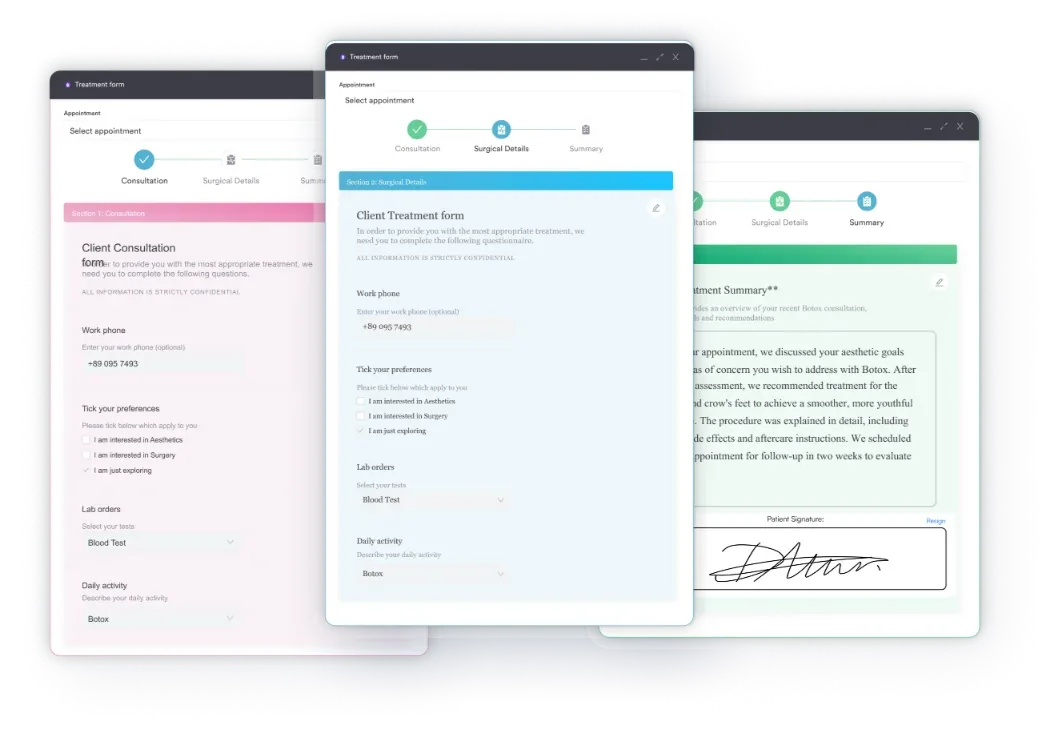
Using structured digital intake and assessment forms within your practice management system reduces the risk of missing a documentation field. When the screening instrument is built into a form template, the tool used, the domain-by-domain findings, and the date populate the encounter record automatically, creating an audit trail without extra manual entry.
Maintaining complete patient record systems that link screening results to specific encounters matters just as much for MIPS. Registries and QCDRs can request supporting documentation to validate submitted quality-data codes, and a note that doesn’t clearly tie the screen to the billed encounter is a common reason a quality action gets disallowed on audit.
Outside of MIPS Measure #283, California’s Medi-Cal program has repurposed two of these same codes – G9919 and G9920 – to bill for a completely different clinical action: screening for Adverse Childhood Experiences (ACEs), potentially traumatic events occurring before age 18 such as abuse, neglect, and household dysfunction.
This is a state-specific program under California’s Proposition 56 directed-payment structure and the Department of Health Care Services’ (DHCS) ACEs Aware initiative. It does not change what G9919 and G9920 mean nationally under MIPS, and G9921 has no role in it whatsoever.
Under ACEs Aware, an enrolled Medi-Cal provider who has completed a certified ACEs Aware core training and attestation can bill G9919 or G9920 for a screening completed with the ACE Questionnaire for Adults or Part 1 of the pediatric PEARLS (Pediatric ACEs and Related Life-events Screener) tool.
Which code applies depends entirely on the patient’s total ACE score, not on the MIPS positive/negative screening framing described above:
Each qualifying screen pays a flat $29, funded by Prop 56 and available only to Medi-Cal providers (including FQHCs, RHCs, and tribal clinics). It isn’t available for patients age 65 and older or for beneficiaries dually eligible for Medi-Cal and Medicare Part B, and it’s generally limited to once per adult lifetime per clinician for patients 21 and older.
Chart documentation should record the tool used, the score, the interpretation, what was discussed with the patient or family, and any follow-up actions taken – kept in the medical record and available on request.
Because the codes look identical on paper, a practice billing both MIPS quality reporting and California ACEs screening for the same patient needs a clear internal rule for which use applies: if the encounter is a Measure #283 dementia screen, code by the behavioral and psychiatric symptoms screening result; if it’s a Medi-Cal ACEs screen under the ACEs Aware program, code by the patient’s ACE score. Revenue cycle management reporting separates claims that were denied from claims nobody submitted.
The two should never be conflated on the same claim, and the eligibility rules (age limits, training attestation, payment amount) belong to the California program, not to CMS’s quality-measure rules.
G9920 sits inside a numbered run of HCPCS G-codes, but the range isn’t a single unified topic – it spans three unrelated CMS quality measures. Reading it as one “SDoH” or ACEs block is a common mistake. For the full current code set, use the AAPC HCPCS Level II code lookup.
None of these sub-ranges are ACEs-specific. The only ACEs billing use case anywhere in this run is California Medi-Cal’s repurposing of G9919 and G9920, covered above – G9921 and G9922 through G9931 have no role in ACEs billing under any program we could verify.
Confirm the active status of any code in this range against the current CMS HCPCS annual update file before submitting; G-codes can be revised or retired between measurement years.
Before submitting G9920, confirm which program you’re reporting under. For MIPS Measure #283, verify the code is still active in the current CMS HCPCS annual release and that your MIPS collection type (claims, registry, MVP, or QCDR) includes the measure for the performance year. For California Medi-Cal ACEs screening, verify your ACEs Aware training attestation is current and that the patient isn’t excluded by age or dual Medicare eligibility. The two programs attach completely different eligibility rules to the same two codes.
Because G9920 sits at the intersection of a federal quality measure and a California state billing program, most errors come from mixing the two up rather than from the codes themselves.
Tracking which program a given patient encounter belongs to is easier when your billing platform flags the qualifying encounter and the correct code set before submission, rather than relying on a coder to remember two different scoring systems for the same two G-codes.
For a broader look at compliance requirements in your practice documentation.
HCPCS code G9920 is a narrow code with two legitimate uses attached to it: reporting a negative dementia behavioral and psychiatric symptoms screen under MIPS Measure #283, and – only in California Medi-Cal, only alongside G9919 – billing an ACEs screening under the state’s Prop 56 ACEs Aware program.
Getting the G9919/G9920/G9921 distinction right for Measure #283, and keeping the California ACEs use case clearly separate from it, protects your quality reporting data and keeps your documentation audit-ready.
Pabau’s claims management software helps practices attach quality-data codes to qualifying encounters, keep screening documentation structured and retrievable, and track MIPS reporting gaps before a performance period closes. If you’re looking to streamline how your practice manages billing codes alongside clinical workflows, book a demo to see how it works in practice.

Coding a related opportunistic infection? Pneumocystosis diagnosis code guide This guide covers the billable code for pneumocystosis, more often documented as Pneumocystis pneumonia, once a provider confirms the diagnosis.
Need the code for an unidentified organism? Unspecified protozoal disease coding guide This guide covers the fallback code for a confirmed protozoal infection when the causative organism has not been identified.
Coding a guinea worm infection? Dracunculiasis (guinea worm) coding guide This guide covers the billable code for dracunculiasis, the guinea worm infection confirmed in returning travelers.
HCPCS code G9920 is an HCPCS Level II G-code with the official descriptor “Screening performed and negative.” It’s a quality-data code used to report the numerator for MIPS Quality Measure #283, Dementia-Associated Behavioral and Psychiatric Symptoms Screening and Management, when a clinician has screened a patient with dementia for behavioral and psychiatric symptoms and the result was negative. California Medi-Cal separately uses G9920 (alongside G9919) to bill ACEs screening under its Prop 56 ACEs Aware program – a distinct, state-specific use of the same code.
Under MIPS Measure #283, G9919 is reported when a behavioral and psychiatric symptoms screen was positive and management recommendations were documented; G9920 is reported when the screen was negative; and G9921 is reported when no screen was performed, only a partial screen was done, or a positive screen wasn’t followed by documented recommendations. Only G9919 and G9920 represent a completed quality action.
No. G9920 is a quality-data code, not a billable procedure, so it carries $0.00 direct reimbursement under traditional Medicare. Its value is in the MIPS Quality performance category score generated by accurate Measure #283 reporting, which contributes to a clinician’s or group’s overall MIPS payment adjustment. Verify the current CMS Physician Fee Schedule for confirmation.
The chart needs the patient’s dementia diagnosis, the screening method used (a validated instrument such as the Neuropsychiatric Inventory, or direct examination), confirmation that all three required domains were assessed (activity disturbances, mood disturbances including depression, and thought or perceptual disturbances), the negative result, the date, and the clinician who performed or reviewed the screen – all tied to the specific qualifying encounter being reported.
Only in one specific context. G9920’s national definition under MIPS Measure #283 has nothing to do with Adverse Childhood Experiences (ACEs). But California’s Medi-Cal program separately repurposes G9919 and G9920 (never G9921) to bill ACEs screening under its Prop 56-funded ACEs Aware initiative, coding by the patient’s total ACE score (4 or higher for G9919, 0 to 3 for G9920) rather than by the MIPS positive/negative screening result. Confirm which program applies before choosing a code.
No – it spans three unrelated CMS quality measures. G9919-G9921 belong to MIPS Measure #283 (dementia behavioral and psychiatric symptoms screening, covered in this guide); G9922-G9926 belong to MIPS Measure #286 (dementia safety concern screening); and G9927-G9931 belong to MIPS Measure #326 (atrial fibrillation and atrial flutter chronic anticoagulation therapy). None of these sub-ranges are ACEs-specific – the only ACEs use case in the whole range is California Medi-Cal’s repurposing of G9919 and G9920.



