ICD-10 Code S42.444P: Medial epicondyle fracture, right humerus
ICD-10 Code S42.444P: full descriptor and code validity ICD-10 Code S42.444P car...

Last Updated: Oct 13, 2026
Billable Code Specific Code
E67.1 is the billable ICD-10-CM code for hypercarotenemia.
Assigning E67.1 correctly comes down to three things. First, the clinical distinction from jaundice. Next, the supporting evidence the chart must carry. Finally, correct sequencing when the carotenemia is secondary to another condition.
Let Pabau's smart automation suggest the right codes, reduce claim denials, and keep your practice compliant—effortlessly.
Automate repetitive tasks and focus on what matters most—your patients.
Reduce coding errors and ensure compliance with the latest regulations.
Clean claims, fewer denials, and faster reimbursements.
Powerful insights and reporting to help your practice thrive.
HIPAA compliant SOC 2 certified GDPR-compliant Trusted by 4,000+ clinics worldwide

ICD-10 Code E67.1 is the billable diagnosis code for hypercarotenemia, valid for claims submission under the FY2026 edition effective October 1, 2025.
Hypercarotenemia causes yellow-orange skin discoloration (carotenodermia) without scleral icterus, the key clinical feature that distinguishes it from jaundice.
Documentation must include confirmed elevated serum carotene, a dietary history of excessive carotene intake, and an explicit rule-out of bilirubin-related jaundice.
When hypercarotenemia is secondary to a condition like hypothyroidism or anorexia nervosa, code the underlying disorder first and sequence E67.1 as an additional diagnosis.
Practice management software like Pabau lets clinicians assign E67.1 directly within the patient record and pass it to billing without re-entry or manual crosswalk steps.
E67.1 is a billable ICD-10-CM diagnosis code. The table below gives coders everything they need for a quick reference check.
The CDC/NCHS ICD-10-CM web tool maintains the official FY2026 tabular list. Therefore, always verify active status against the current fiscal year release before submitting a claim.
Hypercarotenemia is a condition caused by excessive accumulation of carotene in the blood. In practice, it almost always results from a high dietary intake of beta-carotene-rich foods. Common sources include carrots, sweet potatoes, pumpkin, leafy greens, and some supplement regimens. It is generally benign. This diagnosis surfaces most often in functional medicine and integrative health settings. That’s because patients in these settings are often on aggressive nutritional protocols.
The defining symptom of hypercarotenemia is carotenodermia, a yellow-orange discoloration of the skin. It is most visible on the palms, soles, nasolabial folds, and forehead. Critically, the sclerae remain white. That single finding separates hypercarotenemia from jaundice before any lab work comes back. Carotenemia symptoms are cosmetic only, with no associated pain, itching, or systemic illness.
According to the WHO’s ICD-10 browser, the international version of the code maps to the same clinical concept. The US ICD-10-CM version (E67.1) is the code used for American claims submissions.
Understanding where E67.1 sits in the taxonomy helps coders apply the right block-level coding conventions. It also helps them avoid misassignment to adjacent nutritional disorder codes. The ICD-10-CM classification system organizes every diagnosis from broad chapter to specific leaf code.
The E65-E68 block covers excess nutritional states rather than deficiencies. It also contains E66.01 and other obesity codes immediately before the hyperalimentation codes. That is a detail worth knowing for coders who handle a broad nutritional and metabolic caseload.
The ICD-10-CM tabular list and its official approximate synonyms confirm several alternative terms accepted for E67.1. Using these in documentation does not change the code. However, coders should recognize them, so they don’t search for a separate code when the terms appear in clinical notes.
When a provider writes “carotenemia confirmed on dietary history and serum carotene” in the assessment, E67.1 is the correct code. Carotenodermia as a standalone notation is a clinical sign, not a diagnosis. It supports E67.1. However, it should not be the sole basis for code selection if the underlying dietary etiology hasn’t been confirmed.
E67 covers “other hyperalimentation,” a category for nutritional excess conditions that don’t fit into the obesity codes at E66. In addition, each sibling code addresses a different excess nutrient. Understanding the full E67 family helps coders avoid misassignment, particularly between the vitamin toxicity codes and E67.1.
E67.0 vs E67.1 is the most common misassignment to watch for. For example, a patient on high-dose retinol supplements gets E67.0 (hypervitaminosis A). By contrast, a patient eating large quantities of carrots and sweet potatoes gets E67.1.
Beta-carotene is a provitamin that converts to vitamin A in the body at a self-limiting rate. It does not carry the hepatotoxicity risk of preformed vitamin A. That’s why E67.1 carries a benign designation that E67.0 does not.
The E67 category also carries an Excludes1 note. Hyperalimentation not otherwise specified is coded to R63.2, and sequelae of hyperalimentation are coded to E68, not within E67. Neither applies to a straightforward dietary hypercarotenemia. Instead, the note is a reminder to confirm the documentation points to carotene excess specifically before landing on E67.1.
The yellow-orange skin presentation is where coders and clinicians must be most careful. Specifically, the carotenemia vs jaundice distinction is the single most important call in this section. Selecting the wrong code here can trigger inappropriate workups, payer scrutiny, and documentation flags on audit. In practice, the clinical distinction is straightforward when the chart is thorough.
When a note records only “yellow skin” without specifying the mechanism, coders should query the provider before assigning E67.1. An etiology-confirmed entry (elevated serum carotene, dietary history, absent scleral icterus) makes E67.1 appropriate. By contrast, unconfirmed yellow skin defaults to R17 pending further workup.
When hypercarotenemia is secondary to another condition, code the underlying disorder as the primary diagnosis. Then assign E67.1 as an additional code for the carotenemia itself. Most cases are dietary and stand alone. However, elevated serum carotene can also be a downstream sign of a metabolic or endocrine problem. When it is, the sequencing changes.
Three associations account for most secondary presentations coders will see:
Hypercarotenemia itself needs no treatment in any of these cases. It reverses once carotene intake drops or the underlying condition is controlled. What matters for the claim is whether E67.1 is a standalone dietary finding or a secondary one. That’s because this decision drives which code leads.
E67.1 is billable and valid for claims submission under the FY2026 ICD-10-CM edition. According to CMS’s ICD-10 codes guidance, clinicians must ensure that the diagnosis code assigned reflects a confirmed clinical condition. It should not be a symptom or suspected finding. For E67.1, this means the chart must reflect a positive clinical assessment, not just an elevated lab value in isolation.
E67.1 answers why the patient was seen, while a procedure code records what was done. Payers outside the US work from their own schedules, such as CCSD code W8820 for shoulder arthroscopy.
A complete documentation record supporting ICD-10 Code E67.1 should include all of the following elements. Missing any one of them can lead to a query, denial, or compliance flag on audit. Using digital intake forms captures dietary history upfront, before the clinical encounter begins. As a result, this means fewer missing elements.
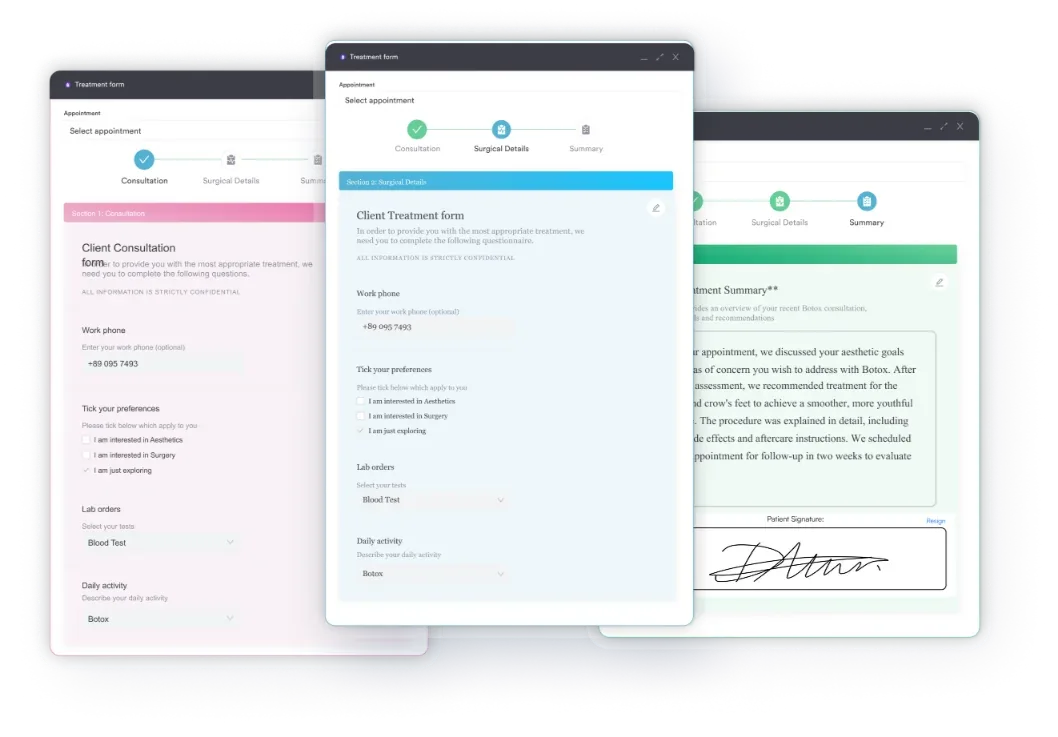
The AAPC ICD-10-CM code lookup provides the official coding guidelines applicable to E67.1. Coders should also consult a certified professional coder (CPC) for complex cases where multiple nutritional diagnoses are present simultaneously. E67.1 can be assigned as a secondary code alongside a primary diagnosis when hypercarotenemia is an incidental but confirmed finding. In practice, this often happens during a visit for another condition.
Track serum carotene alongside the dietary history note in the same encounter. Payers may challenge E67.1 if the only documentation is a skin observation. A lab value plus a dietary trigger establishes the clinical basis for reimbursement and removes ambiguity on audit.
Practices managing nutritional and metabolic diagnoses like hypercarotenemia often repeat the same steps. First, the coder looks up E67.1 on a reference site and confirms it. Next, the coder re-enters it manually into the EHR and again into the billing module. Each hand-off is a point where transcription errors creep in.
Practice management software like Pabau removes that repetition by embedding ICD-10-CM code search directly inside the patient record.
Within Pabau, a clinician can search for E67.1 at the point of care. This works whether the clinician is in a metabolic health or integrative medicine setting. The clinician can then assign it to the encounter note. As a result. The diagnosis travels with the encounter from clinical documentation to claim generation in a single workflow.
Beyond code assignment, Pabau supports the documentation elements that make E67.1 defensible on audit. This all lives within client records. As a result, coders spend less time chasing documentation across disconnected systems.
For practices running frequent nutritional assessments. Specifically, these templates can prompt for the specific fields required to support metabolic and nutritional diagnosis codes.
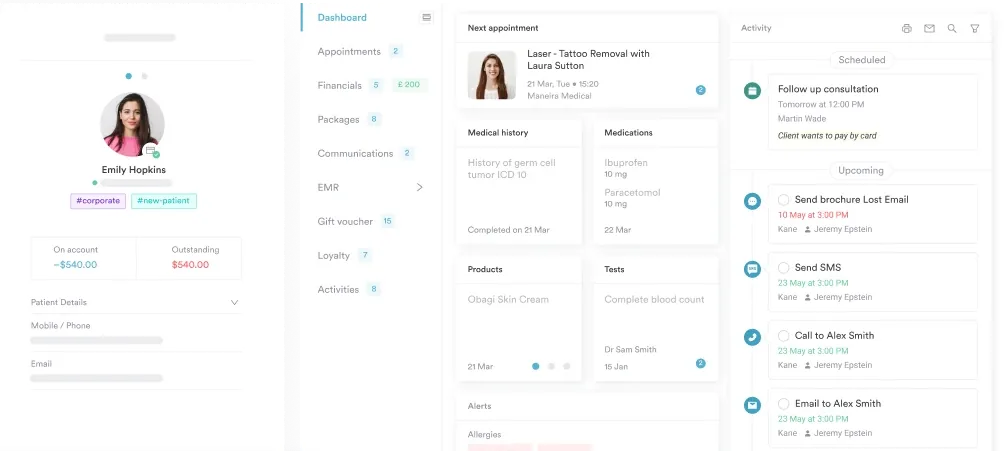
Holding the diagnosis, its supporting documentation, and any secondary-condition coding on one record keeps an E67.1 claim defensible. So the claim holds up even if a payer ever questions it.

Pabau connects diagnosis code assignment directly to billing, so E67.1 and every other ICD-10-CM code travels from the clinical note to the claim without manual re-entry or copy-paste errors.

ICD-10 Code E67.1 became effective on October 1, 2025. However, the code itself has been present in prior ICD-10-CM editions. The FY2026 effective date refers to the current active fiscal year release, not the code’s original introduction date.
Claims submitted for dates of service on or after October 1, 2025 should use the FY2026 tabular list. This version applies to E67.1.
No coding convention changes, excludes notes, or includes notes were added to E67.1 in the FY2026 revision cycle. The code description remains “Hypercarotenemia” without modification.
Coders should verify the effective date against the CDC/NCHS official ICD-10-CM tool at the start of each fiscal year. This confirms no revisions have been applied. The CDC’s CMS ICD-10 codes page publishes annual update files listing all additions, revisions, and deletions.
Review ICD-10-CM update files every October 1 against your active code list. Even stable codes like E67.1 can receive new excludes notes or includes notes in annual revisions that change sequencing rules or add secondary code requirements.
Hypercarotenemia is a benign condition. However, coding it correctly still demands the same documentation discipline as any other ICD-10-CM diagnosis. The key points: E67.1 is billable and valid for FY2026 submission, and the scleral-icterus distinction from jaundice must be documented. In addition, the chart needs a confirmed dietary history and elevated serum carotene to support the code on audit.
Pabau’s integrated ICD-10 code search and claims workflow connects E67.1 assignment directly to claim submission. As a result, the path to a clean claim is a single, connected step. To see how it works in a live nutritional or metabolic health practice, book a demo with the Pabau team.

Billing a high-complexity emergency department visit? Level 5 ED visit billing guide CPT code 99285 is the highest-acuity emergency department code, used for high-complexity medical decision making for any patient.
Coding a different chronic condition this week? M35.3 is the billing guide for polymyalgia rheumatica.
Need a procedure code reference too? E0482 is the billing guide for cough stimulating devices under HCPCS.
ICD-10 Code E67.1 is the billable ICD-10-CM diagnosis code for hypercarotenemia, a condition caused by excessive accumulation of carotene in the blood, typically from high dietary intake of beta-carotene-rich foods. It is valid for claims submission under the FY2026 edition (effective October 1, 2025) and classified in Chapter 4 under the E65-E68 hyperalimentation block.
Yes. E67.1 is a billable, specific ICD-10-CM code valid for reimbursement and claims submission. It can be used as a standalone primary diagnosis or as a secondary code when hypercarotenemia is a confirmed incidental finding during a visit for another condition.
Hypercarotenemia (E67.1) causes yellow-orange skin discoloration without scleral icterus. Serum bilirubin is normal and serum carotene is elevated. Jaundice (coded as R17 or an etiology-specific code) involves elevated bilirubin and yellow sclerae. The presence or absence of scleral icterus in the physical exam documentation is the key clinical differentiator for code selection.
Yes. Carotenemia is an official approximate synonym for E67.1 in the ICD-10-CM tabular list. Other accepted synonyms include hypercarotenaemia (British spelling), carotenodermia (the presentation-based term for the skin finding), and beta-carotene excess. Any of these terms in a clinical note supports assignment of E67.1.
The FY2026 edition of ICD-10-CM Code E67.1 became effective on October 1, 2025. No description changes or new coding conventions were applied to the code in this revision cycle. Claims for dates of service from October 1, 2025 onwards should reference the FY2026 tabular list.
The E67 family includes E67.0 (hypervitaminosis A), E67.1 (hypercarotenemia), E67.2 (megavitamin-B6 syndrome), E67.3 (hypervitaminosis D), and E67.8 (other specified hyperalimentation). E67.0 and E67.1 are the most commonly confused: E67.0 covers excess preformed vitamin A (retinol) with potential hepatotoxicity, while E67.1 covers excess provitamin A (beta-carotene) with only benign skin discoloration.
No. Hypercarotenemia is benign and reversible. Unlike hypervitaminosis A (E67.0), excess beta-carotene does not cause toxicity, and the skin discoloration fades on its own once carotene intake is reduced. No medical treatment is required beyond dietary adjustment, though a persistent case warrants checking for an underlying condition such as hypothyroidism.
Carotenemia develops from sustained high carotene intake over several weeks, not a single large serving. Eating the equivalent of several carrots a day, or taking beta-carotene supplements, for weeks at a time is the usual trigger. Cutting back on high-carotene foods such as carrots, sweet potatoes, and pumpkin clears the discoloration over the following weeks.