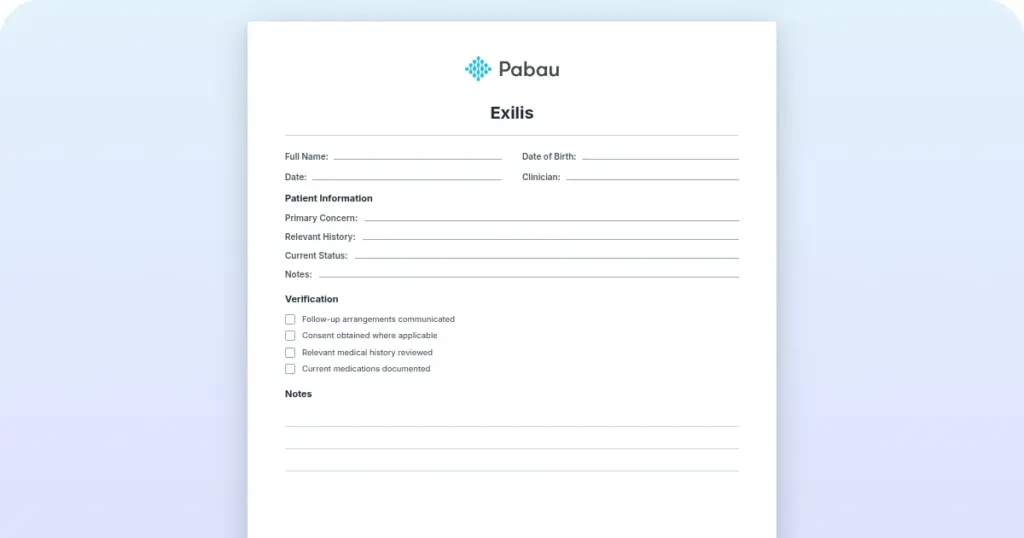
Exilis patient treatment record: Free PDF for RF sessions
An Exilis patient treatment record is the session log for BTL’s radiofrequ...

3
Last Updated: Oct 23, 2026

The New Jersey State Board of Cosmetology and Hairstyling issues the license, through the Division of Consumer Affairs.
You need 1,200 training hours at a Board-approved school, and New Jersey offers no apprenticeship route.
Applicants must be at least 17 with a high school diploma or GED, then pass two Prometric exams at 75%.
Renewal is biennial in even-numbered years, costs $90, and requires no continuing education.
A cosmetology license does not cover injectables or laser treatments, which New Jersey treats as medical practice.
New Jersey cosmetology license requirements come down to 1,200 training hours, two state exams, and one application. Clear those and you can legally cut, color, wax, and work on nails anywhere in the state. Once a salon adds medical spa services, it needs charting as well as checkout, the pairing our roundup of med spa software tests.
What the license will not cover is a Botox syringe or a laser handpiece. That boundary is where new graduates and salon owners trip up. Hire the wrong person for a service and you invite a board complaint, not just an awkward conversation.
So here is what New Jersey asks of you, what each stage costs, and exactly where your license stops.
To become a cosmetologist in New Jersey you work through four steps, in this order:
The credential is the cosmetologist-hairstylist license, and it is one of several the Board issues. Barbering, manicuring, and skin care specialty each carry their own license and their own hour requirement.
Pick the wrong one at enrollment and you train for a scope you did not want.
You have to be at least 17 years old and hold a high school diploma or a GED. New Jersey does not accept a home-school diploma in place of either.
Order a copy of the transcript or the GED certificate before you enroll. Chasing a transcript from a district you left years ago is slow, and it holds up the application.
With the paperwork sorted, the training itself is the long part. The cosmetologist-hairstylist license takes 1,200 hours at a school the Board has approved, and those hours cover the full cosmetic scope:
There is no apprenticeship pathway to fall back on. Hours behind a chair in a salon do not count toward the 1,200, no matter who supervises you.
The 1,200 hours are fixed. How long they take depends on the school’s schedule, so ask each one how many hours a week it delivers. Thirty hours a week clears the requirement in about 40 weeks. Fifteen hours a week takes twice as long.
Both exams come from the National-Interstate Council of State Boards of Cosmetology. Prometric administers them in New Jersey, and you need 75% on each one.
The written paper runs 120 multiple-choice questions with a two-hour limit. The practical is hands-on and worked on a mannequin rather than a live client.
They are scored separately, so passing one does not carry the other. Fail one and you retake only that exam, and you pay its fee again.
The application goes to the New Jersey State Board of Cosmetology and Hairstyling, which sits inside the Division of Consumer Affairs. The Board publishes its current licensing requirements and forms there.
Your application file needs four items:
Most delayed files are not rejected. They are incomplete, and they sit until somebody chases the missing piece. Run through this before you send yours:
That last address point matters more than it looks. A New Jersey cosmetology license belongs to you, not to the salon that hires you, and it travels with you when you change employer.
Keep your own address on file so renewal notices follow you and not the job.
Getting licensed costs about $50 in application fees, then $39 for the written exam and $53 for the practical. The license itself runs up to $90. Together the state’s side is a little over $200 the first time.
Every stage carries its own charge, and each one falls due at a different moment. The table below shows what you pay and when it lands.
Two of those rows repeat if you fail. Exam fees are charged per attempt, so a retake on the practical is another $53 rather than a free second run.
None of those rows covers tuition. Tuition is the largest cost of getting licensed, and the one number the state does not set. Ask each school for its total, including kit and books, before you compare hourly rates.
A New Jersey cosmetology license does not authorize injectables or laser treatments. That holds in a med spa, in a salon, and anywhere else in the state.
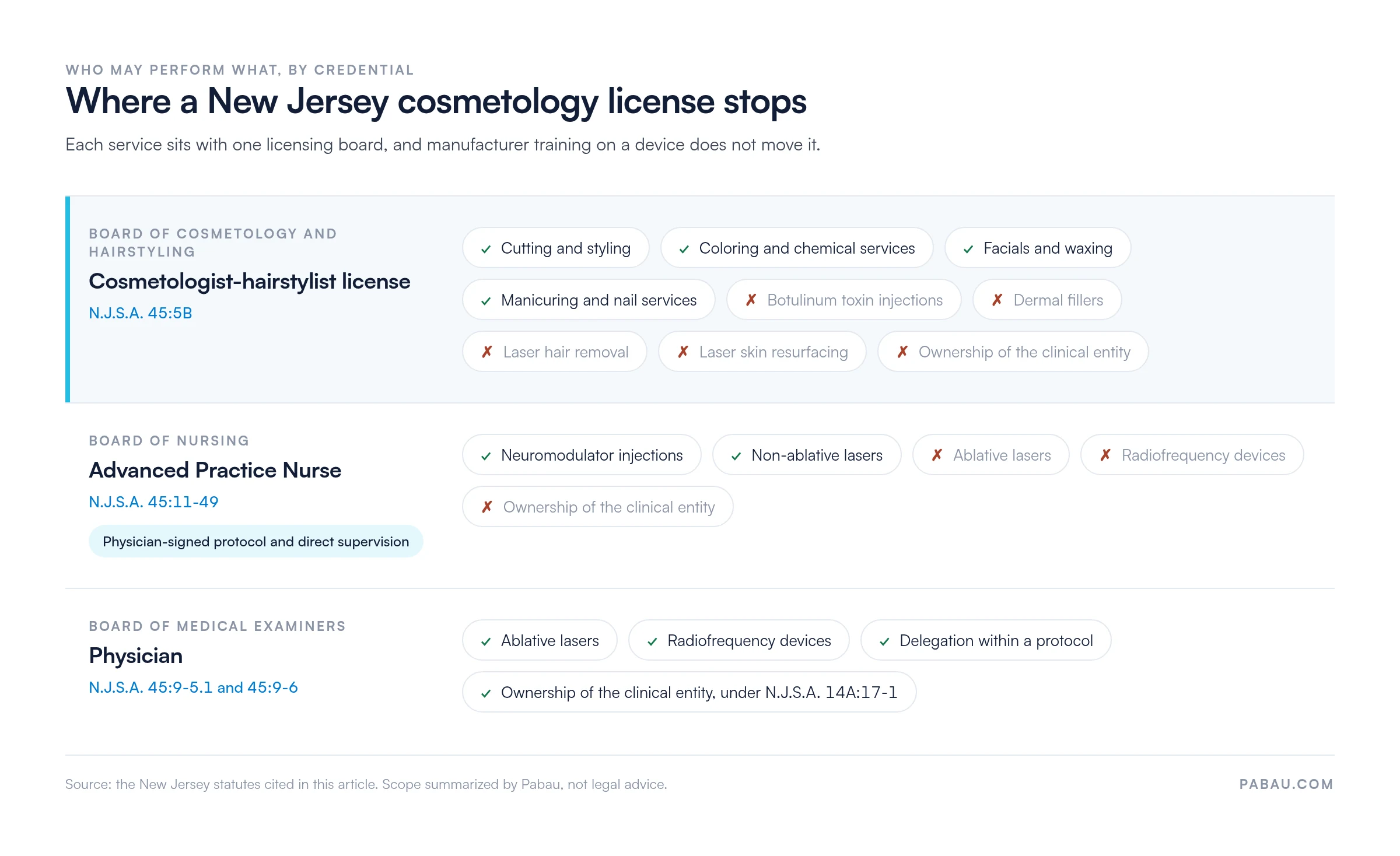
The cosmetologist-hairstylist license is issued under N.J.S.A. 45:5B, and it covers cosmetic services to hair, skin, and nails. Cutting, coloring, facials, waxing, and manicuring sit inside it. Botulinum toxin injections, dermal fillers, laser hair removal, and laser skin resurfacing do not.
New Jersey defines the practice of medicine at N.J.S.A. 45:9-5.1, and N.J.S.A. 45:9-6 requires a license to practice it. That puts injectables and lasers with the New Jersey State Board of Medical Examiners.
So it is a different board, a different statute, and a different license. Manufacturer training on a device does not change which board governs the treatment.
Ownership follows the same logic. New Jersey applies the corporate practice of medicine doctrine through the Professional Service Corporation Act, at N.J.S.A. 14A:17-1 et seq. That act limits ownership of the clinical entity to physicians licensed by the Board of Medical Examiners.
A cosmetologist can work inside a compliant med spa as staff, but cannot own the clinical entity. Those med spa ownership rules vary by state, so check where your state draws the line.
Delegation does not solve it either. A physician cannot hand a medical procedure to a cosmetologist the way a service gets handed to an assistant. The underlying act is still the practice of medicine.
Where a non-physician does perform an aesthetic procedure in New Jersey, the authority comes from elsewhere. An Advanced Practice Nurse may give a neuromodulator injection or run a non-ablative laser.
The New Jersey Board of Nursing certifies them under the Advanced Practice Nurse Certification Act, at N.J.S.A. 45:11-49. That authority depends on a physician-signed protocol and direct supervision. It is a large part of why practices hire a medical director before they buy a device.
Ablative lasers and radiofrequency devices are more restricted still. Those cannot be delegated to a non-physician at all, whatever protocol is on file. The chart below maps each service to the credential that covers it.
If a service on your menu needs a prescription, a needle, or an ablative device, a cosmetology license is not the credential that covers it. Build the menu around who is on shift, not the reverse.
Treat all of this as general information rather than legal advice. Before you open or restructure a med spa, have a healthcare attorney check your ownership and supervision arrangement against the services you plan to sell.
New Jersey cosmetology license renewal runs on a two-year cycle that ends in even-numbered years. It costs $90, and it asks for no continuing education.
That last point surprises people who trained elsewhere. New Jersey does not ask you to bank continuing education hours to keep a cosmetologist-hairstylist license active. Your renewal is a fee and a form, with no coursework to schedule around it. A Virginia cosmetology license also renews without coursework, for $120 every two years.
Renewal goes through the Division of Consumer Affairs’ online licensing portal. Renewing online takes minutes once your contact details are current. The portal is also where you correct an address the Board has wrong.
Miss the date and the license expires, with a $30 late fee added to the $90. The portal will still take your payment after the expiry date. Until the renewal goes through, though, you cannot legally work.
If you employ licensed staff, the renewal date is your problem too. One expired license on the floor is a compliance issue for the premises that scheduled that person, not only for the individual who forgot.
New Jersey licenses out-of-state cosmetologists by endorsement under N.J.S.A. 45:5B-28. Which of the two routes applies depends on how your licensing state’s requirements compare with New Jersey’s.
The word doing the work in that second route is “verified”. Three years you remember is not three years the Board can read. Start collecting employer letters, pay records, and shop license numbers before you file.
Training earned abroad goes through the same substantially-similar test as another state’s. A license from outside the US is not automatically out of scope. It stands or falls on what your training record can prove.
Moving the other way is a separate exercise, because hour counts differ sharply between states. The Texas cosmetology license requirements run on 1,000 hours, for instance, so a New Jersey graduate arrives with hours to spare. The Georgia cosmetology license requirements set 1,500 school hours for a Master Cosmetologist, 300 more than New Jersey asks.
Any premises offering cosmetology, hairstyling, barbering, manicuring, or skin care services needs its own shop license from the Board. Licensed staff do not license the room they work in.
The shop license is separate from every individual license inside it. A suite rented inside somebody else’s building still counts as a premises, so a chair renter is not exempt.
The shop also has to employ at least one manager who has held a cosmetologist-hairstylist license for three years or more. That is a hiring constraint on opening day, not a formality to sort out later. If you are the only licensee on the payroll and you qualified last year, you do not yet meet it.
Standards for the premises come from the Board, which publishes them as a downloadable PDF. That document is worth reading in full before you fit out a room. Check the date on whichever copy you find, because old versions sit on school and supplier sites for years.
The sanitation and infection control training inside your 1,200 hours stops being coursework at this point. It becomes the standard the premises is held to, and the reason disinfecting implements is a daily routine rather than a classroom topic.
Licensing rules turn into an operational problem the moment more than two people are on the schedule. A cosmetologist, a skin care specialist, and an Advanced Practice Nurse each carry a different service list. The front desk is the one deciding who gets booked for what.
Today that control usually lives in a spreadsheet and somebody’s memory. Practice management software like Pabau moves it onto each staff profile instead, where services and permissions are set per person. A neuromodulator appointment cannot land in a cosmetologist’s column, because the system never offers it there.
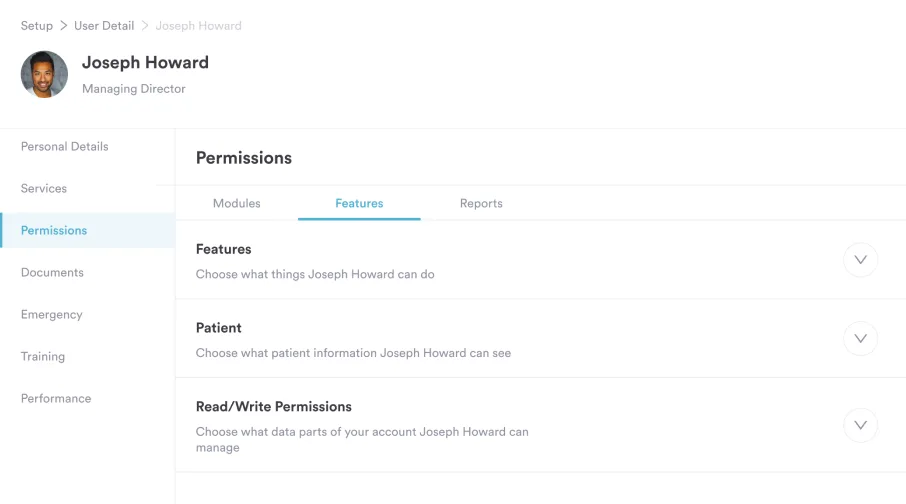
The same profile holds the paperwork behind the person. Staff documents and training records sit next to the schedule. A license certificate and its expiry date are easy to check against next week’s shifts. Consent forms and treatment notes attach to the client record rather than a folder behind reception.
Because Pabau is built for medical aesthetics, one calendar handles a haircut, a facial, and a physician-supervised treatment without pretending they are the same appointment. That is the practical value of medical spa software for a mixed team, and it means you stop policing the scope boundary by hand.
Our roundup of the best aesthetic clinic software compares the options on scheduling, records, and compliance so you can judge them side by side.

Pabau sets services and permissions per staff member, keeps license and training documents on the same profile, and attaches consent forms to the client record. Your schedule matches your team’s credentials without a manual check.

The 1,200 hours and the two exams are the part everybody plans for. The part that costs people money later is the boundary around the license.
A cosmetologist-hairstylist license is authority to do cosmetic work on hair, skin, and nails. It stops short of the medical side of a med spa menu, and no employer can widen it for you. Settle that question before you accept a role, or before you write a job description for someone else.
If you are the one running the schedule, the boundary has to live inside how appointments get made. Book a demo to see how Pabau keeps every appointment matched to a staff member licensed to deliver it.

Licensed in another state and moving south? Texas cosmetology license requirements sets out the 1,000-hour route and how Texas treats transfers in.
Working across the Hudson as well? Medical spa license New York explains what New York asks of a med spa before it opens its doors.
Want the same breakdown for the West Coast? California cosmetology laws covers the hour counts, exams, and renewal rules that state applies.
Building the compliance side of a med spa? Med spa compliance walks through the documentation and oversight owners are expected to hold.
Wondering who on your team may inject? Can nurses do Botox explains where a nurse’s authority to inject comes from, and its limits.
Up to five years. Within that window you file a renewal application, the delinquent fees, and a reinstatement fee. You also submit an affidavit listing every job you held while lapsed. Past five years, N.J.A.C. 13:28-1.1 sends you back to the licensing exam.
No. The license has to be issued before you touch a paying client. Working on a submitted application counts as unlicensed practice, and the shop that scheduled you shares the exposure. Wait for the license number.
Yes. A teaching license under N.J.A.C. 13:28-1.7 needs your cosmetologist-hairstylist license, a 500-hour teacher training course, and a 30-hour teaching methods course. You also need six months of full-time shop experience and a Board exam pass.
Use the Division of Consumer Affairs license verification search. It returns the license number, the status, and the expiration date in seconds. Run it on every candidate before their first shift, then again each renewal season.
Not on its own. Every state licenses separately, so you apply there by endorsement and meet its hour count. Some states accept New Jersey’s 1,200 hours outright. Others ask for extra training or a state law exam first.