GLP-1 diet plan
A GLP-1 diet plan is a structured eating framework for patients taking semagluti...

2
Last Updated: Oct 13, 2026

A nearsighted test checks whether distant objects look blurry while close-up objects stay sharp. That pattern points to myopia, which now affects about 42% of Americans.
The Snellen eye chart is the standard test for distance vision, and anything worse than 20/40 in either eye warrants a professional exam.
A Snellen fraction is not a myopia grade. Only an eye doctor can measure how strong the refractive error is, in diopters.
Home nearsighted tests screen rather than diagnose. They cannot measure eye pressure, prescription strength, or the health of your retina.
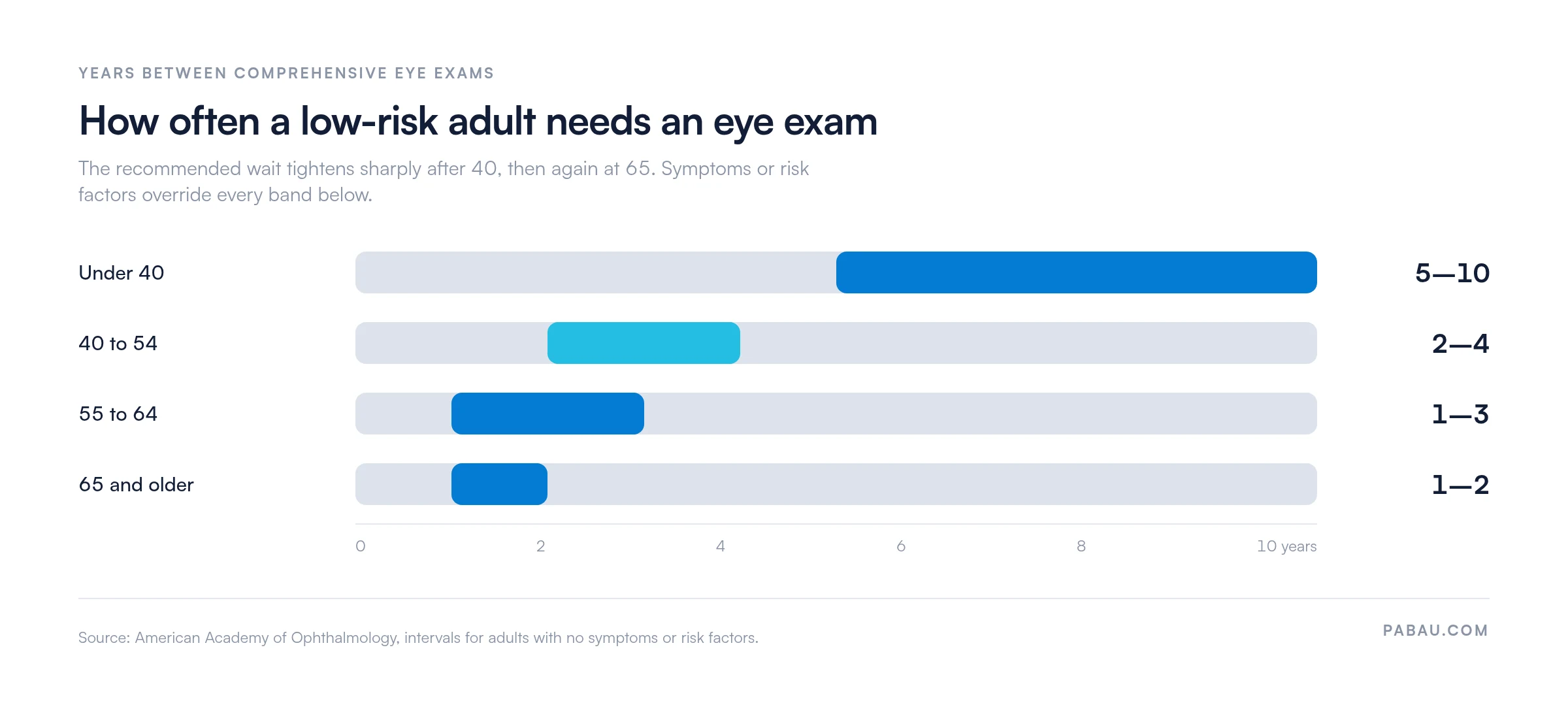
Low-risk adults need a comprehensive exam every five to 10 years under 40, and every one to two years from 65.
About 42% of Americans are nearsighted, up from roughly 25% thirty years ago. Many go undiagnosed for years, because blurry distance vision creeps in gradually. A basic nearsighted test takes under five minutes. It tells you whether blurry road signs, a hard-to-read whiteboard, or squinting at screens deserve a professional look.
This guide walks you through running a nearsighted test at home with a Snellen chart. You will see how to read the result, what it cannot tell you, and when it is time to call an optometrist.
A nearsighted test measures distance visual acuity, the sharpness with which you see objects far away. Myopia, or nearsightedness, happens when the eye is slightly too long or the cornea curves too steeply. Light then focuses in front of the retina instead of on it. Distant objects look blurry while nearby objects stay sharp.
According to the National Eye Institute, about 42% of Americans are now nearsighted. That is nearly double the share of 30 years ago. Catching it early means you can get corrective lenses before blurry distance vision starts costing you at work, behind the wheel, or in class.
These symptoms suggest myopia is already affecting your distance vision. The more of them you recognize, the more useful your test result will be.
A printable Snellen chart is the most reliable way to test distance vision at home. The American Academy of Ophthalmology (AAO) publishes free downloadable versions for adults and children.
Tape the chart to a wall at eye height. If you are using a standard 10-foot chart, stand exactly 10 feet back. For a 20-foot version, stand 20 feet away. Distance accuracy matters, because standing too close makes your result look better than it is.
Cover your left eye with your palm or an index card, without pressing on the eyelid. Read the smallest line of letters you can see clearly. Note the fraction printed beside it, such as 20/40. Then cover your right eye and repeat.
If you read the 20/20 line clearly with each eye, your distance vision meets the standard clinical benchmark. If the 20/40 or 20/100 line is your limit, your distance acuity is reduced. Record each eye separately, because vision often differs between the two.
Hold a near-vision card or standard newspaper text 14 inches (35 cm) from your eyes. According to the AAO, this is the standard near-vision testing distance. Read the smallest print you can make out comfortably.
Trouble here points more toward farsightedness or presbyopia than myopia. If near text is clear while distant text is blurry, myopia is the likelier explanation.
The Snellen chart uses rows of letters that shrink with each line. Each row corresponds to a visual acuity fraction. The top number (20) is the testing distance in feet. The bottom number is the distance at which a person with normal vision would read that same line.
A score of 20/40 means you must stand at 20 feet to read what someone with typical vision reads at 40 feet. The table below maps the common scores to what they mean for everyday tasks.
The table cannot give you a myopia grade. Severity is measured in diopters during a refraction, so an uncorrected Snellen fraction only describes how you see right now.
Legal blindness is a separate definition in the US. It applies at 20/200 or worse in the better eye with best correction, not to an uncorrected home reading.
The difference comes down to where the eye focuses incoming light. A nearsighted eye focuses light in front of the retina. A farsighted eye focuses it behind the retina. Knowing which pattern you have helps you read your result and talk to your optometrist.
Astigmatism, a third common refractive error, often shows up alongside myopia. An irregular corneal shape blurs vision at every distance, and a Snellen chart alone will not isolate it. A pinhole test can help separate refractive blur from other causes, though only a clinical refraction settles it.
Screens do not cause myopia on their own, but heavy near-work is linked to faster progression in children.
A 2021 systematic review and meta-analysis in The Lancet Digital Health pooled studies of smart-device use and myopia. It reported an association between higher screen time and myopia risk, without showing that screens cause it.
The suspected mechanism is sustained accommodation, the effort of focusing on close objects, which stresses a developing eye. Time outdoors appears protective, and the American Optometric Association (AOA) lists outdoor activity among the habits that support healthy vision in children. It does not name a daily target.
For adults with established myopia, the evidence on screen-driven progression is thinner. Digital eye strain is a separate problem, involving tired eyes, dryness, and temporary blurring after long sessions. It does not permanently worsen your refractive error.
The 20-20-20 rule helps you manage that strain. Every 20 minutes, look at something 20 feet away for 20 seconds.
A home nearsighted test is a screening tool, not a clinical diagnosis. Five limits are worth knowing before you act on your result.
Write down each eye’s result and the date you tested. Many vision practices collect that history through digital intake forms before you arrive. Your optometrist then starts the exam with your own numbers in hand.
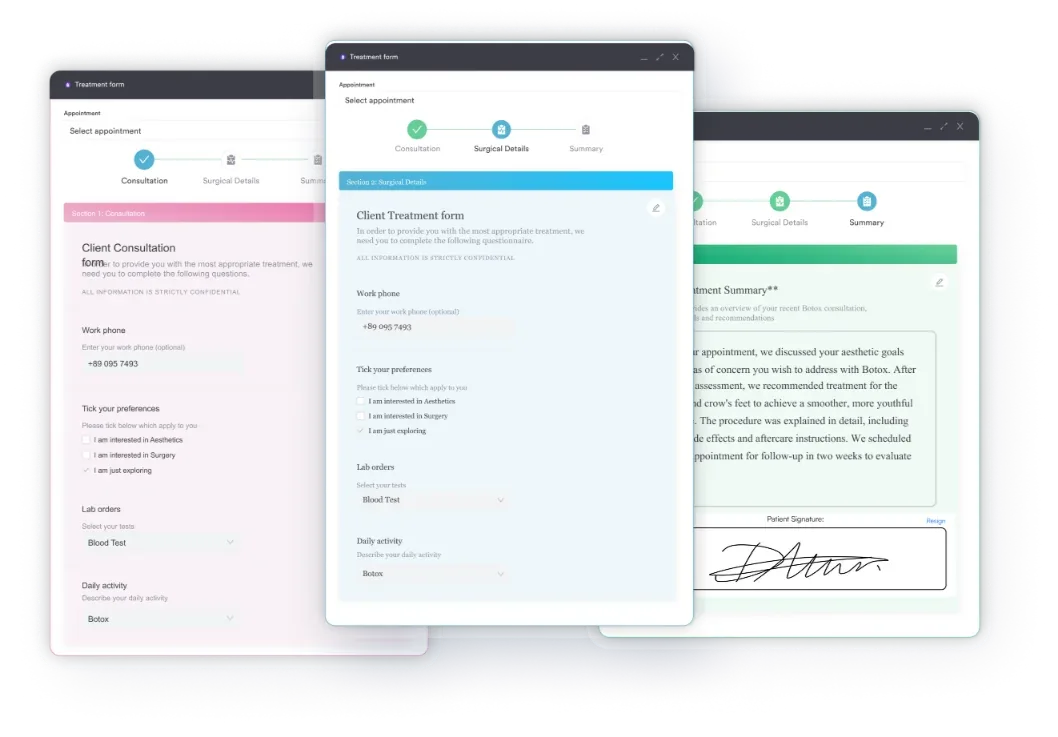
Book an appointment if either eye reads 20/40 or worse on your home test. These signs should also send you to an optometrist, however mild the numbers look.
For adults with no symptoms or risk factors, the AAO sets the interval by age, and it narrows steadily. Under 40 the recommendation is one comprehensive exam every five to 10 years.
That tightens to every two to four years from 40 to 54. From 55 to 64 it is every one to three years, and from 65 it is every one to two years. Risk factors like diabetes, a family history of glaucoma, or an existing prescription pull all of those intervals in.
Some exams have a fixed standard to clear. Commercial drivers, for example, need at least 20/40 in each eye, and the DOT eye test form records exactly that. A full eye examination goes further than acuity, covering pressure, pupil responses, and a look at the retina.
Run your nearsighted test at the same time of day each time you screen. Eye fatigue from prolonged screen use in the evening can make results appear slightly worse than your usual baseline. Morning tests, before sustained near-work, give the most consistent comparison point over time.
Exam intervals only work if someone tracks them. In most vision practices that means a spreadsheet of due dates and a receptionist working through a call list. Patients quietly slip a year or two past their recall date.
Practice management software like Pabau holds the whole cycle in one record. Each patient’s acuity history, intake answers, and next due date sit together, and reminders go out on the interval you set. Your front desk stops chasing and starts confirming.
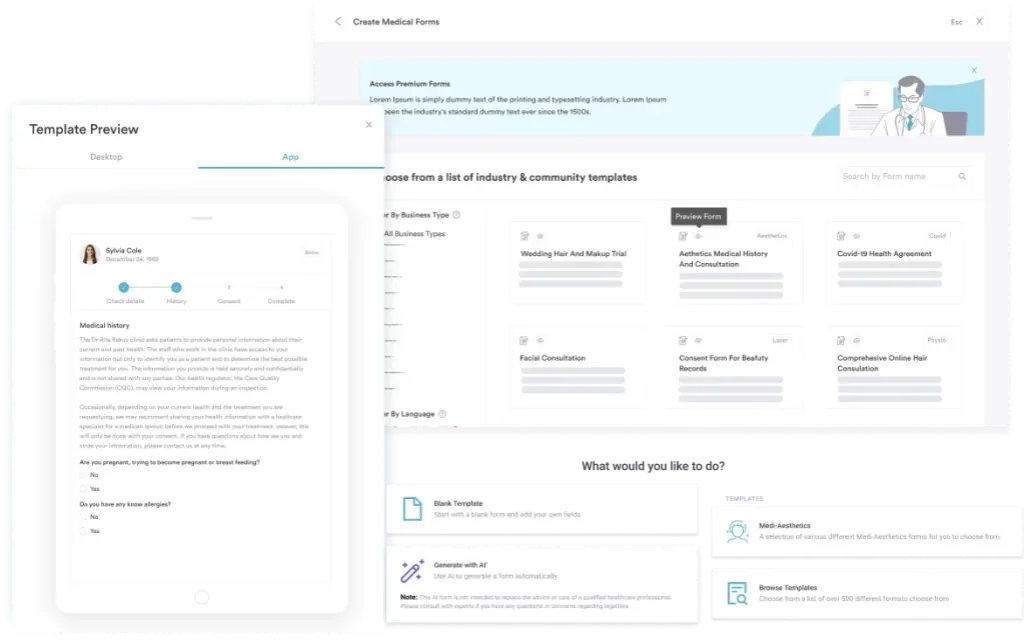
Patients book their own follow-up through online booking, which keeps recall out of the phone queue. Automated reminders go out before each due date, so a patient with progressing myopia gets seen on time rather than two years late.
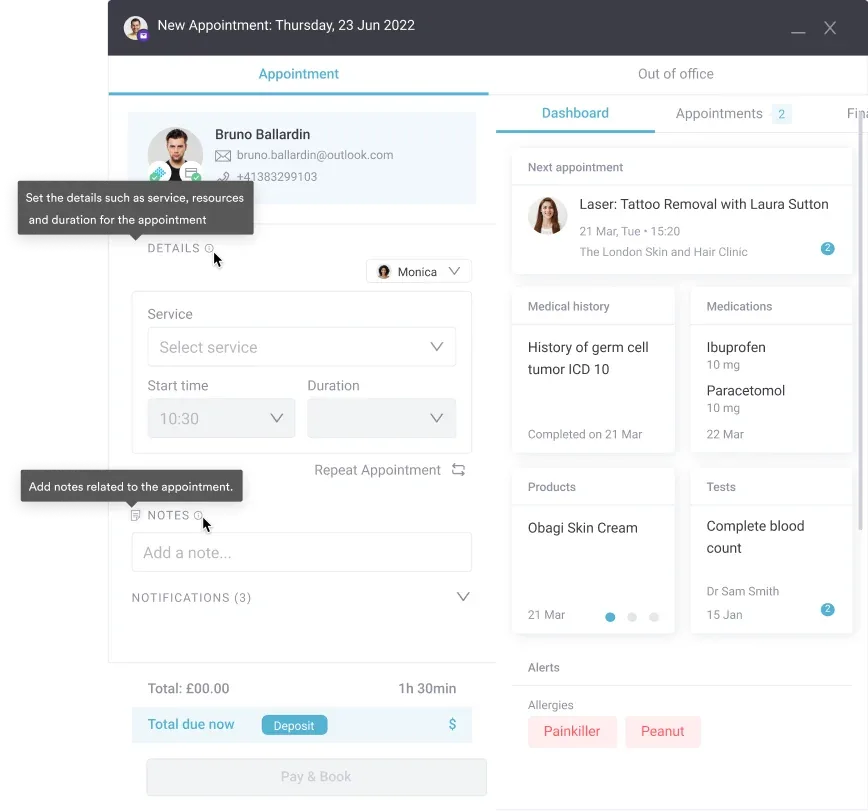

Pabau gives vision practices one place for acuity history, digital intake forms, online booking, and automated recall reminders. Patients get seen on their interval instead of two years late.

A home nearsighted test earns its five minutes because it turns a vague suspicion into a number you can act on. It will not grade your myopia or check your retina. Treating a 20/40 reading as reassurance is the mistake to avoid.
So test both eyes, write the fractions down with the date, and use your age band to decide how soon you are due. If either eye came in at 20/40 or worse, that date is now.
Running the practice on the other side of that appointment is a different job. Book a demo to see how Pabau keeps eye exam recall, intake, and booking in one place.

Wondering what a full eye exam covers? Eye physical examination walks through each station of a clinical exam, from acuity to the retinal check.
Blurry vision with no clear cause? Pinhole test explains how a card of tiny holes helps separate refractive blur from other problems.
Need to rule out a neurological cause? Neurological eye exam covers the cranial nerve checks that sit behind an unexplained visual change.
Monitoring central vision between appointments? Amsler grid chart is a printable grid for spotting distortion in your central field at home.
A nearsighted test is a visual acuity screening that measures how clearly you see distant objects. The most common version uses a Snellen eye chart. You stand at a set distance, 10 or 20 feet, and read progressively smaller rows of letters. Each row corresponds to a standard acuity fraction like 20/20 or 20/40. A result worse than 20/20 at distance suggests myopia, but a professional exam is needed for a diagnosis and prescription.
20/20 means you can see at 20 feet what a person with normal vision sees at 20 feet. It represents the clinical standard for unimpaired distance acuity, not perfect vision. Some people see 20/15, meaning they can read at 20 feet what most people need 15 feet to see clearly. 20/20 simply means your distance vision meets the typical baseline.
A home nearsighted test using a printed Snellen chart can reliably screen for significant myopia. You have to print the chart at the correct scale and measure the viewing distance accurately. It will not detect mild refractive errors reliably, cannot measure prescription strength in diopters, and misses other eye conditions. Treat the result as a directional indicator, not a clinical finding.
See an optometrist or ophthalmologist if your home nearsighted test shows 20/40 or worse in either eye. Go sooner if you notice sudden vision changes, new floaters, or flashes of light. A child who squints or sits unusually close to screens also needs an exam. Annual exams are recommended for anyone with known myopia or risk factors like diabetes or a family history of glaucoma.