Pabau, the practice management platform we build, is the best functional medicine EMR for practices that run labs, supplements, memberships and billing in one system. Cerbo is the stronger pick for lab-heavy cash-pay and direct primary care practices. OptiMantra suits small integrative practices that bill insurance, and Practice Better suits solo nutrition and coaching practices.
One Pabau user review on G2 says the platform handles appointments, patient communication, patient records and reporting in one place. That consolidation is what a functional practice needs once lab panels and supplement sales enter the picture.
Pabau wrote this guide, and Pabau is one of the seven options compared. The five criteria reflect our view of what a functional practice needs. Every statement about a rival comes from that vendor’s own website, checked November 11, 2026. We compared vendor websites and did not run hands-on product tests.
The thread through all five criteria is the lab-to-supplement loop. You order the lab, the result lands in the chart, you trend it over time, then you dispense the supplement protocol. Software is one part of the setup, and our guide to starting a functional medicine practice covers credentials, structure and patient acquisition.
Key takeaways
1. Pabau — the best pick for practices that want labs, supplement sales, memberships, insurance billing and booking in one system.
2. OptiMantra — fits small integrative and naturopathic practices that bill insurance and dispense supplements.
3. Power2Practice — suits cash-pay practices that order compounds and specialty labs from the chart.
4. Practice Better — suits solo nutrition and coaching practices that sell online programs.
5. Cerbo — the deepest structured lab workflow, for lab-heavy cash-pay and direct primary care practices.
6. DocVilla — suits small practices that need claims, e-prescribing and DPC billing on one plan.
7. Jane App — suits multidisciplinary wellness practices that don’t prescribe.
Found our content helpful?
Compare the best functional medicine EMR software at a glance
All seven functional medicine EMR software options return lab results to the chart, but only four confirm trending on their own websites. OptiMantra is the only vendor with a Yes in every column. Pabau’s one partial is supplement dispensing, which runs from in-house stock rather than a dispensary.
Provider
Lab ordering inside the EHR
Results into the chart
Trends over time
Supplement dispensing
Insurance claims
Starting price (checked November 11, 2026)
Pabau
Yes — Quest from the patient record; Labcorp via Labcorp Link
Yes — Quest and Labcorp results import automatically
Yes — biomarker-over-time chart on the record
Partly — supplements sold at the till from tracked stock; no dispensary connection
Yes — Claim.MD in the US; UK and Australia too
Plans listed on Pabau’s pricing page
OptiMantra
Yes — Labcorp, Quest, Evexia and specialty labs
Yes — HTML results, some labs PDF only
Yes — side-by-side comparison and graphs
Yes — Fullscript, Wholescripts and an in-house dispensary
Yes — electronic claims at $0.25 per claim
$99/month for the first practitioner
Power2Practice
Yes — Evexia, Genova, Labcorp, Quest and more
Yes — results flow into the chart, with PDF parsing
Yes — plotted against functional optimal ranges
Yes — Fullscript in the chart, plus point of sale for supplements
Partly — superbills; electronic claims not stated
From $349/month (Essentials)
Practice Better
Partly — via Evexia, Rupa and Fullscript Labs; some orders finish in the partner’s dashboard
Yes — result documents import automatically
Partly — results stored by date; manually entered values can be graphed
Yes — Fullscript, WholeScripts and Natural Dispensary protocols
Yes — Claim.MD claims (US) and superbills
Free plan; paid from $25/month billed annually
Cerbo
Yes — 40+ standard and functional labs, most bi-directional
Yes — structured HL7 data
Yes — graphable, trackable results
Yes — Fullscript and other dispensaries, plus in-house inventory
Partly — claim files and superbills; no direct clearinghouse
$281/month per full-time prescribing provider, plus setup fee
DocVilla
Yes — Quest, LabCorp and others via HL7 (Gold plan)
Yes — mapped to the patient chart automatically
Not stated
Yes — Fullscript recommendations (Gold plan)
Yes — claim filing and eligibility checks (Gold plan)
$100/provider/month, billed annually (Bronze)
Jane App
Partly — through Fullscript only, for US practices
Yes — results arrive in the chart for review
Not stated
Yes — Fullscript plans on every plan, plus in-house inventory
Yes — Insurance Billing add-on with 837 claims
$59/month (Balance, USD)
Source: each vendor’s own website, checked November 11, 2026.
Want to see how Pabau works for your practice? Book a free demo.
Pabau: Best all-in-one software for functional and integrative practices
An electronic medical record (EMR) for patient records and clinical documentation
Appointment scheduling and online booking
Payments, memberships and insurance claims
Patient communication by SMS, email and WhatsApp
Reporting across revenue, retention and marketing
Pabau keeps the consult, the lab order, the supplement sale and the follow-up on one patient record. Your team stops copying results between a lab portal, a spreadsheet and the till.
Key features
Customizable intake forms and one patient record
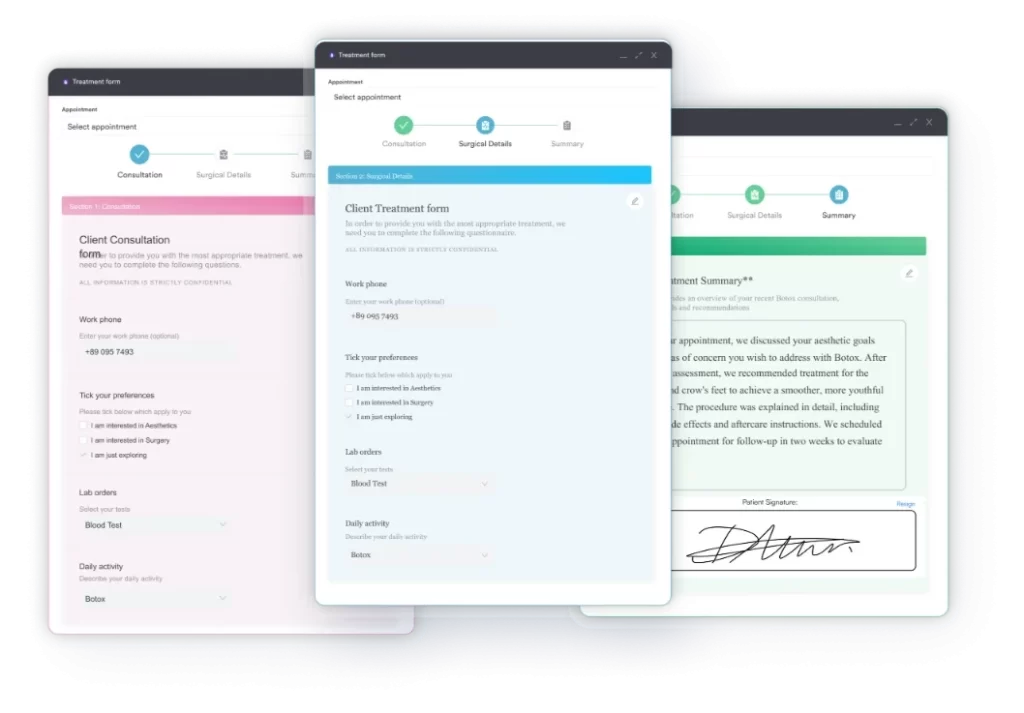
Pabau’s intake forms go out before the first visit, so long functional medicine questionnaires are answered and filed before the consult starts.
Pabau’s digital intake forms come from a drag-and-drop builder or more than 40 ready-made templates. Functional practices use them for:
Lifestyle and wellness questionnaires built in the custom builder
Detailed medical history questionnaires
Consent forms with digital signatures
Every completed form feeds into the patient record, not a PDF attachment. The client card holds each patient’s notes, consent forms, lab results and before-and-after photos.
AI-drafted treatment notes
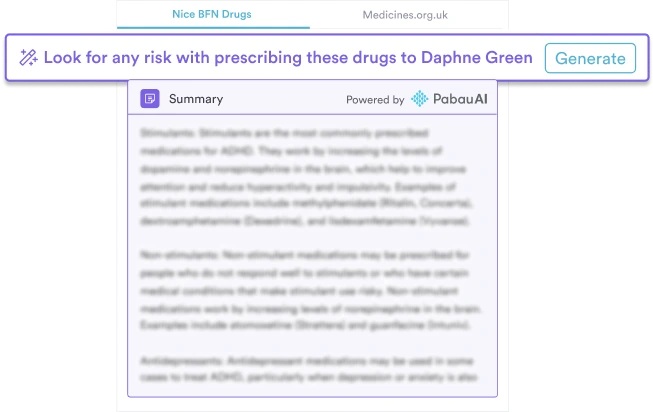
Pabau Scribe drafts the consult note as you speak, so a long functional medicine intake ends with a note to review, not type.
Pabau Scribe, our AI scribe, turns a spoken consultation into a structured clinical note, and the transcript appears as you speak.
The note stays a draft until a clinician signs it off, so only signed notes reach the patient record. Pabau Scribe runs on credits, which are free with the Care Plus add-on.
Pro Tip
Pabau Scribe drafts the note during a long functional medicine consult, so you review and sign it instead of typing it from memory.
Lab ordering, results and trends
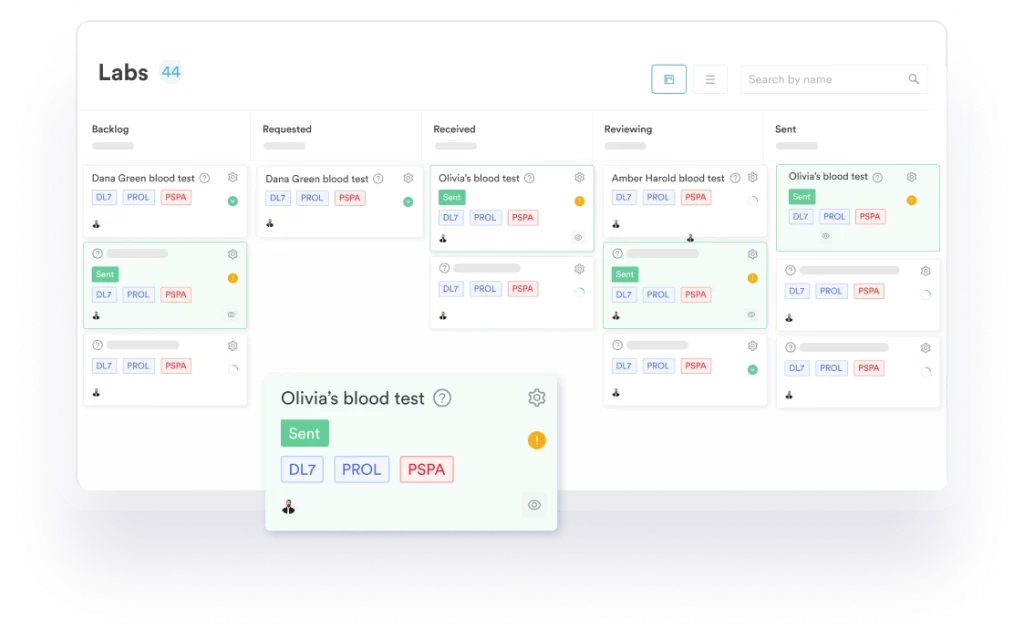
Pabau tracks each lab request from sent to reviewed, so the practice sees which results are overdue before the follow-up visit.
Practices can switch on Labs in Pabau. In the US, the practice orders Quest tests from the patient record with its own Quest login, and results import automatically. Labcorp orders are placed in Labcorp Link, and results sync back automatically.
UK practices connect to The Doctors Laboratory. Once results arrive, Pabau:
Plots a biomarker-over-time chart on the patient record
Shares the trend with the patient for results the practice has released to the Client Portal
Pabau sells supplements as retail products at the till, and stock deducts as each sale goes through. Stock carries a batch number and an expiry date.
How Pabau scores on our five criteria
Pabau confirms four of the five criteria in full and sells supplements from in-house stock rather than through a dispensary.
Lab workflow: The practice orders Quest tests from the patient record, and results import automatically. Labcorp orders go through Labcorp Link and sync back. A biomarker-over-time chart sits on the record.
Supplement dispensing: Retail products such as supplements sell at the till, with stock tracked. Practices can’t connect a supplement dispensary to Pabau today.
Intake and long-consult charting: Forms go out before the visit and land in the patient record, not as a PDF. Pabau Scribe drafts notes, and the Measures tab charts scores such as PHQ-9 and GAD-7 over time.
Programs, memberships and packages: Memberships are a core feature, and a perk can cover a service, a category or wallet credit with rollover. The till sells 2–12 month installment plans.
Insurance billing: Pabau handles self-pay, memberships and insurance billing in one system, in the US, UK and Australia. US claims run through Claim.MD, with eligibility checks and ERA remittances.
Where Pabau shines
One record for the whole loop: Lab results, the biomarker chart, notes, forms and purchase history all sit against the same patient.
Insurance and self-pay together: Pabau handles self-pay, memberships and insurance billing in one system, in the US, UK and Australia.
Recall Workflows: The 90-day and 6-month templates send SMS, email or WhatsApp, and skip patients who already have a booking.
Prescription safeguards: Non-prescribers can draft a prescription, but only a prescriber approves and sends it. US e-prescribing runs through DoseSpot.
Where Pabau falls short
Labs is switched on per account: Confirm Labs is active and your Quest login is set up before go-live.
No dispensary connection today: Drop-ship supplement protocols stay in a separate dispensary account for now.
Setup depth: The feature depth takes more configuration than a scheduling-only tool, which is why onboarding is structured.
Who Pabau is best for
Functional practices that bill insurance and self-pay: Claims, memberships and retail sales run from the same system.
Practices that sell supplements in-house: Stock deducts at the till, and the sale sits on the patient’s record.
Retention-focused practices: Memberships, installment plans and recall Workflows keep patients on long programs.
“After setup, it’s genuinely helpful and cuts down a lot of the admin involved in running a business. It automates many tasks and makes note-keeping straightforward.”
Current prices on Pabau’s pricing page (checked November 11, 2026)
Every Pabau plan includes the core features
Add-ons (Marketing Plus, Care Plus and others)
Listed on the pricing page
Add-ons enhance the experience for practices that want more in one area
Credits: SMS, 2FA, telehealth, Pabau Scribe
Usage-based
Telehealth uses 1 credit per minute per staff member. Telehealth and Scribe credits are free with Care Plus
Onboarding
Structured onboarding
No free trial. Setup is guided by the onboarding team
Source: Pabau’s pricing page, checked November 11, 2026, which lists current plans and add-ons. Every plan includes the core features, and usage-based credits can grow the bill.
OptiMantra
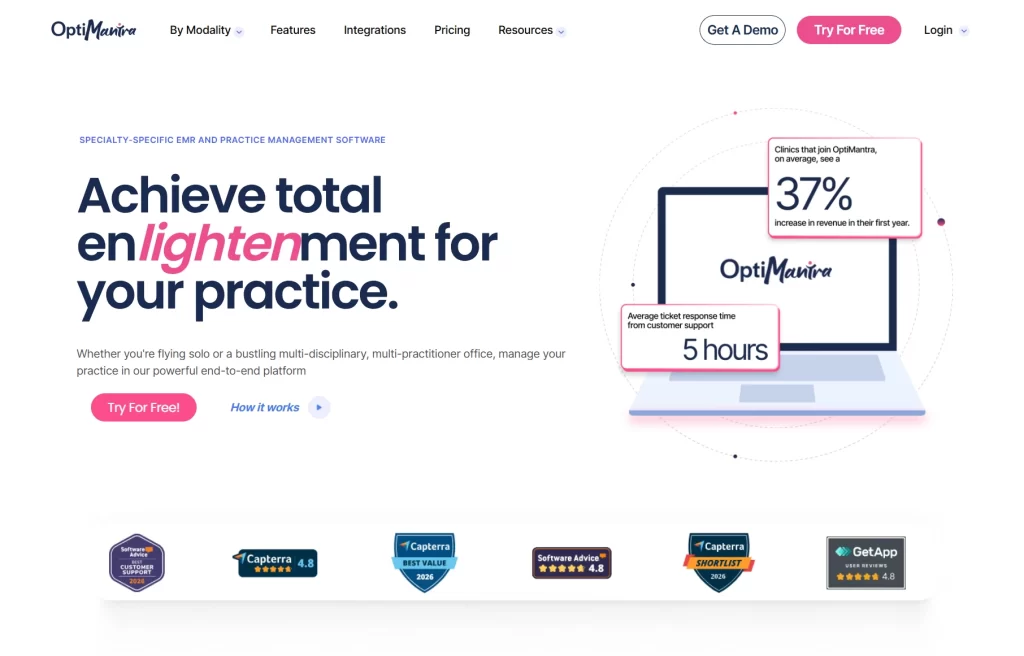
OptiMantra’s homepage leads with integrative and wellness practices, which is where its charting templates and supplement tools are aimed.
OptiMantra is a cloud-based EMR designed for integrative medicine and wellness practitioners. Its site also markets to behavioral health, direct primary care and med spa practices.
OptiMantra stands out for its functional medicine templates, including the MSQ, Symptom Survey, Wheel of Balance and Review of Systems. If your documentation goes beyond standard SOAP notes, OptiMantra is built around those workflows.
Key features
Functional medicine templates: More than 1,000 customizable charting forms for integrative care.
Supplement drop-ship: Fullscript and Wholescripts integrations, with Fullscript recommendations imported into the chart note’s Plan section.
In-house dispensary: OptiMantra’s own dispensary module tracks on-hand stock, vendors, expiring items and low stock.
Lab integrations: Order from Labcorp, Quest and specialty labs, and receive results in the patient record. Rupa now connects for results only.
How OptiMantra scores on our five criteria
OptiMantra’s own website confirms all five criteria, from in-chart lab orders to electronic claims.
Lab workflow: OptiMantra orders from Labcorp, Quest and specialty labs, posts results into the record, and shows results over time on a graph. Some labs send PDF-only results.
Supplement dispensing: Fullscript and Wholescripts handle drop-ship, and the dispensary module tracks in-house stock. Supplement protocols group products with dosages.
Intake and long-consult charting: The integrative template library includes the MSQ and 1,000+ customizable forms. Patients complete intakes and consents in the portal.
Insurance billing: OptiMantra files electronic claims with EOBs and automated payment posting, at $0.25 per claim, through clearinghouse partners such as Office Ally.
Where OptiMantra shines
Integrative-first design: Templates and workflows built for functional medicine documentation.
Support access: Daily office hours and a 1-on-1 Q&A calendar, plus unlimited support tickets.
Accessible pricing: $99/month for the first practitioner, with free clerical staff seats.
Where OptiMantra falls short
Paid add-ons: E-prescribing, texting, fax, AI scribe and per-claim billing are charged on top of the base price.
Slow lab setup: You need your own account with each lab, and approval can take 3–4+ weeks. Labcorp typically takes 8+ weeks.
Mixed result formats: Some results arrive as PDFs only, especially through Rupa, so not every value can be trended.
Who OptiMantra is best for
Multi-modality integrative practices: Practices combining functional medicine with naturopathy, acupuncture or chiropractic care.
Supplement-heavy practices: Practices that prescribe and dispense supplements as part of treatment plans.
Where OptiMantra wins over Pabau: A small integrative or naturopathic practice that bills insurance gets a $99 starting price and claims at $0.25 each.
Customer reviews
“What I like most about OptiMantra is their customer service; they are unbeatable!! This includes IT as well as Sales. I also like the customizability of workflows and the functional medicine templates.” – Christl R., Capterra reviewer
“The reporting is not the most intuitive. It is very robust and meets all our needs, but it is just not super easy. And the password reset function needs some tweaking, in my opinion.” – Kris K., Capterra reviewer
Pricing
Plan
Price
Billing unit and notes
First practitioner
$99/month
Month to month, with 30 days’ cancellation notice
Additional practitioner
$49/month
Per additional practitioner
Clinical staff
$25/month
Per clinical staff member
Clerical staff
Free
No charge
Insurance billing
$0.25 per claim
Charged once per claim, no charge for resubmissions
eRx license with EPCS
From $38/month
Add-on. MDToolbox may charge a separate subscription
AI Scribe
From $19/month
Add-on
Texting and fax
Two-way texting from $75/month, group texting from $100/month, fax from $25/month
Add-ons
Source: OptiMantra’s website, checked November 11, 2026. Standard data migration is free, and annual billing isn’t listed.
Note:
OptiMantra offers a 15-day free trial with no credit card required. The trial covers the base subscription, not the add-ons.
Power2Practice
Power2Practice positions itself as an EMR for functional medicine, with lab ordering and compounding built around cash-pay practices.
Power2Practice describes itself as an EMR designed from the ground up for functional and integrative medicine. It combines charting, scheduling, billing, forms, messaging, lab ordering and patient engagement.
Power2Practice’s site now promotes a new platform, P2PAi, with a waitlist and a “Coming in 2027” banner. Its legacy page describes the original product in the past tense, so we describe features as Power2Practice and P2PAi together.
Key features
Specialty lab integrations: Evexia, Genova, Labcorp, Quest and other labs, with 32 bi-directional lab integrations listed.
Supplement dispensing: Fullscript dispensing from inside the patient’s chart, plus point of sale for in-house supplements.
In-chart compounding: Wells Pharmacy Network offers 2,500+ compound formulations ordered from the patient chart.
IV charting: IV charting with pre-infusion checks, through an IV and Injection Module on Premium and above.
How Power2Practice scores on our five criteria
Power2Practice confirms four of the five criteria, and its site states superbills but not electronic claim submission.
Lab workflow: Providers request tests right from the chart, results flow back with PDF parsing, and lab trend analysis plots values against functional optimal ranges.
Supplement dispensing: Fullscript runs from inside the patient’s chart, and point-of-sale tools sell in-house stock with lot and expiry tracking.
Intake and long-consult charting: Templates capture structured, reportable data, and the portal handles patient forms and e-signatures.
Insurance billing: Power2Practice documents superbills for insurance submissions. Electronic claim submission is not stated on Power2Practice’s website.
Where Power2Practice shines
Functional optimal ranges: Lab trend analysis plots values against functional optimal ranges, not only conventional reference ranges.
Cash-pay labs: Evexia orders run from the chart, with cash-pay pricing and results flowing back automatically.
Supplement workflow: Fullscript sits inside charting, and supplement plans sync with recalls.
Where Power2Practice falls short
Platform transition: The pricing page sits under the 2027 waitlist banner and doesn’t say which platform its prices cover.
Claims: Superbills are documented, but electronic claim submission is not stated.
Higher entry price: Plans start at $349 a month, and basic inventory starts on Premium.
Who Power2Practice is best for
Anti-aging and longevity clinics: Practices that order advanced specialty testing and read it against optimal ranges.
IV therapy practices: Practices running regular IV sessions that need lot and expiry capture by protocol.
Where Power2Practice wins over Pabau: A compounding-heavy, cash-pay functional medicine practice can order Wells Pharmacy compounds and Evexia cash-pay labs without leaving the chart.
Customer reviews
Power2Practice has limited recent reviews on major platforms. Most available feedback dates back to 2023 and earlier, making it harder to assess the current user experience.
Pricing
Plan
Price
Billing unit and notes
Essentials
From $349/month
1 primary provider, 2 clinical support users, 2 office staff, 1 location. Includes the Membership and Program Module
Premium
From $549/month
2 primary providers, 2 locations. Adds basic inventory and the IV and Injection Module
Three onboarding tiers are described without prices
Source: Power2Practice’s website, checked November 11, 2026. Every plan includes e-prescribing, lab integrations and a Zoom televisit line, and exact pricing varies by providers, locations and add-ons.
Practice Better
Practice Better’s homepage centers on wellness practitioners, which matches its strength in protocols, programs and patient engagement.
Practice Better is all-in-one practice management software for health and wellness professionals. Practice Better says more than 50,000 practitioners use it.
Practice Better markets directly to nutritionists, health coaches and functional medicine practitioners. It combines scheduling, charting, billing and a client portal.
Key features
Protocols and programs: Build protocols with supplements, meal plans and lifestyle recommendations, and sell fixed-date, evergreen or self-paced programs.
Telehealth and secure messaging: Built-in HIPAA-compliant video sessions with no Zoom account required.
Wearable data: Patients connect Garmin, Oura, Apple Health and Fitbit to their journals, which feed Measurements and Vitals.
How Practice Better scores on our five criteria
Practice Better confirms four criteria in full, and its lab workflow runs through partner platforms with results stored as documents.
Lab workflow: Practitioners start orders from the client record through Evexia, Rupa Health and Fullscript Labs, with some completed in the partner’s dashboard. Results import as documents, stored by date.
Supplement dispensing: Protocols pull products from online dispensaries such as Fullscript, WholeScripts and Natural Dispensary. Practice Better doesn’t handle in-house supplement inventory.
Intake and long-consult charting: The client portal handles digital intake, and Measurements and Vitals graph values entered or synced over time.
Patient engagement: Protocols, journals and nutrient and water goals keep patients involved between visits.
Wellness-first design: Built for care delivered through nutrition, coaching and lifestyle changes.
Low barrier to entry: A free Sprout plan, and paid plans from $25/month billed annually.
Where Practice Better falls short
E-prescribing costs extra: A $49/month add-on plus a $99 one-time onboarding fee per prescriber.
Labs through partners only: No direct Quest or Labcorp interface is stated, and integrated results aren’t graphed automatically.
No in-house stock: Custom supplements save a name and price, but Practice Better doesn’t handle their inventory.
Who Practice Better is best for
Health coaches and nutritionists: Practitioners whose care model centers on lifestyle, diet and supplementation.
Virtual-first practices: Practices running mainly through telehealth, online programs and remote engagement.
Where Practice Better wins over Pabau: A solo nutritionist or health coach gets a free plan, low paid tiers and online programs to sell.
Customer reviews
“Very user-friendly, great foundation for group programs as well as 1:1, HIPAA compliant.” – verified G2 reviewer
“I don’t like how e-prescribing is not included in the monthly cost of the EHR. This separation potentially increases the expense and complicates the budgeting process for accessing essential functionalities.” – Adriana G., verified G2 reviewer
Pricing
Plan
Price
Billing unit and notes
Sprout
Free
1 practitioner, 3 clients
Starter
$35/month billed monthly, or $25/month billed annually
1 practitioner, 10 clients
Professional
$69/month billed monthly
1 practitioner, 300 clients
Plus
$99/month billed monthly
1 practitioner and 3 admin licenses, unlimited clients
Team
$155/month billed monthly
2 practitioners. Extra practitioners $50/month each
ePrescribe add-on
$49/month plus $99 one-time per prescriber
Powered by DrFirst
AI Charting Assistant
From $10/month per practitioner
Professional plan and up
Source: Practice Better’s website, checked November 11, 2026. Annual billing lowers the paid plans, and practices with 10+ practitioners book a consult for custom pricing.
Note:
Practice Better offers a 14-day free trial for most paid plans and a 30-day trial for the Team plan.
Cerbo
Cerbo’s homepage presents a do-it-all EHR, and its strongest case for functional practices is structured lab data that can be graphed.
Cerbo says it has helped more than 5,000 practitioners, and it is purpose-built for functional and integrative medicine. Cerbo’s site describes it as optimized for cash-based, membership and direct-pay billing. Our ranking of peptide therapy clinic software places Cerbo fourth, as the fit for cash-based functional medicine.
Cerbo suits multi-provider practices, with separate seats for prescribing, non-prescribing and supporting providers. Cerbo offers flexible charting and 55+ integrations.
Key features
Chart Parts: A templating system that builds encounter notes from reusable blocks, including diagnoses, lab orders, treatment plans and charges.
Lab integrations: More than 40 standard and functional labs, most of them bi-directional, with structured results.
Supplement dispensing: Fullscript, Wholescripts, Wellevate and NutrimentRx, plus in-house inventory with lot numbers and expiry dates.
Task management: Tasks, documents and notes on every seat for care coordination.
How Cerbo scores on our five criteria
Cerbo confirms four of the five criteria in full, and it routes insurance claims through files and superbills rather than a direct clearinghouse.
Lab workflow:Bi-directional lab integrations send orders electronically and return structured HL7 data that is graphable and trackable. Some labs, such as DUTCH, are results-only.
Supplement dispensing: Cerbo connects online dispensaries and sells in-house supplements, offering to dispense from stock when you prescribe an item you carry.
Intake and long-consult charting:Chart Parts templates build encounter notes from reusable blocks. Forms and lab results reach patients through the paid portal.
Deep functional medicine fit: Built for root-cause, integrative and patient-funded care models.
Modular charting: Chart Parts lets practitioners build encounter notes from reusable blocks.
Lab ecosystem: Lab integrations with 40+ standard and functional labs, most of them bi-directional.
Where Cerbo falls short
Templates start from scratch: Cerbo has no shared template library, so each practice builds its own.
Premium pricing: $281/month per full-time prescribing provider, plus a $1,195 one-time setup fee.
Paid essentials: The patient portal and telemedicine are add-ons, and insurance payments don’t sync back into Cerbo.
Who Cerbo is best for
Cash-based functional medicine practices: Practices running outside insurance with membership or subscription billing.
Lab-intensive practices: Practices ordering Genova or Vibrant electronically, and reading DUTCH results that arrive results-only.
Where Cerbo wins over Pabau: A lab-heavy cash-pay or DPC practice gets graphable results from bi-directional labs such as Quest, LabCorp, Genova and Vibrant.
Customer reviews
“Cerbo is a great platform for medical practices. Their support team is available and helps resolve issues immediately. Scheduling and creating different schedule types is easy, along with adding inventory and charge parts.” – Dayleane B., Capterra reviewer
“They charge a fee for every small customization you want, whether to the EHR or the forms you use.” – Joe L., Capterra reviewer
Pricing
Plan
Price
Billing unit and notes
Prescribing provider
$281/month full-time, $174 part-time
Per user. Includes eRx, eFax and EPCS
Non-prescribing provider
$256/month full-time, $160 part-time
Per user
Supporting or alternate provider
$127/month full-time, $78 part-time
Per user
Additional staff
$63/month full-time, $39 part-time
Per user
Restricted access user
$15 one-time fee
Scheduling and billing only
Setup fee
$1,195 one-time ($595 new-practice special)
Dedicated cloud server, 6 weeks of training, 2 weeks of go-live support
Patient portal
From $79/month
Up to 1,000 patients, rising with patient count
Telemedicine
$27/month per provider
1:1 video calling
AI Scribe
$29/month per provider
Up to 60 notes a month; unlimited is $59
Source: Cerbo’s website, checked November 11, 2026. At least one provider must be full-time, and part-time seats apply only in multi-provider practices.
Note:
Cerbo charges a one-time setup fee of $1,195, which covers a dedicated server, training and go-live support. Add-ons such as the patient portal, telemedicine and incoming e-fax are priced separately.
DocVilla
DocVilla’s homepage pitches a cloud EHR for independent practices, including cash-pay, membership and direct primary care models.
DocVilla is a cloud-based EHR for solo providers and small to mid-size practices. It covers charting, scheduling, billing, telehealth and a patient portal.
For functional medicine practices, DocVilla offers unlimited SOAP templates, Fullscript supplement recommendations and direct primary care (DPC) billing. E-prescribing, claims, labs, DPC and Fullscript all sit on the Gold plan.
Key features
E-prescribing: Surescripts e-prescribing on Gold, with EPCS for controlled substances as a paid add-on.
Lab integration: Order from Quest, LabCorp, Accu Reference and Vibrant Wellness, with results mapped to the patient chart over HL7.
Patient portal: Patients book appointments, complete intake and consent forms, view records and lab results, and pay bills.
How DocVilla scores on our five criteria
DocVilla confirms four of the five criteria on its Gold plan, and its website doesn’t state lab trending.
Lab workflow:DocVilla’s lab integration places orders from the EHR and maps results to the chart automatically. Graphing results over time is not stated on DocVilla’s website.
Supplement dispensing: The Fullscript integration lets providers recommend supplements from the EHR on the Gold plan. Silver and above include inventory management.
Intake and long-consult charting: DocVilla offers unlimited SOAP templates, and the patient portal handles intake and consent forms.
Programs, memberships and packages:DPC subscriptions charge cards on a schedule, on the Gold plan only. Packages are not stated.
Insurance billing: Gold lists insurance claim filing, real-time eligibility checks and ERA auto-posting. Silver generates superbills with ICD-10 codes.
Where DocVilla shines
One plan for clinical depth: Gold combines claims, Surescripts eRx, lab integration, DPC billing and Fullscript at a published price.
Free telehealth: Video calling and messaging are included in every plan at no extra charge.
DPC-ready: Recurring DPC subscriptions bill daily, weekly, monthly, quarterly or annually on Gold.
Where DocVilla falls short
Gold-only essentials: Labs, claims, e-prescribing, DPC and Fullscript all need the $350 Gold plan.
Usage-based features: SMS messaging, reminder calls and speech-to-text dictation are billed per use.
Minimum contract: All plans require a one-year contract, plus an initiation and training fee with no published amount.
Who DocVilla is best for
Small insurance-billing practices: Solo or small functional medicine practices that need claims and eRx in one EHR.
DPC and cash-pay practices: Practices running membership-based or subscription care models.
Where DocVilla wins over Pabau: A small insurance-billing or DPC practice gets Surescripts eRx, HL7 lab ordering, claims and DPC subscriptions for $350 per provider.
Customer reviews
“DocVilla provides a supportive and professional work environment. The team is collaborative and approachable, which makes it easy to ask questions and learn.” – Chyng I., Capterra reviewer
“There is a limitation when it comes to template customization. It is cloud-based, which means you need a really good, stable, and secure internet connection. It is a little bit slow when switching multiple tabs, pages, and sections.” – Yatra P., Capterra reviewer
Pricing
Plan
Price
Billing unit and notes
Bronze
$100/provider/month
Basic EHR and telemedicine, no staff members. Annual upfront payment required
Silver
$200/provider/month
Adds practice management, inventory, superbills and the patient portal with online booking
Gold
$350/provider/month
Adds claim filing, eRx, PDMP, lab integration, DPC and Fullscript. EPCS is an add-on
Platinum
Call for pricing
More than 25 prescribers
Initiation and training fee
Not stated
Applies on all plans
Source: DocVilla’s website, checked November 11, 2026. Prices are per provider per month on a one-year contract, and monthly plans cost more through sales.
Jane App
Jane App’s homepage targets allied health and wellness practices, and its Fullscript integration is what brings supplements and US labs into the chart.
Jane App is a cloud-based practice management platform for allied health and wellness practices. Jane offers chat, email and phone support.
Jane’s site doesn’t market a functional medicine edition. Since January 2026, though, its Fullscript integration covers supplement plans and US lab ordering from the patient’s chart.
Key features
Chart template library: More than 10,000 chart templates to start from.
Online scheduling: Color-coded calendar, smart waitlists and drag-and-drop rescheduling.
Built-in telehealth: One-on-one video consultations are included, and group sessions cost extra.
Fullscript integration: Supplement plans on every plan, and lab ordering for US practices.
How Jane App scores on our five criteria
Jane App confirms supplement dispensing, results into the chart and insurance billing, while lab ordering runs only through Fullscript.
Lab workflow: US practices order labs through Fullscript from the chart. Lab results appear for review in the chart, and graphing results over time is not stated on Jane’s website.
Insurance billing: The Insurance Billing add-on sends primary and secondary electronic claims through Claim.MD. Superbills and CMS-1500s come with every plan.
Where Jane App shines
Low published prices: Plans run from $59 to $99 a month in USD, with free data import.
Telehealth included: One-on-one telehealth comes with every Jane account at no extra cost.
Fullscript on every plan: Supplement plans sync back into the chart as a draft entry.
Where Jane App falls short
Labs through Fullscript only: US practices only, with patients in NY, NJ, RI and HI excluded, and no direct lab interfaces stated.
No e-prescribing yet: Jane’s US pricing page lists ePrescribe as coming soon.
Add-on costs: AI Scribe, insurance billing and group telehealth are paid extras, and memberships need the Thrive plan.
Who Jane App is best for
Multidisciplinary wellness practices: Teams combining physical therapy, massage and holistic care under one schedule.
Non-prescribing practices: Practitioners who don’t need e-prescribing inside the chart.
Where Jane App wins over Pabau: A US wellness practice that doesn’t prescribe gets low published prices, free 1:1 telehealth and Fullscript on every tier.
Customer reviews
“The platform is pleasing to look at, the Claim MD integration is great, customer service is prompt, and documentation for providers is easy.”
“As our practice grew, it wasn’t able to grow with us. We ran into issues with keeping track of patients’ packages and getting them scheduled for re-exams on time. The tracking was the most difficult part.” – Robert K., Capterra reviewer
Pricing
Plan
Price
Billing unit and notes
Balance
$59/month (USD)
Single practitioner profile, 20 appointments a month
Practice
$79/month (USD)
1 full-time practitioner. Extra practitioners $35 full-time or $17.50 part-time
Thrive
$99/month (USD)
Adds packages and memberships. Extra practitioners $40 full-time or $20 part-time
Insurance Billing add-on
$20/month, plus $5 or $2.50 per extra full- or part-time practitioner
Practice and Thrive only. Clearinghouse account not included
AI Scribe
$15/month per practitioner
Five free notes to try it
Group Telehealth
$15/month per practitioner
Up to 15 participants
Source: Jane App’s website, checked November 11, 2026 on its US pricing. Jane charges no setup fee and includes a free data import.
How to choose a functional medicine EHR: The five criteria we score
A functional medicine EHR should take a lab order, bring the result into the chart, trend it, and dispense the supplement protocol without another system.
Every option on this list is both a functional medicine EHR and functional medicine practice management software, so you won’t buy the two separately. The five criteria below follow the order a patient moves through them.
Lab workflow: Ordering, results in the record and trends over time
When results land in a lab portal, someone downloads the PDF or re-keys the values, and trends get rebuilt in a spreadsheet before each follow-up. Check four points before you sign:
Which named labs you can order from inside the chart, and which are results-only. Cerbo lists both types, and OptiMantra notes Rupa is now results-only.
Whether results arrive as structured values or as PDFs. Structured data can be graphed, and a PDF can only be read.
Whether the system graphs values over time, and against which ranges. Power2Practice plots functional optimal ranges.
How long lab approval takes. OptiMantra quotes 3–4+ weeks, and Cerbo says a lab may refuse low-volume practices.
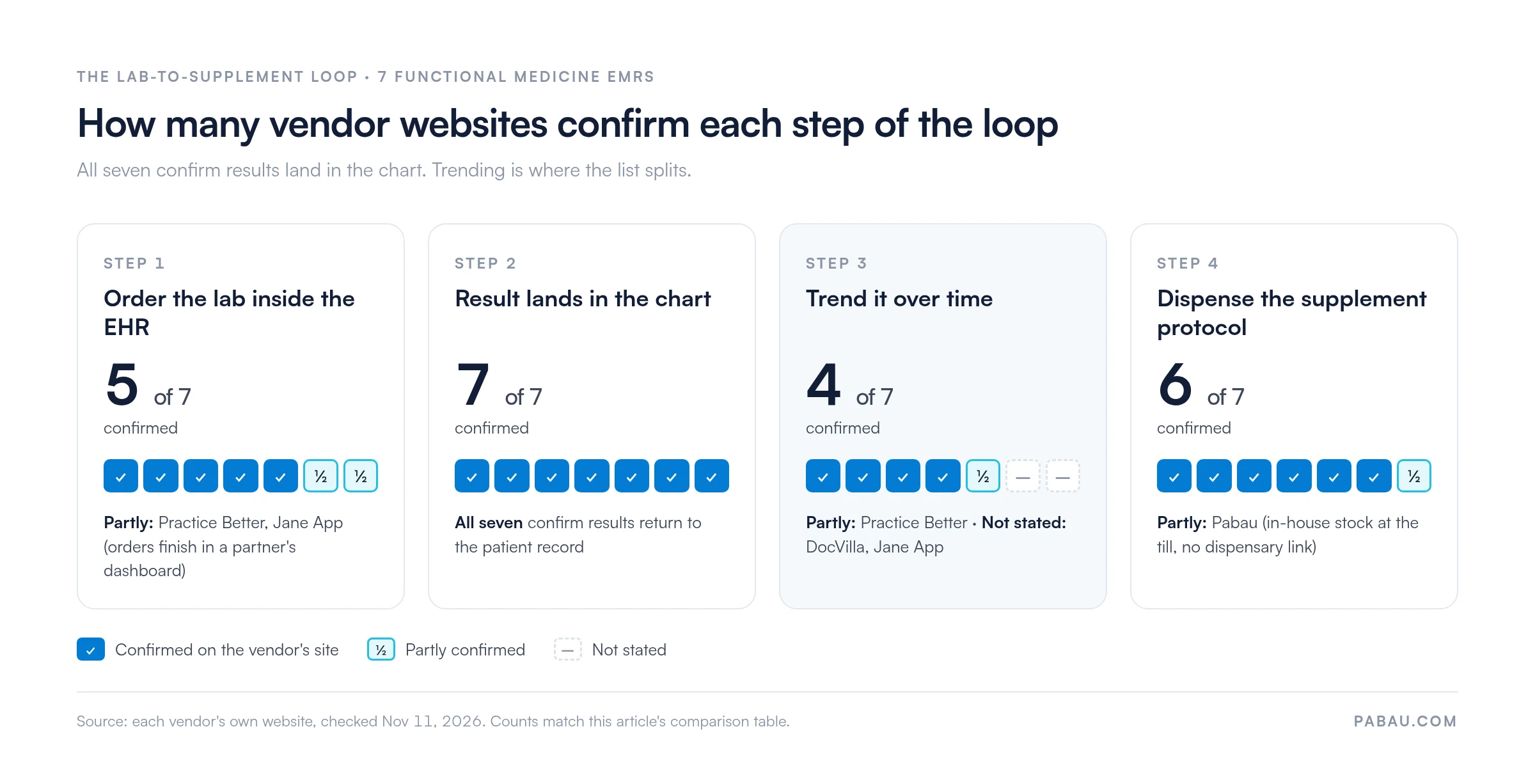
The split shows up at the trending step, as the counts below make clear.
Every vendor confirms lab results reach the chart, but only four confirm trending, so ask each one to show a result graphed over time. Source: each vendor’s own website, checked November 11, 2026.
Pabau orders Quest tests from the patient record and plots a biomarker-over-time chart once results import. Want to see lab tracking in action? Book a demo.
Supplement dispensing
A protocol held in a separate dispensary keeps sales, stock and adherence outside the chart. The vendors here use two models, and some offer both:
Dispensary integration: You recommend products from the chart, and a service such as Fullscript or Wholescripts ships to the patient. You hold no stock.
In-house stock: You buy wholesale and sell at the practice. Inventory then needs lot numbers, expiry dates and a till that deducts stock.
Check whether recommendations import into the plan section of the note, and whether in-house stock tracks lots and expiry. Pabau runs the second model: supplements sell at the till, and stock deducts with each sale.
Intake forms and long-consult charting
Functional intakes run long, and a form returned as a PDF has to be read and re-typed into the chart. Look for systems that offer:
Standard questionnaires such as the MSQ, sent before the visit by appointment type
Completed forms that land in the patient record as data, not attachments
Scored measures tracked over time, such as PHQ-9 and GAD-7
An AI scribe with a clear price. Published add-ons here range from $10 a month (Practice Better) to $150 (a Power2Practice AI seat).
Pabau sends forms before the visit, files them in the patient record, and charts scored measures on the Measures tab. Pabau Scribe drafts the consult note for a clinician to sign off.
Programs, memberships and recalls
Functional patients follow programs that run for months. A membership the tool can’t model ends up billed by hand and tracked in a spreadsheet. Check for:
Recurring memberships, prepaid packages and installment plans, and which pricing tier unlocks them
Program formats you can sell online, such as Practice Better’s fixed-date and self-paced programs
Recalls that skip patients who already have a booking
Pabau treats memberships as a core feature and sells 2–12 month installment plans at the till. Recall Workflows message patients at 90 days or six months. How you package that care matters too, so see our breakdown of functional medicine business models. To set the fee for each tier, the longevity membership pricing model guide walks through a member margin worksheet.
Pabau’s recall Workflows reach patients by SMS, email or WhatsApp, so a patient due for a 90-day retest hears from you without a call list.
Insurance billing alongside self-pay
A cash-only tool can’t bill the visits and labs that payers cover, so patients get a superbill and file the claim themselves. Sort vendors into two groups:
Electronic claims built in: OptiMantra ($0.25 per claim), Practice Better (Claim.MD, US), DocVilla (Gold), Jane App (add-on) and Pabau.
Claim files or superbills only: Cerbo exports HCFA forms and EDI files, and Power2Practice documents superbills.
Pabau handles self-pay, memberships and insurance billing in one system, in the US, UK and Australia. US claims run through Claim.MD, including secondary claims.
HIPAA compliance and data security
HIPAA safeguards are the baseline for every option here, so we don’t score them. When you evaluate platforms, confirm they offer:
Encrypted data storage and transmission
Role-based access controls
Audit logs for record access
A business associate agreement the vendor will sign
Settings alone don’t make a practice compliant, so review each integration too.
How Pabau runs the lab-to-supplement loop for a functional medicine practice
Here is the lab-to-supplement loop for one new patient in Pabau, built only from features our product team has confirmed live. It shows how Pabau works as an EMR for functional medicine when the practice also sells supplements and memberships.
The intake form goes out before the first visit, and the completed answers land in the patient record.
At the consult, the practitioner orders a Quest panel from the patient record, using the practice’s own Quest login. Practices can switch on Labs per account.
The result imports automatically and joins the biomarker-over-time chart on the record.
The practice releases the result, and the patient sees the trend in the Client Portal.
The front desk sells the supplement protocol at the till, and stock deducts from inventory.
A 90-day recall Workflow messages the patient by SMS, email or WhatsApp, unless a booking already exists.
A membership or 2–12 month installment plan covers the program, and insured visits bill through Claim.MD.
Without one system, that loop runs through a lab portal, a results spreadsheet, a retail till and a recall list. Book a demo to see a lab result land on the patient record and trend over time.
Run the lab-to-supplement loop in one system
Pabau orders Quest labs from the patient record, charts biomarker trends, sells supplements at the till and sends recall Workflows. Your protocols and billing stay on one record.
Pick your functional medicine software by where your lab-to-supplement loop breaks today, not by the longest feature list. If longevity programs drive your revenue, see how eight longevity clinic platforms score on labs, memberships and booking.
If results arrive as PDFs and trends live in spreadsheets, shortlist the vendors that confirm structured results and trending. If the break is billing, rule out any tool that stops at superbills. If supplements leave through a drop-ship dispensary, decide whether you want that model or stock on your own shelves.
Then ask each vendor to walk one patient through all four steps with your own lab. A step the demo skips is a step your team will handle by hand. Book a demo to watch a Quest result land on a Pabau patient record and join the trend chart.
Continue your research
Looking for a nutrition template alongside your EMR?AIP diet plan template structures the elimination and reintroduction phases for patients with autoimmune conditions.
Need a form for a patient’s first visit?Functional medicine intake form covers medical history, medications, and a body-system symptom review.
Mapping root causes behind a patient’s symptoms?Functional medicine matrix is a worksheet for retelling a patient’s story through triggers and lifestyle factors.
Ordering micronutrient panels for patients?Vitamin deficiency test explains what each panel checks and how to read the results.
Assessing digestive complaints at intake?Gut health checklist is a signable form covering consent checks, the main assessment steps and a sign-off.
Frequently asked questions
What is the best EMR for functional medicine practices?
Pabau is the best EMR for functional medicine practices that want labs, supplement sales, memberships and insurance billing in one system. Cerbo suits lab-heavy cash-pay practices, and OptiMantra suits small integrative practices that bill insurance.
Do functional medicine practices need a specialized EMR?
Not always, but a general EMR may not trend lab results or dispense supplements. Check the lab-to-supplement loop: in-chart lab ordering, results in the chart, trends over time and supplement dispensing.
What features should a functional medicine EMR include?
A functional medicine EMR should include in-chart lab ordering, structured results, trend charts and supplement dispensing. Long intake forms, membership billing and insurance claims matter for most practices too.
How much does functional medicine EMR software cost?
On vendor sites checked November 11, 2026, starting prices run from a free Practice Better plan to $349 a month for Power2Practice. Practice Better is from $25/month billed annually ($35 monthly), and OptiMantra is $99/month for the first practitioner. Cerbo is $281/month per full-time prescribing provider, plus a setup fee. Pabau lists plans on pabau.com/pricing, with usage-based credits on top.
Can Pabau support functional and integrative medicine practices?
Yes. Pabau combines clinical records, intake forms, memberships and insurance billing, and practices can switch on Labs to order Quest tests from the patient record. US e-prescribing runs through DoseSpot, and only a prescriber can approve and send a prescription.