

Thessaly test: How to perform it and avoid false positives
Your patient stands on one leg, twists twice, and winces. The Thessaly test needs no equipment and adds barely a minute to a knee examination. It also loads the joint the way walking does, which a supine test cannot. The trouble starts with what you do next. A positive result feels definitive, but joint line […]
Rheumatoid arthritis test: What your RF and anti-CCP mean
Most patients expect one definitive rheumatoid arthritis test. There isn’t one. A diagnosis comes from blood markers, inflammation levels, imaging, and a careful joint exam, all read as a single picture. Getting that picture wrong costs joints. Erosion doesn’t reverse, and the window where treatment prevents it is measured in months. The American College of […]
7 Best sports medicine software platforms in [year]
Sports medicine practices lose revenue and compliance standing when their software can’t keep pace with athlete caseloads, multi-practitioner teams, and payer requirements. The wrong platform means athletic trainers documenting injuries in spreadsheets and physicians waiting on paper SOAP notes. It also means a front desk juggling scheduling across three systems that don’t talk to each […]
HCPCS code E0154: Platform attachment, walker, each
Attribute Value HCPCS code E0154 Official descriptor Platform attachment, walker, each Code type HCPCS Level II (DME) Equipment category Durable medical equipment (walker accessory) Billing unit Each (one per attachment supplied) Type of service DME, billed with the initial walker or as a replacement part Biller Enrolled DMEPOS supplier only, not the ordering provider Payer […]
Gaenslen test: how to perform, interpret, and document it
The sacroiliac joint accounts for an estimated 15 to 30% of chronic low back pain. It is also one of the least examined structures in a routine assessment. Most clinicians work through the lumbar spine and hip first, so the joint gets skipped. The Gaenslen test loads that joint through torsion, so it tests the […]
CPT code 20697: Strut exchange billing guide
CPT code 20697 covers the exchange of a strut, meaning its removal and replacement. The descriptor in the American Medical Association’s CPT code set ends with the word “each,” so one strut is the unit of service. The code sits in the external fixation range of the Musculoskeletal System section, next to CPT 20696. That […]
Global Rating of Change scale
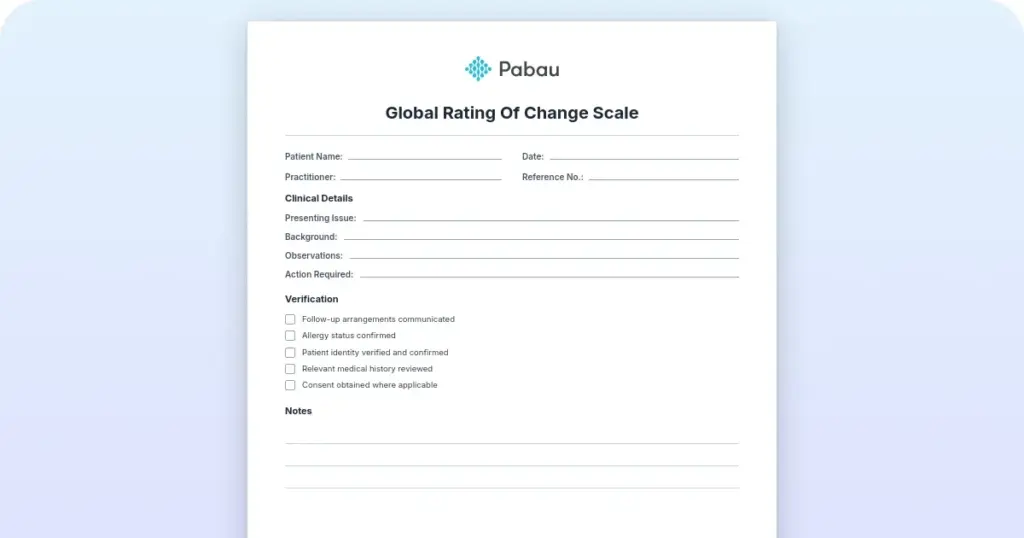
Download your free Global Rating of Change scale template A one-page clinical form with the Patient Global Impression of Change question and its seven numbered response options. They run from no change through a great deal better. It also includes date, patient information, chief complaint, and additional notes fields. Download template You can measure range […]
CPT code 20527: Enzyme injection for Dupuytren’s contracture
CPT code 20527 is a billable procedure code for injecting a collagenase enzyme into a palmar fascial cord to treat Dupuytren’s contracture. It covers the injection service only. A complete course of treatment produces three claim lines, not one. The injection is 20527, the collagenase drug is HCPCS J0775, and the day-2 finger manipulation is […]
Fall risk assessment: Free template and scoring guide
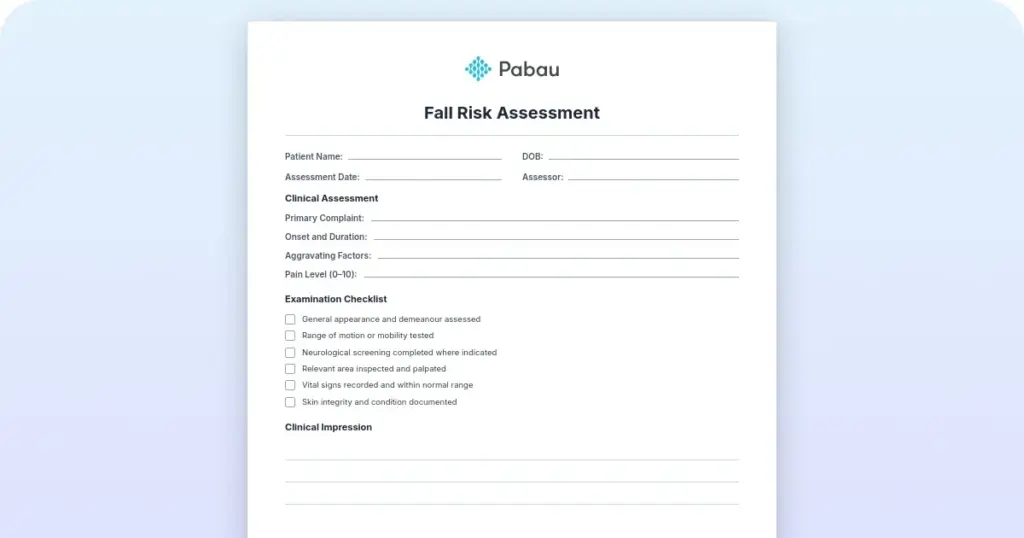
Download your free fall risk assessment template A one-page scored screening form covering four domains: recent falls, medications, psychological factors, and cognitive status. It totals out of 20, sets a low, medium, or high risk band, and flags two automatic high-risk factors. Download template Falls are the leading cause of injury-related death and disability in […]
ICD-10 Code S42.475G: Left humerus transcondylar fracture

ICD-10 Code S42.475G: Definition and billable status ICD-10 Code S42.475G is a billable, specific ICD-10-CM diagnosis code. Its full official description is: Nondisplaced transcondylar fracture of left humerus, subsequent encounter for fracture with delayed healing. The Centers for Medicare and Medicaid Services, known as CMS, put the 2026 edition of the code into effect on […]