

ICD-10 code S52.001E: Fracture of upper end of right radius, subsequent encounter
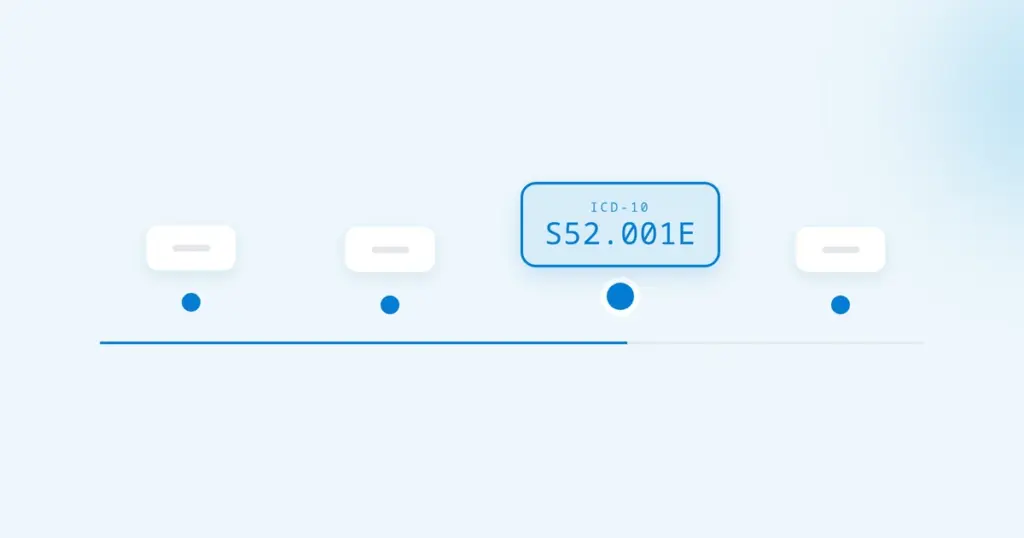
ICD-10 code S52.001E: Quick reference Field Detail Code S52.001E Full descriptor Fracture of unspecified upper end of right radius, subsequent encounter for open fracture type I or II with routine healing Code type Billable (valid for claim submission) Valid since FY2016 (October 1, 2015) ICD-10-CM chapter Chapter 19: Injury, Poisoning, and Certain Other Consequences of […]
SOAP progress notes template
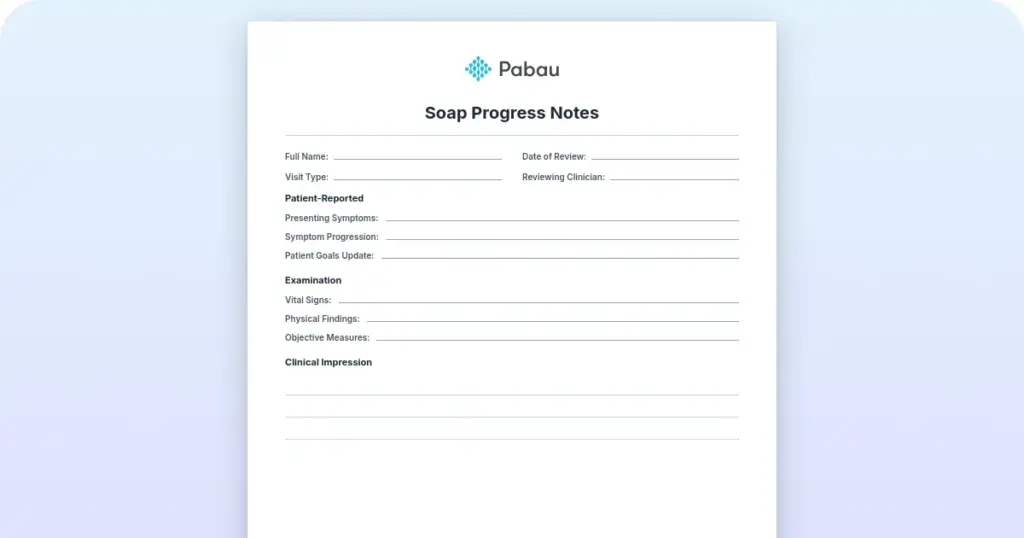
Download your free SOAP progress notes template A one-page PDF with patient details and blank Subjective, Objective, Assessment, and Plan fields. It closes with lines for the practitioner’s name and signature. Download template SOAP progress notes record a patient encounter in four fixed sections: Subjective, Objective, Assessment, and Plan. The format is used across mental […]
Eden’s test template
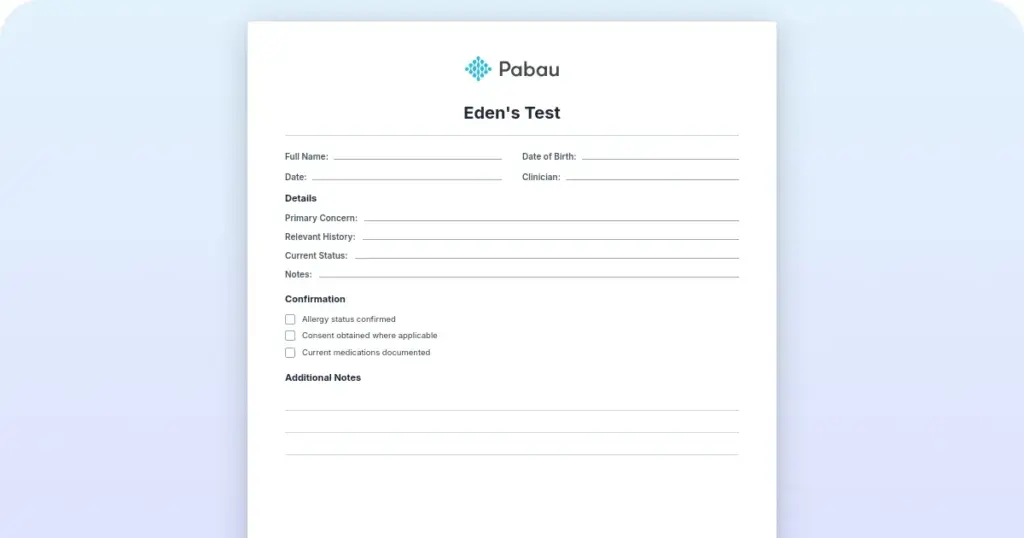
Download your free Eden’s test assessment form A printable form for writing up an Eden’s test assessment in the patient’s notes. Open fields cover patient information, clinical notes, a dedicated military brace test box, recommendations, and practitioner sign-off. Download template Eden’s test is a provocation maneuver used to check whether the costoclavicular space is compressing […]
Deep neck flexor endurance test: Procedure and normative values
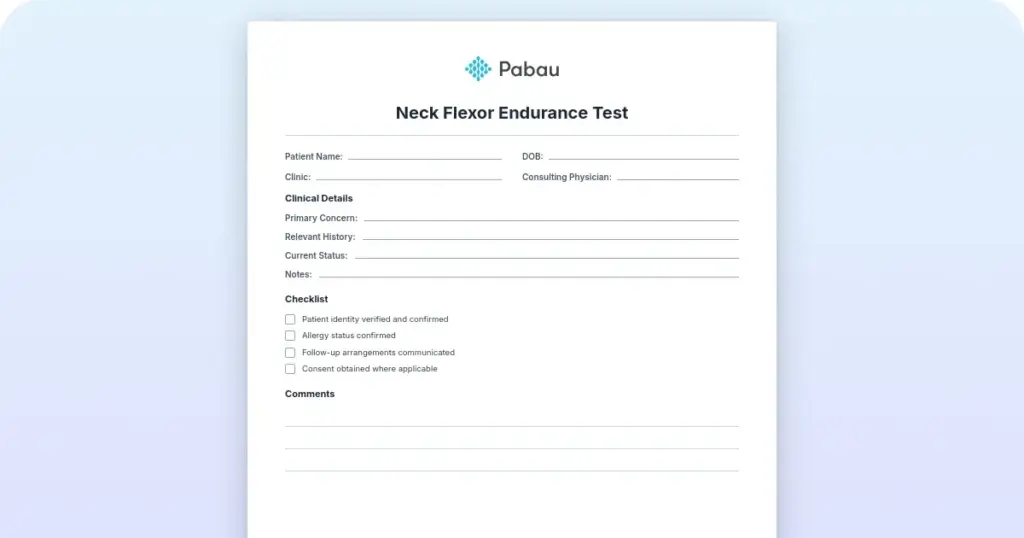
Download your free neck flexor endurance test form A standardized one-page form covering patient positioning, test administration, hold-time recording, normative reference values, and scoring guidance. Print it for the treatment table or file it straight into the patient record. Download template Neck pain affects over 25% of the population each year, and many of those […]
HCPCS Code G0159: Physical therapist home health billing guide
What is HCPCS Code G0159? HCPCS Code G0159 is the Medicare G-code for a physical therapy maintenance program delivered at home. A qualified physical therapist sets up or delivers that program, and each unit covers 15 minutes. The official CMS descriptor is specific about the setting and the service: Services performed by a qualified physical […]
Body composition test: Methods, results, and healthy ranges
A body composition test measures what your weight is made of: Fat mass, lean mass, total body water, and bone mineral density. A scale cannot tell you any of that. Two people can weigh exactly the same and still have very different health profiles. Practitioners use the breakdown to set a baseline, judge metabolic risk, […]
ICD-10 code S43.014D: Right shoulder dislocation, subsequent encounter
Code details at a glance Field Detail Code S43.014D Full description Anterior dislocation of right humerus, subsequent encounter Billable? Yes. Terminal code, no further specificity required ICD-10-CM chapter Chapter 19: Injury, poisoning, and certain other consequences of external causes (S00-T88) Parent category S43: Dislocation and sprain of joints and ligaments of shoulder girdle Parent sub-block […]
ICD-10 code S45.019A: Laceration of axillary artery, unspecified side
ICD-10 code S45.019A: Code details at a glance The table below summarizes ICD-10 code S45.019A for quick reference during coding or documentation review. Field Value Code S45.019A Full description Laceration of axillary artery, unspecified side, initial encounter Code system ICD-10-CM (International Classification of Diseases, 10th Revision, Clinical Modification) Billable / specific Yes, billable ICD-10-CM code […]
Lift off test: How to perform and interpret it

Anterior shoulder pain with weakness on internal rotation is one of the most common presentations in musculoskeletal (MSK) practice. The subscapularis is frequently the culprit, and it is also the rotator cuff muscle most often missed. The lift off test, also known as Gerber’s lift off test, isolates subscapularis function at the bedside with a […]
Halstead maneuver: How to perform, interpret, and document TOS testing

The Halstead maneuver is a provocative test for thoracic outlet syndrome, and a positive result needs two findings at once. The radial pulse has to drop, and the patient’s familiar arm symptoms have to return. Performing it takes under two minutes. Reading it correctly takes more judgment, because this test has the weakest specificity of […]