Antipsychotic medication list
An antipsychotic medication list is a structured reference that organizes psychi...

2
Last Updated: Oct 13, 2026

A window of tolerance worksheet helps a client map three nervous system states: hyperarousal, hypoarousal, and the window where they function best.
This one asks open questions instead of offering a symptom checklist, so the client names their own signs, triggers, and coping strategies.
Dr. Dan Siegel coined the model, and the worksheet turns it into language a client can use outside the therapy room.
Re-issue the same eight prompts a few months later, and the two dated copies show whether the client’s window has widened.
Practice management software like Pabau stores the completed worksheet in the client record, so the answers sit beside the session note.
Two sections and eight open prompts, with space for clinician notes. The client names the signs and triggers of each arousal zone, then the coping strategies that bring them back.
Download templateA window of tolerance worksheet gives a client words for what their nervous system is doing. It maps three states: hyperarousal, hypoarousal, and the middle band where a person can think and feel at the same time.
Before you print it, note the format. This worksheet asks open questions rather than offering symptoms to tick. That changes how you introduce it, because the client supplies the content and you hold the frame.
What follows is what each prompt is for, how to run it in a first session, and how to reuse it later.
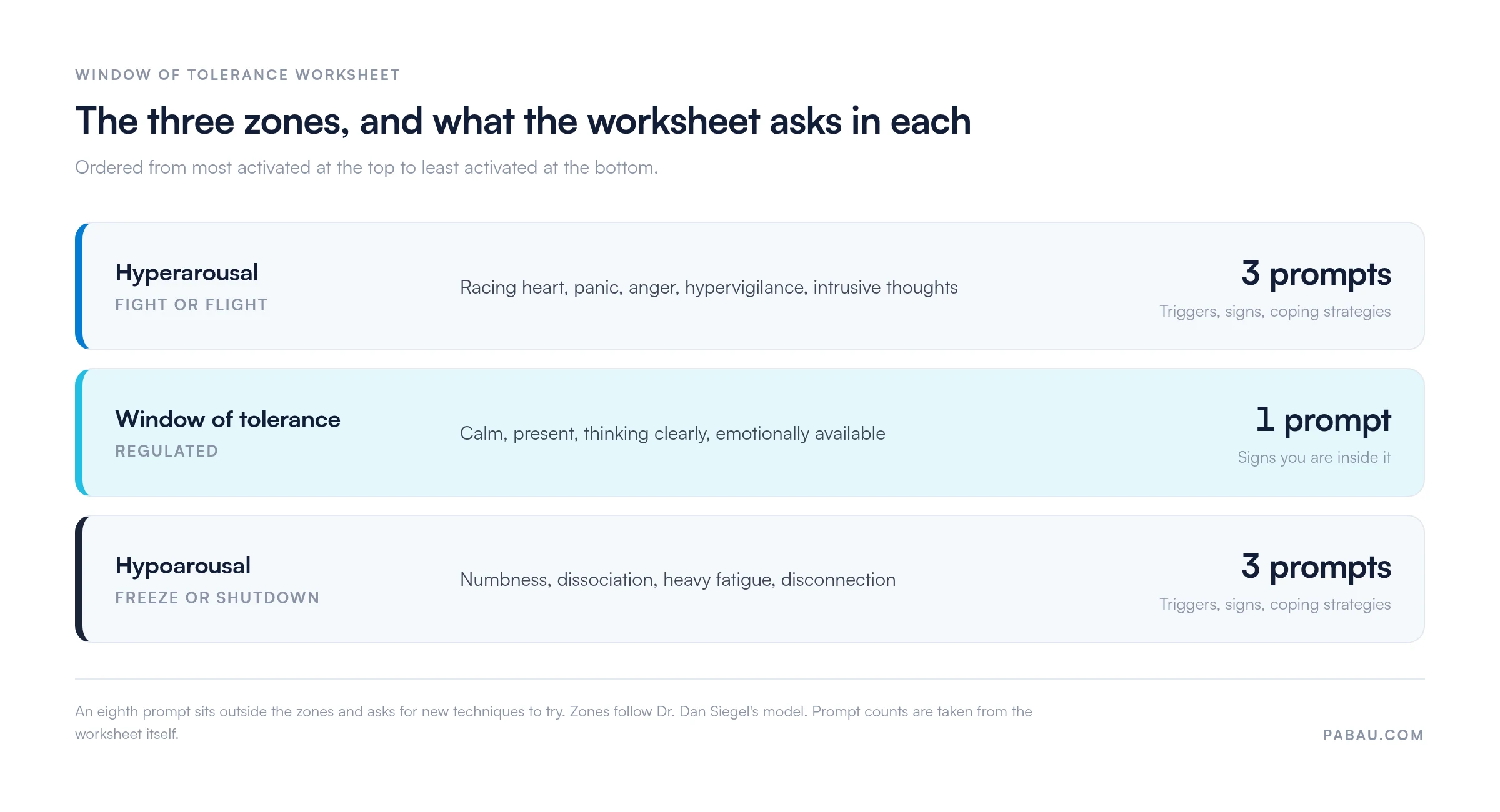
The window of tolerance is the band of nervous system arousal where a person can think clearly, feel emotion, and stay connected to the room.
Dr. Dan Siegel, a clinical psychiatrist, coined the term as part of his work on interpersonal neurobiology. Outside that band the capacity to learn or process difficult material drops away.
Above the window sits hyperarousal, the fight or flight end. A client there may notice a racing heart, panic, anger, hypervigilance, or intrusive thoughts.
Below the window sits hypoarousal, the freeze and shutdown end, where clients report numbness, dissociation, heavy fatigue, and disconnection. The worksheet gives each band its own prompts.
Naming the zones does clinical work on its own. It reframes panic and shutdown as nervous system responses rather than character failures, which takes the shame out of the conversation.
Trauma-informed care leans on that reframe, and SAMHSA publishes free guidance on the approach if you want to read further.
The worksheet supports psychoeducation and informed consent, both of which sit inside American Psychological Association ethical guidelines. It does not diagnose.
Instead it teaches a client to read their own arousal states, so the two of you can build regulation skills from there.
The download runs to two sections. Section one builds awareness, section two builds a plan.
No answer is pre-filled, which is the difference between this page and a symptom checklist. A client who writes “I snap at my kids” in their own handwriting owns that sentence. Checked boxes never get owned the same way.
Budget 15 to 20 minutes for a first pass. The order matters more than the pace.
Save the completed page to the client record before they leave, and send them a copy. If the hyperarousal answers point to risk, pair the worksheet with a mental health safety plan in the same session.
The worksheet travels across modalities because the zones are descriptive rather than theoretical. Where it lands in the treatment arc does change.
In each case the page does the same job. It hands the client language before the harder work starts.
The three-band idea travels well to younger clients once you swap the vocabulary. Color helps. Red for the racing end, blue for the shutdown end, green for the middle, drawn rather than written.
Ages 6 to 11. Ask for body signals instead of feelings. A clenched fist and a thumping heart are easier to report than “hyperarousal”. Let them draw their answers in the boxes.
Ages 12 and up. Use situations that carry weight for them, like a group chat going quiet or a test they did not study for. Teenagers respond to choice, so let them pick the technique that goes in the last box.
Bring the caregiver in. A parent who reads a meltdown as a nervous system state responds differently to one who reads it as defiance. Send the completed page home, and walk the caregiver through the bands once.
The eighth prompt asks for a new technique to try, so keep two or three ready. Match them to what the client already tolerates. Some want cold and pressure. Others need movement.
Assign one, then ask about it at the top of the next session. A dedicated grounding techniques worksheet is worth handing over alongside this one when a client wants more options to practice.
This kind of handout is usually filled in once and then filed. Repeating it is the better move. The eight prompts stay the same, so a second copy three or four months later reads as a rough before and after.
Two changes are worth watching. The first is range. A client who once listed two signs of hyperarousal may now list six, and that usually means they are noticing more rather than coping worse.
The second is the coping section. Early copies lean on avoidance, like canceling plans or going quiet. Later copies name strategies the client chose on purpose, which is the readable evidence that the window has widened.
Keep both copies in the client record, dated, and put the comparison in your progress note. For a lighter check-in between sessions, an emotional regulation checklist covers similar ground in less time.
Handouts drift. The blank PDF lives in a folder on one clinician’s desktop. Meanwhile the completed copy gets scanned when somebody remembers, and the second copy never gets compared to the first.
By session ten, the page you built the treatment plan around is a memory.
Practice management software like Pabau closes that loop. The worksheet lives in digital forms as a reusable template. You send it from the client’s record, and the answers come back into the same file. The completed page then sits beside the session note, dated, where you will look for it next time.
Because the prompts never change, a repeat send takes a couple of clicks instead of a fresh document. That is a fair test for any software for therapy practices, and it is what turns a handout into a measure of progress.

Pabau’s digital forms hold psychoeducation handouts like this one as reusable templates. You send them from the client’s record, and the answers come straight back into it. No scanning step, and the second copy is as easy to produce as the first.

Print it and use it in the first few sessions, before the harder work starts. A client who can name their own zones will tell you where they are without being asked. That changes what the two of you can do in the room.
Then diary the second copy. Comparing two dated pages is the clearest progress evidence a psychoeducation tool will ever give you, and it costs one session’s homework.
Book a demo to see how Pabau sends, stores, and re-sends client worksheets without the scanning step.

Working with the body rather than the story? Somatic experiencing exercises give you a set of body-based practices to pair with the zones on this page.
Preparing a client for processing work? EMDR worksheets cover the preparation and resourcing steps that come before bilateral stimulation.
Need to map a trauma history first? The trauma timeline worksheet sequences events without asking the client to narrate each one in session.
Client stuck at the hyperarousal end? The distress tolerance skills worksheet gives them structured options for riding out a spike.
Seeing more dissociation than you expected? The dissociative experiences scale puts a number on what the hypoarousal prompts surface.
No. The window of tolerance describes three arousal zones. Polyvagal theory describes the vagal states underneath them, including dorsal vagal shutdown. Plenty of clinicians teach both, using the zones as the client-facing language.
Yes, once you have introduced the zones together. Sending it cold leaves a client sitting with hyperarousal prompts and no support. Introduce it in session, then let them finish the coping half at home.
Stop the writing and ground first. Then note which prompt came immediately before, because that answer is clinically useful. Some clients need the hypoarousal section left blank until later in treatment.
Often, with adjustment. Sensory overload and executive fatigue can look like hyperarousal and hypoarousal without any trauma history. Keep the zones, and let the client define the signs in their own terms.
Yes, and it works well as a group opener. Ask members to complete the awareness prompts privately, then share only what they choose. The coping prompts are the part worth discussing out loud.