Despina Petrushevska
Exilis patient treatment record: Free PDF for RF sessions
An Exilis patient treatment record is the session log for BTL’s radiofrequ...

3
Last Updated: Oct 23, 2026
Free PDF 1 page, print-ready Clinician-reviewed
TempSure Envi sells easily, and it over-promises just as easily. In fact, search the device and you will find pages claiming an FDA clearance for dry eye and meibomian gland treatment. Yet no Cynosure filing says that.
That distance between marketing and paperwork creates risk for the practice. For example, a consent form that calls periocular dry eye treatment FDA-cleared claims something no filing supports. Similarly, a session note without a handpiece size and set point cannot be rebuilt a year later.
In fact, three uses are cleared in the US, and dry eye is not one of them. The section below sets out the cleared indications in the FDA’s own terms, so you can check your consent form and website against them.
The aftercare sheet above is the patient-facing half of that record. In other words, it is post-treatment guidance only, with no consent form, no screening checklist and no protocol pack inside it. Instead, you write those three yourself, and this page sets out what each should carry.
A one-page patient handout covering normal reactions, the first 24 to 48 hours, and first-week and first-month skin care. It also lists the warning signs that need a call, plus a patient confirmation line.
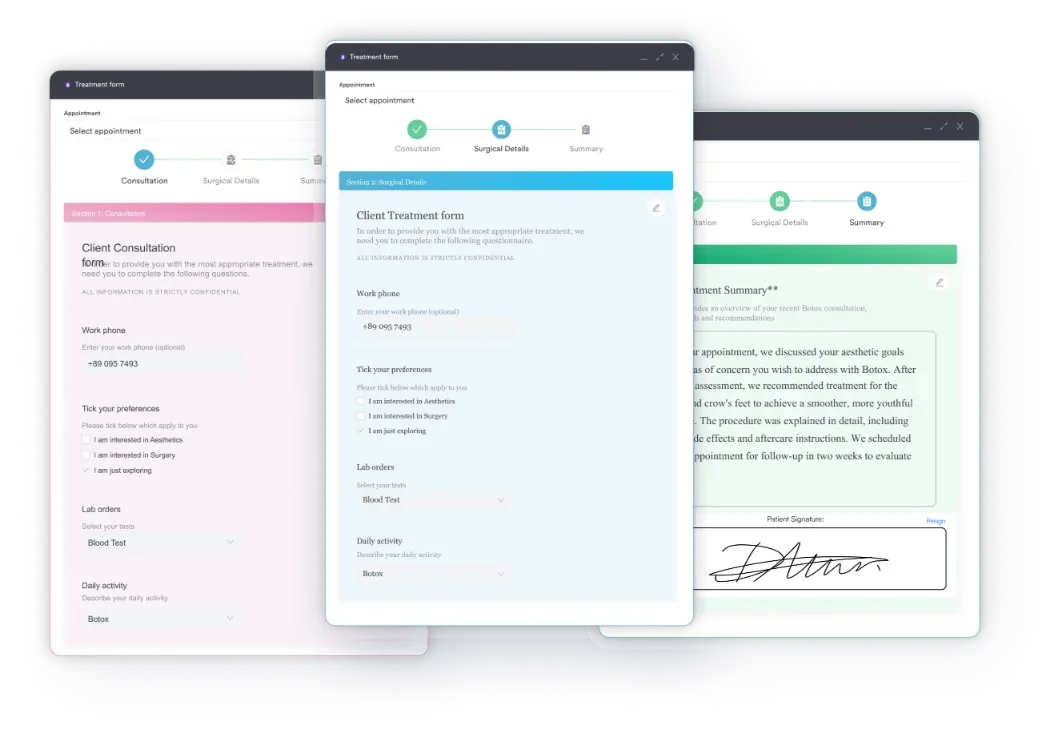
Upload this PDF, or any form you already use, and Pabau's AI Form rebuilds it with tick boxes, text fields and a signature. Attach it to the treatment once, and every patient gets it on time.
AI Form rebuilds the consent, history and aftercare forms you already use. You review each one, then publish.
Patients complete forms on their phone before they arrive, so the front desk stops retyping paper.
Every signed form is versioned and attached to the treatment record, ready when you need it.
Set how long a consent stays valid. Returning patients skip forms they have already signed.
Supports HIPAA and GDPR compliance AES-256 encryption 4.8 on G2 4.7 on Capterra Trusted by 4,000+ practices worldwide

The free download is a single-page TempSure Envi aftercare handout, not a consent form, screening checklist or protocol pack.
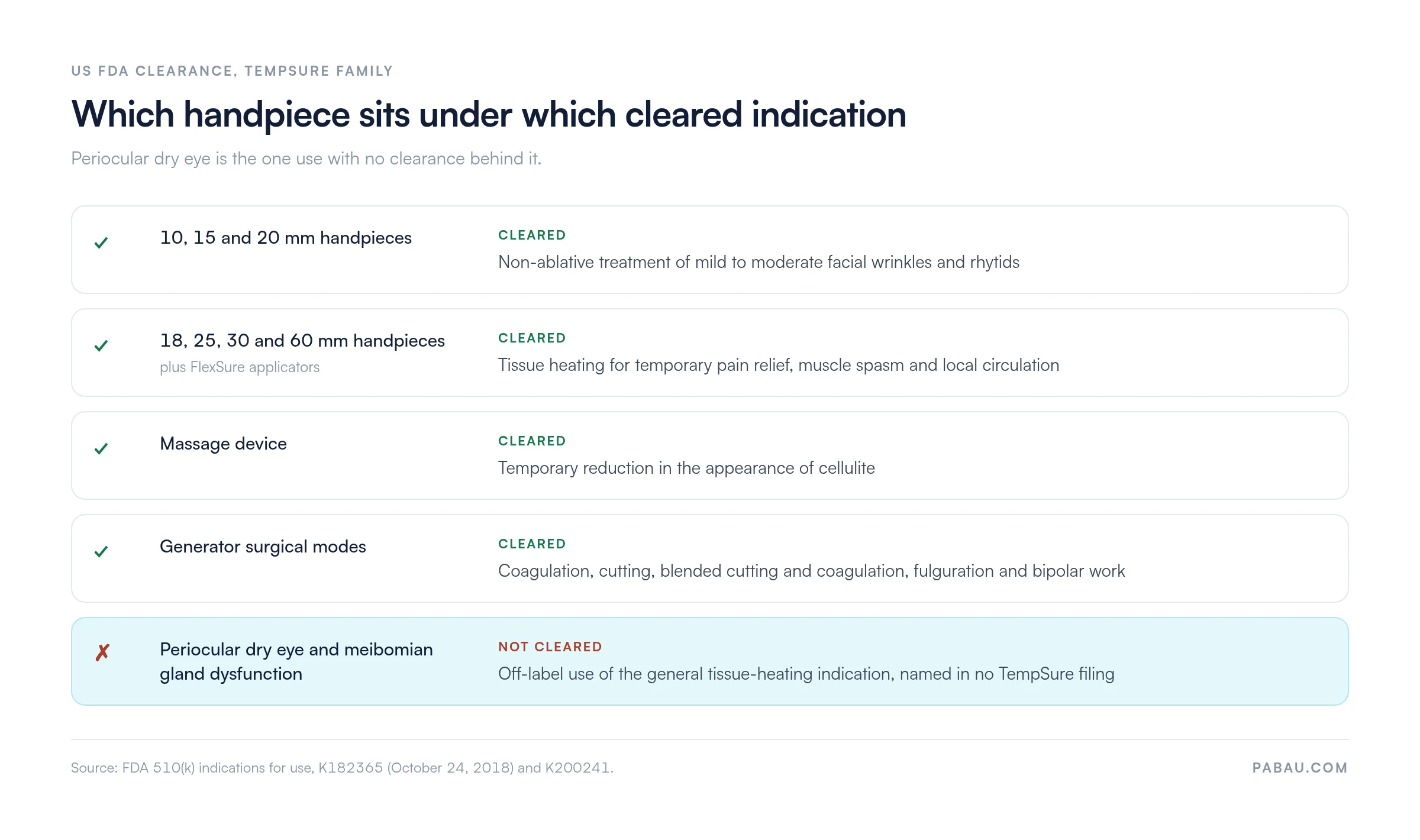
In the US, the 10, 15 and 20 mm handpieces are cleared for non-ablative treatment of mild to moderate facial wrinkles and rhytids.
Larger handpieces are cleared for tissue heating for temporary pain relief, muscle spasm and local circulation, and the massage device for cellulite appearance.
No Cynosure TempSure clearance names dry eye or meibomian gland dysfunction, so periocular treatment for those conditions is off-label.
Record the handpiece, temperature set point, treated area and any off-label decision for every session, then send the aftercare sheet from the same record.
TempSure Envi is a radiofrequency platform for non-invasive skin tightening and wrinkle smoothing. Cynosure, based in Westford, Massachusetts, specifically makes it as part of the wider TempSure platform.
The device heats dermal and subdermal tissue rather than cutting or injecting. In FDA terms it sits under 21 CFR 878.4400, as an electrosurgical cutting and coagulation device, product code GEI. Additionally, the massage applicator adds a second product code, PBX.
First, which handpiece you fit decides which indication you are working under. That distinction runs through the whole clearance, so it belongs in your notes as well as your protocol.
The clearance covers facial wrinkles, tissue heating and cellulite appearance, and dry eye is not on the list. Specifically, six Cynosure filings cover the TempSure family: K171262, K182365, K190678, K200241, K212891 and K223292. The wording below comes from K182365, cleared on October 24, 2018.
The indications for use on that clearance cover four things:
A later filing, K200241, added the 18 mm and 60 mm handpieces and the FlexSure applicators to the heating indication. However, the three aesthetic indications themselves did not change. The mapping below sets out the whole cleared set, handpiece by handpiece.
Read all six indications-for-use forms and neither dry eye nor meibomian gland dysfunction appears once. Indeed, Cynosure does not claim that indication in its own TempSure Envi material either.
Treating outside a cleared indication is legal for a licensed practitioner. However, describing an uncleared use as FDA-cleared is what creates risk. Therefore, keep the two apart in your marketing, your consent forms and your clinical notes.
Periocular radiofrequency for dry eye and meibomian gland dysfunction is an off-label use of the general tissue-heating indication. In other words, it is not a second cleared indication, and it is not a dual indication.
Eye-care practices do offer it, and the published evidence for radiofrequency in meibomian gland dysfunction is growing. For example, a 2026 randomized controlled trial in The Ocular Surface tested the approach directly. Evidence in the literature is still not a clearance.
So if you offer it, say so plainly. Your consent form should state that the use is off-label, name the alternatives, and record that the patient understood both. Likewise, your website and your intake material should not call it FDA-cleared.
The handpiece delivers controlled radiofrequency energy to heat tissue without burning the surface. Meanwhile, temperature monitoring runs in real time, and the clinician adjusts contact pressure and movement speed to keep the heat effective without overheating the skin.
That heat activates fibroblasts in the dermis. Collagen contracts right away, then remodels over the following 8 to 12 weeks. Consequently, patients see progressive tightening, better texture and softer fine lines as new collagen builds up.
Settings and session count vary with tissue laxity, age, skin type and patient goals. Therefore, your own consent form should name the areas you treat, and your notes should carry the clinician’s assessment of whether the patient is a good fit for each one.
Thorough intake screening protects the patient and reduces your liability. Specifically, a consultation form template should capture absolute contraindications and relative risk factors in the same pass.
First, record every screening answer in an aesthetic intake questionnaire format. That record is your proof that the assessment happened before the handpiece came out.
Cynosure clinician training sets the baseline parameters for each area. Then, your protocol document should hold those reference figures plus whatever your practice adjusts for comfort and safety.
Keep the protocol where the whole team can reach it. For example, storing it with your digital consent forms means every clinician works from the current version rather than a printout.
Informed consent needs a plain account of what can go wrong. Overall, most effects are temporary and settle on their own, and serious complications stay rare when contraindications are respected and settings are correct.
Your consent form must say that results vary and are not guaranteed. Additionally, record that the patient received automated aftercare instructions and agreed to follow them.
Set the timeline early so patients do not abandon a course halfway through. Indeed, results arrive gradually, as collagen remodeling catches up with the treatment.
Add before-and-after photos to the conversation. Photograph at baseline and 12 weeks after the final session, in the same lighting and at the same angles, so the comparison means something.
The template is a one-page patient handout with a confirmation line at the end. It runs in the order patients need it, from the first hour after treatment through to long-term care.
That is the whole document. In fact, it is not a consent form, a screening checklist or a protocol guide, and it makes no claim about dry eye or meibomian glands. Instead, build those three around it, using the sections above.
In fact, patients keep little of what they hear at the end of an appointment. Talk the sheet through in the room, then send a copy home so the guidance survives the drive back.
Add your practice phone number, email and online booking link before you send it. After all, a patient who is worried at 9pm should not have to hunt for a way to reach you.
Then log the send. In fact, a dated record that this patient received these instructions is worth as much as the instructions themselves if an adverse event is ever reviewed.
Aesthetic practices, medical spas, dermatology groups and laser providers running TempSure Envi or a similar radiofrequency device need the same post-treatment wording every time. In short, a standard handout means every patient leaves with the same guidance, whoever treated them.
Eye-care practices using periocular radiofrequency for dry eye also need aftercare wording. However, their consent form has to carry an off-label statement, which this patient handout does not.
In particular, multi-location groups get the most from it. One version-controlled document keeps every site giving the same advice, instead of five slightly different printouts.
Steady patient communication: every patient hears the same timeline, the same restrictions and the same warning signs, session after session.
Fewer needless calls: the handout separates normal reactions from the ones that need a phone call, so patients know which is which.
Smoother workflows: nobody rewrites aftercare advice between appointments, and new staff have a ready reference from their first shift.
A record of what you sent: a standard document with a confirmation line proves what the patient was told and when they acknowledged it.
Audit readiness: a standard aftercare routine shows an inspector or a state licensing board that patients were told what to expect and how to reach you.
The handout supports your consent form, and it does not replace it. Still, consent, screening and protocol records stay your practice’s own documents.
Store the aftercare handout in your practice management system rather than a printed binder. Keep the consent form and protocol guide you write yourself in the same place. Everyone then works from the current version, and each send is logged against the patient.
In many practices this workflow lives in three places. For example, consent sits in a paper folder, the session details live in a calendar note, and the aftercare sheet gets printed when someone remembers. As a result, across a six-session course, that paperwork drifts apart.
Instead, practice management software like Pabau holds all three on one client record. The consent form goes out before the appointment and comes back signed and timestamped. It then stays attached to the patient rather than to a filing cabinet.
Session notes use your own template, so the handpiece, set point, treated area and any off-label decision each get a field. For instance, Pabau Scribe, our AI scribe, can draft that note from your dictation and leave you to check it.
Mark the session complete and the aftercare sheet sends itself, by email or SMS, with the send logged against the client record. As a result, nobody prints anything, and no patient leaves without instructions.
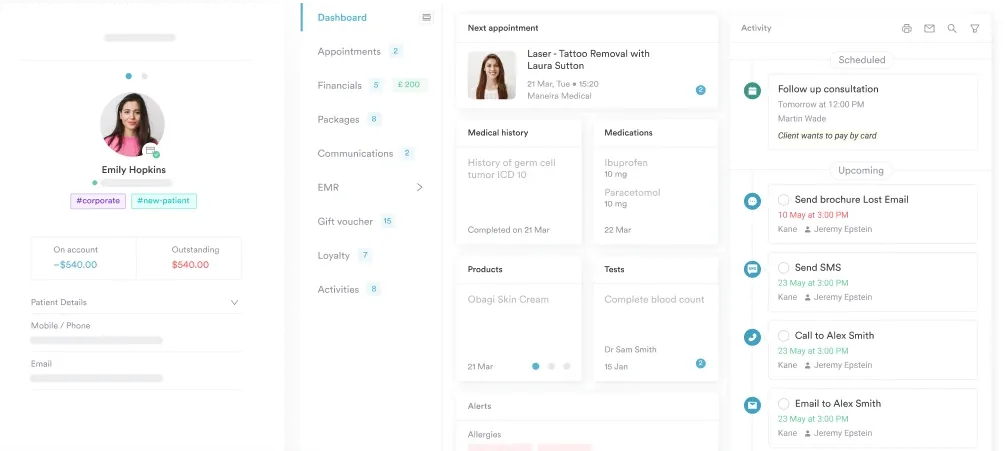

Pabau sends digital consent before the appointment and stores each session’s settings against the patient. The aftercare sheet then goes out automatically when you mark the session complete.

TempSure Envi earns its place in a skin service, as long as the words around it match the filings behind it. In short, the clearance is narrower than the marketing, and that is the practical lesson here.
Three claims hold up. First, the small handpieces treat mild to moderate facial wrinkles non-ablatively. Second, the larger ones heat tissue for temporary pain relief and local circulation. Finally, the massage device reduces the appearance of cellulite temporarily.
Dry eye and meibomian gland treatment stay off-label, however well they work in your hands.
So do three things this week. Download the aftercare sheet, then strip any dry eye clearance language out of your consent form and your website. Finally, give every session note a field for handpiece size and temperature set point. Book a demo to see how Pabau keeps those records together.

Need a customizable consent form framework? Consultation form template provides a structured intake format for documenting patient history and candidacy assessment before any aesthetic treatment.
Want to track before-and-after results? Before and after photo management helps clinicians standardize patient photography and organize visual documentation for outcome tracking and marketing.
Looking for regulatory guidance on clinic documentation? Safer clinical notes covers best practices for writing audit-proof treatment records that protect your clinic during compliance review.
TempSure Envi uses radiofrequency energy to tighten skin and soften wrinkles on the face and neck. The cleared indications cover non-ablative treatment of mild to moderate facial wrinkles, tissue heating for pain and circulation, and cellulite appearance. Treatment is non-invasive and needs no downtime.
It is a single-page patient aftercare handout with a confirmation line for the patient to sign. It covers normal reactions, the first 24 to 48 hours, first-week and first-month care, and when to call the practice. It is not a consent form, a screening checklist or a protocol guide.
Most patients need 3 to 6 sessions, spaced 7 to 10 days apart. Results appear gradually over 8 to 12 weeks as collagen remodels. Maintenance sessions, usually 1 to 2 a year, hold the improvement for 6 to 12 months.
TempSure Envi is generally safe across Fitzpatrick skin types, though types V and VI carry a higher risk of pigment change. Clinicians should adjust settings for those patients and screen carefully for relative risk factors before treating.
Common temporary effects include redness and mild swelling, which usually settle within hours. Uncommon risks include thermal burns, numbness, pigment change and infection where aftercare is not followed. Serious complications stay rare with sound screening and technique.