Head to toe assessment cheat sheet: Printable nursing guide
A head to toe assessment cheat sheet gives you one fixed order at the bedside, s...

3
Last Updated: Oct 23, 2026

A new tattoo is an open wound, so remove the bandage after 2 to 5 hours and wash it with fragrance-free soap.
Surface healing takes 2 to 4 weeks, and the ink keeps settling into the dermis for up to 6 months.
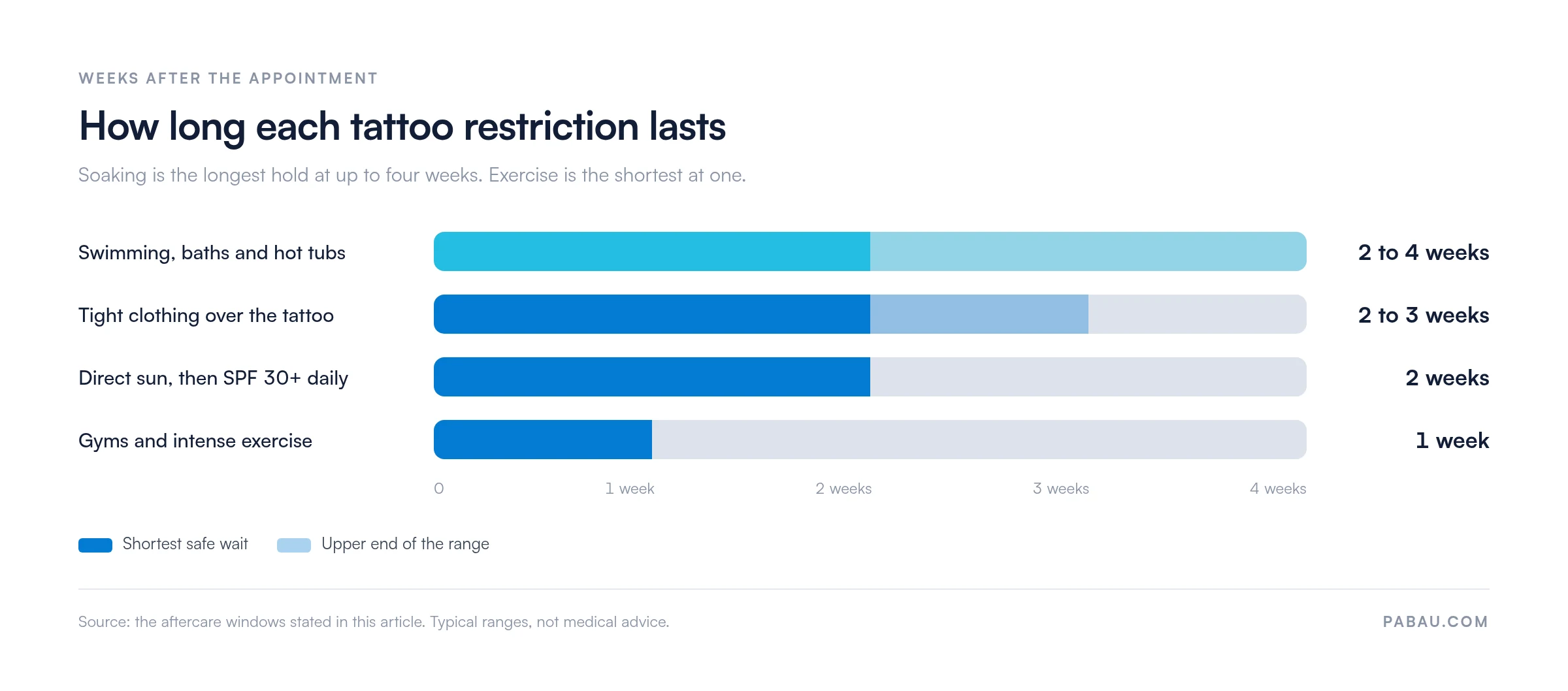
Soaking is the longest restriction at 2 to 4 weeks, while intense exercise is off the list for one week.
Spreading redness, thick discharge, red streaks or a fever mean the client needs a healthcare professional, not the artist.
Practice management software like Pabau sends the aftercare sheet automatically after the appointment, so no client leaves without it.
The form covers bandage removal timing, daily washing and moisturizing steps, the healing timeline week by week, infection warning signs, and long-term sun care. Print it for the counter or send it digitally after every appointment.
Download templateTattoo aftercare instructions tell a client how to treat a fresh tattoo as the open wound it is. The surface closes in 2 to 4 weeks. The ink keeps settling into the dermis for up to 6 months. Hand the client a written sheet and you remove the guesswork that causes most healing complaints.
This page gives you the full protocol and a printable form you can hand out or email. It also maps the three moments when clients pick up the phone, so your sheet answers them before they call.
From the moment the needle breaks the skin, the body starts an inflammatory healing response. Written instructions decide whether the client supports that process or fights it.
Clear guidance on cleaning, moisturizing and sun exposure lowers infection risk and keeps the ink sharp. It also protects the studio when a client blames a poor heal on the advice they were given. Studios that run digital intake forms can attach the aftercare sheet to the client record, so the signed copy and the advice sit together.

According to the CDC’s infection control guidance, wound care protocols prevent bacterial contamination during the vulnerable healing window. A written sheet also standardizes what every artist tells every client. Verbal advice is impossible to evidence later.
A complete aftercare form covers four areas: immediate actions, the daily routine, warning signs, and long-term care. Studios hand it over printed or digital, and the client acknowledges receipt.
That acknowledgment is the point for the studio. It shows the client received professional guidance, which matters if a heal goes wrong and the complaint lands on the artist. It also keeps advice consistent when several artists work the same floor.
The first two days decide whether the tattoo escapes infection and ink loss. Four steps cover it.
Healing runs through five stages. Knowing them helps a client tell normal healing from a problem worth a phone call.
Most healing problems trace back to six habits. Each has its own window, so the sheet should give a date rather than a vague “until it heals”.
Side by side, the windows are easier to hold in your head. The chart below stacks them from longest to shortest.
Most tattoos heal without trouble, but infection is a recognized complication that needs medical attention. A client who sees any of these signs should call a healthcare professional, not the studio.
Non-sterile equipment, an unclean workspace or contaminated ink can all cause a serious infection. Put that line in writing on the sheet, and tell the client to seek care rather than self-treat.
Once the tattoo has healed, the work shifts to holding the color and line quality for decades.
Every studio has its own protocol, so treat the download as a starting point. Add artist notes, your local urgent care contact, and your branding.
Then work backwards from your phone log. Clients call at three predictable points. The wrap comes off, peeling starts around day 5, and the color looks dull around day 10.
A sheet that names all three, with the date each one falls on, turns most of those calls into a glance at the fridge door. Studios that also pierce can pair it with our body piercing aftercare sheet and hand over one set of rules.
Consistency gets easier when the form lives in the same system as the booking. Software for studio owners can attach the sheet to a client record and send it the moment the appointment closes.
Printed sheets work until the client loses them. Practice management software like Pabau sends the aftercare instructions the moment the appointment is marked complete. The guidance arrives while the wrap is still on.
Pabau’s automated workflows handle the sequence. You brand the instructions with your studio logo and contact details, pick a version by wrap type, and see which clients opened it.
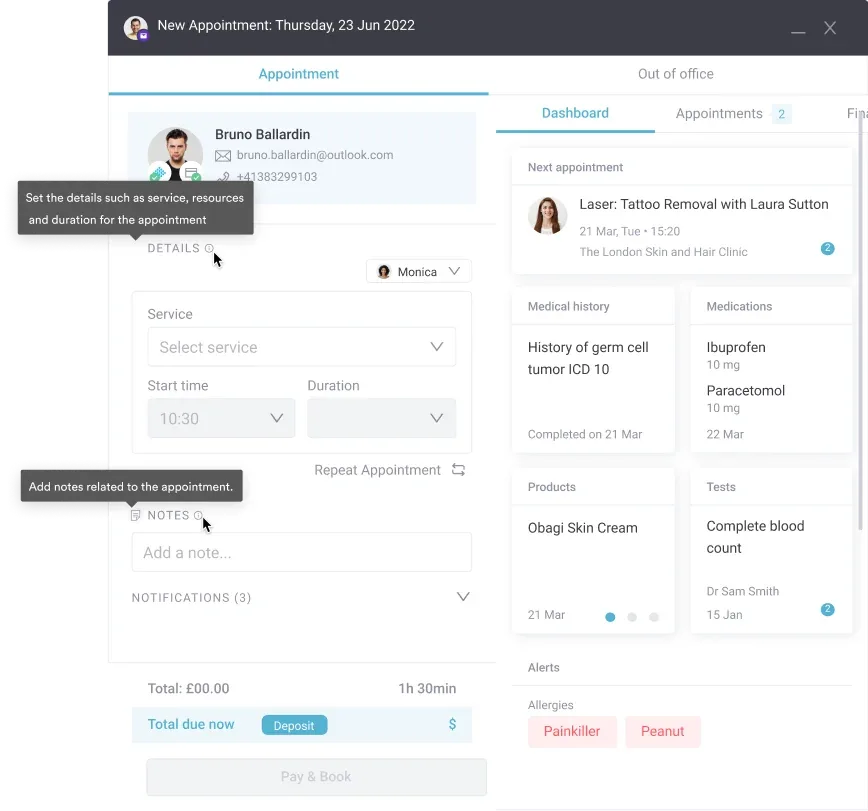
The client portal keeps the instructions open for the full six-month healing window. Clients check the peeling section themselves at day 5 instead of calling the front desk.
Automated email and SMS follow-ups cover the milestones after that. A note at day 7, day 14 and week 6 confirms the client is on track and opens the door to a touch-up booking.
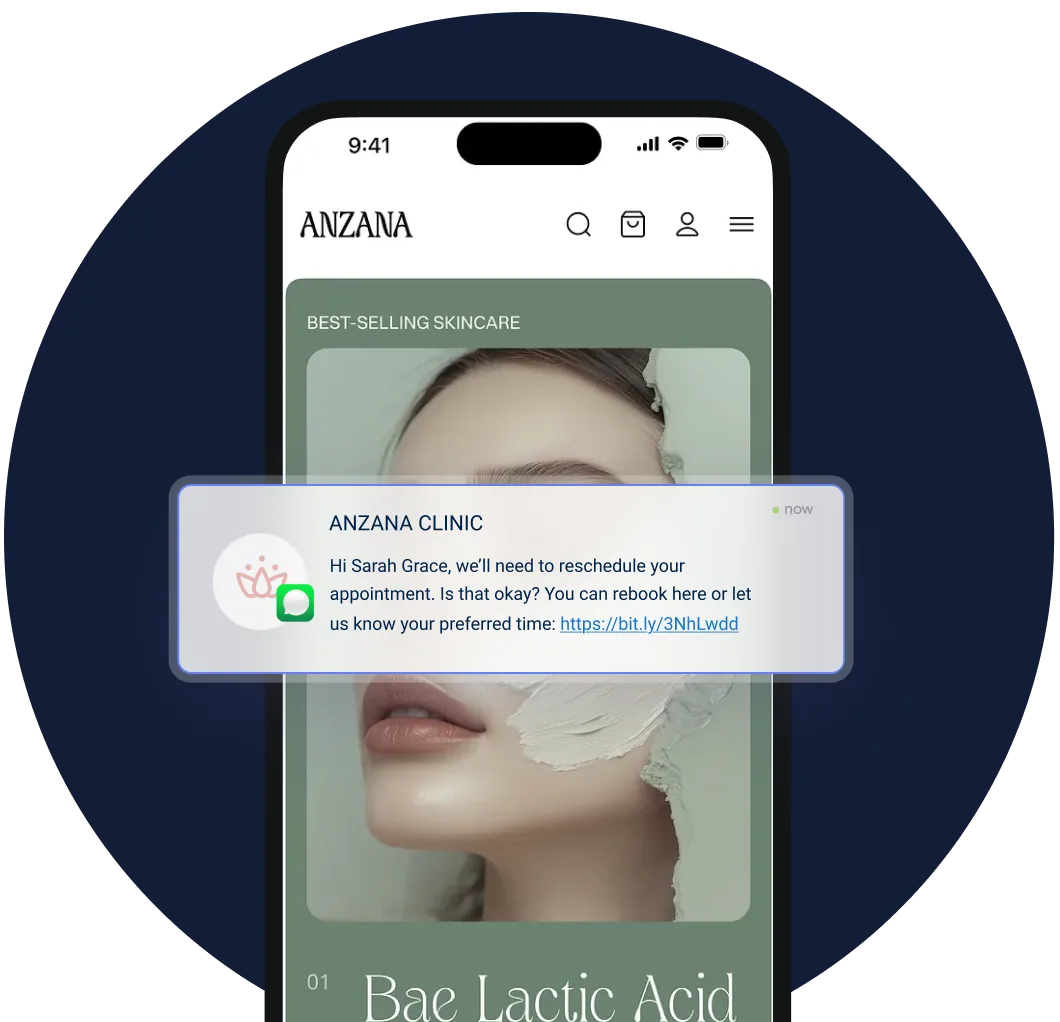

Send post-appointment instructions automatically, see which clients opened them, and follow up at each healing milestone from one place.

The studios that get clean heals are the ones whose clients never had to guess. A written sheet, handed over at the right moment, does more for a heal than any product recommendation.
Download the form, add your studio’s details, and decide who sends it. If the answer is “whoever remembers”, automate it instead. Book a demo to see how Pabau delivers aftercare instructions and follow-ups for every client.

Sending clients home after a body treatment? Full body exfoliation aftercare guidelines sets out the same kind of written protocol for exfoliation clients.
Need an aftercare sheet for waxing too? Eyebrow waxing aftercare covers the first 24 hours that keep freshly waxed skin calm.
Still collecting client details on paper? Spa intake form template lists the fields worth capturing before anyone sits in the chair.
Comparing systems to run the studio on? Best software for spas weighs the main platforms on booking, client records and payments.
Surface healing (skin closure and peeling) takes 2-4 weeks. Deep dermal healing, where ink fully settles into the dermis, continues for up to 6 months. This is why long-term sun protection matters even after the tattoo looks and feels normal.
Yes. Peeling typically starts around day 4-5 and peaks days 5-10. As the body heals, old skin flakes off naturally. Do not pick or scratch. Let the flakes fall on their own. If ink comes off with them, it is usually surface ink being shed as part of normal healing.
Saniderm and similar adhesive wraps are typically left on 24-72 hours, depending on the product and the artist’s instructions. Follow your own artist’s guidance, because ranges vary. If fluid builds up under the wrap or you develop a rash, remove it early.
Showers are fine once the initial bandage is off, which is 2-5 hours after the tattoo. Keep the water lukewarm, not hot. Avoid soaking in baths, pools or the ocean for 2-4 weeks, because soaking softens the healing skin and introduces bacteria.
Use a fragrance-free, unscented lotion or balm. Cetaphil, CeraVe, Hustle Butter and Tattoo Goo are all common choices. Avoid petroleum jelly, perfumed products and heavy oils. Your artist may recommend a specific product, so follow their guidance.
Avoid direct sunlight for the first 2 weeks. After that, use SPF 30+ daily on any tattooed area exposed to sunlight. This is the most important long-term protection for ink vibrancy and color preservation.