Physician credentialing checklist
A physician credentialing checklist lists every license, certificate, verificati...

Last Updated: Oct 23, 2026

SQT bio microneedling uses freshwater sponge spicules, massaged in by hand, so the skin surface is never broken.
Generic microneedling consent forms describe needles, punctures, and bleeding, which makes them inaccurate for an SQT treatment.
Screen every client for active infection, pregnancy, blood thinners, recent isotretinoin, and known sponge allergy.
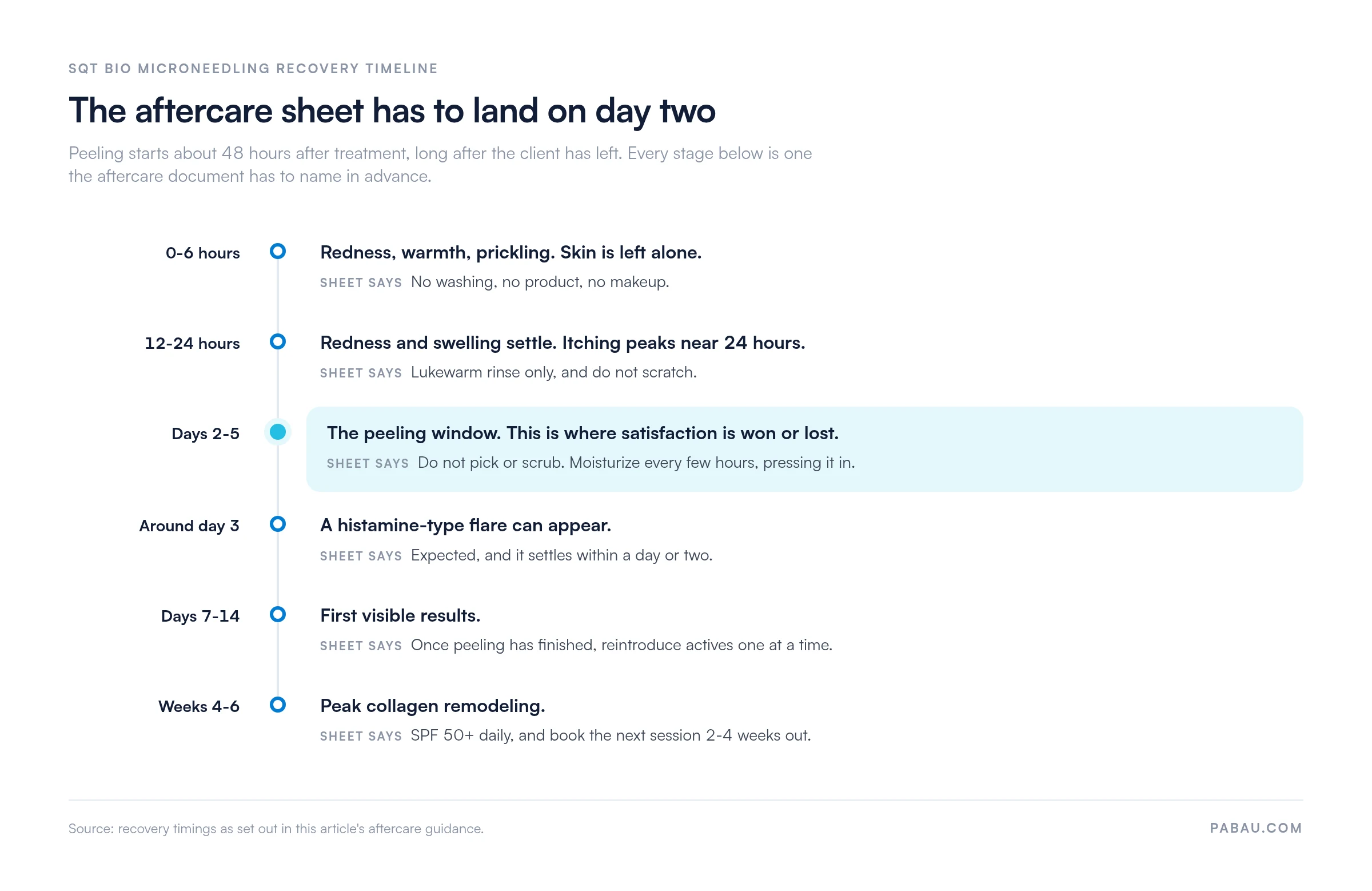
Peeling starts around 48 hours, so the aftercare sheet has to reach the client before it does.
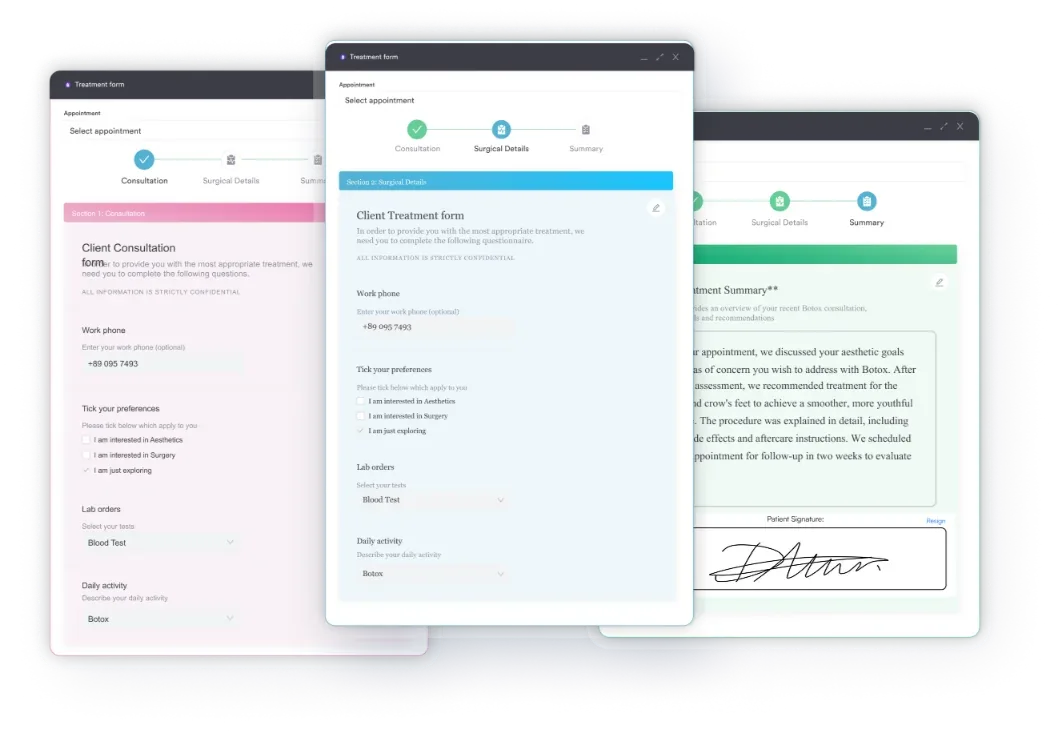
Practice management software like Pabau keeps signed consent, intake answers, photographs, and aftercare on one client record.
Four SQT-specific documents in one PDF. You get an informed consent form written around the spicule mechanism, a client intake questionnaire, a pre-treatment checklist, and a day-by-day aftercare sheet. Each part prints on its own, so you can rebrand it and hand over only what the visit needs.
Download templateSQT bio microneedling breaks the consent form you already use. The spicules come from a freshwater sponge, the practitioner massages them in by hand, and the skin surface never breaks. Generic microneedling paperwork describes needles, punctures, and bleeding, so it documents a treatment your client did not receive.
Day two is when that matters, because the peeling starts while the client is at home with whatever you handed them. The four documents in the pack above are written around the spicule mechanism instead. Below, what each one needs to say and when to hand it over.
SQT uses spicules, tiny needle-shaped microstructures taken from the Spongilla lacustris freshwater sponge. Massaged into the skin, they open millions of microchannels in the epidermis.
That triggers the skin’s own healing response, which is what drives collagen and elastin production. No metal needles are involved, and no acid or chemical peeling agent is used, so the treatment suits most skin types.
Where an acid peel is the better choice, our salicylic peel consent form covers that treatment instead. It screens for peel-specific contraindications and sets out the flaking window that runs from day two to day five.
Practitioners reach for it to soften acne scars, pigmentation, fine lines, dull skin, and rough texture. Results usually show within 7-14 days. Collagen remodeling keeps working for another four to six weeks after that. Most clients book a course of three to six sessions, spaced two to four weeks apart.
Your consent form has to describe what happens in the room. Keep the sequence in front of you while you write it. Here is the protocol most practitioners follow.
Hands-on application takes only a few minutes. Allow 30-45 minutes for the appointment as a whole, including consultation, photographs, and the aftercare conversation. Because the skin surface is not broken, there is no bleeding. Clients see redness and feel prickling instead, and your consent form should say so plainly.
SQT works across Fitzpatrick skin types I-VI, which is one of its selling points. Some conditions still rule a client out completely, and your intake form is where you catch them.
Ask about each of these by name on the intake questionnaire. A yes-or-no box beside every item gives you a dated record of the answer, which a free-text “any medical conditions?” field never will.
Prep is where a good result is set up or quietly lost. Your pre-treatment checklist works best as a countdown, because clients follow dates better than they follow rules.
Two habits carry on through the washout. Clients keep wearing broad-spectrum SPF 50+ every day, since sun exposure can trigger pigmentation afterward.
They also tell you about active acne, a cold sore, or any new lesion before the appointment rather than on arrival.
Peeling starts around 48 hours after treatment, which is exactly when the client is at home without you. A sheet handed over on the day, and sent again digitally, is what keeps them from picking at it.
The timeline below is the shape your aftercare document has to follow.
Consent protects your practice and sets the client’s expectations at the same time. It only does either job if it describes the treatment the client received.
Photography deserves its own paragraph rather than a checkbox buried at the bottom. Storage, retention, and marketing use are separate permissions, and the photo consent rules for med spas set out what each one needs to cover.
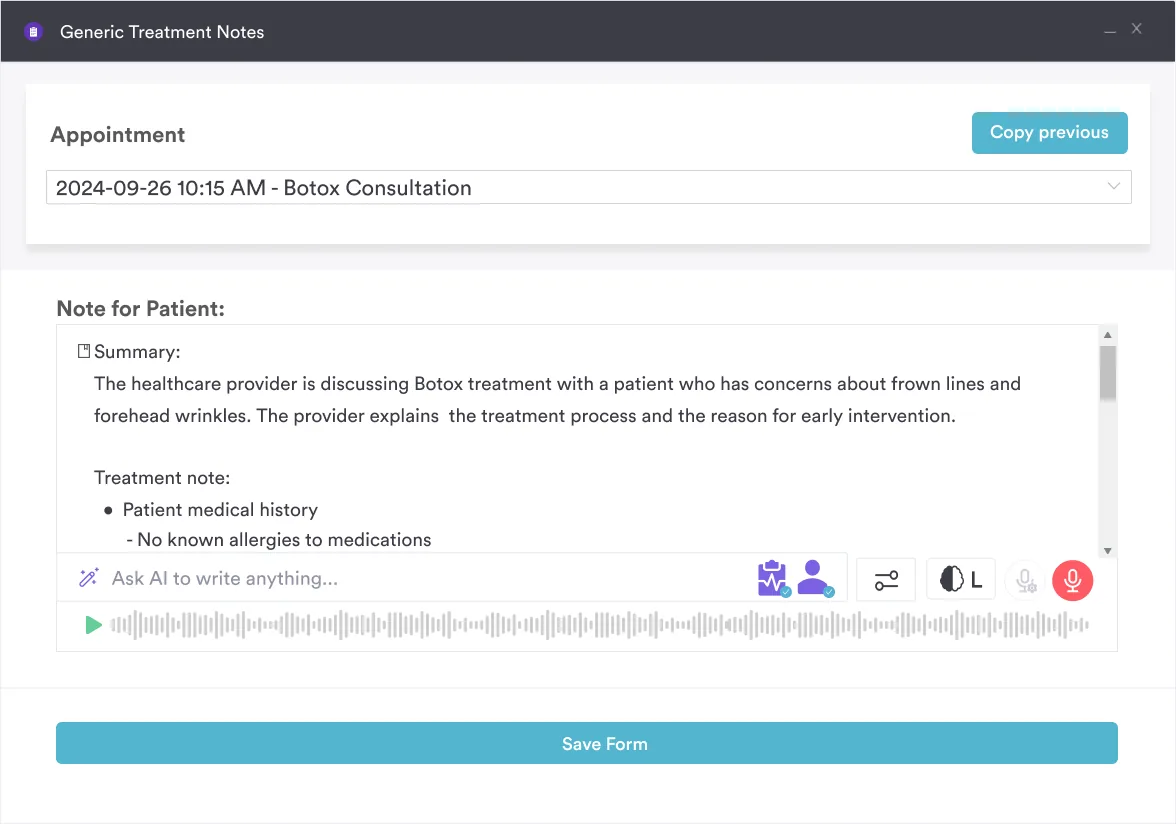
Intake does two jobs at once. It screens for the contraindications above, and it captures a baseline you can compare against at session four.
Send the questionnaire out before the appointment rather than handing it over at the desk. Most medical spa software can attach it to the booking confirmation, so screening is finished before the client sits down.
None of these are clinical errors. They are paperwork habits carried over from needle microneedling, and each one costs you something later.
Fix the last three and most of your follow-up messages disappear, because the client already knows what is happening and when it ends. If you offer needle microneedling too, keep its own skin needling consent form on file. Reach for the SQT pack only when you are working with spicules.
Practices running SQT usually hand over a printed consent form, a paper intake sheet, and an aftercare leaflet. The consent gets filed, the intake sits in a folder, and the leaflet rarely survives the week. On day three nobody can say whether the client was told not to pick.
Practice management software like Pabau moves the four documents in this pack onto the client record instead. The intake questionnaire goes out before the appointment, so screening happens before the client is in the chair. Consent is signed on screen and timestamped against the session it belongs to.
Aftercare is the part that pays for itself. Schedule the instruction sheet to arrive on the day, then again at 48 hours as the peeling starts. Photographs, batch numbers, and massage times sit on the same record, so a four-session course reads as one story rather than five loose documents.

Pabau holds consent, intake, photographs, and aftercare on one client record, and sends the follow-up automatically. Your team documents a full course without retyping anything.

SQT sits in an awkward spot for documentation. It is gentle enough that practices treat it casually, and unusual enough that generic microneedling paperwork describes the wrong treatment. A consent form built around needles and bleeding is worth very little if a client ever disputes what they agreed to.
The pack at the top of this page fixes that. Consent describes spicules massaged in by hand, intake screens for sponge allergy alongside the usual contraindications, and the checklist enforces the two-week retinoid washout. The aftercare sheet lands on the peeling window instead of glossing over it.
Print them, add your branding, and check the clinical wording against the instructions for use supplied with your spicule system. Then decide how they reach the client.
Book a demo to see Pabau send the intake form before the appointment and the aftercare sheet on day two, with nobody chasing paper.

Also offering traditional microneedling? The skin needling consent form covers the needle-based treatment, with the risk wording SQT does not need.
Building out the rest of your intake paperwork? The dermatology intake form gives you a broader medical history to screen against before any skin treatment.
Need a baseline before session one? The full skin assessment template records Fitzpatrick type, condition, and concerns you can compare against later.
Running peels alongside SQT? The chemical peel aftercare template sets out a separate recovery timeline, so clients are not handed the wrong sheet.
Yes. Practitioners commonly treat the neck, chest, and backs of the hands alongside the face. Check the instructions for use supplied with your spicule system before you treat any other area. Record the area treated on the consent form each time.
Follow the instructions for use that came with your system. Where a patch test is advised, run it on the inner forearm 24 to 48 hours ahead. Note the result even when the test is clear, because that is evidence you screened.
Not while the skin is actively flaring. Postpone until the area has been calm for several weeks, and ask for medical clearance if the client is on prescription treatment. Write the decision and the reason into the record either way.
Ask them to call for spreading redness, blistering, pus, fever, or pain that worsens after day three. Put those five signs and your phone number on the aftercare sheet, rather than leaving them in the conversation at the desk.
Scope depends on where you practice. SQT is non-invasive, so it often sits within an esthetician’s scope of practice. Rules still vary by state in the US and by qualification in the UK, so confirm with your regulator and your insurer first.