GLP-1 diet plan
A GLP-1 diet plan is a structured eating framework for patients taking semagluti...

2
Last Updated: Oct 13, 2026

PRX-T33 is a non-ablative, non-peeling chemical peel that uses 33% trichloroacetic acid (TCA) buffered with hydrogen peroxide and kojic acid to stimulate collagen without the visible flaking of a traditional peel.
Redness and mild swelling usually settle within 48 hours; some patients notice minor peeling similar to slight sunburn, and any bruising can take 1-2 weeks to fade.
Core aftercare: moisturize the treated area 2-3 times daily, skip makeup for 24 hours, and avoid exfoliation, perfume, fake tan, or other harsh chemicals for 72 hours.
Patients should avoid retinoids and acids for 7 days, skip further cosmetic treatments and hair removal for 2 weeks, and wear SPF 30+ daily for at least 2 weeks after treatment.
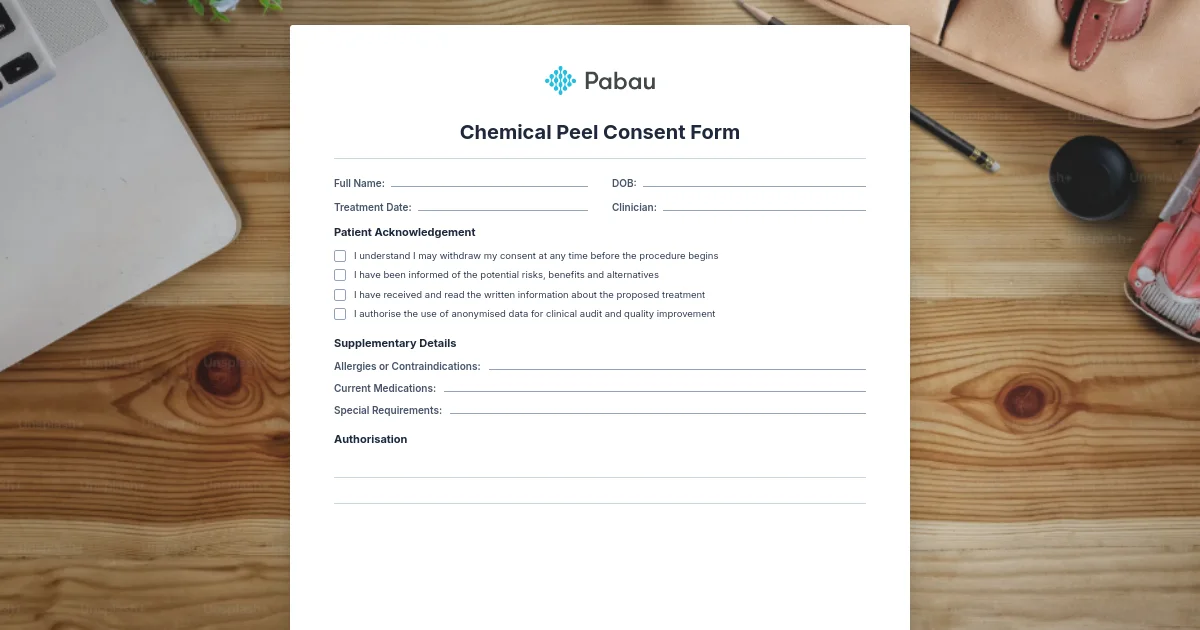
A single-page PRX-T33 aftercare and consent form covering post-treatment care instructions, activity restrictions, and warning signs, plus a patient declaration for signature — ready to hand or send to patients straight after treatment.
Download templatePRX-T33 is a non-ablative “biorevitalizing” chemical peel that combines 33% trichloroacetic acid (TCA) with hydrogen peroxide and kojic acid. The hydrogen peroxide buffers the TCA so it stimulates collagen at the dermal level without the visible exfoliation of a traditional chemical peel — which is why it’s often described as a peel with no downtime. Practices offering chemical peels can compare charting and checkout tools across eight platforms in our guide to med spa management software.
Because there’s no shedding phase to manage, PRX-T33 aftercare focuses on protecting freshly treated skin from irritation and sun exposure rather than nursing patients through days of peeling.
This guide covers what to expect after treatment and the exact instructions in the downloadable PRX-T33 aftercare and consent form from practice management software like Pabau.
PRX-T33 doesn’t remove the outer skin layer the way a traditional TCA or glycolic acid peel does, but the treated skin is still temporarily more sensitive right after treatment. Aftercare protects this sensitive skin while the biorevitalizing effect takes hold, and it directly affects patient comfort, results, and the risk of complications.
Clear, consistent aftercare instructions cut down on follow-up calls and raise patient satisfaction — especially since a peel with no visible downtime can catch patients off guard if mild redness or peeling shows up anyway. This is where skin clinic software that standardizes how instructions go out to patients makes the difference.
The treated area may feel slightly tender and appear red and swollen right after treatment. Some patients notice mild skin peeling with an appearance similar to slight sunburn — this is expected and not a sign of a problem.
These effects usually improve noticeably within 48 hours, though full settling can take a little longer. Minor bruising can also occur and may take 1-2 weeks to resolve.
These steps reduce the risk of complications and support comfortable healing. Practices using a patient portal to share aftercare protocols help patients follow these steps more consistently.
Active ingredients and harsh chemicals increase irritation risk on freshly treated skin, which is why many med spas send these restrictions straight to patients’ phones instead of relying on printed handouts.
Sweat, heat, alcohol, and friction can irritate freshly treated skin or interfere with healing.
Mild redness, tenderness, and occasional peeling are normal after a PRX-T33 peel. Contact your practitioner promptly if you notice:
Attend any follow-up appointments your practitioner recommends, even if recovery seems to be going well — this lets them confirm healing is on track and plan any further sessions.
Practice management software like Pabau can automate aftercare delivery, sending PRX-T33 post-treatment instructions directly to patients’ phones by email and SMS so every patient receives consistent guidance. Schedule a demo to see how this reduces no-shows and cuts down on follow-up calls about aftercare.
Med spas already automating this step.
PRX-T33 is often delivered as a course of treatments rather than a single session. Continue wearing SPF 30+ daily beyond the initial 2-week restriction period to protect results.
Follow your practitioner’s guidance on when to resume retinoids or acids and when your next session is due.
PRX-T33 aftercare is simple by design: because the peel itself is built to work without visible downtime, the focus is on gentle moisturizing, sun protection, and avoiding a short list of products and activities while the biorevitalizing effect settles in.
Giving patients Pabau’s downloadable PRX-T33 aftercare and consent form at the end of their appointment ensures they leave with clear instructions and a signed record of their understanding of the aftercare requirements.
PRX-T33 is a non-ablative, “biorevitalizing” peel designed to work without visible peeling. The treated area may look red and swollen right after treatment, and some patients notice mild peeling similar to slight sunburn. These effects usually improve within 48 hours, though full settling can take a little longer, and any minor bruising can take 1-2 weeks to resolve.
Avoid makeup for 24 hours after treatment, since applying it too soon increases the risk of infection in the treated area.
Avoid products containing alpha hydroxy acids, retinol, or glycolic acid for at least 7 days after your PRX-T33 treatment. Also avoid exfoliating the treated skin for 72 hours after treatment.
Use a regular moisturizing cream on the treated area 2-3 times a day, applying it more often if the skin feels dry or is peeling. Avoid perfumed products, fake tan, and other harsh chemicals for 72 hours after treatment.
Avoid strenuous exercise, saunas, sunbeds, and swimming for 72 hours after treatment — heat and sweating can irritate delicate treated skin and slow healing. Also avoid excess alcohol or caffeine for 48 hours after treatment.
Contact your practitioner if you notice signs of infection — hot, red, shiny skin, pus formation, fever, or feeling generally unwell — or any other unwanted side effects. Also avoid further cosmetic treatments such as Botox or dermal filler, and hair removal or waxing, for 2 weeks after treatment, and wear SPF 30+ daily for at least 2 weeks.