Receptive one word picture vocabulary test: What it measures and how to interpret scores
The receptive one word picture vocabulary test is a norm-referenced assessment o...

Last Updated: Sep 23, 2026

A speech intelligibility rating scale is a standardized clinical tool speech-language pathologists (SLPs) use to measure how clearly listeners understand a person’s speech.
Coplan and Gleason’s 1988 parent-report milestones estimate full intelligibility by age 4. Hustad et al.’s 2021 transcription-based data place that milestone closer to age 5.
The Duffy scale is a 10-point severity rating for motor speech disorders. The ICS and SIR scales serve pediatric and hearing-device populations, respectively.
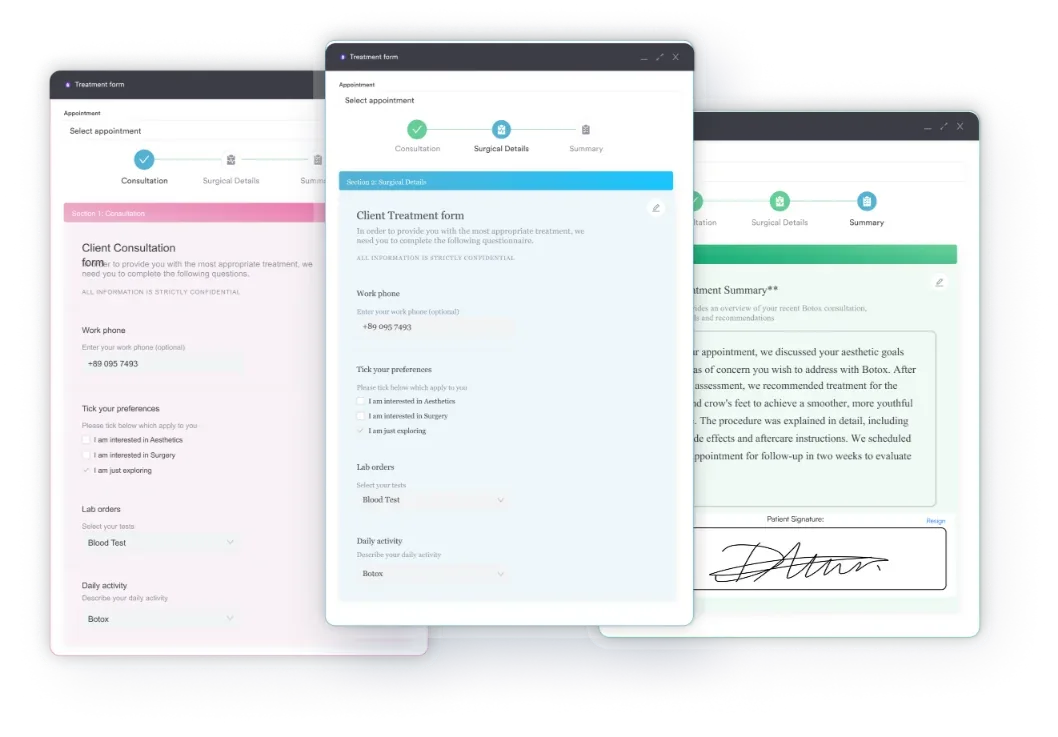
Pabau’s digital forms and clinical note templates let SLPs capture intelligibility ratings in the client record, linked to IEP goals and progress reports.
A ready-to-use assessment tool for measuring speech clarity and intelligibility across contexts. Includes age-based milestones, Duffy, ICS, and SIR scoring descriptors, and documentation fields for IEP goals and progress monitoring.
Download templateSpeech-language pathologists face a daily clinical challenge: how do you objectively measure whether a client’s speech is becoming easier to understand? This is where the speech intelligibility rating scale becomes indispensable.
The scale provides a standardized method for quantifying intelligibility: the degree to which a listener understands a speaker’s message. It lets clinicians establish baselines, track progress over time, and report outcomes to insurers, school districts, and families.
A speech intelligibility rating scale is ordinal. Each level is anchored by a descriptor, such as “20% intelligible to unfamiliar listeners” at the lowest level. This structure turns a subjective impression into a repeatable measurement. That is why clinicians in motor speech disorders, childhood apraxia of speech (CAS), fluency disorders, and dysarthria rely on it.
A speech intelligibility rating scale is a clinical instrument SLPs use to measure how well a listener understands spoken communication. Unlike vocabulary tests or language samples, intelligibility scales focus on a single dimension: clarity and comprehensibility to an unfamiliar listener.
The rating is ordinal, meaning each level represents a qualitative jump in how much of the speaker’s message is understood. Anchors, or descriptors, standardize the rating at each level, so “Level 2” always means roughly the same thing across clinicians and settings. This consistency enables progress data to be meaningful for digital intake forms and structured documentation workflows in clinical records.
One of the most clinically useful features of a speech intelligibility rating scale is that it can be benchmarked against developmental milestones. Coplan and Gleason’s 1988 parent-report study remains a widely used clinical rule of thumb for these milestones. More recent transcription-based research from Hustad et al. (2021) shows the same milestones landing roughly a year later than the older parent-report figures.
These milestones help clinicians flag children who fall outside typical development. Because Hustad’s measured figures run about a year behind the older parent-report numbers, a 4-year-old at 50% intelligibility raises less concern on the newer scale. The same score would raise more concern against Coplan and Gleason’s older benchmark. Either way, a child who is not gaining ground between visits warrants a closer look.
When a child’s difficulties reach beyond speech, the autism rating scale scores 15 behavioral domains, including verbal and nonverbal communication. Totals of 30 or above signal the need for a comprehensive diagnostic evaluation.
While many clinicians use informal rating scales, three named instruments dominate the literature and clinical practice. Each has distinct strengths depending on the clinical population and assessment context.
The choice of scale depends on clinical context. For a child with a cochlear implant or hearing device, the SIR scale’s five categories give a quick, repeatable measure of everyday intelligibility. For adult dysarthria in an outpatient setting, the Duffy scale’s 10-point severity rating tracks smaller changes over time.
Scoring a speech intelligibility rating scale follows a straightforward but rigorous process. The key is consistency: using the same descriptor anchor each time so scores are comparable across sessions and clinicians.
The four-point descriptor scale below is a general clinical shorthand for rating a connected-speech sample. It is not the Duffy or SIR instrument itself; those are described in later sections with their own point structures.
A speech intelligibility rating scale is indicated in assessment and treatment planning for several clinical populations.
The Intelligibility in Context Scale (ICS), developed by McLeod, Harrison, and McCormack at Charles Sturt University, takes a parent-report approach. Parents rate their child’s intelligibility from 1 (never understood) to 5 (always understood) across 7 listening contexts. These range from familiar and unfamiliar listeners to quiet and noisy settings, and face-to-face versus phone conversation.
This parent-report format captures real-world variability. A child who is 100% intelligible at home with a sibling may drop to 60% intelligibility when speaking to a teacher in a noisy classroom. Both data points are clinically valuable. The ICS scoring averages across contexts to yield a total intelligibility estimate, making it sensitive to functional communication outcomes.
The Duffy scale is formally the Motor Speech Disorders Severity Rating (MSDSR), a 10-point clinician-rated instrument. It appears in Duffy’s textbook, Motor Speech Disorders (3rd ed. 2013 and 4th ed. 2020). It was modified from an ALS severity scale published by Hillel and colleagues in 1989.
Raters score overall speech severity from 1 (nonvocal) to 10 (normal speech), rather than the percentage-banded scale sometimes described online. A peer-reviewed validation study documents the same instrument in detail.
This makes it the standard severity measure for dysarthria and other motor speech disorders in adults. It works well for progressive conditions such as ALS, where a single score can track change across many visits.
For school-based SLPs, progress monitoring using intelligibility ratings is a requirement. Federal IDEA legislation mandates that IEP goals be measurable and revisable based on progress data. Intelligibility ratings meet this bar: they are quantifiable, repeatable, and sensitive to treatment changes.
Best practice is to establish a baseline rating at the start of therapy, then administer the rating every 2-4 weeks. Plot these on a graph. The visual record of progress becomes powerful evidence for IEP review meetings. Parents see concretely that their child went from “mostly unintelligible” to “fairly intelligible” over a semester. School administrators see data justifying continued SLP services.
Objective measurement: Replaces subjective impressions with an ordinal scale anchored to clear descriptors, so you and colleagues rate consistently.
Functional outcome data: Ratings answer the question families actually ask, “Will my child be understood?” and align assessment with real-world goals.
IEP documentation and legal defensibility: Measurable progress in intelligibility justifies continued services and withstands scrutiny from school administrators or insurance auditors.
Progress tracking: Repeated ratings over time show whether therapy is effective, allowing SLPs to adjust goals or intensity based on data.
Insurance and payer communication: Quantified intelligibility change provides the medical necessity evidence payers need to authorize ongoing coverage.
Use the same assessment context (same listener, same task, same noise level) each time you administer a speech intelligibility rating. Consistency across sessions makes trend data meaningful. If you rate intelligibility during connected speech at intake, repeat the same format at every progress-monitoring point.
Reliability in intelligibility rating is not automatic. Research shows that different SLPs rating the same speech sample may assign different levels if descriptors are not clear or if context varies.
To strengthen reliability, follow a few core practices:
Where speech intelligibility ratings truly drive clinical value is in longitudinal documentation. A single rating at intake tells you where the client starts. Ratings at each session show whether therapy is working. Many EHR systems, however, force SLPs to type narrative notes without structured fields for intelligibility data, making trend analysis cumbersome.
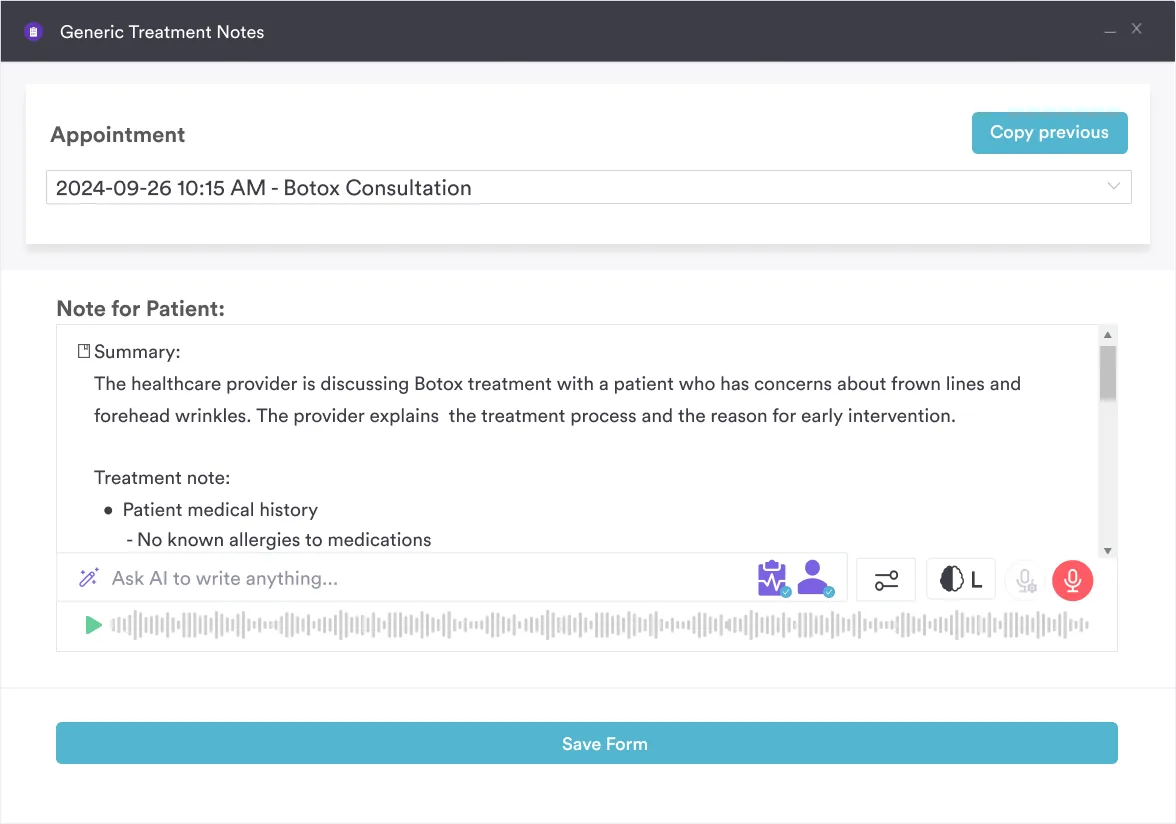
Pabau’s structured clinical records let SLPs capture intelligibility ratings as discrete data points in each session note, linked to treatment goals and outcome measures. This means your intelligibility data automatically populates progress reports, with no manual re-entry and no data loss. When an insurance company asks about the trajectory of change, you can export a chart in seconds. It shows intelligibility improvement from session 1 to session 20.
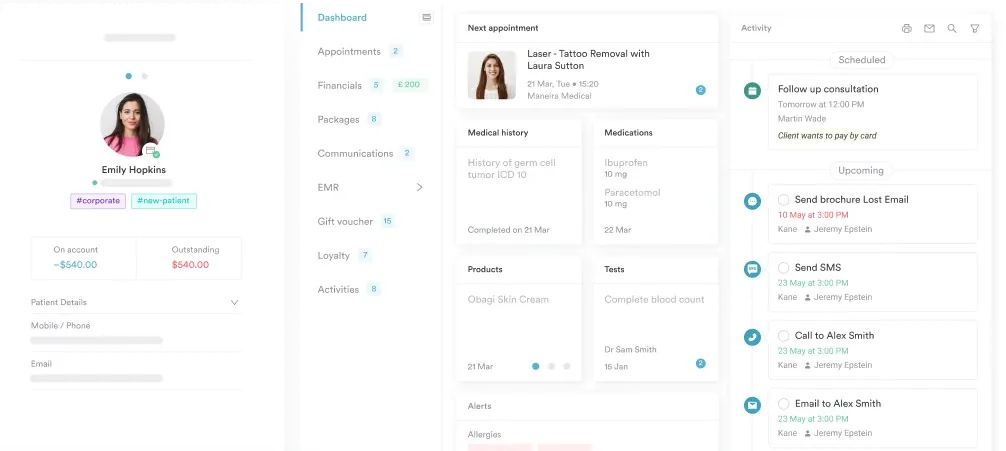

See how Pabau’s structured note templates help SLPs document intelligibility ratings, link them to IEP goals, and generate payer-ready progress reports in minutes.

A speech intelligibility rating scale turns a clinician’s sense of how well someone communicates into a measurable, trackable outcome. Whether you work in a school, an outpatient setting, or private practice, the scale gives families, educators, and payers the objective data they expect.
Downloading and customizing this template gives you a reliable tool for baseline assessment, progress monitoring, and goal setting, anchored to published developmental milestones.
Start documenting intelligibility change today. Book a demo to see how Pabau’s clinical records support longitudinal progress tracking for your caseload.

Looking for a structured note-taking tool? Safer clinical notes covers how SLPs can document assessment findings and progress with legal defensibility and compliance in mind.
Need to turn ratings into measurable IEP goals? Speech therapy goal bank gives you pre-written, measurable objectives you can pair directly with intelligibility scores.
Want to streamline intake and consent? Digital forms enable parents to complete pre-assessment questionnaires, parent-report scales like the ICS, and consent in minutes before the first session.
A speech intelligibility rating scale is a standardized clinical tool used by speech-language pathologists to measure how well listeners understand a person’s speech. It typically uses an ordinal scale, from 1-5 to 1-10 depending on the instrument, with descriptors anchoring each level to a speech-understanding target. The scale provides objective, repeatable measurement of speech clarity for baseline assessment, progress monitoring, and IEP documentation.
Coplan and Gleason’s 1988 parent-report study is a widely used clinical rule of thumb. It estimates about 50% intelligibility by age 2, 75% by age 3, and 90-100% by age 4. Hustad et al.’s 2021 transcription-based research found the same milestones landing about a year later. Their objective data show roughly 50% intelligibility by age 3, 75% by age 4, and 90% by age 5. Because the newer data is measured more objectively, many SLPs treat it as the more conservative screening reference.
The Duffy scale, a 10-point severity rating, is best for adult dysarthria and other motor speech disorders. The Intelligibility in Context Scale (ICS) is a parent-report tool averaged across seven contexts, and works well for young children with speech sound disorders. The Speech Intelligibility Rating (SIR) scale, rated 1-5, is used mainly to monitor children with cochlear implants or other hearing devices. Choose based on your clinical population and whether you need a clinician-rated or parent-report format.
For progress monitoring, administer ratings every 2-4 weeks during active therapy. This frequency allows you to detect meaningful change while avoiding fatigue from over-testing. Use the same assessment context (same task, same listener type, same environment) each time to ensure consistency and reliable trend data.
Yes, but check which instrument fits the population. The Duffy scale is documented mainly in adults with motor speech disorders. The SIR scale monitors both children and adults with cochlear implants or hearing devices. For children without hearing loss, intelligibility is usually benchmarked against age-based developmental milestones. An adult with acquired dysarthria is measured against their own baseline rather than a developmental norm.