Newborn feeding schedule: How much and how often by week
A newborn feeding schedule is a framework for how often and how much a baby eats...

Last Updated: Oct 13, 2026

The pediatric sleep questionnaire is a parent-report screening tool for sleep-disordered breathing and obstructive sleep apnea in children aged 2-18, developed by Chervin et al. at the University of Michigan.
A score of ≥0.33 on the 22-item SDB subscale (8+ items positive) indicates elevated risk for sleep-disordered breathing and warrants clinical follow-up or polysomnography.
The PSQ covers snoring, witnessed apneas, daytime sleepiness, inattention, hyperactivity, and bedtime resistance – domains that help clinicians identify children at risk of significant sleep disorders.
Deploying the pediatric sleep questionnaire as a digital intake form in practice management software like Pabau reduces paper handling, automatically captures parent responses linked to the child’s record, and surfaces scoring summaries within clinical notes.
A validated parent-report screening tool covering snoring, witnessed apneas, daytime sleepiness, behavioral symptoms, and sleep quality in children aged 2-18. Ready to deploy in your practice.
Download templateIdentifying sleep disorders in children early improves daytime functioning, academic performance, and long-term health outcomes. The pediatric sleep questionnaire has become a cornerstone screening tool in pediatrics, primary care, mental health, and developmental assessment settings.
The pediatric sleep questionnaire is a parent-completed screening instrument developed by Ronald Chervin and colleagues at the University of Michigan. It screens for sleep-disordered breathing (SDB) and obstructive sleep apnea (OSA) in children aged 2-18 years.
Parents answer yes/no questions covering snoring, breathing disturbances, daytime sleepiness, and behavioral symptoms. The tool is quick to administer (5-10 minutes) and requires no special equipment, making it ideal for busy clinical settings.
The PSQ is not diagnostic – it is a screening tool only. A positive screen indicates elevated risk and typically warrants clinical follow-up with a sleep specialist or structured patient care assessment including sleep history and a physical examination. In some cases, polysomnography (sleep study) may be recommended to confirm the diagnosis.
The PSQ captures a broad range of sleep-related symptoms and daytime consequences:
These domains address the core manifestations of sleep-disordered breathing in children and help clinicians recognize when a child’s daytime behavior or school struggles may be rooted in undetected sleep pathology. The PSQ’s breadth means it can flag risk even in children whose parents might not initially recognize sleep as the underlying issue.
The full PSQ contains 22 items organized into five key domains. Each item is answered yes/no by the parent or guardian.
Parents typically complete the PSQ before or during the first consultation. The straightforward yes/no format means clinicians can quickly identify symptom clusters and prioritize next steps in assessment. Practices can fold this screening into a child’s annual physical exam checklist to catch sleep issues during a routine visit.
In software built for occupational therapy practices, scores from scales like this feed straight into progress notes.
Scoring the pediatric sleep questionnaire is straightforward once you understand the subscale structure.
Important caveat: The ≥0.33 cutoff applies specifically to the 22-item SDB subscale. Do not apply this threshold to other subdomains or the total score without clinical validation.
The PSQ was validated extensively by Chervin et al. in the original 2000 study and has been tested in multiple cohorts since. A separate pediatric obesity study found that PSQ scores predicted moderate-to-severe obstructive sleep apnea with 80% sensitivity and 100% specificity at a 0.65 cutoff, a different population and threshold from the general validation figures below.
These metrics confirm the PSQ is a well-validated, evidence-based screening instrument. However, remember that a positive PSQ screen is not equivalent to an OSA diagnosis – clinical judgment and polysomnography remain the gold standard.
Integration into your practice workflow ensures consistent screening and captures data linked to the patient record.
Many practices now deploy the PSQ as a digital EHR form, which automatically calculates the score and flags elevated results for the clinician – reducing manual work and improving consistency.
The PSQ is University of Michigan copyrighted material, free to license for non-commercial academic and clinical use. However, commercial use – including use within proprietary practice management software – requires a paid license from MAPI Research Trust (ePROVIDE).
This applies if your practice sells or monetizes services that rely on the PSQ.
For clinicians using the PSQ in routine practice without commercial resale, no license is required. Always attribute the questionnaire to Chervin et al., University of Michigan, in your clinical notes.

While the PSQ is the most widely validated and cited tool, clinicians sometimes use complementary instruments depending on the clinical context.
Many clinicians use the PSQ as the initial screen and then deploy a complementary tool (such as BEARS) if the results suggest a broader sleep problem or if daytime symptoms predominate.
Having the PSQ, BEARS.
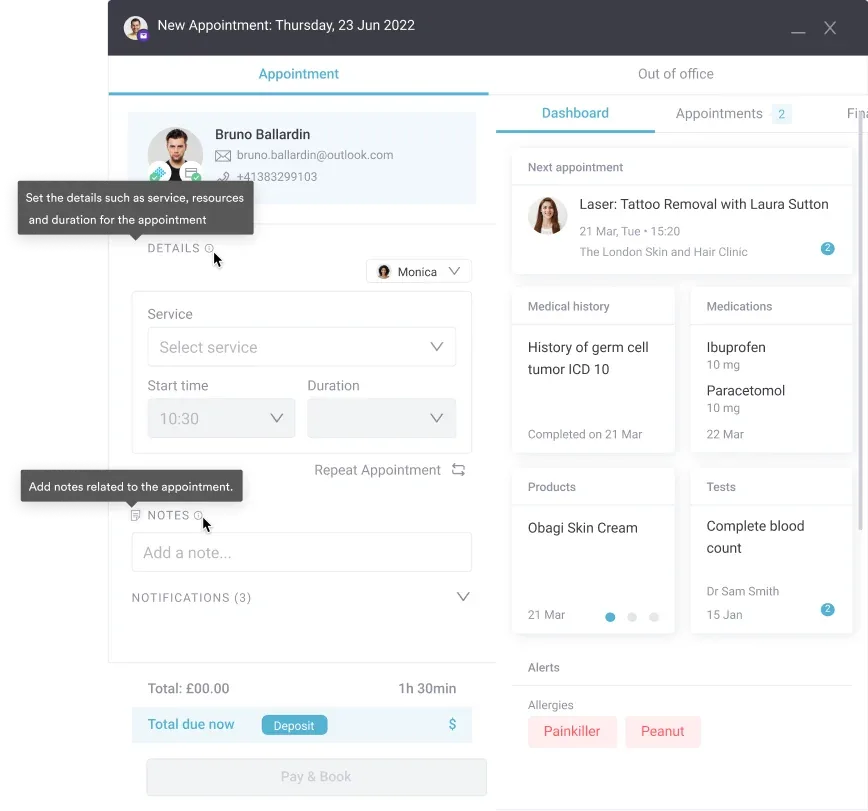
To ensure the PSQ becomes a consistent part of your screening process, integrate it into your intake workflow. Many practices find that patient portals and online intake forms increase completion rates – parents answer the PSQ before arriving, giving you time to review and act on elevated scores during the visit.
Store the PSQ score and clinical interpretation in the child’s electronic health record so it’s available for future visits and can be tracked over time. This is especially useful for monitoring children with mild SDB risk or those pending specialist evaluation.
For practices managing multiple pediatric patients, automated recall reminders can prompt follow-up with families whose child scored positive on the PSQ, so no child is missed while awaiting sleep specialist assessment.
The pediatric sleep questionnaire is a validated, efficient screening tool that takes parents 5-10 minutes to complete and clinicians 2-3 minutes to score.
A score of ≥0.33 on the 22-item SDB subscale indicates elevated risk and warrants further clinical evaluation or specialist referral. Remember: the PSQ is a screening tool, not a diagnostic test. Polysomnography remains the gold standard for confirming obstructive sleep apnea.
Deploying the pediatric sleep questionnaire in your practice is a small step that yields significant clinical returns. Early identification of sleep-disordered breathing prevents missed diagnoses, improves treatment outcomes, and supports better long-term health trajectories for your young patients.
Book a demo to see how Pabau’s digital intake forms can help you deploy the PSQ and other validated screening instruments consistently across your practice.

Charting a higher-acuity nursing case? Pulmonary embolism nursing care plan covers NANDA diagnoses, NIC interventions with rationales, and discharge planning for acute care.
Mapping a different kind of rash? Shingles nerve pathways map diagrams dermatomal distribution patterns to aid diagnosis, treatment planning and patient education.
Need normal heart rate ranges during sleep? Sleeping heart rate chart lists normal ranges by age and flags abnormal readings for review.
The pediatric sleep questionnaire is a validated 22-item parent-report screening tool for sleep-disordered breathing and obstructive sleep apnea in children aged 2-18 years. Developed by Ronald Chervin and colleagues at the University of Michigan, it covers snoring, breathing disturbances, daytime sleepiness, behavioral symptoms, and sleep quality. Parents answer yes/no questions, and a score of ≥0.33 (8+ items positive) indicates elevated risk.
Count the total number of “yes” answers across the 22 SDB items (0-22), then divide by 22 to calculate a decimal score (e.g., 8 ÷ 22 = 0.36). A score of ≥0.33 indicates elevated risk for sleep-disordered breathing and warrants further evaluation by a sleep specialist or polysomnography.
The PSQ was validated for children aged 2-18 years. Some adapted versions focus on narrower age ranges (e.g., ages 2-10) – confirm the version in your setting to ensure age-appropriate item validity.
Yes. The PSQ has strong psychometric properties including sensitivity 81-85%, specificity 87%, internal consistency (Cronbach’s alpha 0.66-0.89 across subscales), and criterion validity against polysomnography. It has been validated in multiple pediatric cohorts and is considered an evidence-based screening tool.