Nutrition intake form
A nutrition intake form is a structured questionnaire that records a patientR...

2
Last Updated: Oct 22, 2026

Ketosis is a metabolic state where your body burns fat for fuel instead of carbohydrates, triggered by restricting net carbs to 20-50g daily.
The standard keto macro ratio is 70-75% fat, 20-25% protein, and 5-10% carbs. The template helps you hit those targets consistently.
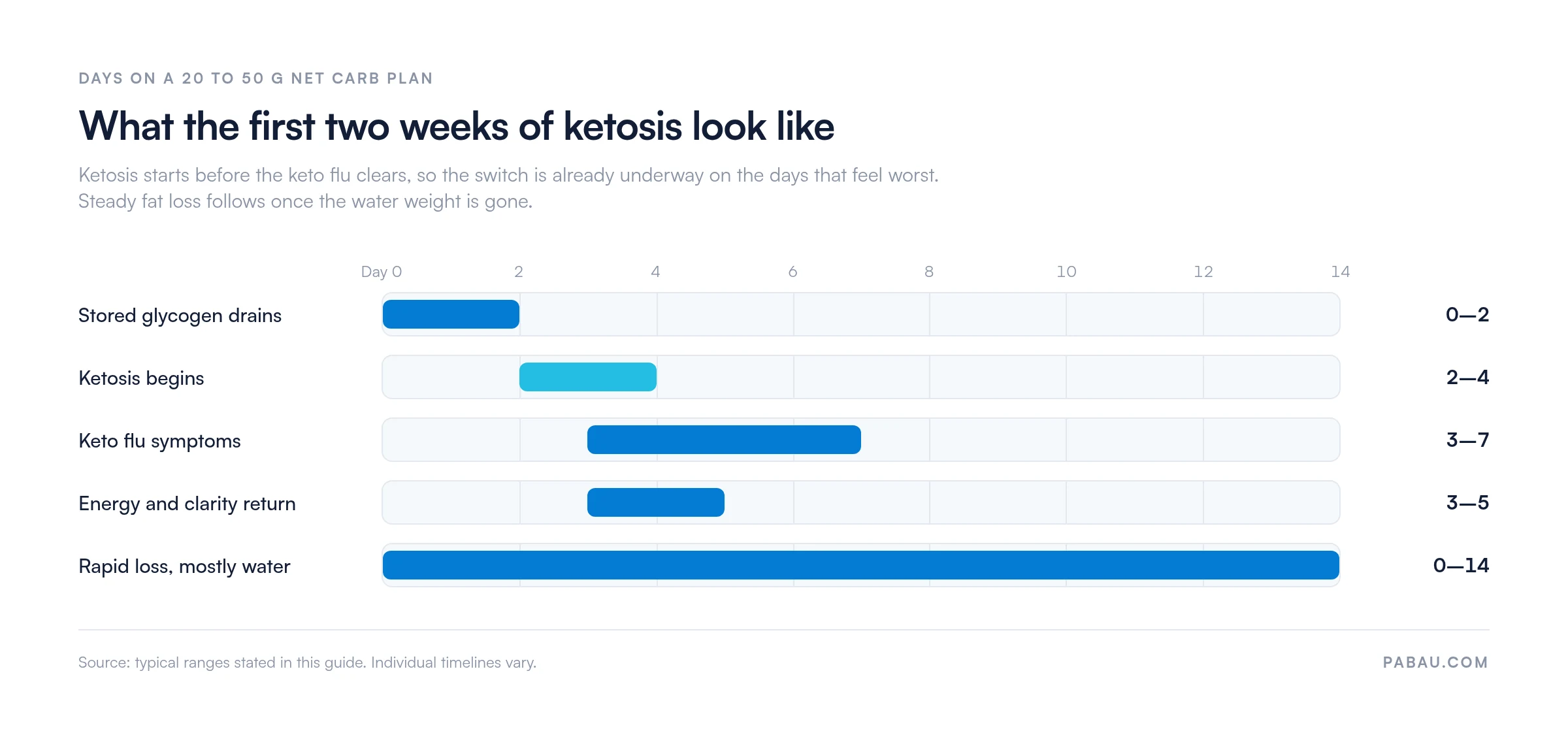
Most people enter ketosis within 2-4 days of strict carb restriction. Keto flu symptoms like fatigue and headaches usually pass within a week.
Ketosis usually begins on day 2 to 4, before the keto flu clears, so the hardest days come after the switch.
A structured plan removes the daily guesswork, speeds up fat adaptation, and helps you avoid hidden carbs and too little fat.
A printable weekly grid with a row for each day and columns for breakfast, lunch, and dinner. Fill it in with the meals and macro targets on this page.
Download templateA meal plan for ketosis keeps your net carbs low enough, every day, to push your body into burning fat for fuel. That means roughly 20 to 50 grams of net carbs a day, with fat making up most of your calories.
This page gives you the macro targets, the food lists, a 7-day sample schedule, and the timeline your body follows once you start. The template itself is a blank weekly grid, so you can drop your own meals into it and keep the week planned.
Ketosis is a metabolic state in which your body burns fat for fuel instead of carbohydrates. When you cut carbohydrates sharply, your liver converts stored fat into molecules called ketones. Those ketones become your cells’ main energy source, because there is no longer enough glucose to run on.
Ketogenic diets have been used therapeutically since the 1920s, when a Mayo Clinic physician named the diet and started using it to treat epilepsy. Its use in weight management came much later, after a 1990s revival driven by hard-to-treat epilepsy.
Being in ketosis is not the same as eating low-carb. A low-carb diet can cut carbohydrates without ever triggering the metabolic switch. A ketosis plan restricts net carbs, meaning total carbs minus fiber, to a level that forces it.
Most people reach nutritional ketosis below 50 grams of net carbs a day. Many aim for 20 to 30 grams to get there faster.
The template is deliberately blank, so it works for any version of keto you settle on. Five steps take it from an empty grid to a planned week:
A ketosis plan balances three macronutrients in fairly narrow ranges:
These ratios suit most people, and they give you a starting point you can adjust. Log your food for two or three days at the start to check you are in range. If fat is running low and hunger is high, that is usually the number to fix first.
Fill the grid with whole foods that are naturally low in carbohydrates. These are the foundations:
For net carb counts per serving, our low carb food list breaks these groups down further.
Hidden carbs are what usually break a keto week. Avoid these entirely:
This sample week shows how the plate balances out across seven days. Each day stays under 30 grams of net carbs and hits the macro targets above:
Portions are generous on protein and fat, because satiety is built in. Carbs come from vegetables only. You will notice there is no calorie cap here, since appetite tends to fall on its own once ketosis takes hold.
A plan only works if you stick to it, and prep is what removes the friction:
A ketosis plan often triggers what people call keto flu. These are temporary symptoms as your body switches from burning carbs to burning fat, and they usually pass within 3 to 7 days.
Common symptoms: fatigue, headaches, irritability, mild brain fog, and muscle soreness. They show up because your body is burning off stored glycogen and rebalancing electrolytes.
The timeline below maps the whole first two weeks, from the carb cut to fat adaptation.
Five signals tell you the switch has happened, and most of them appear in the first week:
If none of these show up by day five, net carbs are usually the culprit. Review your food log and tighten the ceiling to 20 grams a day.
A calorie deficit is what drives weight loss. Ketosis makes that deficit easier to hold, because hunger falls. One NIH-indexed study followed appetite through a ketogenic weight-loss program and found it stayed suppressed while participants remained in ketosis.
To adapt the sample week, start by working out your maintenance calories. Subtract about 500 to target a pound a week, then plan meals inside that number. The macro percentages hold at any calorie level.
If your target lands near the low end, our 1200 calorie diet plan shows how the same macros work on a tighter budget.
Five pitfalls account for most failed first weeks:
A ketosis plan is not right for everyone. Talk to your doctor first if you have type 2 diabetes or take blood pressure medication. The same applies if you are pregnant, breastfeeding, or have a history of disordered eating.
Ketogenic diets can move blood glucose and insulin levels sharply, so those groups need medical supervision. The template here is educational, and individual needs vary. If diabetes is in the picture, our low carb diabetic plan sets carb targets by diabetes type and medication.
If you are a practitioner handing this plan to clients, the follow-up is usually where it falls apart. The plan goes out as an email attachment and the carb targets live in a spreadsheet. Nobody sees the food log until the next appointment.
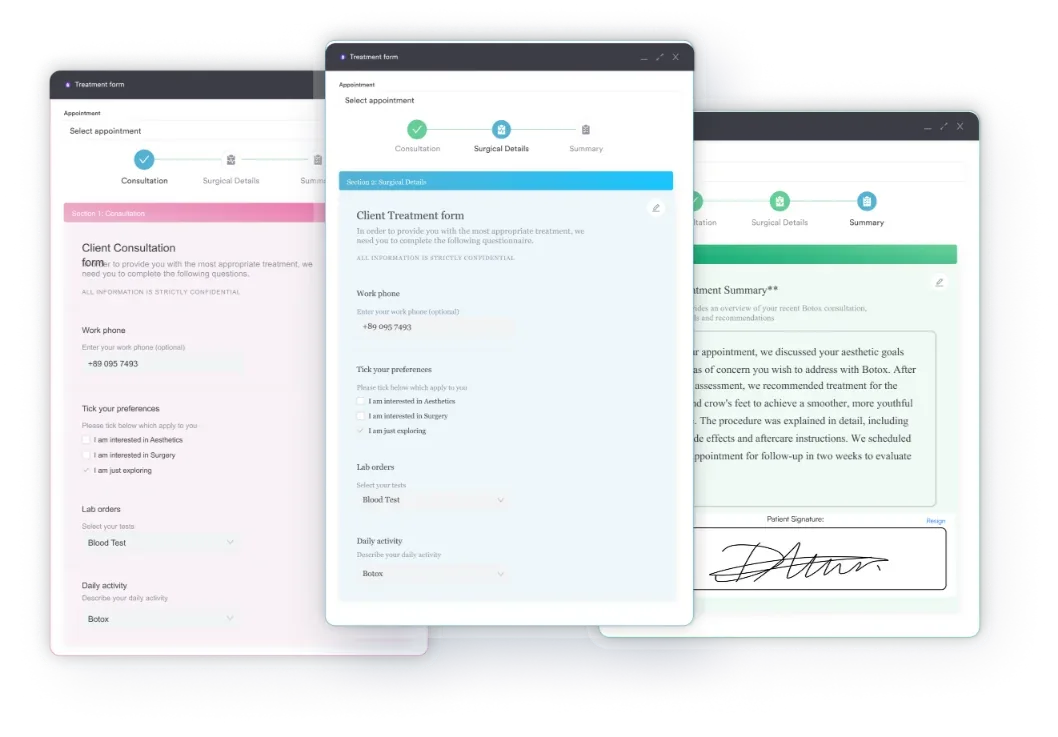
Practice management software like Pabau keeps the plan and the follow-up in one client record. Digital intake forms capture diet history and medication at signup, so the carb ceiling is set before the first consultation. The plan you send, the consent, the weigh-ins, and the notes all sit against the same file.
Automated messages then do the chasing for you. A check-in on day three lands exactly when keto flu usually hits. A reminder at week two asks for a weight and a food log. Every subscription includes those tools, so you are not choosing a tier to get them.
Our weight loss clinic software brings the calendar, the client record, and payments into one place. A keto program then runs as one workflow instead of five.

Pabau keeps intake forms, meal plans, weigh-ins, and follow-up messages against the same client file. Your team spends the follow-up week reviewing progress instead of chasing paperwork.

The plan works because it is boring. You hold the same carb ceiling every day, let fat do most of the work, and let vegetables carry the rest. Adherence beats optimization here, which is why a filled-in grid on the fridge outperforms a perfect plan you never wrote down.
Give it two weeks before you judge it. Day four will be the worst of it, and the signs you are looking for usually arrive before the symptoms clear. If they have not by day five, tighten the carbs rather than abandoning the plan.
If you run keto programs for clients rather than for yourself, the admin is the part that scales badly. Book a demo to see how Pabau keeps meal plans, intake forms, and follow-ups in one client record.

Setting targets in grams rather than percentages? Macro diet plan shows how to split daily calories by goal.
Want more protein and less fat? High protein low carb diet plan covers the version that suits strength training.
Curious how the original low-carb diet differs? Atkins diet template walks through its phased approach to reintroducing carbs.
Eggs, meat, fish, full-fat dairy, oils, nuts, seeds, and low-carb vegetables such as spinach, broccoli, zucchini, and asparagus. Avoid all grains, high-carb fruits, sugar, and processed foods.
Most people stay in ketosis at 20 to 50g of net carbs a day. For beginners, 20g is the strictest and most reliable threshold.
Most people enter ketosis within 2 to 4 days of strict carb restriction. Individual variation is wide, and some take up to a week.
Appetite suppression, increased energy after 3 to 5 days, keto breath, steady weight loss, and reduced carb cravings all signal ketosis is active.
Weight loss requires a calorie deficit. Ketosis does not create it on its own, but it reduces appetite, which makes a deficit easier to maintain.
Ketogenic diets are not recommended for pregnant or breastfeeding individuals, those with certain liver conditions, or people taking diabetes medication without medical supervision. Always consult your healthcare provider before starting.