OSHA respirator medical evaluation questionnaire
The OSHA respirator medical evaluation questionnaire is the mandatory health for...

3
Last Updated: Oct 15, 2026

A massage feet chart maps reflex zones on the toes, ball, arch and heel of the foot to specific organs and body systems.
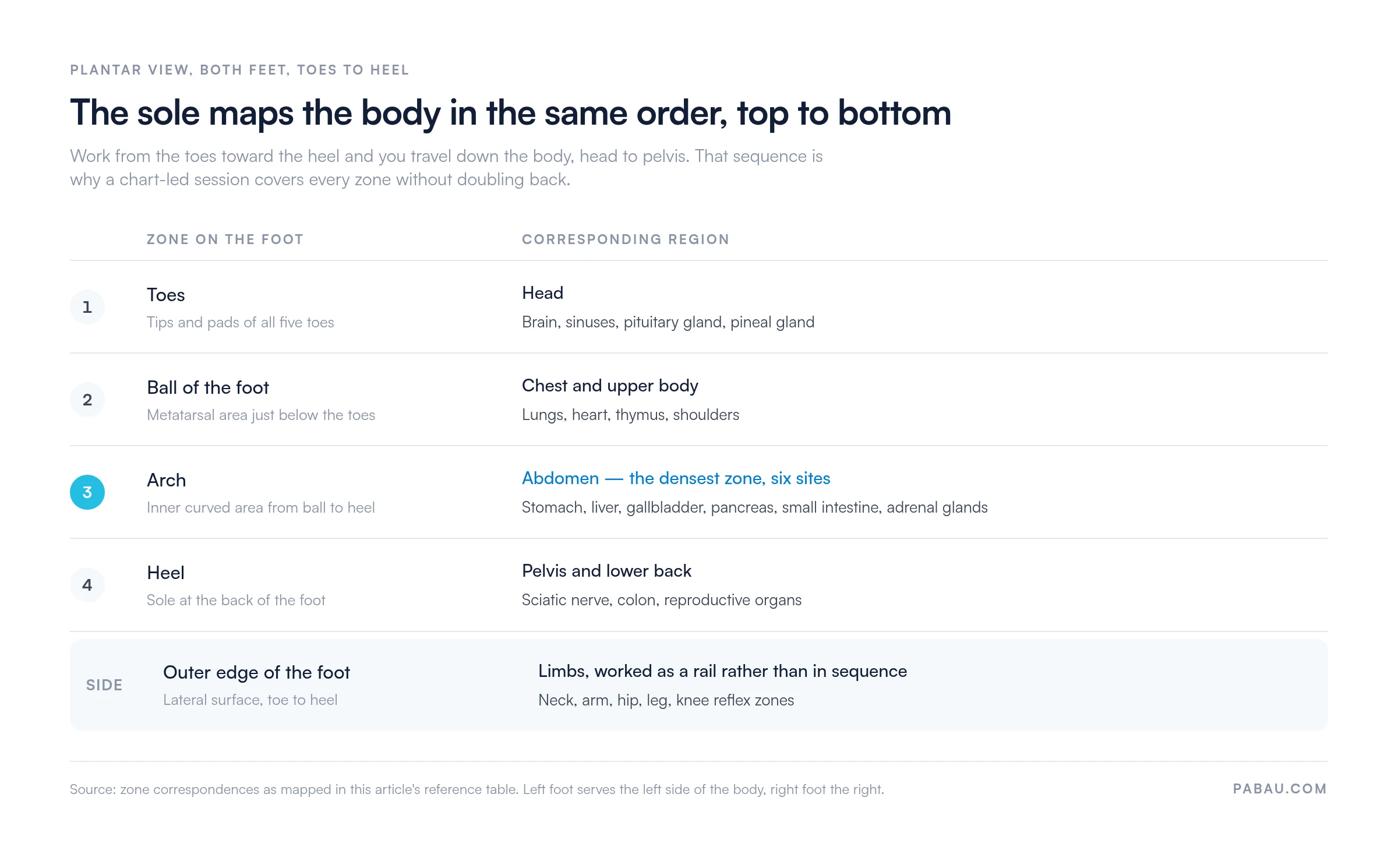
The zones run in the body’s own order. Toes correspond to the head, the arch to the digestive organs, the heel to the pelvis.
The left foot serves the left side of the body and the right foot serves the right side. Most therapists work both.
Working from the toes down to the heel covers every zone once, which is what makes a charted session repeatable across therapists.
Reflexology is contraindicated in deep vein thrombosis, foot injuries and active infections. Screen every client before treatment and refer on when in doubt.
A printable plantar-view chart with the foot divided into labeled reflex zones, each mapped to the organ or system it corresponds to. It also carries the screening checklist and the pressure-point sequence, so a therapist can run a session from one sheet.
Download templateA massage feet chart is a visual reference that maps pressure points and reflex zones on the foot to specific organs, glands, and body systems.
Massage therapists, reflexologists, and spa practitioners use it to deliver consistent, targeted treatments. This guide explains how to read the chart, how to work it into a session, and where to download a printable copy.
Reflexology is a complementary therapy with roots in Traditional Chinese Medicine and Egyptian healing practice. Its central premise is that specific points on the feet correspond to organs and systems elsewhere in the body. The chart turns that premise into a layout, so pressure can be applied in a systematic, repeatable order.
A massage feet chart is a diagram that divides the foot into zones and pressure points, each corresponding to an organ, gland, or system. Reflexology holds that stimulating these points can reduce tension and support the body’s own recovery. In practice the chart works as a reference tool. A therapist can locate and treat a specific zone rather than working the whole foot generically.
Most charts show the sole from a plantar view, divided into labeled zones. Each label names the organ or system that zone represents, such as the digestive organs, the respiratory system, or the endocrine glands. Referencing it during treatment keeps a therapist working across every relevant zone instead of returning to the familiar ones.
Reading the chart starts with bilateral mapping. The left foot corresponds to the left side of the body and its left-sided organs. The right foot corresponds to the right side. Most practitioners work both feet in a session so the treatment stays balanced.
The zones are not arranged at random. They run down the foot in the same order the body runs down from the head. That is why the standard sequence starts at the toes and finishes at the heel.
To use the chart in a session, find the client’s presenting complaint or target system, then locate the matching points on the foot. Apply firm but gentle pressure with the thumb or fingers, moving slowly. Work both feet unless a contraindication applies to one. Practitioners who also treat the upper body apply the same logic to hand reflexology charts.
Used systematically, the chart turns a general relaxation treatment into a protocol-driven session. These five steps put it into a practice workflow.
Track outcomes over multiple sessions. Note which zones show improvement, which change in sensitivity, and which hold tension. Over a few months you will build a protocol per client, informed by the chart but refined by what you observe. Keep those notes in the client record so covering therapists can read them.
A documented chart brings structure to reflexology sessions. Every therapist works the same zones in the same order, which is what makes a treatment repeatable. Practices that log those sessions in their wellness practice software can also see how a client responded last time.
The chart is written for licensed massage therapists, reflexologists, spa staff, and any clinician offering foot treatments. It earns its place in several settings.
Day spas that add reflexology to an existing menu usually schedule it through their software for day spas. The booking and the session note then stay together. Therapists new to reflexology should keep a printed copy on the wall until the correspondences are second nature.
Reflexology is safe for most clients, but some conditions call for caution and others for avoidance. Screen every client before treatment, and refer to a physician when a contraindication applies.
Laminate a screening checklist and keep it in the treatment room beside the chart. Before each session, run the list to confirm you have checked for contraindications. It takes ten seconds and it gives you a dated record that the screening happened.
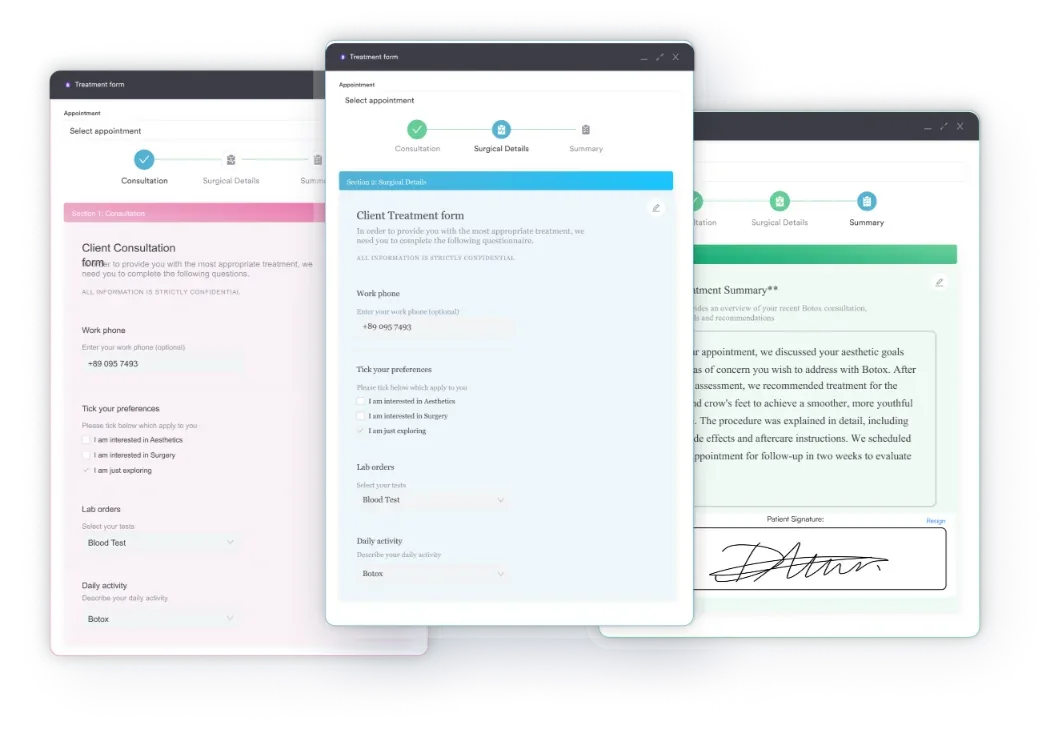
Record the screening result and the client’s consent at every appointment, not only the first. If anything is unclear, refer the client to a physician before proceeding.
Reflexology is a complementary therapy and does not replace medical diagnosis or treatment. Work within your scope of practice, and refer on as soon as a medical concern appears.
Most reflexology practices still document on paper. The chart sits on the treatment table, the therapist writes the zones and responses on a card, and the card goes into a folder. Six weeks later, when the client rebooks with a different therapist, nobody can find the card.
Practice management software like Pabau keeps the appointment, the signed consent form and the session note in one client record. A therapist opens the client, reads the previous note, and records this session’s outcomes in the same treatment history. Intake answers and consent signatures attach to that record too, so the screening you did is evidenced rather than remembered.
The outcome is continuity without a filing cabinet. Anyone covering a shift can read what the last session covered. The practice can also produce a documented history when a client or an inspector asks. Book a demo to see how it handles reflexology records.

Pabau stores the appointment, the consent form and the session note against a single client. Any therapist can then pick up where the last one left off, without chasing paper.

The chart is only half the job. What turns reflexology into a documented treatment is the note written after the session. That note is what a returning client, a covering therapist, or an inspector actually reads.
So print the chart, but decide now where the zones and responses will be logged. A laminated sheet and a paper card will carry you through a quiet week. Neither survives a second therapist or a client who comes back after six months.
Download the free chart above, then book a demo to see how reflexology sessions stay documented as your practice grows.

Need a client-facing tracker between sessions? Wellness journal gives clients a structured place to log sleep, energy and tension between reflexology appointments.
Planning a course of treatments? Personal wellness plan sets goals, session frequency and review points across a multi-week treatment block.
Pairing aromatherapy with reflexology? Essential oil guide covers dilution, contraindications and which oils suit which treatment.
Standardizing intake across the whole spa? Spa intake form template collects health history and consent for every treatment on the menu, not just massage.
Comparing systems for a spa? Best software for spas reviews the platforms that handle booking, records and payments in one place.
A massage feet chart maps reflex zones on the foot to corresponding organs and body systems. Therapists use it to apply targeted pressure during reflexology or foot massage sessions, so the treatment covers the zones that relate to the client’s complaint.
Yes. The left foot corresponds to the left side of the body and its left-sided organs, and the right foot corresponds to the right side. Most charts show both feet. Many practitioners work both in a session so the treatment stays balanced.
The toes represent the head and brain, and the ball of the foot represents the chest and lungs. The arch represents the digestive organs, and the heel represents the pelvis and lower back. Each zone is marked on the chart and labeled with its body system.
Yes, many people learn basic reflexology techniques for self-care or to work with family members. Use gentle pressure and avoid any area with pain, injury, or a contraindication. If you have a health concern, consult a physician before starting.
People with deep vein thrombosis, acute foot infections, active fractures, severe neuropathy, or recent surgery should avoid reflexology. Pregnant clients, anyone with a fever or acute illness, and anyone on blood-thinning medication should consult a physician first. Screen every client and refer on when a contraindication applies.