Nutrition intake form
A nutrition intake form is a structured questionnaire that records a patientR...

2
Last Updated: Oct 22, 2026

A lowering cholesterol meal plan swaps saturated fat for soluble fiber, plant sterols, unsaturated fats, and lean protein to bring LDL down.
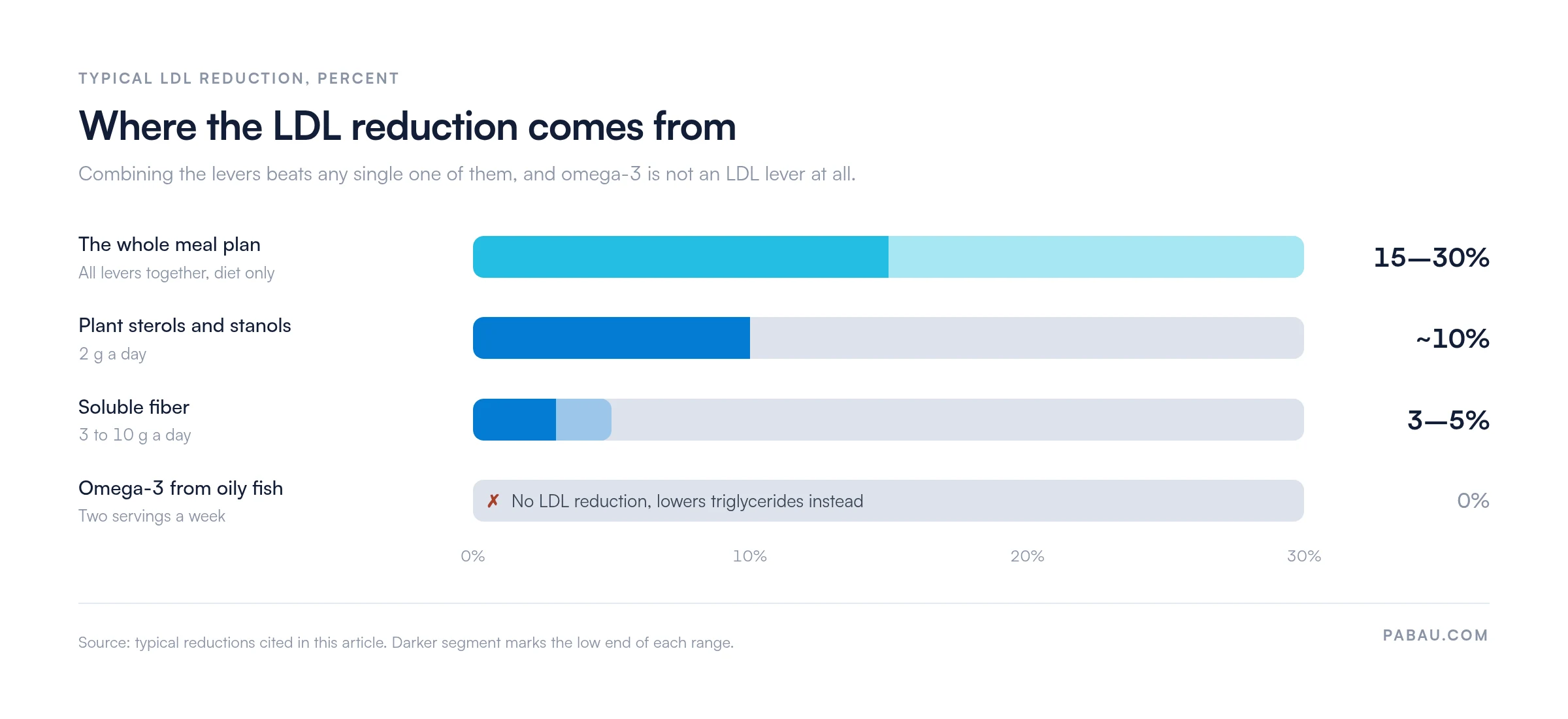
Diet alone moves LDL by roughly 15% to 30%, and every 1 mmol/L drop cuts major vascular events by about 22%.
Plant sterols do the heaviest lifting at around 10%, while omega-3 fats mainly lower triglycerides rather than LDL.
The seven-day table gives patients a breakfast, lunch, dinner, and snack they can copy without weighing food or counting calories.
The download is a printable two-page care plan form for recording goals, actions, support, and review dates at follow-up.
A printable two-page form to pair with the meal plan on this page. It holds a patient header, a background box, five goals, seven actions, support checkboxes, and a five-entry review record with signature lines.
Download templateA lowering cholesterol meal plan turns advice patients nod along to into a shopping list they can follow. Told to “eat healthier”, most patients go home and change one meal. Set out as seven days of breakfasts, lunches, dinners, and snacks, the same advice moves LDL by 15% to 30%.
That is often enough to delay a statin, or to make one work harder alongside diet. It matters to you because the follow-up lipid panel lands on your desk either way.
Below are the nutrients doing the work, a seven-day table you can hand over, and the counseling steps that keep patients on it.
It is a diet built to pull LDL down while holding HDL steady. Soluble fiber, plant sterols, unsaturated fats, and lean protein take up most of the plate. Saturated and trans fats get pushed to the edge of it.
LDL is what drives arterial plaque, so the size of the drop matters. The Cholesterol Treatment Trialists’ Collaboration found that each 1 mmol/L fall in LDL cuts major vascular events by about 22%. Diet on its own moves LDL by 15% to 30%.
That range makes food a first-line move for mild to moderate elevation, and a useful partner to a statin the patient is already taking.
The plan does a second job too. It gives the consultation something to hand over, which is what a patient still has in a week’s time.
Every food group on the plan earns its place through a specific mechanism. Giving a patient that mechanism in one line turns a rule into a reason, and reasons survive the drive home.
The levers are not equal, and one of them does not touch LDL at all.
Patients who need to lift total fiber further can start from a high fiber diet plan and layer the cholesterol foods on top of it.
Framing the week as a list of additions beats framing it as a list of bans. Patients who focus on what goes in rarely mourn what dropped off.
If a patient already follows a named pattern, a DASH diet plan covers similar ground with a sodium focus. That way you are adding to a habit instead of asking them to start over.
Two fats deserve a direct conversation. Saturated fat raises LDL. Trans fat raises LDL and lowers HDL at the same time, which is why it gets the hardest line.
The week below lands at roughly 25 to 30 g of fiber a day. It also covers two servings of oily fish and 1 to 2 g of plant sterols. Treat it as a starting shape rather than a prescription.
Tell patients to swap down a column, not across a row. Someone who hates mackerel can take Thursday’s dinner from Monday, and the week still lands in the same place.
A patient can buy every food on the list and still lose the benefit at the stove. Frying oxidizes oil and adds back the fat the plan just took out, so cooking method belongs in the same conversation as the shopping list.
Handing over the sheet is the easy half. The half that changes a lipid panel is the five minutes of conversation around it.
Give the result somewhere to sit at that follow-up visit. A cholesterol level chart lets a patient place their own number against their age band. An abstract target becomes a position on a page.
A plan can be clinically right and still fail on the way out the door. Run through the list below before the patient leaves. It takes about five minutes and saves a wasted eight weeks.
Two mistakes come up again and again. The first is trading saturated fat for refined carbohydrate, which swaps one problem for higher triglycerides. The second is trusting “low fat” packaging, where the fat comes out and the sugar goes in.
Volume changes the calculus here. A practice handing out two plans a month can carry it in their head. A metabolic or weight program handing out twenty needs the plan, the review date, and the result in one place. That is what weight loss clinic software is built to hold.
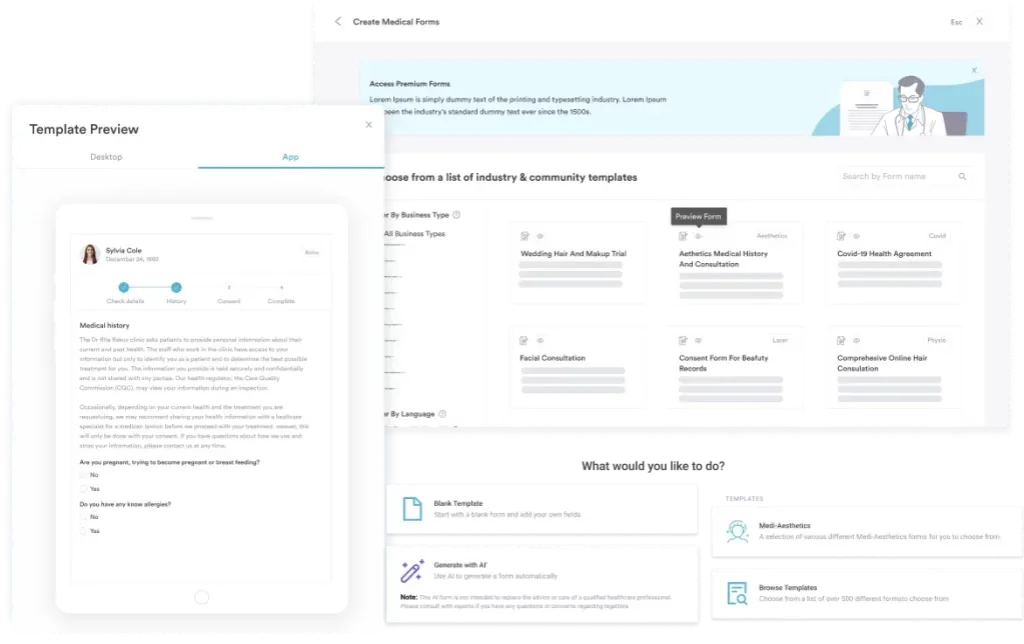
Today the plan usually leaves the room as an email attachment or a printout. What lands in the chart is a line saying diet advice was given. Twelve weeks later, nobody can tell which version the patient walked out with.
Practice management software like Pabau closes that loop. The meal plan and the care plan form go out from the patient record. The patient fills in their goals and actions, and the completed copy files itself back against their chart. So the review appointment starts from the plan itself, not from memory.
Between visits, patients open the same documents from the patient portal, so front desk staff stop re-sending PDFs. Pabau Scribe, our AI scribe, writes the dietary conversation into the note while you are having it, so the counseling does not follow you home.

Pabau sends the meal plan and care plan form from the patient record. It files the completed copy back and books the 12-week lipid review.

The plan on this page is not the hard part. Getting a patient to run it for eight weeks is. That comes down to how specific you are on the day you hand it over.
Pick three swaps, name the follow-up date, and write down what happens to their medication in the meantime. Patients who leave with those three things come back with a number worth discussing. Patients who leave with a leaflet come back with a shrug.
The admin usually bites before the clinical win arrives. Book a demo to see how Pabau sends the plan, files the signed copy, and puts the lipid review in the diary for you.

Need to explain the numbers? Cholesterol level chart by age gives patients a reference point for their own LDL and total cholesterol results.
Managing more than one risk factor? Heart healthy diet plan widens the same advice out to blood pressure and weight.
Patients testing between visits? At-home cholesterol test covers how accurate the kits are and when a lab panel is still needed.
Blood pressure in the picture too? DASH diet plan hands you a seven-day sodium-controlled template that pairs neatly with this one.
Is fiber the sticking point? High fiber diet meal plan builds intake up to target without the bloating that makes patients quit.
In moderation, yes, but alcohol raises triglycerides and adds calories that work against the plan. If a patient drinks, the American Heart Association’s ceiling is one drink a day for women and two for men. Patients with high triglycerides should stop while they retest.
Unfiltered coffee does. Cafestol and kahweol, the oils in French press, espresso and boiled coffee, raise LDL. A paper filter traps most of them. A patient on six unfiltered cups a day has a cheap swap available before anything else on the plan changes.
Not on their own. Plant sterol supplements at 2 g a day do lower LDL, but fish oil targets triglycerides, and red yeast rice varies in potency between batches. Use supplements to top up a diet that already works, and check them against current medication.
It works well, because legumes, oats, nuts and soy already sit at the center of it. Watch for coconut and palm oil in processed vegan foods, which are high in saturated fat. Swap oily fish for walnuts, flaxseed, or an algal omega-3 supplement.