GLP-1 diet plan
A GLP-1 diet plan is a structured eating framework for patients taking semagluti...

2
Last Updated: Oct 13, 2026

The lever sign test is a clinical examination maneuver used to assess anterior cruciate ligament (ACL) integrity in the knee, also known as Lelli’s test.
The test shows high sensitivity (80-90%) for ACL tears and requires no imaging equipment, making it practical for emergency and physiotherapy settings.
A positive lever sign (heel does not rise when downward pressure is applied to the distal thigh) suggests ACL disruption and warrants further investigation.
Practice management software like Pabau enables standardized documentation of lever sign test findings through structured assessment templates, with easy integration into patient records.
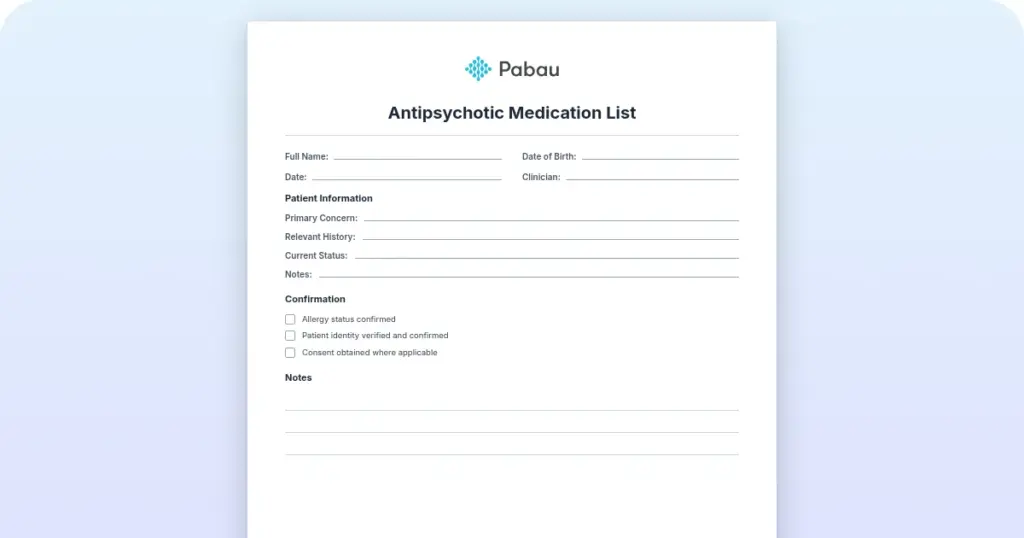
A simple form for recording lever sign test findings. Capture patient and examiner details, a positive or negative result, and space for notes.
Download templateHealthcare professionals performing musculoskeletal assessments need a reliable, low-cost screening tool for anterior cruciate ligament (ACL) injuries. The lever sign test (also called Lelli’s test) offers exactly that. It is a simple, equipment-free maneuver for any clinical setting, from sports medicine to physiotherapy to emergency departments.
This guide walks through the test procedure, interprets findings, and reviews diagnostic accuracy data. It also provides a downloadable template to standardize documentation in your practice.
The lever sign test is a physical examination technique used to assess the integrity of the anterior cruciate ligament (ACL). In fact, the ACL is the primary stabilizer of the knee joint. First described by Lelli et al. in 2016, the test is also known as Lelli’s test or the lever test.
It relies on a simple biomechanical principle. When the ACL is intact, the knee maintains a stable lever arm under a specific directional force. Conversely, when the ACL is torn or ruptured, that lever arm collapses, producing a specific clinical sign.
The lever sign test is distinct from other ACL screening tests like the Lachman, anterior drawer, and pivot shift tests. Notably, it requires no special equipment and no specialized positioning. The standard supine position is used, and it needs no prior training beyond understanding the procedure.
Indeed, it can be performed in seconds. It stays sensitive even in acute injury settings where patient guarding makes other tests hard to interpret. Like the Finkelstein test for wrist tendon pain, the lever sign is a quick bedside special test. Typically, clinicians use these tests before ordering imaging.
The lever sign test procedure is straightforward and takes seconds to perform. Following a consistent sequence ensures reliable, reproducible findings. It also enables accurate comparison across repeat examinations of the same patient or across your practice’s patient population.
Additionally, the test can be repeated 2-3 times on the same leg to confirm consistency. It should also be performed bilaterally, on both legs, to allow comparison. A positive finding on one leg compared to the unaffected side increases clinical confidence in the result.
Understanding what each test result means is critical for deciding whether further investigation (imaging or specialist referral) is warranted. Importantly, a single physical examination test never rules an ACL tear in or out on its own. Instead, all findings must be integrated with the patient’s history, mechanism of injury, and other clinical signs.
Practices that digitize paper scales with software for capturing forms cut scoring errors and filing time.
The clinical value of the lever sign test lies in its diagnostic accuracy. This measures how reliably it identifies patients who have ACL tears versus those who do not. Two metrics dominate this discussion. Sensitivity is the test’s ability to detect ACL tears when they are present. Specificity is, by contrast, its ability to rule out ACL tears when they are absent.
These figures come from the original Lelli study and subsequent peer-reviewed validation research. The lever sign test compares favorably to older ACL tests. Moreover, it has a particularly high negative predictive value. A negative result is therefore highly reassuring that the ACL is intact.
Clinicians have several physical examination options for ACL screening. However, each has advantages and limitations. The table below compares the lever sign test to the most commonly used alternatives. The reverse pivot shift test plays a similar role, helping clinicians assess posterolateral corner injuries that can mimic ACL instability.
The lever sign test’s key advantage is ease of use in acute settings. Specifically, it requires no patient repositioning and minimal technical skill. It is particularly valuable in emergency departments, primary care, and sports injury settings where rapid ACL assessment informs referral decisions. Use the lever sign test alongside other clinical findings, such as patient history, mechanism, and pain pattern. Do not rely on any single test.
The lever sign test fits into a practical clinical workflow at specific decision points. Knowing when to apply it-and when to combine it with other tests or imaging-supports better patient outcomes. It also makes efficient use of your practice’s time and resources.
A structured assessment template-like the downloadable form above-ensures consistent documentation across your team. It supports quality improvement by tracking which findings led to which clinical decisions and outcomes.
Recording test findings in a standardized way lets your team track outcomes and audit accuracy. It also helps demonstrate that care meets professional standards. Digital documentation systems that integrate with patient records keep findings accessible to everyone involved in the patient’s care. They also retain findings as part of the permanent clinical record.
When documenting your lever sign test findings, capture:
Many practices use digital intake forms built into physical therapy EMR systems to create custom fields for physical examination findings. Overall, this structure ensures no detail is missed. It also creates a searchable database of test results that supports quality improvement and research.

Pabau’s digital assessment templates and clinical note integration help your team document physical examination findings consistently and securely.

The lever sign test offers a quick, sensitive, equipment-free way to screen for ACL injuries at the point of care. It suits physiotherapists, sports medicine clinicians, and emergency practitioners alike. Its combination of ease, reliability, and high negative predictive value makes it an ideal first-line tool for knee injury assessment.
Documenting findings consistently with a structured template-like the downloadable form above-helps your team maintain high-quality clinical records. Above all, these records support patient safety and enable outcome tracking. Combined with patient history, mechanism of injury, and other clinical tests, it becomes a powerful part of your diagnostic toolkit.

Curious about other quick bedside orthopedic tests? Our foot stress fracture test guide covers a similarly fast lower-limb screening technique clinicians use before ordering imaging.
Need to screen for hip pain too? The resisted external derotation test uses a similar hands-on approach to assess gluteal tendon pathology.
Hiring for a multi-provider practice? Doctor of osteopathy vs MD explains how the distinction affects hiring, credentialing, and patient questions.
Lelli’s test is another name for the lever sign test, named after Dr Alberto Lelli who first described it in 2016. It is a physical examination technique used to assess anterior cruciate ligament (ACL) integrity by observing whether the patient’s heel lifts when downward pressure is applied to the thigh while the patient lies supine with a fist under the proximal tibia.
No. The lever sign test is a useful clinical screening tool, but it cannot replace MRI imaging for definitive ACL diagnosis. A positive test suggests an ACL injury and should prompt imaging or specialist referral. A negative test may reduce the likelihood of a tear but does not exclude it completely. MRI remains the gold standard for confirming ACL rupture and assessing associated injuries (meniscus, cartilage).
Yes. The lever sign test is particularly suited to acute injury settings (emergency departments, sports sidelines) because it requires no special positioning or imaging equipment and is highly sensitive in the first 2 weeks after injury, before protective muscle guarding develops. It provides rapid initial assessment to guide referral decisions.
A negative lever sign test-where the heel rises normally when downward pressure is applied to the thigh-indicates the ACL is likely functionally intact. The negative predictive value of the test is 90-95%, meaning if the test is negative, the chance of an ACL tear is low. However, clinical context (patient history, other test findings) should always be considered.
Pain or muscle guarding in acute injuries can make the lever sign test difficult to interpret. If the patient is in severe pain, they may protect the knee by tensing muscles, which can produce a false-negative result. In such cases, repeating the test when pain is more controlled, performing other ACL tests, or recommending imaging may be more appropriate.