Getting along with siblings worksheet
A getting along with siblings worksheet is a printable that helps children and t...

2
Last Updated: Oct 23, 2026
The Daniel fasting 21 days food list covers every food permitted and every food excluded during this 21-day spiritual fast from the Book of Daniel.
The permitted side is short. You eat fruits, vegetables, whole grains, legumes, nuts, seeds and plant-based oils. Meat, dairy, eggs, sweeteners, leavened bread, caffeine and processed foods all come off the menu.
This guide gives you the full food list and a 21-day meal plan with breakfast, lunch and dinner for every day. You can download and print the whole thing below. It also covers the nutrition shifts worth watching and how to come off the fast without upsetting your digestion.
A printable food list and 21-day meal plan covering the permitted fruits, vegetables, grains, legumes, nuts and oils. It also sets out the restricted foods, from meat and dairy through to sweeteners and leavened bread.
Download template
The Daniel Fast is a 21-day plant-based fast drawn from Daniel 1:12 and Daniel 10:3.
Permitted foods are fruits, vegetables, whole grains, legumes, nuts, seeds and plant-based oils.
Meat, dairy, eggs, sweeteners, leavened bread, caffeine and alcohol are excluded for all 21 days.
Water is the primary beverage, and caffeine-free herbal teas are generally accepted.
Three weeks without animal products lowers protein and vitamin B12 intake, so break the fast gradually.
The Daniel Fast draws on two passages in the Book of Daniel. In Daniel 1:12, Daniel asks to eat only vegetables and drink only water for ten days. In Daniel 10:3, he describes a 21-day stretch without choice foods, meat, wine or anointing oil.
That second passage sets the length most people follow today. Modern practice combines both accounts into a 21-day plant-based pattern, kept as a spiritual discipline rather than a diet.
A complete fast means eating nothing at all. The Daniel Fast keeps you eating and narrows what goes on the plate instead. Weight loss and detox are not the goal. Most people pair the eating pattern with a set time for prayer or reflection each day.
Every permitted food is a whole plant food. The six groups below cover the full allowance, and the chart sets them against the six groups you leave out.
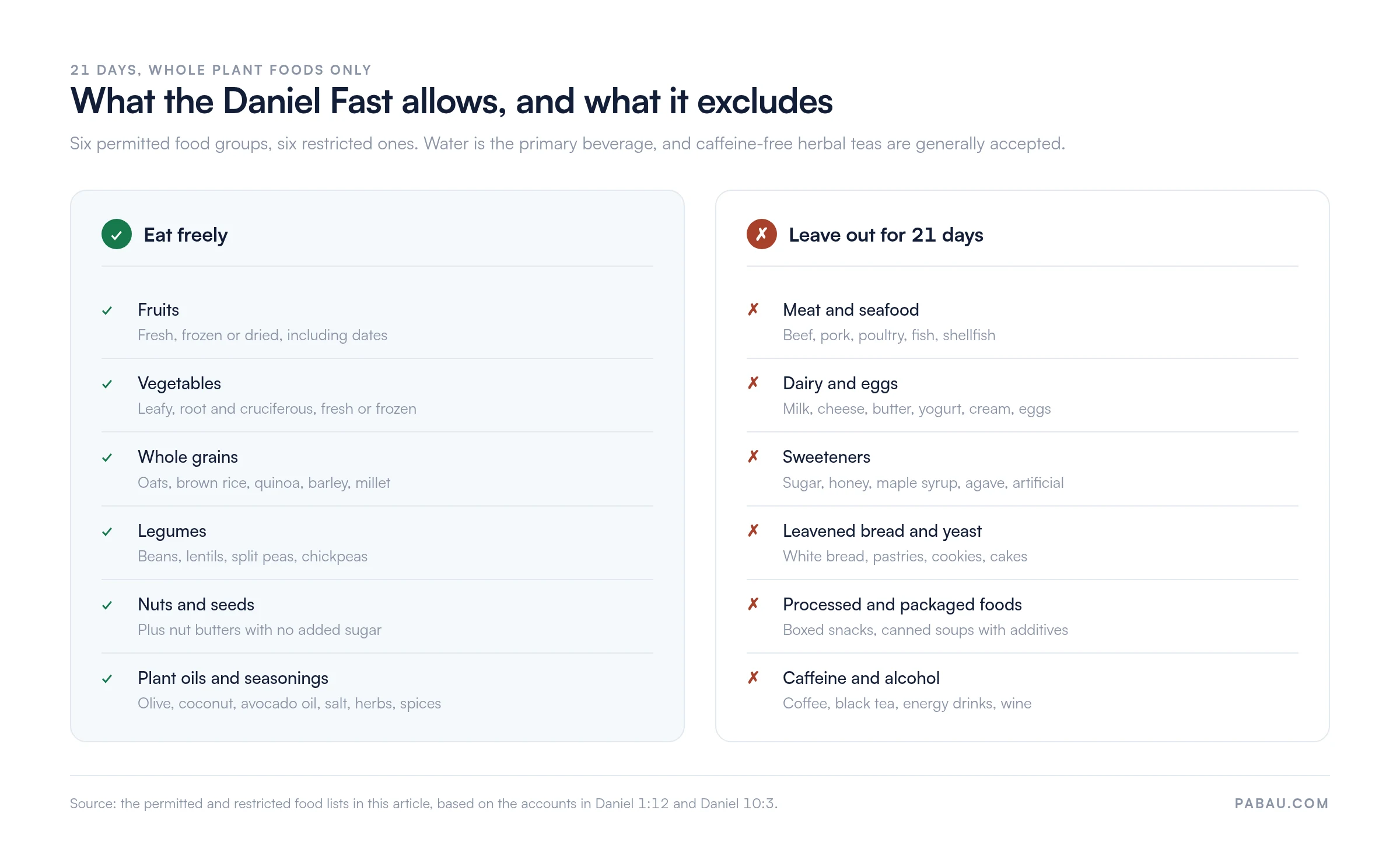
All fresh, frozen and dried fruits are permitted. That covers apples, bananas, oranges, grapes and berries, along with pears, peaches, plums and melons. Kiwis, mangoes, pineapple and dates count too.
All fresh and frozen vegetables are allowed. That covers leafy greens, root vegetables, cruciferous vegetables, squash, zucchini, bell peppers, tomatoes, cucumbers, mushrooms and onions. So spinach, kale, carrots, beets, potatoes, sweet potatoes, broccoli, cauliflower and Brussels sprouts are all fine.
Choose whole grain options such as oats, brown rice, quinoa, barley, millet, farro and whole wheat. Unleavened whole grain bread is permitted. Refined grains and white rice are avoided.
Beans of every kind qualify, including black, kidney and pinto beans and chickpeas. Lentils and split peas count too.
Nuts such as almonds, walnuts and cashews are permitted, along with natural nut butters that carry no added sugar. Seeds and plant-based oils finish the group. That means sunflower, pumpkin and sesame seeds, plus olive, coconut and avocado oil.
Salt, herbs and spices are allowed for flavoring, so meals do not have to taste plain. Water is the primary beverage and the preferred one. Caffeine-free herbal teas are generally accepted, while coffee and black tea are avoided.
The restricted list matters as much as the permitted one. Avoid each category below for the full 21 days.
The plan below is a sample, organized by week. Swap similar foods, adjust portions and repeat the meals you like, as long as you stay inside the permitted list.
Weeks 2 and 3 follow the same pattern. Rotate the Week 1 meals, bring in new vegetable and grain combinations, and borrow ideas from a plant-based diet plan when you want more variety.
Keep the prep routine simple. Cook grains in bulk, chop vegetables the night before, and make dressings ahead so a busy Tuesday does not derail you.
The Daniel Fast resembles a whole-food, plant-based eating pattern, close to a vegan diet in practice. The pattern is built on whole, unprocessed food, which is the part nutrition research tends to look at.
Three weeks with no animal products lowers your protein and vitamin B12 intake compared with a mixed diet. Plan around that rather than discovering it in week two. If you want to keep eating this way after day 21, a whole food diet plan applies the same principle without the 21-day frame.
Talk to a healthcare provider before you start if you are pregnant, or if you have diabetes or a thyroid condition. The same goes for anyone on blood-thinning medication, for children, and for anyone with a history of disordered eating. A registered dietitian can suggest modifications that keep the 21 days nutritionally adequate.
Three weeks is long enough for good intentions to wear off, so the practical side does most of the work. Shopping from a healthy grocery list keeps permitted foods in the cart and restricted ones out of the house.
Three weeks without meat, dairy and processed food changes how your gut handles them. Reintroduce slowly over three to five days rather than going back to your old diet in a single meal.
On the first day, add a small amount of dairy and see how you feel. On the second, bring back a light protein such as fish or poultry. From the third day on, keep adding foods one at a time and watch how your body responds.
Skip the celebration feast. A large rich meal on day 22 undoes the gentle reacclimation your digestion needs.
Plenty of people keep part of the pattern afterwards. Staying plant-forward once the 21 days are over is far easier than starting from scratch next year.
Dietitians, wellness practices and health coaches field questions about the Daniel Fast every January. Handing over the plan is the easy part. Knowing who is still following it in week two is where it gets messy.
Practice management software like Pabau keeps that on one record. Intake forms capture dietary history and restrictions before the first appointment. The plan you issue, the notes from each review and the follow-up reminders all sit on the same patient file.
So you can see who started on day one and who stopped quietly in week two, without digging through email. Automated check-ins go out on the days that matter. Appointment time goes to the patient instead of to reconstructing what happened.
If structured nutrition plans are the core of what you offer, weight loss clinic software is built around that workflow rather than bolted onto it.

Capture dietary intake forms, store the plan you issue, and schedule the check-ins that follow. It all sits on the patient record, so progress notes never get lost between appointments.

The food rules take a minute to learn. Holding them for 21 days is the harder part, and it usually comes down to preparation rather than willpower.
Decide your meals before day one, shop once for the week, and keep water within reach. Do that and the food stops competing for your attention, which was the point of the fast in the first place.
Download the food list and meal plan above so you are working from one reference instead of five browser tabs. If you support patients through structured eating plans, book a demo to see how Pabau keeps their intake forms, plans and progress notes together.

Want a plant-based plan with a different goal? Vegan meal plan for weight loss keeps the animal products out while tracking portions and calories.
Struggling with the no-sweeteners rule? 2-week no sugar meal plan shows where added sugar hides and what to reach for instead.
Looking for something you can keep up long term? Anti-inflammatory meal plan builds the same whole-food habits into everyday eating.
Assessing a patient before they start? Nutrition assessment form captures dietary history, restrictions and goals in one intake document.
No. Eggs are an animal product and are not permitted on the Daniel Fast. The fast restricts all animal-derived foods, including meat, poultry, seafood, dairy and eggs.
Yes, as long as it contains no added sugar or hydrogenated oils. Peanut butter made from only peanuts and salt is permitted. Check labels carefully, because many commercial brands contain sweeteners.
Yes. Salt and most herbs and spices are permitted for seasoning. Use them freely to make meals flavorful without breaking the fast.
Daniel 10:3 describes Daniel eating no choice foods, meat, wine or anointing oil for 21 days. It was an act of spiritual discipline during a period of prayer and mourning. The 21 days stand for a stretch of deep focus and humility.
Water is the primary beverage. Caffeine-free herbal teas are generally accepted. Avoid coffee, black tea, alcohol, energy drinks and any beverage containing sweeteners or artificial additives.
Only unleavened bread without yeast or additives is permitted. Most commercial bread is leavened and is not allowed. Look for unleavened whole grain bread, or make your own if you follow a stricter interpretation.