HD Brows consultation form: Free template and guide
HD Brows is a seven-step brow treatment that combines consultation, tinting, wax...

2
Last Updated: Oct 13, 2026

Orthorexia nervosa is an obsessive focus on eating ‘pure’ foods that impairs daily functioning and differs from health-conscious eating.
The ORTO-15 questionnaire is a validated screening instrument, and the Bratman Orthorexia Test is a widely used clinical screening tool, though less rigorously validated.
Clinicians should screen for orthorexia using structured tools and refer patients to eating disorder specialists for diagnosis and treatment planning.
Practice management software like Pabau offers digital intake forms and clinical documentation features that let eating disorder practices administer, score, and track orthorexia assessments in the patient record.
Orthorexia Test
A ready-to-use 10-item orthorexia self-assessment questionnaire, informed by concepts from the ORTO-15 and Bratman Orthorexia Test, with administration instructions, scoring guidance, and interpretation thresholds for eating disorder assessment.
Download templateOrthorexia nervosa is a lesser-known but clinically significant eating disorder. It’s an obsessive fixation on eating “pure,” “clean,” or “healthy” foods. Unlike anorexia nervosa or bulimia, which focus on food quantity, orthorexia centers on food quality and perceived nutritional purity, creating psychological distress and functional impairment.
For eating disorder practitioners, mental health clinicians, and nutritionists, orthorexia test protocols like the ORTO-15 and Bratman Orthorexia Test provide assessment frameworks to identify at-risk patients early.
This guide covers how to administer an orthorexia test in your practice, interpret results.
Physician Dr. Steven Bratman coined the term orthorexia nervosa in 1997 to describe an unhealthy obsession with eating only “perfect” foods. Orthorexia literally means “right appetite,” but in clinical practice, it manifests as rigid food rules, social isolation due to dietary restrictions, and significant psychological distress when those rules cannot be followed. Comparing a result against earlier sessions is quicker when software for psychology practices holds the history.
Key distinction: Health-conscious eating is intentional, balanced, and sustainable. Orthorexia involves compulsive restriction, ritualistic food behaviors, and anxiety or shame when dietary rules are broken. Patients often report that their focus on food purity dominates social interactions, career decisions, and family relationships.
Orthorexia is not yet a standalone diagnosis in the DSM-5. Clinicians typically code it under Avoidant/Restrictive Food Intake Disorder (ARFID) or Other Specified Feeding or Eating Disorder (OSFED). Validated screening instruments, most notably the ORTO-15 questionnaire, allow practitioners to identify orthorexia symptomatology and support early intervention.
Recognizing orthorexia requires awareness of both behavioral and psychological indicators. Unlike eating disorders focused on weight control, orthorexia manifests as rigid thinking about food “purity” and health value. Patients may present with anxiety, guilt, or depression when unable to adhere to their self-imposed dietary rules.
During patient intake, screen for these warning signs using open-ended questions about dietary habits, food anxiety, and how eating patterns affect relationships and work. A structured orthorexia test helps standardize assessment and reduce clinician bias.
Distinguishing orthorexia from legitimate health-conscious eating is critical. Patients with orthorexia often rationalize their restrictive behaviors as “wellness” or “optimal nutrition,” while the underlying driver is anxiety, perfectionism, and compulsion rather than genuine health optimization.
The clinical key is functional impairment. If a patient’s dietary choices enhance wellbeing without causing distress or social dysfunction, it is health-conscious eating. If rigid food rules cause anxiety, guilt, or impaired functioning, screen with an orthorexia test to assess severity.
In software built for occupational therapy practices, scores from scales like this feed straight into progress notes.
Two instruments dominate orthorexia assessment in clinical practice: the validated ORTO-15 questionnaire and the widely used Bratman Orthorexia Test (BOT). Each has distinct strengths and limitations.
The ORTO-15 is a 15-item self-report questionnaire developed by Donini et al. (2005) for research and clinical screening. It assesses orthorexic thinking patterns across domains like food selection, eating rituals, and emotional consequences of dietary choices, with items scored on a 4-point Likert scale.
Strengths: Validated across multiple languages and cultures; captures multidimensional aspects of orthorexia; suitable for rapid screening in busy clinical settings.
Limitations: Research indicates high false-positive rates in non-clinical populations and cultural variability in cutoff scores. It is a screening tool, not a diagnostic instrument, and should always be combined with a clinical interview.
Dr. Bratman developed a 10-question binary (yes/no) screening tool based on his clinical observations. Affirmative answers to four or five or more of the ten questions suggest orthorexia nervosa may be present. The test is simpler and faster than ORTO-15, making it practical for initial screening.
Strengths: Quick administration; clinically intuitive; based on Bratman’s direct experience defining the disorder; requires no specialized scoring software.
Limitations: Less rigorous psychometric validation than ORTO-15; limited normative data; may miss subtle presentations if patients unconsciously minimize symptoms.
Administering an orthorexia test requires minimal training but benefits from a structured approach. Most clinicians integrate orthorexia screening into the eating/nutrition portion of the initial psychiatric or medical history.
Accurate score interpretation is essential for clinical decision-making. Cutoff scores vary slightly by population and study, but the guidelines below apply to most clinical contexts.
The downloadable template above uses a simpler 0-to-40 scale: 10 items rated from Never to Always, worth 0 to 4 points each. A total of 0 to 10 indicates low risk, 11 to 20 moderate risk, 21 to 30 high risk, and 31 to 40 very high risk.
The ORTO-15 and Bratman Orthorexia Test, summarized below, use their own separate scoring conventions.
Important caveat: These cutoffs are screening thresholds, not diagnostic criteria. Final diagnosis requires clinical judgment, assessment of functional impairment, and DSM-5 coding (typically ARFID or OSFED). Screen scores should inform the clinical interview, not replace it.
Understanding orthorexia’s origins supports compassionate assessment and treatment planning. Orthorexia typically emerges from a convergence of personality, environmental, and sociocultural factors, not a single cause.
Orthorexia treatment parallels evidence-based eating disorder interventions, with additional focus on flexibility, anxiety management, and challenging perfectionism. Cognitive-behavioral therapy (CBT) and acceptance and commitment therapy (ACT) show promise in research and clinical practice.
Treatment typically spans 3-6 months for mild-to-moderate orthorexia and 6-12+ months for severe cases with significant functional impairment. Clinicians benefit from patient compliance strategies to improve session attendance and assignment completion, especially when patients experience shame or treatment resistance.
Eating disorder. Pabau enables clinicians to digitize intake screening, maintain secure treatment records, automate follow-up appointments, and generate treatment progress notes, reducing administrative burden and improving care coordination.
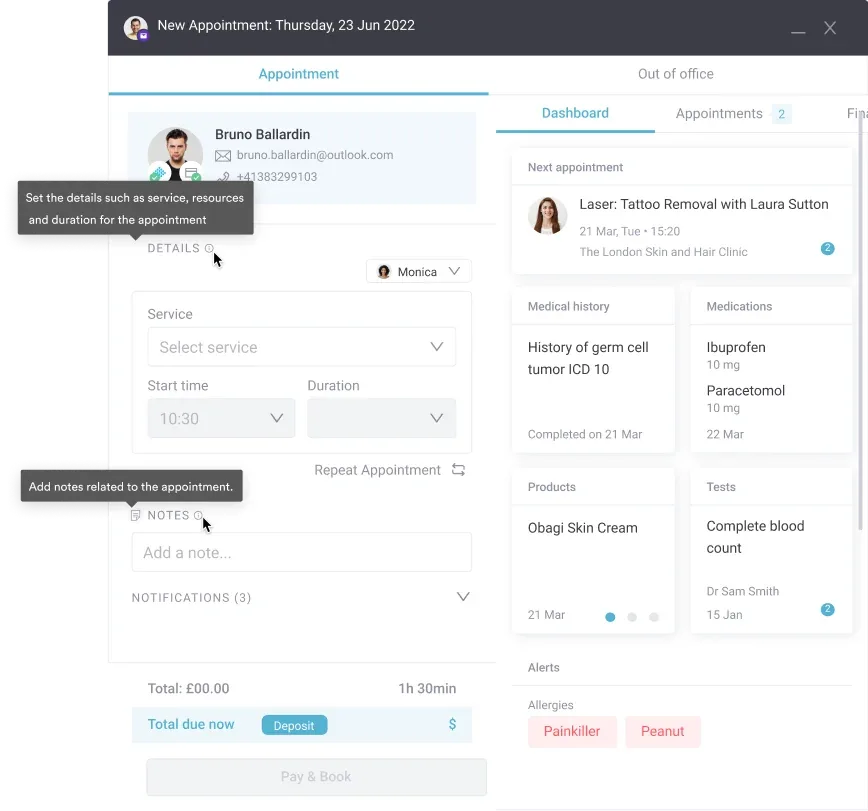
Implement the orthorexia test in Pabau’s workflow: Upload the downloadable orthorexia template as a digital intake form. Patients complete the screening before their first appointment, and results auto-populate the patient record. Clinicians review scores in real time and use the results to guide their assessment conversation.
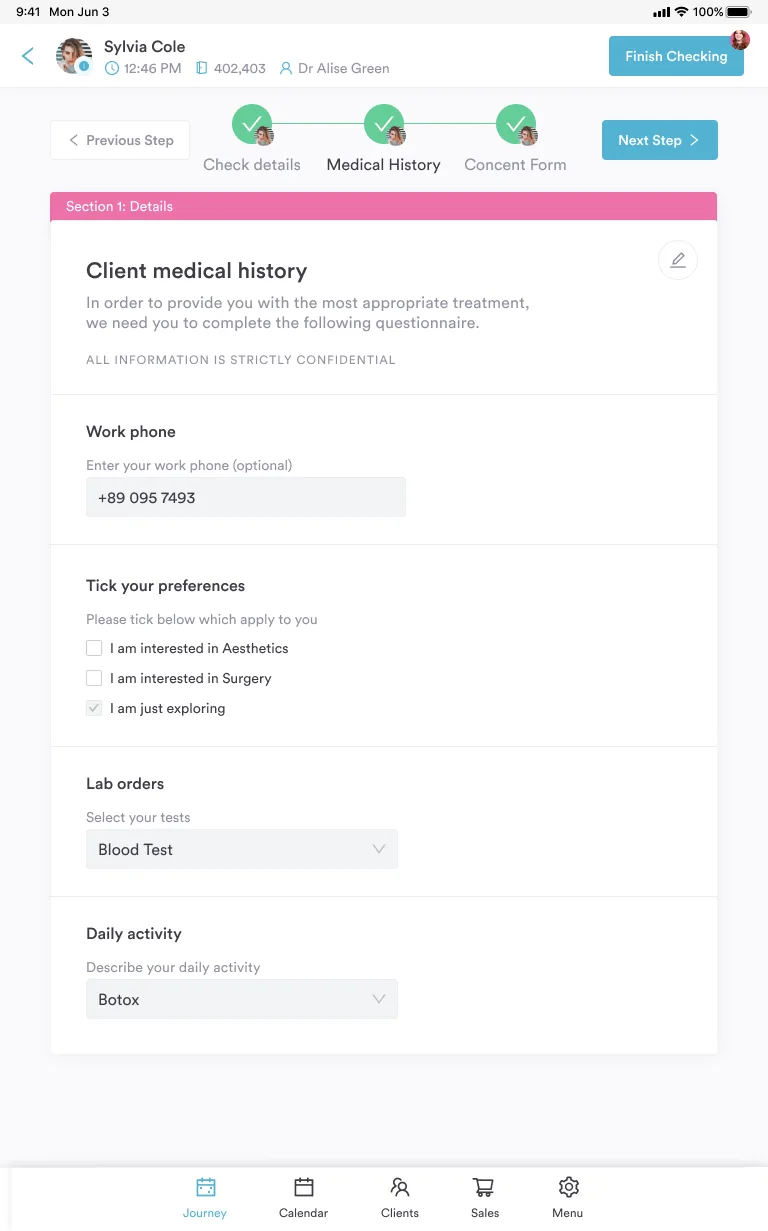
Pabau’s secure patient records centralize all clinical data, including screening results, session notes, dietary tracking, and therapist observations, in one HIPAA-compliant location. This supports continuity of care, enables evidence-based treatment adjustments, and protects against medicolegal risk.

For clinicians experiencing therapist burnout, automating routine administrative tasks like appointment scheduling, note templating, and chart organization reclaims time for direct patient care and clinical supervision. That time matters for managing the emotional labor of eating disorder treatment.

See how Pabau’s intake forms, secure records, and automated workflows support orthorexia screening and patient management.

Orthorexia nervosa is a significant but underdiagnosed eating disorder that impairs quality of life through obsessive food restriction and anxiety. Screening tools like the validated ORTO-15 and the widely used Bratman Orthorexia Test enable early identification, but require clinical judgment and functional assessment to inform diagnosis and treatment planning.
Using the downloadable orthorexia test template in your practice, integrated with Pabau’s secure patient records and digital forms, creates a streamlined, evidence-based assessment workflow that supports both practitioner efficiency and patient outcomes. Schedule a demo to see how Pabau can modernize your eating disorder practice.

Need a structured tool for cognitive distortions? Dysfunctional thought record helps patients challenge the rigid food rules behind orthorexic thinking.
Assessing for bipolar disorder symptoms? Young Mania Rating Scale Template is an 11-item standardized tool measuring the severity of manic symptoms across affective and behavioral domains.
Want a framework for thoughts, feelings, and behaviors? cognitive triangle explains the CBT framework showing how thoughts, feelings, and behaviors connect in mental health practice.
The ORTO-15 is a 15-item self-report questionnaire developed by Donini et al. (2005) that screens for orthorexia nervosa symptoms across domains like food selection, eating rituals, and emotional consequences. Items are scored on a 4-point Likert scale, and lower total scores indicate greater orthorexia risk. Scores below 40 suggest likely orthorexia and warrant clinical referral.
The Bratman Orthorexia Test (BOT) is a 10-question binary screening tool created by Dr. Steven Bratman based on his clinical experience. Answering yes to four or five or more questions suggests possible orthorexia nervosa. It is faster than ORTO-15 and practical for initial office screening.
Orthorexia nervosa is not a standalone DSM-5 diagnosis. However, it is widely recognized clinically and is often coded under Avoidant/Restrictive Food Intake Disorder (ARFID) or Other Specified Feeding or Eating Disorder (OSFED). It is not classified as a distinct diagnosis in ICD-11 either; presentations are typically captured under the same OSFED or ARFID categories used in DSM-5.
Orthorexia typically results from a combination of perfectionism, health anxiety, obsessive-compulsive traits, prior eating disorder history, and sociocultural exposure to wellness culture messaging. No single cause has been identified; it emerges from personality, environmental, and lifestyle factors interacting over time.
Treatment includes cognitive-behavioral therapy (CBT) to challenge rigid food thinking, nutritional counseling with an eating disorder dietitian, acceptance and commitment therapy (ACT) for anxiety management, and sometimes psychopharmacology (SSRIs) for comorbid anxiety or OCD. Therapy typically spans 3-12 months depending on severity.