

CCSD code G5100: Bypass of duodenum billing guide
CCSD code G5100 bills a bypass that leaves the duodenum in place CCSD code G5100...

Last Updated: Oct 16, 2026
J2469 is the HCPCS Level II code for injection, palonosetron hcl, 25 mcg.
One unit equals 25 mcg of palonosetron HCl, so a standard 0.25 mg (250 mcg) dose bills as 10 units. Notably, billing it as a single unit, a 10x underbilling error, is the mistake that shows up most often on J2469 claims, alongside a missing National Drug Code (NDC).
Let Pabau's smart automation suggest the right codes, reduce claim denials, and keep your practice compliant—effortlessly.
Automate repetitive tasks and focus on what matters most—your patients.
Reduce coding errors and ensure compliance with the latest regulations.
Clean claims, fewer denials, and faster reimbursements.
Powerful insights and reporting to help your practice thrive.
HIPAA compliant SOC 2 certified GDPR-compliant Trusted by 4,000+ clinics worldwide

HCPCS code J2469 describes the injection of palonosetron HCl, 25 mcg, billed primarily for chemotherapy-induced nausea and vomiting (CINV) prevention.
One unit of J2469 equals 25 mcg of palonosetron HCl. Billing the wrong unit size is the most common J2469 claim error.
Medicare Part B reimburses J2469 at ASP+6%, with rates updated quarterly. Always verify current rates against the CMS ASP drug pricing file before submitting claims.
Practice management software like Pabau helps capture accurate dose, NDC, and diagnosis data at the point of care, so J2469 claims start from clean documentation.
J2469 is a Level II HCPCS code maintained by the Centers for Medicare and Medicaid Services (CMS). Specifically, it belongs to the Drugs Administered Other Than Oral Method category, covering physician-administered injectable medications billed under Medicare Part B.
First, coders should verify active status annually. CMS may revise, delete, or update HCPCS descriptors each January 1. The AAPC HCPCS code database and the CMS annual HCPCS update files are the most reliable sources for confirming current status.
Palonosetron hydrochloride is a second-generation 5-HT3 receptor antagonist antiemetic. Unlike first-generation 5-HT3 antagonists such as ondansetron, palonosetron has a higher binding affinity and a significantly longer plasma half-life (roughly 40 hours), which supports its use as a single pre-chemotherapy dose.
Two brand names map to J2469. Aloxi (manufactured by Eisai) is the original branded formulation, available as a 0.25 mg/5 mL single-dose vial. Meanwhile, Posfrea (Avyxa Pharma) is a newer branded version. Generic palonosetron formulations are also available and bill under the same J2469 code when the NDC is reported correctly on the claim.
For billing purposes: a 0.25 mg (250 mcg) dose administered to a single patient equals 10 units of J2469, because one unit equals 25 mcg. Consequently, this unit calculation is where most billing errors originate.
J2469 is most commonly billed in outpatient infusion centers, hospital outpatient departments, and oncology physician offices. Understanding infusion clinic best practices matters here: the clinical setting determines the place of service (POS) code on the claim, which affects reimbursement rates.
Medicare Part B covers J2469 when it is physician-administered in an eligible setting. In addition, the drug must be reasonable and necessary for the patient’s condition under Medicare’s coverage framework. However, palonosetron administered in a hospital inpatient setting is typically bundled into the DRG payment and is not separately billed under J2469.
Similarly, ambulatory surgical settings.
Medicare Part B reimburses physician-administered drugs under J2469 using the Average Sales Price (ASP) methodology. The standard reimbursement rate is ASP+6% for non-facility settings. By contrast, facility settings (such as hospital outpatient departments) typically receive a rate based on the hospital outpatient prospective payment system (HOPPS) rather than the ASP+6% formula.
ASP-based rates update every calendar quarter. Therefore, billing staff should verify current rates directly from the quarterly ASP Drug Pricing File, or the OPPS Addendum B/APC file for facility rates, before submitting claims. Rates listed in third-party databases may lag by one or more quarters.
340B-acquired palonosetron reimburses at ASP+6%, the same rate as non-340B claims. CMS restored this rate in September 2022, after American Hospital Association v. Becerra struck down the earlier 340B-specific cut.
Covered entities now report modifier TB on 340B-acquired drug lines. TB is informational only, tied to the Part B inflation-rebate program, and doesn’t change the payment amount. CMS discontinued modifier JG for 340B reporting effective January 1, 2025, so it should no longer appear on these claims.
Getting units right is the single most important billing discipline for J2469. One unit equals 25 mcg. For example, a standard adult CINV prevention dose is 0.25 mg (250 mcg), which equals 10 units on the claim. Good medical documentation workflows that capture the administered dose at the point of care reduce transcription errors before the claim is built.
Pabau’s practice management platform helps capture accurate dose, NDC, and place-of-service data at the point of care, so that information is already correct by the time a claim is built, reducing the errors that lead to denials or post-payment audits.
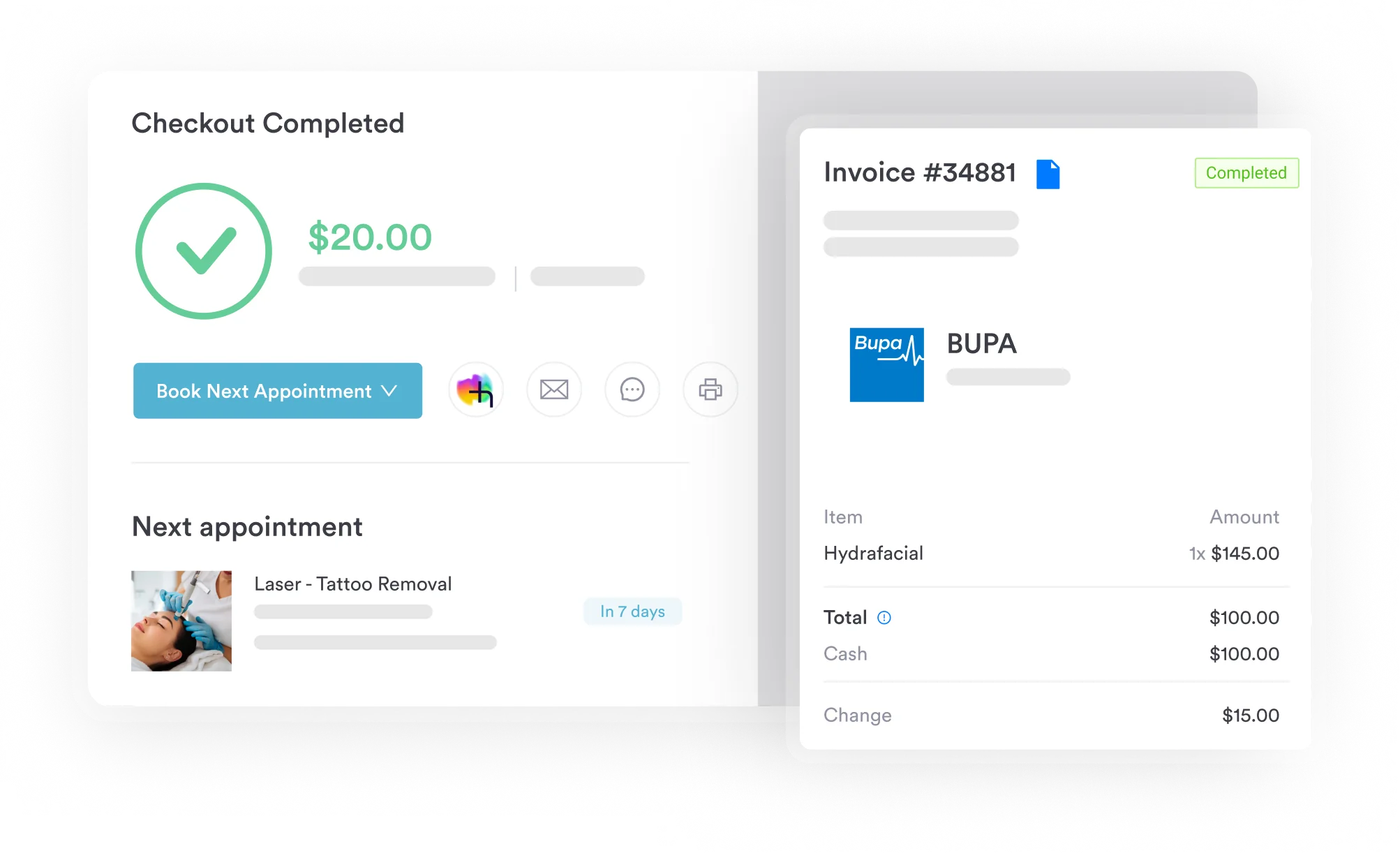
Flag J2469 claims for a secondary review step before submission. Confirm: (1) units match the administered dose divided by 25, (2) the NDC is present in the correct format, (3) the place of service code matches the actual care setting, and (4) the administration CPT code is paired correctly.
Medicare requires that a National Drug Code (NDC) be reported on all Part B drug claims, including J2469. In other words, the NDC identifies the exact manufacturer and formulation dispensed. Practices managing injectable drug inventories benefit from IV therapy EMR software that stores NDC data at the product level and pre-populates it on claims.
NDC numbers change when drug lots or manufacturer packaging changes. Accordingly, always verify the NDC for the specific vial dispensed using the FDA NDC directory or the manufacturer’s current prescribing information. Reporting an outdated or incorrect NDC on a claim is a compliance risk that can trigger a refund request after post-payment audit.
Every J2469 claim requires a supporting ICD-10-CM diagnosis code that establishes medical necessity. In particular, the pairing must reflect the patient’s documented clinical condition.
When palonosetron is given as CINV prophylaxis during a chemotherapy encounter, Z51.11 is typically the appropriate primary diagnosis code. The patient’s active malignancy diagnosis should also appear on the claim as a secondary diagnosis to fully support medical necessity. Additionally, the chemotherapy itself is billed separately.
Medicare Part B does not generally require prior authorization for J2469. The drug is covered as a medically necessary physician-administered antiemetic under the Part B drug benefit, and CMS has not identified it as a code requiring prior auth under current Medicare programs.
Commercial and managed care payers are a different matter. Understanding medical spa compliance workflows that track prior auth requirements by payer is relevant for any injectable drug code. Moreover, many commercial insurers and Medicare Advantage plans require prior authorization for antiemetics, particularly when used outside their preferred formulary or before a certain number of prior antiemetic trials are documented. Electronic claims leave the practice as an 837 file, so a coding error becomes a rejection at the clearinghouse. The CARC denial code list is short enough to learn, and most rework traces to a handful of entries.

Pabau’s practice management platform helps oncology and infusion practices capture accurate units, NDC data, and diagnosis codes at the point of care for J-code billing like J2469, so claims start from clean documentation.

No single national policy article governs injectable palonosetron. CMS policy article A52480 (Oral Antiemetic Drugs, Replacement for Intravenous Antiemetics) covers oral alternatives dispensed by DME suppliers, such as aprepitant, rolapitant, and netupitant/palonosetron capsules, not the injectable form billed under J2469.
Coverage for injectable antiemetics instead follows Local Coverage Determinations (LCDs) issued by each Medicare Administrative Contractor (MAC). Practices billing J2469 at scale, particularly infusion centers managing IV therapy software, should confirm the applicable MAC’s LCD as part of their billing compliance protocols.
A defensible J2469 claim rests on documentation that all points to the same dose, drug, and diagnosis. In short, missing or mismatched records are what turn an otherwise clean claim into an audit finding.
Where nausea and vomiting are the primary symptom driving treatment, the chart should reflect a structured symptom review rather than a vague note, similar to the approach in a gastrointestinal assessment guide. Ultimately, keeping the order, the administration record, the NDC, and the diagnosis aligned before the claim is built prevents most J2469 denials before they happen.
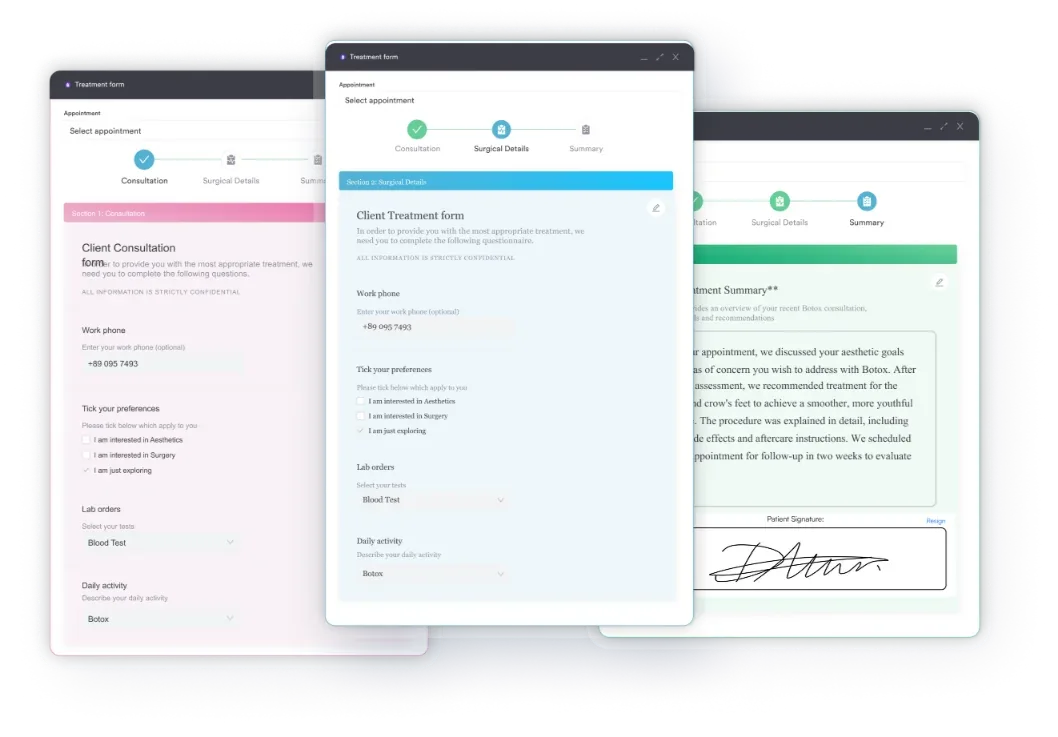
No competitor reference page dedicates a section to J2469-specific billing errors. Indeed, this is where most denials originate, and the patterns are consistent enough to systematize. Practices using digital intake forms that capture dose, NDC, and setting at the point of care catch most of these errors before the claim is built.
For broader HIPAA compliance context that governs how patient data and billing records are handled.
When palonosetron is contraindicated or unavailable, billing staff may need to code for alternative antiemetics, or for other supportive-care drugs used during the same chemotherapy visit, such as filgrastim (J1442) for neutropenia prevention. The table below lists the most common antiemetic J-codes for cross-reference.
For a comprehensive lookup of HCPCS Level II codes including antiemetic J-codes, the PGM Billing lookup tool provides free search using CMS source data.
Review related antiemetic J-codes whenever a J2469 claim is denied for coverage. If palonosetron was not covered under a specific payer’s formulary, an alternative antiemetic from the table above may have been covered. Document the substitution and bill the correct J-code for what was actually administered.
Unit-of-service errors and missing NDCs account for the majority of J2469 denials. One unit equals 25 mcg: every claim starts there. From that foundation, correct place of service, appropriate ICD-10 pairing (Z51.11 for chemotherapy encounters), and modifier accuracy for 340B settings determine whether the claim pays cleanly or triggers a rework cycle.
Pabau’s practice management platform helps infusion and oncology-adjacent clinics embed these billing rules at the point of care, so unit counts, NDC data, and POS codes are captured correctly before the claim is submitted. To see how Pabau handles injectable drug billing workflows for your practice, book a demo with the team.

Coding an embolism after an induced abortion? ICD-10 code O04.7 It covers when this code applies for air, amniotic fluid, or blood clot embolic complications.
Coding hemorrhage after a failed termination? ICD-10 code O07.1 It covers this child code for the hemorrhagic and coagulopathic complications under O07.
Coding a pregnancy-related hypertension diagnosis? ICD-10 code O11.1 covers pre-existing hypertension with pre-eclampsia before 14 weeks gestation.
HCPCS Code J2469 is used to bill for the injection of palonosetron HCl, 25 mcg. It is primarily used for preventing chemotherapy-induced nausea and vomiting (CINV) in cancer patients and for preventing postoperative nausea and vomiting (PONV) in adults undergoing surgery. The code covers physician-administered injectable palonosetron in eligible outpatient settings under Medicare Part B.
One unit of J2469 equals 25 mcg of palonosetron HCl. The standard adult CINV prevention dose is 0.25 mg (250 mcg), which means 10 units should be billed on the claim. Divide the total administered dose in micrograms by 25 to calculate the correct number of billable units.
J2469 is active for both 2025 and 2026 based on current CMS HCPCS listings. HCPCS codes can be revised, deleted, or have descriptors updated each January 1, so billing staff should verify active status annually against the CMS HCPCS annual update files or a current code database.
Medicare Part B (traditional) does not generally require prior authorization for J2469. However, Medicare Advantage plans and commercial insurers frequently require prior authorization for palonosetron, particularly when step-therapy protocols apply or when palonosetron is not the preferred antiemetic on the payer’s formulary. Always verify prior auth requirements with the specific payer before administering the drug.



