HCPCS code E0198: Water pressure pad billing guide
HCPCS code E0198 is a water pad for a standard mattress HCPCS code E0198 is the ...

Last Updated: Oct 13, 2026
G0145 is the HCPCS Level II code for screening cytopathology, cervical or vaginal (any reporting system), collected in preservative fluid, automated thin layer preparation, with screening by automated system and manual rescreening under physician supervision.
For OB/GYN practice management software users, G0145 is one of the most frequently billed laboratory codes in preventive women's health. The clinician collects a cervical or vaginal specimen into a liquid preservative vial, such as ThinPrep by Hologic or SurePath by BD Diagnostics.
The laboratory then processes it into an automated thin-layer slide, runs the slide through an automated screening system, and has a cytotechnologist or pathologist manually rescreen it under physician supervision. G0145 captures all three steps as a single billable unit.
Let Pabau's smart automation suggest the right codes, reduce claim denials, and keep your practice compliant—effortlessly.
Automate repetitive tasks and focus on what matters most—your patients.
Reduce coding errors and ensure compliance with the latest regulations.
Clean claims, fewer denials, and faster reimbursements.
Powerful insights and reporting to help your practice thrive.
HIPAA compliant SOC 2 certified GDPR-compliant Trusted by 4,000+ clinics worldwide

HCPCS code G0145 describes screening cytopathology, cervical or vaginal, collected in preservative fluid, automated thin-layer preparation, with automated system screening and manual rescreening under physician supervision.
Medicare covers G0145 once every 24 months for average-risk women and once every 12 months for high-risk women or women of childbearing age with a prior negative Pap test within the last 3 years.
The most common denial triggers for G0145 are frequency violations, mismatched ICD-10 diagnosis codes, and missing physician supervision documentation — none of which standalone code-lookup tools flag before submission.
Pabau’s claims management software gives OB/GYN practices and clinical labs claim status tracking, insurer-specific price lists, and submission checks that flag missing details before a G0145 claim goes out.
The table below gives the quick-reference fields billing staff need before touching the claim form. All information reflects the current active code status.
G0145 is paid under the Medicare Clinical Laboratory Fee Schedule (CLFS), not the Physician Fee Schedule. The CLFS sets a national limitation amount (NLA) that acts as a payment ceiling, and Medicare contractors may not pay above it. Rates are adjusted annually through the CMS final rule process.
The 2026 national limitation amount for G0145 has not been published in a final rule available at the time of this writing. Use the CLFS lookup tool to verify the current year’s rates before submitting claims.
As a reference point, G0145 has historically reimbursed in the range of $20 to $35 nationally. Rates are set nationally, with minimal geographic variation.
According to CMS MLN909032, Medicare Part B covers screening Pap tests for the early detection of cervical and vaginal cancer. Coverage frequency depends on the patient’s risk category.
High-risk factors recognized by CMS include prior cervical cancer, history of abnormal Pap results, sexually transmitted infections, other high-risk conditions, and certain lifestyle factors documented by the ordering physician. The high-risk determination must appear in the medical record to support the 12-month frequency.
Medicare Advantage (Part C) plans are required to cover preventive pap smear screening at parity with traditional Medicare. The Affordable Care Act (ACA) preventive services mandate additionally requires most commercial insurers to cover cervical cancer screening without cost-sharing, though code-specific coverage rules vary by payer.
An EHR suited to primary care templates wellness visits and screenings, which is where most G-codes are earned.
A clean G0145 claim requires a supporting ICD-10-CM diagnosis code that confirms the screening indication. Mismatched or unsupported diagnosis codes are a top denial driver. Use the codes below as a starting reference, and verify against the current CMS crosswalk and your MAC’s local coverage determination before billing.
For high-risk patients receiving annual screening, confirm the diagnosis code reflects the documented high-risk factor. Using Z12.4 alone on a claim billed at the 12-month frequency may trigger a frequency-limit edit if the payer’s system cannot identify the high-risk justification from the diagnosis alone.
Documenting the specific risk factor in the record and selecting the most specific ICD-10 code available strengthens the claim. Obstetric-specific diagnoses such as O219 have no bearing on a cervical screening claim and will not support G0145 medical necessity if selected in error.
See the clinical documentation best practices guide for how to structure patient records to support preventive screening claims and reduce audit exposure. Maintaining structured digital records is also a key requirement under HIPAA compliance requirements.
Modifier selection for G0145 determines whether the technical component, professional component, or complete service is being billed. An incorrect or missing modifier is one of the fastest ways to generate a denial or an overpayment audit flag.
When the same entity performs both the technical and professional work (the complete service), no modifier is appended and the full NLA is billed. Splitting the global service into TC and 26 should only occur when two separate entities genuinely perform the two components. Splitting incorrectly is a common audit target.
G0145 is almost always billed by the clinical laboratory that processes the specimen, not by the clinician who collected it. Understanding place-of-service (POS) codes matters for accurate claim submission and rate calculation.
The collecting clinician (the OB/GYN or primary care physician) does not typically bill G0145. The clinician bills for the office visit and specimen collection using the appropriate E&M and collection codes.
G0145 travels to the laboratory with the requisition and becomes the lab’s claim. This split-billing workflow is a common source of confusion for practices that have recently brought cytology processing in-house.
Excision codes invert that split. With CPT Code 11462, the physician performing the hidradenitis excision bills the service, not an outside laboratory.
If your OB/GYN practice recently started billing G0145 in-house, confirm your CLIA certificate number is enrolled with your Medicare Administrative Contractor (MAC) before submitting claims. Missing or incorrect CLIA enrollment is one of the fastest routes to a blanket laboratory claim rejection.
The G-series cytopathology codes are the primary source of mis-billing on cervical screening claims. Each code represents a specific combination of collection method, preparation technique, and screening protocol. Payers audit for code-to-service mismatches, and the difference between G0145 and G0123 is enough to turn a clean claim into a denial.
G0145 vs G0123 in practice: Both use liquid-based collection. The difference is the screening protocol. G0123 uses manual screening only, while G0145 adds an automated system pass before the manual rescreening.
If your laboratory runs specimens through an automated screening device (such as ThinPrep Imaging System) and then has a cytotechnologist manually review, G0145 is correct. If the lab uses only manual cytotechnologist screening, G0123 applies.
For related reproductive health procedure coding.

Pabau’s claims management software tracks claim status, applies the right insurer price list automatically, and flags missing details before a claim is sent. OB/GYN practices and clinical labs use Pabau to catch billing errors before submission, not after the remittance arrives.

The record must demonstrate that the service described by G0145 actually occurred. Medicare auditors review lab requisition forms, physician orders, and chart notes to confirm code-to-service alignment. Missing any of the following elements is enough to trigger a recoupment demand.
Practices using digital patient intake forms can embed a structured cervical screening risk-factor assessment directly into the intake workflow, capturing the high-risk documentation automatically at the point of care rather than hunting for it during an audit. The same digital intake record can also hold a signed consent for medical treatment alongside the risk-factor assessment.
None of the top-ranking code reference pages for G0145 address denial prevention. This section covers the five errors that generate the most G0145 rejections, what causes each one, and how to prevent it before the claim leaves the practice.
Standalone code-lookup tools give you the description and the fee schedule. They don’t verify frequency limits against the patient’s last service date, flag diagnosis mismatches, or prompt for missing modifiers before the claim goes out — and those are exactly the checks that catch a G0145 denial before it happens.
Pabau’s claims management software is built for clinical practices that need HCPCS billing integrated with patient records, not bolted on afterward. Key capabilities relevant to G0145 workflows include:
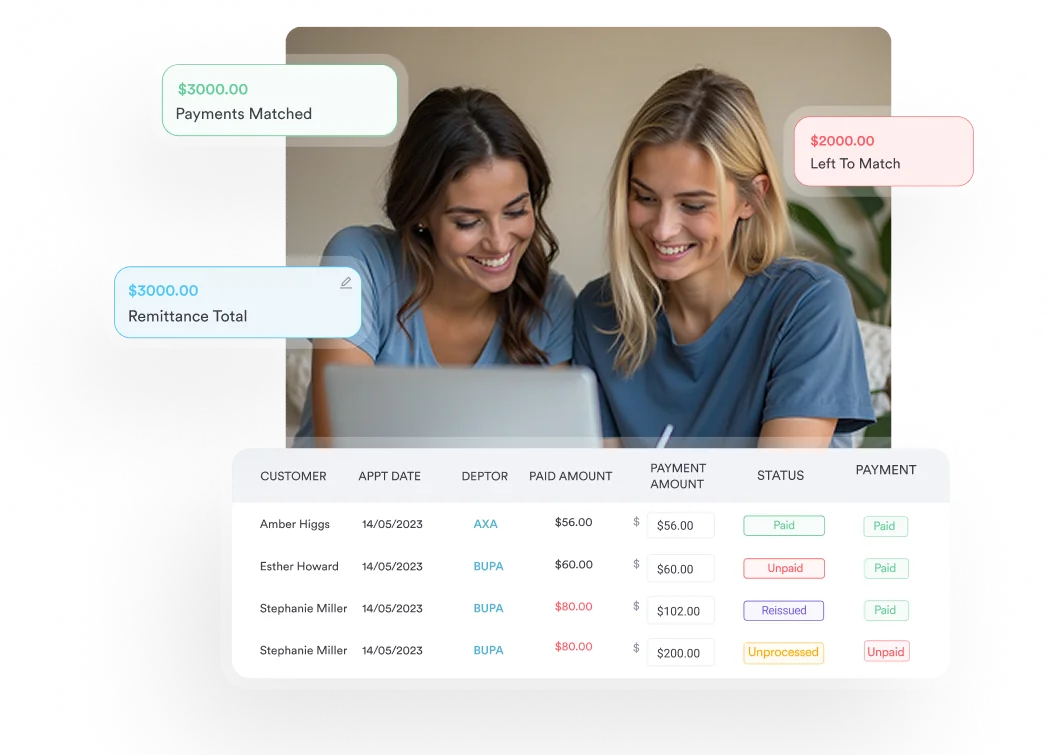
For OB/GYN and women’s health practices that bill preventive pap smears alongside a broader gynecology service mix. Practices managing multi-payer environments can also use Pabau’s practice management software to standardize code selection and documentation across providers.
HCPCS code G0145 is the correct billing code when a cervical or vaginal specimen is collected in a liquid preservative, processed through automated thin-layer preparation, screened by an automated system, and manually rescreened under physician supervision. Getting that specific combination right on every claim requires more than a code-lookup page.
Frequency violations, diagnosis mismatches, and undocumented physician supervision are the three denial triggers that usually surface only after the remittance advice arrives, once the claim has already been rejected. Pabau’s claims management software tracks claim status and flags missing details before submission, so a G0145 claim can be fixed while it’s still fixable. To see how it works for your OB/GYN or women’s health practice, book a demo. An eligibility check at booking and again at arrival catches mid-month plan changes.

Need the ICD-10 code for a routine GYN exam with no abnormal findings? Z01.419 is the diagnosis code to pair with a normal preventive pelvic exam.
Billing enteral nutrition for a metabolic disorder? enteral formula billing guide covers the documentation needed to bill formula for conditions like PKU or MSUD.
Billing a visit that also involves abnormal uterine bleeding? N93.9 is the code to document when that is the reason for the visit.
HCPCS code G0145 is used to bill for screening cytopathology of a cervical or vaginal specimen that was collected in a liquid preservative, processed using automated thin-layer preparation, screened by an automated system, and manually rescreened under physician supervision. It applies to liquid-based pap tests (such as ThinPrep or SurePath) that go through both an automated and a physician-supervised manual screening step.
G0145 is paid under the Medicare Clinical Laboratory Fee Schedule (CLFS) at a nationally set rate (the national limitation amount). Historically this has ranged from approximately $20 to $35, though the exact 2026 figure must be verified against the current CMS CLFS final rule at cms.gov before billing, as rates are updated annually.
Both G0123 and G0145 use liquid-based cervical cytology collection in a preservative fluid. The difference is the screening protocol: G0123 uses manual cytotechnologist screening only, while G0145 adds an automated system pre-screen followed by physician-supervised manual rescreening. If your laboratory runs specimens through an automated screening device (such as ThinPrep Imaging System) before manual review, G0145 is the correct code. If only manual screening occurs, use G0123.
Medicare covers G0145 once every 24 months for average-risk women and once every 12 months for high-risk women or women of childbearing age who have had a negative Pap test in the previous 3 years. The high-risk determination must be documented in the medical record to support the 12-month billing frequency.
The most commonly paired ICD-10-CM codes are Z12.4 (screening for malignant neoplasm of cervix) for routine average-risk screening, Z01.419 (routine gynecological examination without abnormal findings), and Z12.72 (screening for malignant neoplasm of vagina) for post-hysterectomy vaginal cytology screening. High-risk patients should have a more specific diagnosis code reflecting the documented risk factor.
G0145 is most commonly billed with Place of Service 81 (Independent Laboratory), as the reference lab typically processes the specimen and submits the claim directly to Medicare. OB/GYN practices with an in-house laboratory may use POS 11 (Office), provided the practice holds the appropriate CLIA certificate for non-waived laboratory testing.