

HCPCS code E0198: Water pressure pad billing guide
HCPCS code E0198 is a water pad for a standard mattress HCPCS code E0198 is the ...

Last Updated: Oct 13, 2026
E0667 is the HCPCS Level II code for segmental pneumatic appliance for use with pneumatic compressor, full leg.
Medicare's National Coverage Determination NCD 280.6 governs all three of these requirements. According to CMS, HCPCS Level II codes like E0667 are maintained annually and follow DMEPOS billing rules that differ from standard procedure code submissions.
Let Pabau's smart automation suggest the right codes, reduce claim denials, and keep your practice compliant—effortlessly.
Automate repetitive tasks and focus on what matters most—your patients.
Reduce coding errors and ensure compliance with the latest regulations.
Clean claims, fewer denials, and faster reimbursements.
Powerful insights and reporting to help your practice thrive.
HIPAA compliant SOC 2 certified GDPR-compliant Trusted by 4,000+ clinics worldwide

HCPCS Code E0667 is the segmental pneumatic appliance (full leg) code billed separately from pneumatic compressor codes E0650, E0651, and E0652
Medicare coverage requires a qualifying diagnosis — lymphedema or a venous stasis ulcer from chronic venous insufficiency — plus a documented failed trial of conservative therapy, under NCD 280.6
Common billing error: billing the appliance without the paired compressor code, or using E0667 (full leg) when E0669 (half leg) is the correct appliance for a below-knee-only order
Practice management software like Pabau helps DME practices keep organized clinical documentation that supports medical necessity and reduces claim denials
HCPCS Code E0667 describes a segmental pneumatic appliance for use with a pneumatic compressor, full leg. It falls within the DMEPOS billing category under HCPCS Level II, the Healthcare Common Procedure Coding System classification maintained by CMS for durable medical equipment, prosthetics, orthotics, and supplies.
The code was added to the code set on January 1, 1985, took its current effective date of January 1, 1996, and remains valid for 2026.
The key distinction: E0667 covers the appliance that wraps the full leg, not the compressor unit that powers it. These two pieces of equipment are billed under separate HCPCS codes and must not be bundled into a single line item.
Medicare coverage for HCPCS Code E0667 is governed by National Coverage Determination NCD 280.6 (Medicare NCD Manual, Pub. 100-03, Ch. 1, section 280.6), which outlines the diagnoses and clinical conditions that support medical necessity for pneumatic compression devices.
The DME MACs retired the prior Local Coverage Determination LCD L33829 and its Policy Article A52488 for dates of service on or after November 14, 2024.
Billing without a qualifying diagnosis is the fastest path to denial. Clinicians ordering pneumatic compression therapy for the full leg should confirm the patient’s diagnosis meets NCD 280.6’s criteria before submitting a claim.
Medicare covers pneumatic compression devices, including E0667, for only two qualifying conditions under NCD 280.6:
Coverage also requires a face-to-face physician evaluation and documentation of the clinical rationale, on top of the conservative-therapy trial above. Confirm current NCD 280.6 requirements with your DME MAC, since CMS updates coverage guidance periodically.
Practice management software like Pabau helps DME practices keep the face-to-face evaluation notes, conservative-therapy trial records, and physician rationale organized in one place, ready for when the claim is prepared.
Every E0667 claim needs a supporting ICD-10 diagnosis code that matches one of the two conditions NCD 280.6 recognizes as medically necessary. The table below covers the most frequently paired codes; a nonspecific code such as I87.9 doesn’t establish medical necessity on its own.
Always verify accepted diagnosis codes against the current NCD 280.6 and your DME MAC’s coverage article before billing.
Selecting an overly general ICD-10 code when a more specific code exists is a common audit trigger. I89.0 is preferred over broader circulatory codes when the underlying condition is clearly lymphedema. When a venous stasis ulcer is present, pair the diagnosis with the appropriate wound care code, such as 97597, rather than relying on the compression appliance code alone.
Equipment orders need follow-through, and patient management software tracks who received what, and when it needs review.
Medicare reimbursement for HCPCS Code E0667 is set through the DMEPOS fee schedule and varies by CMS geographic payment locality. Rates are updated annually. The table below shows representative national average figures; actual allowed amounts depend on the beneficiary’s location and whether the supplier is participating or non-participating.
For the most current allowed amounts by locality, use the AAPC HCPCS code lookup or pull the 2026 DMEPOS fee schedule directly from CMS. Rates in competitive bidding areas may differ significantly from the national fee schedule.
Run a fee schedule check by CMS locality before quoting patients their out-of-pocket cost. E0667 reimbursement in a competitive bidding area can be materially lower than the national rate, and quoting the wrong figure creates compliance risk and billing disputes.
Incomplete documentation is the top reason E0667 claims are denied or recouped on audit. CGS Medicare guidance and NCD 280.6 together define what the clinical record must contain before the appliance is dispensed.
A well-maintained digital record created at the point of care is far harder to challenge than retrospective documentation.
Retain all documentation for at least seven years. Medicare audit contractors can request records well after the claim date, and missing records are treated as if the service never occurred.
The single most-cited coding error in Noridian Medicare’s DME MAC guidance is submitting the appliance code without a paired compressor code. HCPCS Code E0667 is the appliance; the compressor is a separate piece of equipment billed under a separate code.
Both must appear on the claim, matched correctly to what was actually dispensed.
Bill E0667 with E0651 or E0652 depending on the compressor’s specifications. Pairing E0667 with the non-segmental compressor E0650 is incorrect and will trigger a denial or audit finding. Always match the appliance code to the actual compressor dispensed, not the most commonly ordered unit.

Pabau helps DME billing teams keep physician orders, evaluation notes, and delivery documentation organized in one place, so the paperwork is ready when it’s time to prepare a claim.

The E0655-E0677 range covers both segmental and non-segmental pneumatic appliances for different body regions and limb segments. Selecting the wrong appliance code is a frequent claim error, particularly between E0667 (full leg) and its true half-leg counterpart, E0669 (half leg). The distinction hinges entirely on whether the appliance covers the entire lower extremity or only the below-knee segment. Self-pay patients submitting to their own insurer need the code and the charge on one patient receipt template.
E0668 is easy to confuse with E0669 by code proximity, but it describes a different body region: the segmental full-arm appliance, not a half-leg option. E0673 follows the same body-region logic within the same code family.
The clinically meaningful comparison is E0667 against E0669: both are segmental leg appliances, and the only difference is whether the physician’s order covers the full leg or stops at the knee.
E0668 sits in the same numeric range but describes a different body region, the segmental full-arm appliance, so it should never be substituted for either leg code. Confirm the treated limb and its full extent against the physician’s order before selecting between E0667 and E0669.
DMEPOS claims for HCPCS Code E0667 may require specific modifiers depending on the rental or purchase method, supplier type, and bilateral dispensing. Common modifiers include:
The KX modifier is particularly important: submitting E0667 without KX when NCD 280.6 requires it will result in automatic denial. Verify modifier requirements with your specific DME MAC before billing.
Audit your E0667 claims quarterly against Noridian and CGS MAC guidance. These DME MACs publish correct-coding articles specifically for pneumatic compression devices. A pre-bill review checklist matched to NCD 280.6 catches the most common denial triggers before the claim leaves your system.
The disconnect between the clinical record and the billing system causes most E0667 denials. When a physician orders pneumatic compression therapy, the documentation in the chart needs to flow directly into the claim without transcription errors.
Manual hand-offs between clinical notes and billing entries introduce exactly the kind of errors that NCD 280.6 audits expose.
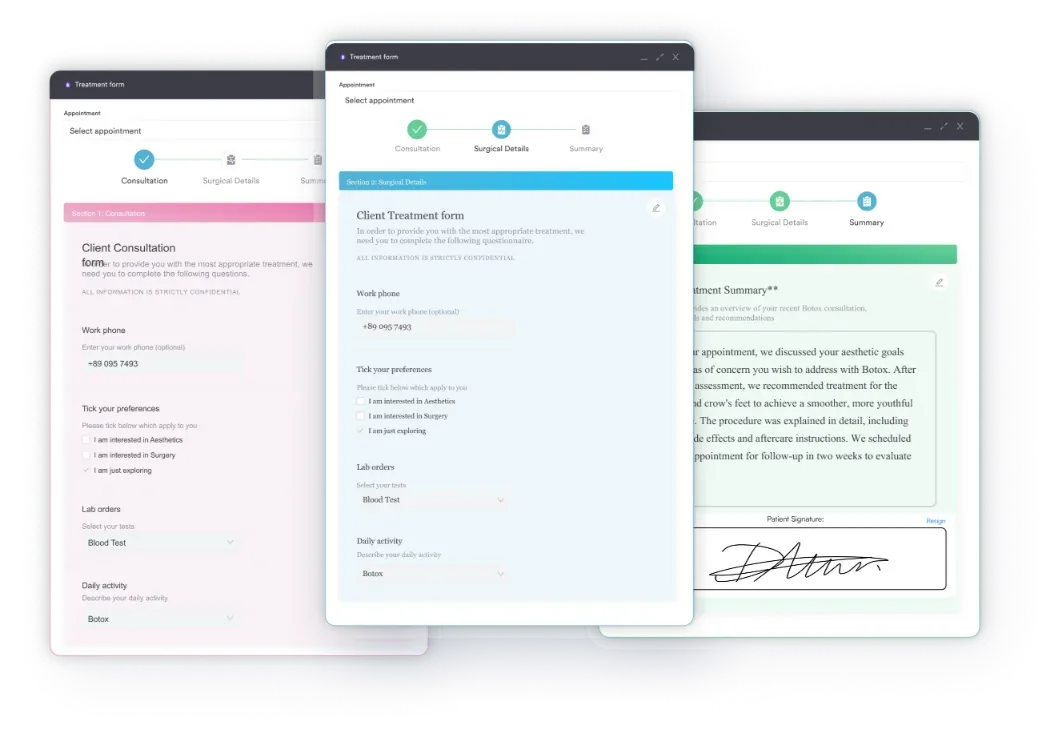
Pabau connects clinical documentation to billing workflows, so the information required for E0667 medical necessity is captured in the correct fields from the outset .
Practices using physical therapy EMR or wellness clinic software integrated with billing report fewer claim rejections because clinical notes and claim data share a single source of truth.
For DME providers billing HCPCS Code E0667 regularly, an integrated system reduces the back-and-forth of chasing missing documentation before a claim can be submitted. For more on how integrated billing and documentation work together.
HCPCS Code E0667 claims fail most often because of a missing compressor code, the wrong appliance code for the body region, or documentation that does not satisfy NCD 280.6. Getting all three right requires that clinical orders, diagnosis coding, and DMEPOS billing rules stay connected throughout the workflow.
Pabau brings clinical documentation and billing information together, so the record supports the claim without manual reconciliation. To see how this applies to your DME billing setup, book a demo and we’ll walk through the E0667 documentation workflow for your practice.

Need another recent DME billing reference? E0260 covers billing for a semi-electric hospital bed, another common DMEPOS item.
Billing for wound care alongside a compression appliance? 11012 is the debridement code often billed for venous stasis ulcers.
Looking for more DMEPOS coding guides? E0482 walks through billing for a cough stimulating device.
Need related vascular diagnosis coding? I71.9 covers aortic aneurysm of unspecified site, without rupture.
HCPCS Code E0667 is a DME code for a segmental pneumatic appliance for the full leg. It bills compression therapy for lymphedema or chronic venous insufficiency with a venous stasis ulcer, both recognized under NCD 280.6. It covers the appliance only; the compressor bills separately (E0651/E0652).
E0667 covers a segmental pneumatic appliance for the full leg (thigh to foot); E0669 covers the half-leg version (below-knee only). E0668 describes a full-arm appliance, never a substitute for either leg code. Using the wrong leg-length code causes denials or audit findings.
The most common pairing is I89.0 (lymphedema, NEC), one of two qualifying diagnoses under NCD 280.6. The second is chronic venous insufficiency with a venous stasis ulcer, qualifying only after a documented six-month conservative-therapy trial fails. PVD alone and CVI without ulceration do not qualify.
The Medicare allowed amount for E0667 varies by CMS payment locality and updates annually through the DMEPOS fee schedule; competitive bidding areas may differ. Check the CMS DMEPOS fee schedule for your locality before billing.
E0667 must be billed with a segmental compressor code, either E0651 (without calibrated gradient pressure) or E0652 (with it), based on the equipment dispensed. Pairing E0667 with the non-segmental E0650 is incorrect and will deny; E0650 pairs only with non-segmental appliances.
The most critical modifier for E0667 is KX, certifying the record satisfies NCD 280.6’s medical necessity criteria. Others include RR (rental), NU (new purchase), and LT or RT for bilateral billing. Missing KX when criteria are met triggers automatic denial.



