HCPCS code G0257: Unscheduled or emergency dialysis billing guide
HCPCS code G0257: Official descriptor and code overview HCPCS code G0257 is defi...

Last Updated: Oct 27, 2026
B4162 is the HCPCS Level II code for enteral formula, for pediatrics, special metabolic needs for inherited disease of metabolism, includes proteins, fats, carbohydrates, vitamins and minerals, may include fiber, administered through an enteral feeding tube, 100 calories = 1 unit.
That last detail is where B4162 claims come apart. A supplier ships 30 days of formula, bills cans or cases, then watches the line item bounce back denied. Coverage is the second hurdle, because Medicare wants evidence the child cannot eat enough by mouth.
Get the unit math, the order paperwork, and the diagnosis code right, and B4162 pays without much fuss. Miss any one of the three and the claim sits in denial for weeks.
Let Pabau's smart automation suggest the right codes, reduce claim denials, and keep your practice compliant—effortlessly.
Automate repetitive tasks and focus on what matters most—your patients.
Reduce coding errors and ensure compliance with the latest regulations.
Clean claims, fewer denials, and faster reimbursements.
Powerful insights and reporting to help your practice thrive.
HIPAA compliant SOC 2 certified GDPR-compliant Trusted by 4,000+ clinics worldwide

HCPCS code B4162 covers enteral formula for a pediatric patient whose special metabolic needs come from an inherited metabolic disease.
One unit equals 100 calories, so quantity on the claim is total calories delivered divided by 100.
Medicare pays only when the child has a working gut, cannot eat enough by mouth, and needs tube feeding long term.
CMS retired the certificate of medical necessity in 2023, so a standard written order and the medical record now carry the proof.
B4160 is a caloric-density code and B4154 covers non-inherited special metabolic needs, so neither one substitutes for B4162.
Only formulas with a published PDAC coding verification may be billed under B4162.
B4162 applies to a metabolically engineered formula for a child with an inherited metabolic disease, delivered through a feeding tube. The CMS HCPCS code set files it under Level II. It sits in the Enteral Formulas and Additives range that runs from B4100 to B4162.
Specificity is the whole point of the code. Products billed under B4162 are built for conditions such as phenylketonuria (PKU) and maple syrup urine disease (MSUD). Other inherited amino acid and organic acid disorders qualify too. A low-phenylalanine formula for a child with PKU is the textbook case.
Reach for a broader enteral code and the claim fails on formula type. The reverse catches suppliers just as often. A standard polymeric feed does not become a B4162 product simply because the patient carries a metabolic diagnosis.
Here is the rule that catches new suppliers first. B4162 is restricted to products that have passed a written coding verification review by the Pricing, Data Analysis and Coding contractor, known as PDAC. Verified products are then published on the Product Classification List.
So the formula on the shelf has to appear on that list under B4162. If it does not, the claim is miscoded no matter how strong the clinical story is. Check the product before you set up the order, not after the denial arrives.
Below is the code as CMS defines it, cross-checked against the AAPC Codify HCPCS lookup.
The billing unit line is the one to memorize. Quantity on a B4162 claim is always calories divided by 100. Ounces, cans, and cases are not valid measures, and a claim built on them gets rejected.
Medicare covers enteral nutrition under the Part B durable medical equipment benefit. Coverage runs through CMS Policy Article A58833 and the Local Coverage Determinations each DME MAC administers. Four clinical tests plus a valid order all have to clear.
Every one of the following needs to be on file before you bill:
Medicaid is a different story, and it varies a lot by state. Some programs cover metabolic formula through the medical or pharmacy benefit rather than DME. Unit caps, prior authorization rules, and covered diagnoses all shift, so check with the state agency first.
Supply billing leaks revenue quietly, and medical practice management software catches unbilled items before they’re written off.
Thin documentation causes more B4162 denials than anything else. Since January 1, 2023 CMS no longer requires a certificate of medical necessity. The standard written order and the medical record now carry the whole load, and the DME MACs audit against exactly that.
Here is what an auditor expects to find, in the patient record and retrievable on request:
Practices that run digital intake forms in practice management software like Pabau can template these fields once and reuse them. Structured medical forms management beats hunting through a shared drive when a records request lands.
Storage matters too. Metabolic disease records are sensitive.
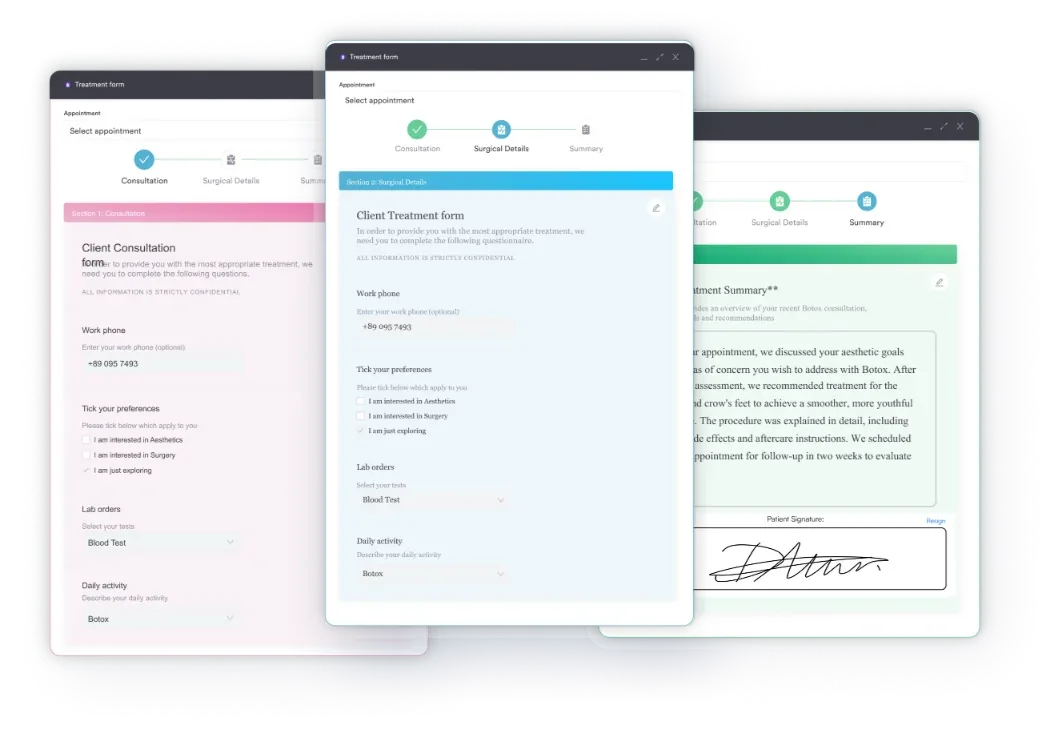
Build the B4162 order check into your intake workflow. Before a claim goes out, check four things on the patient account. You want the standard written order, the diagnosis records, the oral intake assessment, and the caloric order. Auditors ask for all four together.
Billing B4162 comes down to one conversion and a handful of claim fields. The math is simple. Unit errors are still one of the most cited findings in DME enteral nutrition audits, usually because nobody wrote the caloric order down.
Take the total calories delivered in the billing period and divide by 100. Say a patient receives 1,500 calories a day across a 30-day period. That comes to 45,000 calories, so the billable quantity is 450 units. Round to the nearest whole unit.
A DME supplier normally bills B4162 for home enteral nutrition. Place of service is 12 for the home. Non-institutional suppliers file on the CMS-1500, while institutional providers use the UB-04. The supplier also needs current Medicare enrollment with the DME MAC covering the patient’s region. Most of these forms are submitted as an electronic claim, whose structure the clearinghouse checks before the payer reviews its content.
Then there is the modifier, which trips up plenty of otherwise clean claims. Append KX when every coverage criterion in the LCD is met and the evidence is on file. Use GA if you hold a signed advance beneficiary notice, or GZ if you do not. A B4162 line submitted bare gets rejected.
Feeding the claim from your clinical system rather than a spreadsheet keeps those fields consistent.
Medicare sets the B4162 allowable through the DMEPOS fee schedule, not the physician fee schedule. Rates are published per unit, meaning per 100 calories, and they carry a geographic adjustment. CMS updates the files every January 1, so pull the current year rather than trusting a saved copy.
Three things move the final payment on a B4162 claim:
To find a specific figure, open the CMS fee schedule look-up tool, then pick the DMEPOS file for the year and state you need. Third-party rate lists go stale fast, and a stale rate turns into a write-off at reconciliation.
Policy Article A58833 requires a supporting ICD-10-CM diagnosis on every B4162 claim. The code has to confirm the inherited metabolic disease, and it has to match what the medical record says. The list below covers the diagnoses billers reach for most often.
Treat that table as a starting point. A58833 holds the authoritative covered-diagnosis list and CMS revises it periodically, so check the current version before submission. A diagnosis that is not on the list produces a medical necessity denial, however clean the rest of the claim is.
Retyping codes between systems is where errors creep in. An EHR integration that pushes the diagnosis straight from the chart to the claim removes that step entirely.
B4162 sits at the end of a run of enteral formula codes, and the neighbors are easy to confuse. Picking the wrong one is miscoding, which shows up in a post-payment review as an overpayment or an underpayment. The table below sets out what separates each code.
One mix-up deserves naming. Suppliers often read B4160 as the code for acquired metabolic needs, which it is not. Non-inherited special metabolic needs belong to B4154, and that code is not pediatric-specific.
So a renal or hepatic formula for a child goes to B4154, never to B4160 or B4162. Where the patient is an adult with an inherited disorder, B4157 is the counterpart code. A soy-based pediatric feed with intact nutrients sits at B4159.
Two more neighbors come up in the same audits. Blenderized natural food delivered by tube is B4149. Neither belongs on a B4162 line.
Audit your enteral claims quarterly across B4154 through B4162. Watch for pediatric renal or hepatic formulas coded to B4160, which is a caloric density code. Those belong on B4154, and catching the pattern early saves you a recoupment request.
DME MAC correct coding guidance keeps flagging the same handful of errors on enteral nutrition claims. All of them are preventable with a tighter workflow. The right practice management features can catch several before the claim ever leaves the building. Common claim denial codes recur across specialties, so it helps to check the pattern before you rework a rejected line.
Because these records name a child’s genetic diagnosis, treat security as part of the billing workflow. Solid patient data security gives you an audit trail as well as protection, and both help in a post-payment review.
The CGS PDAC coding verification is worth bookmarking too. It is how you confirm a specific formula product maps to B4162 before you bill it.
Five questions, asked in the same order every time, catch most B4162 problems while they are still cheap to fix:
Answer yes five times and the claim is ready. Answer no once and you have found your denial before the payer did.
Most practices billing pediatric metabolic formula run this on three systems. The order arrives by fax, the caloric target lives in the dietitian’s note, and the units get worked out in a spreadsheet. When a records request lands, someone spends an afternoon reassembling it.
Pabau keeps all of it on one patient file. The standard written order, the metabolic diagnosis notes, the caloric order, and the delivery history all sit together. Evidence for a B4162 claim is then one click away. That matters most for practices running a metabolic health EMR alongside a supplier relationship.
On the billing side, Pabau’s claims management checks the submission fields an insurer needs and holds the claim back until they are complete. A status dashboard then shows you what is queued, sent, or waiting. Nutrition-led practices using functional medicine software get the same benefit for their own claim types.
Automated reminders close the loop on continued need. The family gets prompted for the review appointment, the note lands on the file, and your next B4162 claim has current documentation behind it.


Pabau holds the written order, the diagnosis notes, and the delivery history together. Its claims management then checks submission fields before a claim can be sent. Less rework, fewer resubmissions.

B4162 rewards precision more than volume. The clinical case for pediatric metabolic formula is usually obvious, so denials rarely come from the medicine. They come from a quantity in cans, a product that never made the PDAC list, or an order the practitioner signed too late.
Fix that once, at the workflow level, and it stays fixed. Write the caloric order into the intake template, check the product list before the first delivery, and set a calendar rule for continued-need reviews. The trade-off is a slower first order in exchange for a claim that pays every month after.
Ready to keep the order, the diagnosis notes, and the delivery record in one place? Book a demo to see how Pabau supports enteral nutrition documentation and cleaner claim submissions.

Billing a blenderized tube feed instead? B4149 sets out the units, coverage tests, and documentation for pureed natural food delivered by tube.
Switching a patient to parenteral nutrition? B4216 explains how the administration kit is billed and what the record has to support.
Need a code for a supply that has none? B9999 covers the miscellaneous enteral supply route and the narrative a payer expects with it.
Still billing the retired Q4131 code? Q4131 code retirement guide explains why Medicare retired the code in 2019 and which codes replaced it.
Billing a membrane graft or wrap? membrane graft billing guide explains why this add-on code can never be submitted as a standalone claim.
Yes. The formula and the delivery supplies are separate codes, so the kit is billed alongside the formula units. B4034 covers a syringe-fed supply kit and B4035 covers a pump-fed kit, at one kit per day of feeding. Never fold the supplies into the B4162 quantity.
Medicare treats a total daily intake of 20 to 35 calories per kilogram as sufficient to reach or hold an appropriate body weight. Order above or below that band and the treating practitioner has to document why in the medical record. Units on the claim should trace back to that caloric order.
As a purchase. Formula is a consumable, so each claim covers only what was actually delivered in that period. Rental logic and its modifiers belong to the feeding pump, which carries its own code, not to the formula line.
Medicare’s required prior authorization list for DMEPOS does not include enteral formula. Plenty of state Medicaid programs and Medicare Advantage plans do require it, often with a caloric order and a dietitian’s assessment attached. Check the payer before the first delivery, since retroactive authorization is rarely granted.