

HCPCS code E0198: Water pressure pad billing guide
HCPCS code E0198 is a water pad for a standard mattress HCPCS code E0198 is the ...

Last Updated: Oct 13, 2026
A4638 is the HCPCS Level II code for replacement battery for patient-owned ear pulse generator, each.
The code carries a By Report (BR) pricing indicator, so there is no fixed national rate. The MAC sets the allowable amount case by case from submitted cost documentation.
Let Pabau's smart automation suggest the right codes, reduce claim denials, and keep your practice compliant—effortlessly.
Automate repetitive tasks and focus on what matters most—your patients.
Reduce coding errors and ensure compliance with the latest regulations.
Clean claims, fewer denials, and faster reimbursements.
Powerful insights and reporting to help your practice thrive.
HIPAA compliant SOC 2 certified GDPR-compliant Trusted by 4,000+ clinics worldwide

HCPCS code A4638 describes a replacement battery for a patient-owned ear pulse generator, classified as a Level II HCPCS Miscellaneous DME supply under Medicare Part B
A4638 carries a By Report (BR) pricing indicator, meaning no fixed national rate applies and reimbursement is determined by the MAC jurisdiction on a case-by-case basis
Coverage is not automatic: many payers treat the underlying Meniett-type device as investigational, so billers need a valid physician order, medical necessity documentation, and PDAC verification to avoid denials
Practice management software like Pabau keeps physician orders, PDAC verification notes, and delivery documentation for A4638 organized in one patient record, so nothing goes missing when a claim is prepared
HCPCS code A4638 has one official descriptor: Replacement battery for patient-owned ear pulse generator, each. The “each” unit is significant for claim submission. Every battery replaced is billed as a separate unit, and quantity should match the physician’s order exactly.
A4638 sits within the CMS HCPCS Level II codes, maintained annually by CMS alongside the AMA. The A-series covers DME, medical and surgical supplies, and administrative, miscellaneous, and investigational items. A4638 specifically falls under the DME supply subset.
This classification matters because most billing platforms differentiate between CPT (physician procedure) codes and HCPCS Level II (supply and service) codes. Submitting A4638 under the wrong claim type leads to automatic rejection.
An ear pulse generator is a small, patient-worn device that delivers electrical pulses for therapeutic purposes, typically related to auditory or vestibular conditions. Patients own the generator itself. When its battery depletes, the replacement battery is billed separately under A4638 rather than being bundled with the device.
This distinction matters for NCCI bundling checks. The generator hardware and its replacement battery are separate billable items with separate HCPCS codes. Bundling them incorrectly into a single line item is a common denial trigger. The same accessory-versus-device split applies to other implantable pulse-generating systems.
The table below summarizes the key attributes for HCPCS code A4638 in 2026. Verify active status against the CMS annual HCPCS code list before the start of each calendar year, as CMS publishes updates that can change pricing indicators or benefit category assignments. Miscellaneous DME items without a dedicated code.
Before billing A4638 at the start of each year, cross-check the code against the CMS HCPCS release file published each October. Pricing indicators and benefit category assignments can shift between fiscal years. A code that was active and priced By Report in 2025 may carry different MAC instructions in 2026.
A4638 carries a By Report (BR) pricing indicator. This means CMS has not established a fixed national average, floor, or ceiling rate for this supply item. Reimbursement is determined at the MAC jurisdiction level based on submitted documentation that establishes the item’s cost and medical necessity.
Because A4638 is a By Report DME supply code, it carries no Medicare Physician Fee Schedule (MPFS) pricing or RVUs to look up. Check your DME MAC’s own fee schedule and pricing tools instead, such as Noridian’s or CGS’s online fee schedule lookup, or contact the MAC directly for current By Report pricing guidance on A4638.
By Report pricing requires the supplier to submit documentation establishing the item’s actual cost. The MAC reviews this documentation and determines an allowable amount. Key implications for billing staff:
Billing staff working across multiple MAC jurisdictions benefit from tracking A4638 reimbursement outcomes by region.
Supply billing leaks revenue quietly, and medical practice management software catches unbilled items before they’re written off.
Medicare Part B covers A4638 under the Durable Medical Equipment (DME) benefit category, as a Miscellaneous DME accessory to the ear pulse generator billed under E2120, when the item is medically necessary and properly documented. Coverage is not automatic. The patient must have an active, valid prescription for the ear pulse generator itself, and the battery replacement must be linked to that original order.
For a claim to process without challenge, the following eligibility conditions generally apply. Verify these against your MAC’s current Local Coverage Determination (LCD) for DME accessories, as coverage conditions can vary by jurisdiction and change annually.
Coverage is far from guaranteed in practice. The ear pulse generator that A4638 services is marketed as the Meniett device, delivering positive-pressure pulses for Meniere’s disease, and many commercial and Medicaid plans list E2120 and its accessories, including A4638, as noncovered or investigational. The American Academy of Otolaryngology-Head and Neck Surgery’s 2020 Clinical Practice Guideline on Meniere’s Disease recommends against positive-pressure (Meniett) therapy, citing systematic reviews that show no benefit over placebo. Confirm your MAC’s current LCD status for E2120 and A4638 before assuming coverage, since this evidence base directly affects medical necessity review. Since positive-pressure therapy lacks strong supporting evidence, many patients pursue vestibular rehabilitation instead, through practices using physical therapy EMR software to track balance and symptom outcomes. A paid claim can still be underpaid, and the electronic remittance file is where that shows up. Common claim denial codes repeat by specialty, so the pattern is worth reading before reworking.
The most common reason A4638 claims are delayed or denied comes down to incomplete documentation. Because the code carries a By Report pricing indicator, the MAC cannot process the claim without sufficient cost and medical necessity evidence. Primary care practices, the usual source of the physician order behind an ear pulse generator prescription. Maintaining medical forms documentation that travels with every DME supply claim reduces turnaround time.
Standard documentation requirements for A4638 billing include:
For HIPAA-compliant billing workflows, all documentation should be stored and transmitted securely. Patient ownership records, physician orders, and delivery confirmations are all protected health information subject to HIPAA’s minimum necessary standard.
The National Correct Coding Initiative (NCCI) publishes quarterly edit tables that identify code pairs that cannot be billed together without a modifier. For HCPCS code A4638, the primary bundling risk involves billing the replacement battery alongside the ear pulse generator device code on the same claim date.
Check the current CMS NCCI edit files before submitting any claim that includes A4638 alongside adjacent device or accessory codes. NCCI edit pairs change quarterly. Relying on a prior quarter’s edit table is a compliance risk. Refer to the AAPC HCPCS code lookup for a summary of known edit associations, but always verify against the official CMS tables.
Keeping a digital log of NCCI edit checks performed per claim date provides an audit trail if a payer challenges a bundled submission.

Pabau keeps physician orders, PDAC/DMECS verification notes, cost documentation, and delivery confirmations for HCPCS supply items like A4638 attached to the same patient record used for CPT-coded procedures, so nothing is missing when your billing team prepares a claim.

A4638 sits within a cluster of A-series HCPCS codes covering DME device accessories and replacement components. Knowing the adjacent codes helps billers avoid cross-coding errors and supports accurate patient record documentation. The table below lists the codes most commonly encountered alongside A4638 in DME supply billing workflows. Verify all codes and descriptions against the current CMS HCPCS release at PGM Billing’s lookup tool or the official CMS file.
The closest neighbor in the A46xx series is A4630. It covers replacement batteries for transcutaneous electrical stimulators, not ear pulse generators, so the two devices are not interchangeable for billing. Selecting A4630 when the patient owns an ear pulse generator is an upcoding risk that MAC auditors flag routinely.
Code reference platforms show fee schedule data, but they do not connect a supply code’s documentation to the patient’s clinical record. For DME suppliers and practices billing A4638 as part of a broader care pathway, documentation for the physician order, PDAC check, and delivery confirmation often ends up scattered across separate systems between the clinical encounter and the billing team.
Pabau keeps the physician order, PDAC/coding notes, delivery confirmation.
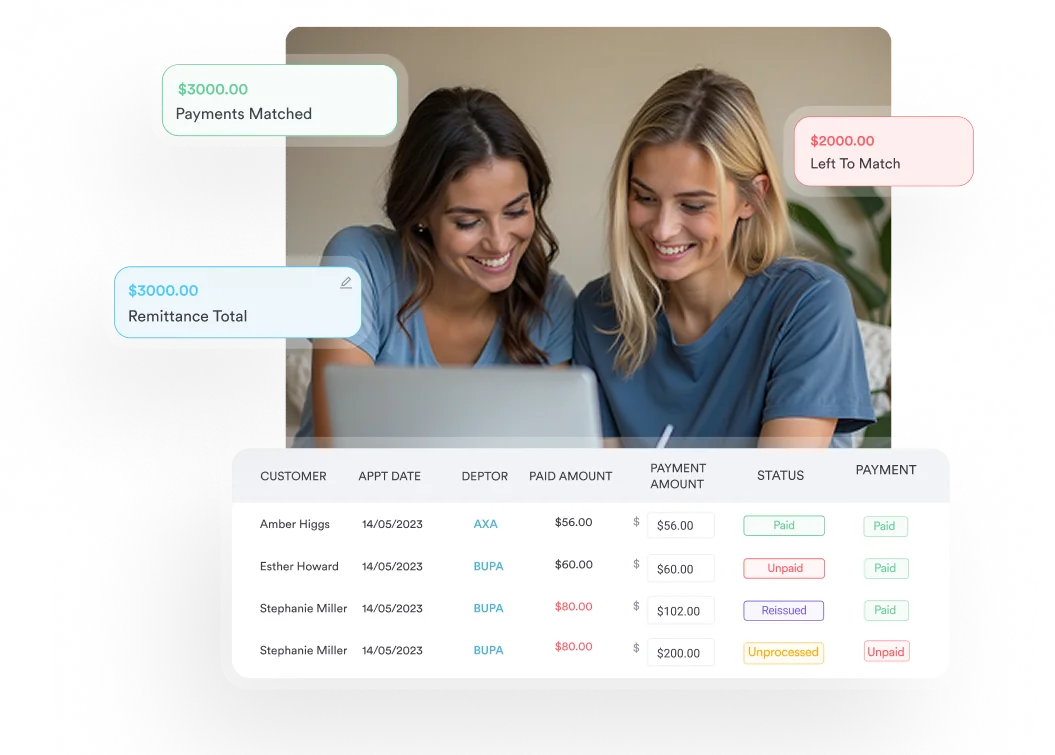
Key capabilities relevant to A4638 billing include:
Practices managing patient records across multiple specialties benefit from keeping DME supply documentation in the same system that handles scheduling and clinical notes. Fragmented tools mean information falls through the cracks. An EHR integration that connects clinical records to billing workflows reduces the manual re-entry that causes most HCPCS supply claim errors.
For practices evaluating their current setup, Pabau covers scheduling, clinical documentation, and billing in a single subscription, with every feature included. See how it keeps HCPCS supply documentation organized by booking a demo.
HCPCS code A4638 is a By Report DME supply code with no fixed national rate. Clean claims require complete documentation, a DMECS-verified battery model, and current physician orders. Skipping any of these elements stalls adjudication at the MAC level, often for weeks.
Pabau keeps the intake documentation A4638 requires connected to the clinical record, captured at the point of care instead of chased down after the fact. For practices dealing with DME supply denials, that connection is where prevention starts. Explore how Pabau supports time-saving features across billing and documentation workflows.

Billing another DME supply code alongside A4638? A4580 walks through Medicare’s plaster cast supply billing rules and documentation requirements.
Need the rules for a wearable DME accessory? A4467 covers Medicare billing for belts, straps, and support garments.
Looking for more disposable supply coding guidance? A4456 explains documentation requirements for adhesive remover wipes.
HCPCS A4638 bills for a replacement battery for a patient-owned ear pulse generator. It is a Level II DME supply code under Medicare Part B, in the Durable Medical Equipment (DME) benefit category as a Miscellaneous DME accessory, and requires a valid physician order supporting continued medical necessity.
Coverage is inconsistent. Medicare Part B may cover A4638 under the DME benefit category, provided the patient owns the generator, holds a valid physician order, and documents medical necessity, but many payers treat the underlying Meniett-type device as investigational or not reasonable and necessary. The AAO-HNS 2020 Clinical Practice Guideline on Meniere’s Disease recommends against this therapy, citing no benefit over placebo in systematic reviews. Confirm your MAC’s current LCD status before billing, since that evidence affects medical necessity review.
A4638 carries a By Report (BR) pricing indicator, so there is no fixed national rate. The MAC sets the allowable amount case-by-case from submitted cost documentation, such as an invoice or manufacturer price list. Contact your local MAC for current, region-specific pricing.
Required documentation: a written physician order dated before delivery, an invoice or cost documentation for the By Report submission, clinical notes establishing medical necessity, proof of patient ownership, and a signed delivery certificate. Also confirm the battery model is listed under A4638 in the PDAC’s DMECS database, a one-time product-level check rather than a per-claim attachment. Missing any of the per-claim items risks denial.
A4630 covers replacement batteries for patient-owned TENS units, while A4638 covers batteries for patient-owned ear pulse generators. Swapping the two codes is a coding error that creates an upcoding or downcoding risk under MAC audit review.
NCCI edits may apply to A4638, especially on same-date claims billing both the ear pulse generator and its replacement battery. Because edits change quarterly, verify current edit pairs in the official CMS NCCI files before submitting; outdated tables are a compliance risk.



