HCPCS code E0198: Water pressure pad billing guide
HCPCS code E0198 is a water pad for a standard mattress HCPCS code E0198 is the ...

Last Updated: Oct 13, 2026
A4456 is the HCPCS Level II code for adhesive remover, wipes, any type, each.
The code falls within the A-series of HCPCS Level II, which covers medical and surgical supplies — including durable medical equipment (DME) accessories and ostomy care products. In practice, coders report it on a per-unit (each) basis, so one unit equals one wipe.
The "any type" qualifier in the description matters: A4456 covers all formulations of adhesive remover wipes — silicone-based, petroleum-based, and alcohol-free variants — without requiring a separate code for each product type. As a result, coders do not need to specify the formulation; the single code captures all.
Let Pabau's smart automation suggest the right codes, reduce claim denials, and keep your practice compliant—effortlessly.
Automate repetitive tasks and focus on what matters most—your patients.
Reduce coding errors and ensure compliance with the latest regulations.
Clean claims, fewer denials, and faster reimbursements.
Powerful insights and reporting to help your practice thrive.
HIPAA compliant SOC 2 certified GDPR-compliant Trusted by 4,000+ clinics worldwide

HCPCS Code A4456 describes adhesive remover wipes, any type, each — a Level II HCPCS supply code used for ostomy and wound care billing
A4456 is covered under Medicare Part B as a medical supply, subject to medical necessity documentation and applicable LCD requirements
Reimbursement rates vary by Medicare Administrative Contractor (MAC) jurisdiction and are updated annually — verify 2026 rates against your MAC before submitting claims
Pabau’s claims management workflow supports HCPCS Level II supply code documentation and charge capture at the point of care
Medicare Part B covers A4456 as a medical supply when it meets medical necessity requirements. However, coverage is not automatic: a physician or treating practitioner must order the supplies and document them as medically necessary for the patient’s condition.
For example, coverage for adhesive remover wipes under A4456 typically applies in these clinical contexts:
In addition to Medicare, Medicaid programs in most states cover ostomy and wound care supplies, though coverage policies vary by state plan. Meanwhile, private insurers generally follow CMS coverage logic for these supply codes, but always verify prior authorization requirements with the specific payer before submitting claims. Good HIPAA-compliant documentation at the point of care is the first line of defense against denial. A service billed to Australian Medicare needs the matching schedule item and the documentation the descriptor asks for.
Claim denials for A4456 most often trace back to incomplete documentation rather than incorrect coding. Specifically, the medical record must include the following to support coverage:
Maintaining thorough structured medical forms at the point of care helps capture all required fields before staff submit the claim. In fact, missing documentation, not incorrect coding, is the most common reason audits result in recoupment for supply codes.
Importantly, this matters most when billing above the 50-unit monthly allowance, since the SWO and supporting notes must justify the higher quantity.
Each MAC jurisdiction determines Medicare reimbursement for A4456, so there is no single national allowable rate for all supply codes. Instead, rates vary by geographic region, and CMS updates them annually through the fee schedule lookup tool.
Because practices bill A4456 per each, they need to carefully track actual units dispensed when supplying wipes in bulk. For example, billing 30 units when the practice dispensed only 20 is a common audit trigger for supply codes. Use your MAC’s published fee schedule rather than relying on third-party rate estimates, as jurisdictional rates can differ meaningfully.
Check your MAC jurisdiction’s fee schedule posting directly before submitting A4456 claims. MAC-specific rates for supply codes can vary meaningfully across jurisdictions, and third-party fee tools may lag behind annual CMS updates. CGS, Novitas, Palmetto, and other MACs publish fee schedules on their provider portals each January.
A4456 covers a broad range of clinical scenarios. Notably, the “any type” qualifier means coders do not need to identify the specific product formulation — the code applies whenever a clinician dispenses adhesive remover wipes in a covered clinical context.
The most common billing context for A4456 is ostomy care. Specifically, patients with colostomies, ileostomies, and urostomies require regular pouch changes, and during each change, clinicians must remove adhesive skin barriers without damaging peristomal skin.
Adhesive remover wipes reduce friction, protect fragile skin, and improve comfort during appliance changes. In addition, good supply inventory management helps practices track the right quantity per patient and per encounter.
For instance, practices managing high ostomy patient volumes will often see A4456 billed alongside pouch codes (e.g., A4391) and companion supplies like ostomy deodorant (A4394), skin barrier codes (A4362, A4363).
Similarly, wound care clinicians use adhesive remover wipes when changing adhesive-secured wound dressings, particularly for patients with fragile or sensitive skin.
For example, medical adhesive often secures trauma dressings, moisture-retentive dressings, and film dressings — removing them without proper technique can cause medical adhesive-related skin injury (MARSI).
Consequently, skin clinics and wound care practices managing these patients can bill A4456 per unit alongside the appropriate wound care supply and procedure codes. Clinics offering wound care services benefit from skin clinic practice management that tracks supply usage across encounters.
Overall, correct billing of A4456 comes down to three things: accurate quantity reporting, adequate supporting documentation, and correct companion code selection. Here is where most billing errors occur.
Billers report A4456 per each unit (one wipe per unit). Report only the quantity actually dispensed and documented. For example, billing a round number like “30 units” when records show the practice supplied only 22 wipes is a common pattern that triggers post-payment audits.
Therefore.
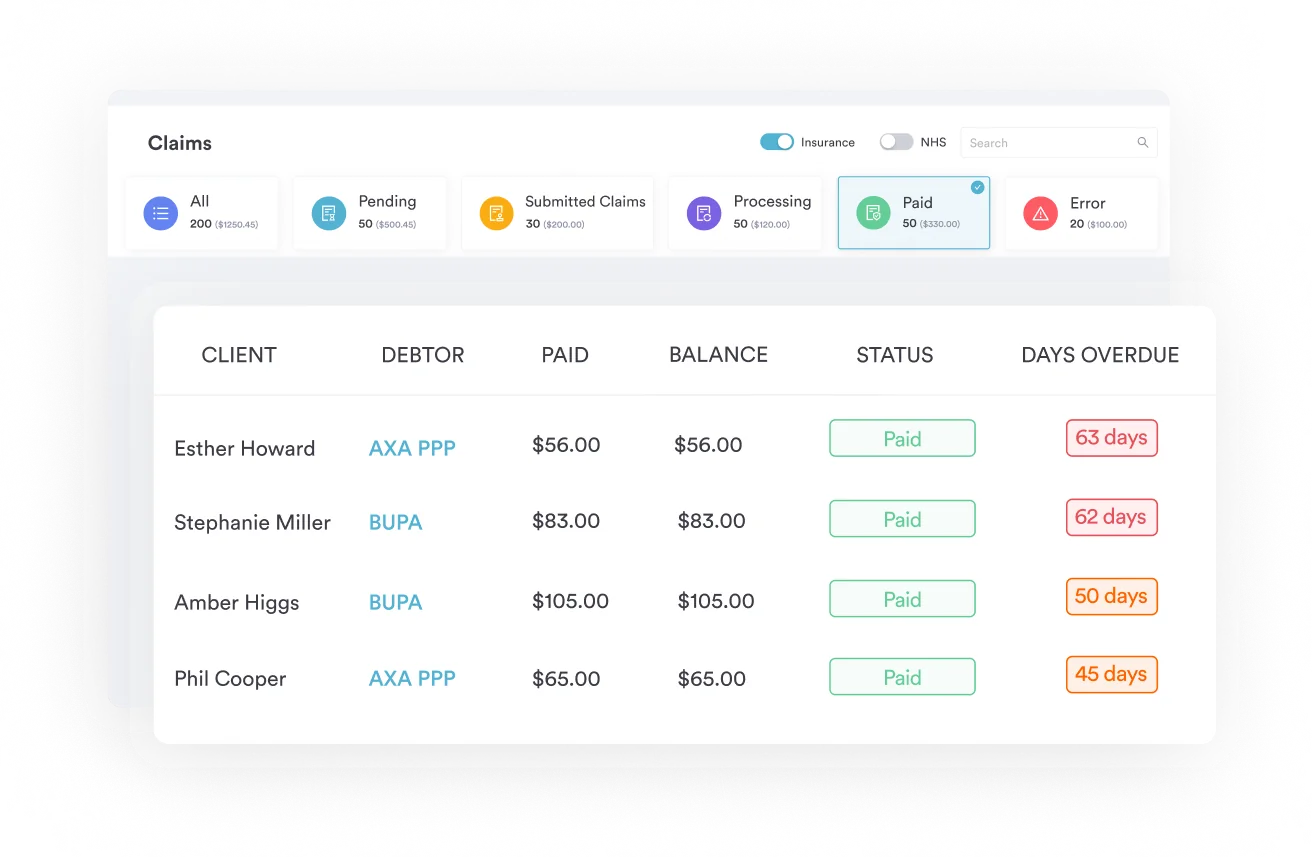
Structured digital forms used at the encounter level create a reliable audit trail, capturing the diagnosis, supply type. Notably, this is particularly valuable for practices managing large ostomy patient panels where supply billing is high-volume and repetitive.
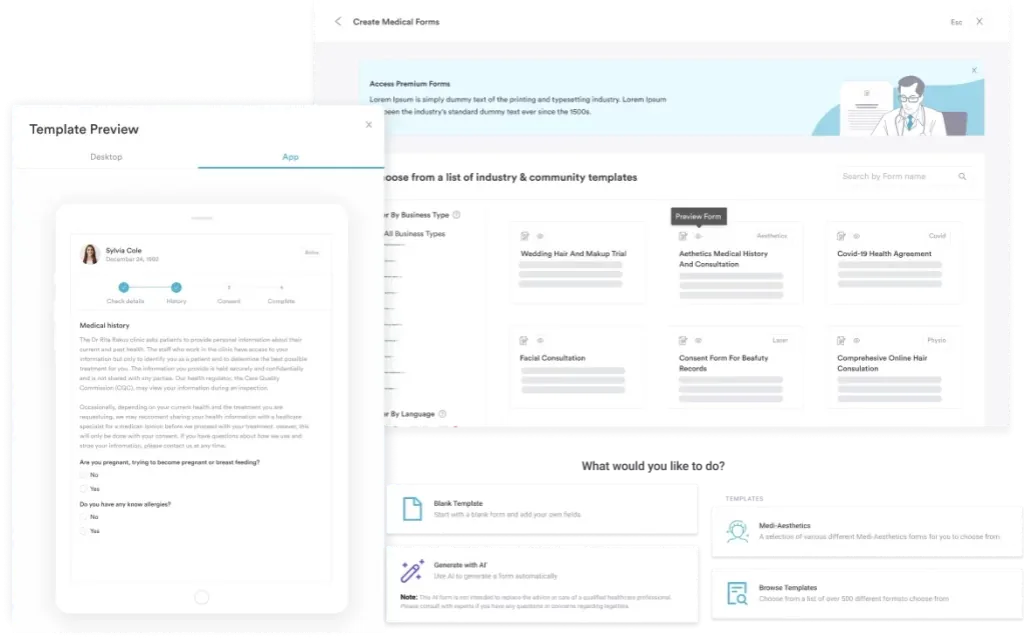

Pabau’s claims management workflow captures supply code charge data at the point of care, helping your team bill HCPCS Level II codes accurately and submit clean claims the first time.

A4456 rarely stands alone on a claim. Ostomy and wound care billing typically bundles several supply codes together. In particular, selecting the wrong code from this cluster is a common coder error, especially when differentiating between adhesive remover wipes (A4456), liquid adhesive removers (A4455), and adhesive skin barriers.
The most common crosswalk error is billing A4455 (liquid adhesive remover, per ounce) when the practice actually dispensed a wipe (A4456). These are different codes with different billing units. Therefore, confirm the product type and form before selecting the code.
Above all, use the AAPC Codify HCPCS lookup or the PGM Billing HCPCS tool to verify current descriptions and crosswalk codes before billing.
When building an ostomy supply claim, map out the complete supply list before assigning codes. A typical pouch change may involve A4456 (adhesive remover wipe), A4362 (skin barrier), and a pouch code. Billing all components on the same claim avoids the need for retroactive corrections and reduces the risk of a fragmented audit trail.
Reference tools give coders the code description. They do not connect that code to a charge, a patient record, or a submitted claim. As a result, that disconnect is where billing lag and documentation errors accumulate.
Specifically, Pabau’s claims management software lets clinicians capture supply charge data at the point of care, associating HCPCS Level II codes with the clinical encounter before the record leaves the treatment room. For practices managing regular ostomy or wound care supply dispensing, staff log the quantity, code, and supporting diagnosis together, rather than reconstructing them from memory at billing time.
The workflow also supports automated billing workflows that reduce manual coding steps between the clinical encounter and the claim submission. In turn, practices that handle high volumes of A-series supply codes benefit from reduced billing lag and a more defensible audit trail — particularly for per-unit codes like A4456 where quantity accuracy is critical.
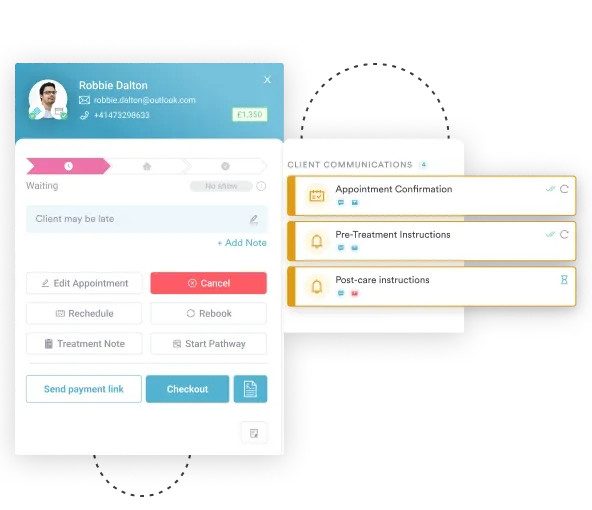
Connecting clinical documentation to charge capture matters beyond supply codes alone. Moreover, EHR integration reduces rework between clinical systems and billing.
Billing errors on A4456 almost always trace to incomplete documentation rather than incorrect code selection. In short, accurate quantity reporting, a signed physician order, and a supporting ICD-10-CM diagnosis code are the three non-negotiables for clean claims on adhesive remover wipes.
Practices with high ostomy or wound care patient volumes need a workflow that captures supply charge data at the encounter level, not after the fact. Pabau’s medical practice management tools bring charge capture, documentation, and claim submission together so practices bill codes like A4456 accurately from the start.
Finally, to see how Pabau supports HCPCS Level II billing in practice, book a demo.

Billing other DMEPOS supply codes? HCPCS code A4259 covers lancet billing guidance for the same DMEPOS benefit category.
Need a related HCPCS Level II reference? HCPCS code J2353 walks through octreotide depot billing and Medicare Part B coverage.
Working on other DME billing guides? HCPCS code E0486 covers custom oral appliance billing for DME suppliers.
HCPCS Code A4456 is a Level II HCPCS supply code that describes adhesive remover wipes, any type, billed per each unit. Coders use it primarily in ostomy care and wound care billing contexts to report the dispensing of wipes that safely remove adhesive barriers and dressings from patient skin. CMS maintains the code within the A-series of medical and surgical supplies.
Medicare Part B covers A4456 as a medical supply when the medical record documents necessity and a treating physician orders the supplies. Applicable Local Coverage Determinations (LCDs) from the beneficiary’s MAC jurisdiction govern coverage, and claims must include the appropriate ICD-10-CM diagnosis code supporting the need for adhesive remover wipes.
The 2026 Medicare allowable rate for A4456 varies by MAC jurisdiction and geographic region. There is no single national rate for all supply codes. Therefore, verify the current rate for your jurisdiction using the CMS Physician Fee Schedule lookup tool or your MAC’s published fee schedule, as CMS updates rates annually each January.
A4455 describes adhesive remover or solvent in liquid form, billed per ounce, while A4456 describes adhesive remover in wipe form, billed per each unit. The distinction is the product form and the billing unit. If you dispensed a wipe, use A4456; if you dispensed a liquid or solvent measured by ounce, use A4455. Mixing these codes is a common billing error that can trigger audits.
To support a clean A4456 claim, the medical record must include a signed physician order specifying the supply and quantity, an ICD-10-CM diagnosis code documenting medical necessity (such as Z93.3 for colostomy status or the relevant wound care diagnosis), and a clinical note confirming the practice dispensed the supply. The billed quantity must match what the practice actually dispensed.
Common companion codes for ostomy supply claims include A4362 (skin barrier, solid, each), A4364 (adhesive, liquid or equal, any type, per ounce), and A4455 (adhesive remover or solvent, per ounce) when the product type differs. Wound care companion codes may include A4461 (surgical dressing holder, non-reusable) and the appropriate wound care supply codes. Finally, always confirm that all companion codes reflect what the practice actually dispensed and documented.