

HCPCS code E0198: Water pressure pad billing guide
HCPCS code E0198 is a water pad for a standard mattress HCPCS code E0198 is the ...

Last Updated: Oct 13, 2026
A4467 is the HCPCS Level II code for belt, strap, sleeve, garment, or covering, any type.
The code's "any type" language covers a wide range of prefabricated items, but payers apply medical necessity criteria that vary by jurisdiction and product category. DME suppliers and orthotists most often see claim denials on belts, straps, and compression garments when the documentation doesn't match what the payer expects for that specific item.
Let Pabau's smart automation suggest the right codes, reduce claim denials, and keep your practice compliant—effortlessly.
Automate repetitive tasks and focus on what matters most—your patients.
Reduce coding errors and ensure compliance with the latest regulations.
Clean claims, fewer denials, and faster reimbursements.
Powerful insights and reporting to help your practice thrive.
HIPAA compliant SOC 2 certified GDPR-compliant Trusted by 4,000+ clinics worldwide

HCPCS Code A4467 describes a belt, strap, sleeve, garment, or covering of any type – a HCPCS Level II DME supply code that’s active in the 2026 code set, though generally non-covered by Medicare (see below).
A4467 applies to prefabricated (off-the-shelf) items only; custom-fabricated orthoses require separate L-codes and will be denied if billed under A4467.
A4467 is generally non-covered by Medicare. Elastic and fabric belts, straps, and garments don’t meet the statutory definition of a rigid or semi-rigid brace, so the code carries a pricing indicator of 00 (not separately priced or paid) instead of a standard fee schedule rate.
Practice management software like Pabau streamlines HCPCS coding workflows, helping DME suppliers submit accurate A4467 claims with the correct documentation attached.
HCPCS Code A4467 carries the official CMS descriptor: Belt, strap, sleeve, garment, or covering, any type. It sits within the A4xxx accessory and supply range of HCPCS Level II, the coding system maintained by the Centers for Medicare and Medicaid Services (CMS) for DME, drugs, and other non-physician services.
The code type is HCPCS Level II and the product category is Durable Medical Equipment (DME) Supplies. It is not a CPT code and cannot be submitted on a CMS-1500 professional claim under the CPT range. DME suppliers use it on DMEPOS claims, typically submitted through the Medicare DME MAC with the appropriate supplier number.
The table below summarizes the key attributes of HCPCS Code A4467 that billers need when setting up the code in a billing system or reviewing a remittance.
The broad descriptor “any type” is intentional. HCPCS Code A4467 is designed to capture the wide range of prefabricated, non-custom supportive garments and coverings that DME suppliers dispense. It does not, however, cover custom-fabricated orthoses or devices that have their own specific HCPCS or L-code.
Items typically billed under A4467 include:
Key distinction: A4467 is reserved for items that are primarily elastic or fabric and don’t provide rigid or semi-rigid support – that’s also why Medicare treats it as non-covered (see below).
A patient who needs a structured, rigid or semi-rigid orthosis instead needs an L-code: L1930 for a prefabricated plastic ankle-foot orthosis, for example, or L1900 for a custom-fabricated spring-wire ankle-foot orthosis.
Billing A4467 for a device that meets the definition of a brace, or an L-code for a soft elastic item that should be A4467, are both coding errors that will trigger denial and may raise audit flags.
Clinical applications span several specialties. Orthotists use it for post-operative supportive garments. Wound care programs use it for secondary coverings. The code is also common in lymphedema therapy practices where compression garments are a core treatment tool.
Good practice management software for medical practices turns supplies used in a visit into billed line items automatically.
HCPCS Code A4467 is generally non-covered by Medicare, regardless of how well the claim is documented. Per CMS/Noridian correct-coding policy (“Correct Coding and Coverage – Braces Constructed Primarily of Elastic or Other Fabric Materials”), items billed under A4467 are made primarily of elastic or other fabric materials, even when they include stays or panels.
That construction means they don’t meet the statutory definition of a “brace” under the Medicare Braces Benefit (Social Security Act Section 1861(s)(9)), which requires a rigid or semi-rigid device. Because A4467 items fail that test, Medicare denies the code as non-covered, and the code carries a pricing indicator of 00 (not separately priced or paid).
A physician order, supporting ICD-10-CM diagnosis, and clinical notes are still worth keeping on file – they matter for commercial payers, Medicaid, and audit defense – but they will not convert an A4467 claim into a Medicare-payable one. In practice, suppliers handle A4467 in one of two ways:
Medicare LCDs that cover related orthoses, such as LCD L33686 for ankle-foot and knee-ankle-foot orthoses, sometimes list A4467 for completeness or cross-reference. That listing doesn’t create a separate payable pathway for A4467 – as with any code referenced in an LCD, appearance in the policy does not indicate coverage. A4467 remains non-covered under Medicare regardless of whether it’s billed alongside a covered AFO or KAFO. Front-desk data entry and back-office coding both feed cash collection, so errors compound downstream.
Any true billing exception for A4467 comes from a payer-specific Medicaid or commercial policy, not from a Medicare LCD. Thorough patient documentation forms still matter here, since Medicaid, commercial payers, and any payer-specific exception will expect the same medical necessity evidence Medicare would have required if the item were covered.
Spectacle lens code V2310 carries its exception in statute instead, since Section 1862(a)(7) bars routine vision care but allows lenses after cataract surgery. The benefit attaches to each surgery, so a qualifying operation on the second eye supports a second pair.
Noridian Healthcare Solutions administers DME MAC Jurisdictions A and D (DME MAC jurisdictions run only A through D – there is no “Jurisdiction J”), and its correct-coding policy article on elastic and fabric braces is the coverage reference DME suppliers cite most often, since all four DME MACs apply the same non-coverage logic to A4467.
There is no standard 2026 Medicare fee schedule amount for HCPCS Code A4467. Because the code carries a pricing indicator of 00 (not separately priced or paid), CMS does not publish a rural, non-rural, or competitive bidding area (CBA) rate for it the way it does for genuinely covered DMEPOS items.
There’s no geographic wage index adjustment or annual fee schedule update to track, either.
That doesn’t mean the item goes unpaid. It means payment doesn’t come through the standard Medicare fee schedule:
For DMEPOS items that are separately priced, current rates are published on the CMS DMEPOS Fee Schedule, not the CMS Physician Fee Schedule, which prices physician services rather than DME supplies. Confirm any A4467-adjacent exception directly with the applicable DME MAC rather than assuming a standard rate applies.
A4467 DME billing follows the standard DMEPOS claim submission process, but several documentation and coding steps catch practices off guard. The steps below reflect current HCPCS Level II guidance from the AAPC and CMS policy articles.
Modifiers communicate additional context about the supply or how it was dispensed. Incorrect or missing modifiers are a leading cause of A4467 denials.
Because A4467 is generally non-covered by Medicare, GY is the modifier suppliers reach for most often; KX and GA apply mainly to the narrow payer-specific exceptions described above. Confirm applicable modifiers with your MAC’s policy article before routine use.
Don’t assume A4467 pays like a typical DME code. Because the item doesn’t meet Medicare’s statutory brace definition, the default path is modifier GY and direct patient billing, not a KX-supported medical necessity claim. Confirm with your MAC before treating any A4467 claim as fee-schedule payable, and check whether a Medicaid or commercial policy might cover the item instead.
HCPCS Code A4467 denials follow predictable patterns. Most errors fall into one of five categories, and each is preventable with the right documentation workflow.
Consistent use of practice management workflows that include pre-claim documentation checklists reduces denial rates significantly. Tracking denial patterns across A4467 claims also reveals systemic issues early, before they compound across multiple billing cycles.
Selecting the right code requires knowing which adjacent codes exist. A4467 is one of several HCPCS supply codes in the A4xxx range that cover elastic or fabric garments, wraps, and supports.
L-codes cover rigid or semi-rigid orthoses and prosthetic accessories, whether prefabricated or custom-fabricated. Related orthotic L-codes.
For a broader lookup of codes in the A4xxx range, the PGM HCPCS lookup tool provides a free search using CMS data. The NLM Clinical Table API also supports programmatic HCPCS Level II lookups for practices integrating code verification into their billing workflows.
Most A4467 claim denials stem from missing or incomplete documentation, not coding errors. The code itself is straightforward; the challenge is ensuring that the written order, diagnosis linkage, modifier selection, and supporting notes are all present and correctly attached when the claim goes out.
Practice management platforms with integrated billing modules address this at the workflow level. Rather than chasing documentation after the fact, the system prompts staff to capture everything during the patient encounter.
Pabau’s claims management software supports HCPCS coding workflows by keeping documentation, diagnosis coding, and claim submission in one connected workflow, reducing the manual handoff errors that generate denials.
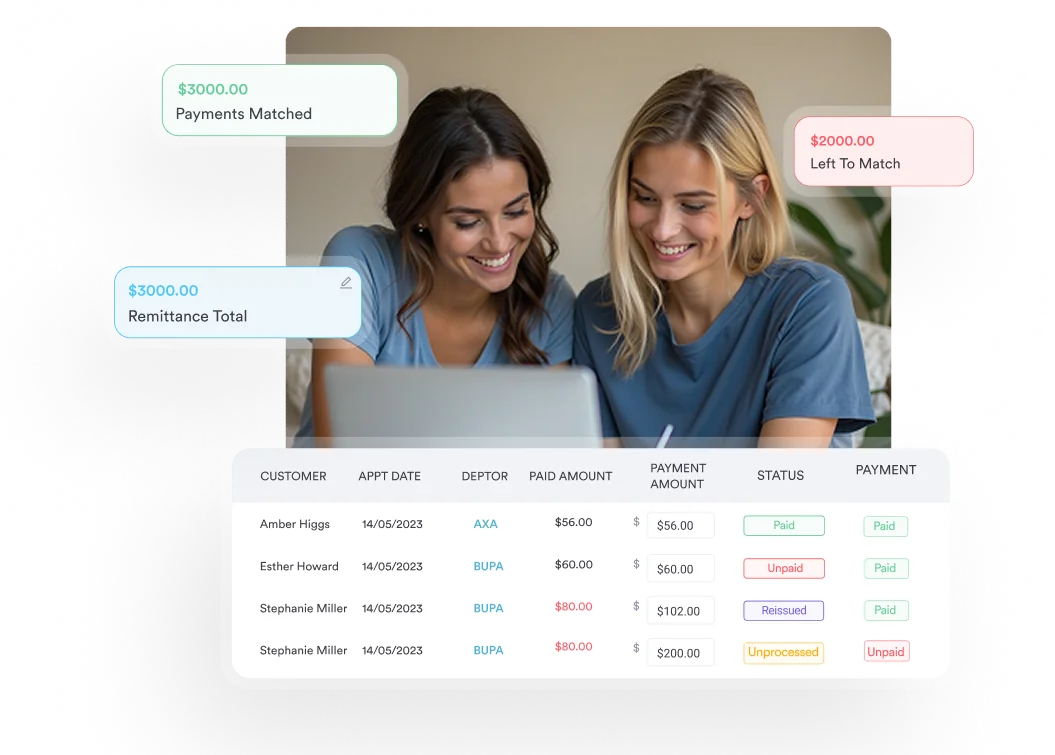
Key capabilities that reduce A4467 denial rates include:
Practices managing multiple practice management software features alongside HCPCS billing benefit most from an integrated approach. Separate billing and documentation systems create inconsistencies that payers exploit during audits.

Pabau keeps clinical notes, diagnosis codes, modifiers, and claim submission in one connected workflow. Fewer denials, less manual chasing, and full audit-ready documentation for every A4467 claim.

HCPCS Code A4467 is a broad but precise code, and a generally non-covered one under Medicare. Getting it right comes down to knowing the prefabricated-vs-custom (and elastic-vs-rigid) distinction and applying modifier GY where Medicare coverage doesn’t apply.
Keeping airtight documentation matters too, for the Medicaid, commercial, or payer-specific exception claims where reimbursement is possible. Each of those failure points is a workflow problem as much as a coding problem.
Pabau’s claims management software connects documentation, diagnosis coding, and claim submission in one place, giving DME-supplying practices the infrastructure to reduce A4467 denials and pass audits confidently. To see how it works in practice, book a demo.

Need a reference for another DME supply billing code? A4561 walks through Medicare coverage criteria and applicable modifiers for a different prefabricated DME item.
Want to see how another prefabricated DME supply code is billed? A4452 covers documentation and modifier requirements for a comparable supply code.
Need the right diagnosis code for an orthotic or DME claim? M16.6 is a common diagnosis link for supportive devices and orthoses.
HCPCS Code A4467 is a HCPCS Level II DME supply code with the official descriptor “Belt, strap, sleeve, garment, or covering, any type.” It is used by DME suppliers, orthotists, and other providers to bill Medicare and commercial payers for prefabricated, off-the-shelf belts, straps, sleeves, and compression garments dispensed to patients.
A4467 covers prefabricated elastic belts, compression sleeves, abdominal binders, lumbar support belts, rib belts, shoulder straps, and fabric coverings used over wounds, braces, or prosthetics. Custom-fabricated or custom-molded items are not covered under this code and require the appropriate L-code instead.
No, Medicare generally does not cover HCPCS Code A4467. Elastic and fabric belts, straps, sleeves, and garments do not meet the statutory definition of a rigid or semi-rigid brace, so CMS assigns the code a pricing indicator of 00 (not separately priced or paid). Suppliers typically bill the patient directly using modifier GY, or bill Medicaid or a commercial payer under that payer’s own policy. Medicare LCDs may list A4467 for cross-reference, but they don’t create a separate payable pathway – any true exception comes from a payer-specific Medicaid or commercial policy, not a Medicare LCD.
There isn’t a standard Medicare reimbursement rate for A4467. The code carries a pricing indicator of 00 (not separately priced or paid), so it doesn’t have a rural, non-rural, or competitive bidding rate the way genuinely covered DME codes do. Suppliers are typically paid by billing the patient directly with modifier GY, or by billing Medicaid or a commercial payer under that payer’s own fee schedule.
Common modifiers for A4467 include KX (requirements met per medical policy), GA (ABN on file), GY (non-covered item), NU (new purchase), and RR (rental). Modifier requirements vary by MAC, so confirm the applicable modifiers for your jurisdiction before routine claim submission to avoid preventable denials.
A4467 applies to elastic or fabric garments and coverings that do not provide rigid or semi-rigid support, so Medicare treats it as non-covered. L-codes (such as L1930 for a prefabricated ankle-foot orthosis) apply to rigid or semi-rigid orthotic devices that meet the Medicare Braces Benefit definition, whether prefabricated or custom-fabricated, and are typically payable when medical necessity is documented. Billing A4467 for a device that meets the brace definition, or an L-code for a soft item that should be A4467, is a coding error that will be denied on audit.



