

HCPCS code E0198: Water pressure pad billing guide
HCPCS code E0198 is a water pad for a standard mattress HCPCS code E0198 is the ...

Last Updated: Oct 13, 2026
A4570 is the HCPCS Level II code for splint.
Practice management software like Pabau can help route the correct supply code, A4570 or the matching Q-code crosswalk, to the right payer.
Let Pabau's smart automation suggest the right codes, reduce claim denials, and keep your practice compliant—effortlessly.
Automate repetitive tasks and focus on what matters most—your patients.
Reduce coding errors and ensure compliance with the latest regulations.
Clean claims, fewer denials, and faster reimbursements.
Powerful insights and reporting to help your practice thrive.
HIPAA compliant SOC 2 certified GDPR-compliant Trusted by 4,000+ clinics worldwide

HCPCS Code A4570 describes a splint, a Level II HCPCS supply code under the DMEPOS category.
CMS declared A4570 invalid for Medicare use effective July 1, 2001, per CMS Program Memorandum AB-01-60. Medicare and Medicare Advantage plans require the temporary Q4001-Q4051 crosswalk instead, selected by splint type, patient age, and body region.
A4570 may still be accepted by some commercial payers and a small number of state Medicaid programs. Always verify the specific payer’s preferred code before submitting.
Pabau’s claims management software gives billing teams an insurance-claims dashboard with clearinghouse integrations and pre-submission checks. This helps teams submit clean claims for supply codes like A4570.
A4570 is classified under the Medical and Surgical Supplies section of HCPCS Level II. The Centers for Medicare and Medicaid Services (CMS) maintains this code set and updates it annually. It falls within the broader DMEPOS (Durable Medical Equipment, Prosthetics, Orthotics, and Supplies) supply category. CMS removed it from Medicare use in 2001, covered in the next section. The table below summarizes the key code attributes.
The official descriptor is intentionally broad. “Splint” covers non-rigid and semi-rigid immobilization devices applied to injured extremities, including prefabricated and custom-fitted versions. The device must be dispensed to the patient rather than used as a reusable clinic tool. Devices that are permanently incorporated into the patient’s care are the target here.
CMS invalidated A4570 alongside its sibling codes A4580 (cast supplies, plaster) and A4590 (special casting material), effective July 1, 2001. All three were replaced with the temporary Q4001-Q4051 code series.
A4570 applies when a provider supplies a splint to a patient for take-home use. The device must be dispensed as part of treating a documented condition, not retained by the practice for reuse. Whether the claim is billed as A4570 itself or as the matching Q4001-Q4051 crosswalk code depends on the payer, covered in the next section. Four clinical scenarios account for the large majority of these claims.
Orthopedic providers, urgent care clinicians, emergency physicians, and physical therapists are the most frequent billers of this code family. Sports medicine practices bill it regularly too. Confirm which code, A4570 or its Q4001-Q4051 crosswalk, your payer expects before submitting.
Medicare Part B does not cover splints billed under A4570. CMS declared A4570 invalid for Medicare use effective July 1, 2001, per CMS Program Memorandum AB-01-60, and it has remained non-payable since. Medicare and Medicare Advantage plans require the temporary Q4001-Q4051 crosswalk instead, selected by splint type, patient age, and body region.
Routine insurance eligibility verification before dispensing is still essential, regardless of which code family applies. Confirm the patient’s Medicare status, Part B deductible position, and any applicable secondary coverage before the splint is provided.
Coverage and billing requirements by payer type:
The table below covers the Q4001-Q4051 codes most frequently required in place of A4570 for Medicare and Medicare Advantage claims:
Pediatric equivalents (patients under 11) exist throughout the series. Examples include Q4023/Q4024 for short arm splints and Q4047/Q4048 for short leg splints, alongside separate code blocks for long arm splints and other splint types. Verify the exact code against the current CMS HCPCS file before submission.
Medicaid coverage varies further by state beyond the crosswalk question above. Some states impose additional prior authorization requirements or limit coverage to specific beneficiary categories. Always verify revenue cycle management processes against state-specific Medicaid policy before billing either code.
A4570 itself does not carry a Medicare fee schedule rate, because CMS does not pay it. The Q4001-Q4051 crosswalk code that replaces it for Medicare and Medicare Advantage claims does, set through the CMS DMEPOS fee schedule, which CMS updates annually. Rates are geographically adjusted using payment locality modifiers, so the reimbursement a practice receives depends on where the service is furnished.
Because DMEPOS rates change each January and vary by region, no single dollar figure applies universally. Use the CMS Physician Fee Schedule lookup tool and the CMS DMEPOS fee schedule files. Select the correct Q4001-Q4051 code for the splint type, body region, and patient age billed. The table below illustrates the general reimbursement structure without referencing specific figures that may be outdated by the time this page is read.
Private payer rates for A4570 are negotiated separately from the Medicare Q-code fee schedule and may differ substantially. Review payer contracts and fee schedules annually, as rates for supply codes are often bundled or excluded in some commercial plans.
Most A4570 claim rejections trace back to one of three issues. These are billing A4570 to Medicare instead of crosswalking to the correct Q4001-Q4051 code, missing diagnosis linkage, or incorrect units. Understanding the clean claim requirements for each payer type prevents all three.
For clean claim submission, the following elements must be correct on every claim:
Understanding medical billing workflows end-to-end helps practices avoid the most common A4570 errors. Denial management for supply and crosswalk codes differs from denial management for procedure codes. These denials often involve invalid-code and medical-necessity edits rather than coding errors, so reviewing remittance advice at the reason-code level speeds resolution. The denial codes reference for medical billing lists the reason codes most often tied to supply and crosswalk claims. A well-maintained superbill documentation process that captures supply dispensing alongside the procedure code reduces the chance of a missing claim line.
Before submitting any splint claim, confirm the payer type first. Map Medicare and Medicare Advantage claims to the matching Q4001-Q4051 code by splint type, patient age, and body region; A4570 will deny as an invalid code. For commercial or Medicaid claims, confirm whether A4570 or the Q-code crosswalk is expected. Either way, flag claims for secondary review if the splint was applied and removed within the same encounter, since dispensing implies the patient takes the device home.
Every A4570 claim must carry a supported ICD-10-CM diagnosis code. The following codes represent the most common pairings based on typical clinical scenarios where splints are dispensed. Verify each code against the current CDC/NCHS ICD-10-CM web tool before submitting, as the ICD-10-CM tabular list is updated annually.
Use the most specific ICD-10-CM code that reflects the documented diagnosis. Unspecified codes are acceptable when specificity is genuinely unknown at the time of service, but payers may flag patterns of repeated unspecified code use. Match the laterality suffix (right/left) to the clinical documentation. Always use the correct encounter suffix: A for initial encounter, D for subsequent, S for sequela.
HCPCS Code A4570 is a supply code, not a procedure code. It reports the splint material itself, not the clinical act of applying the splint. That clinical service is reported separately using a CPT procedure code. The two are billed together: the CPT code for the procedure, A4570 (or its Q-code crosswalk) for the supply.
Understanding this distinction also matters when reviewing related procedure codes in similar billing scenarios. The table below maps the most common CPT procedures performed when A4570 is also billed.
Payer bundling rules vary. Some commercial payers bundle A4570 into the associated splint application CPT code, treating the supply as included in the procedure fee. Confirm payer policy before billing both codes on the same claim to avoid automatic bundling adjustments.
A4570 sits within a family of HCPCS supply and orthotic codes. Knowing the adjacent codes helps coders select the right one and avoid miscoding when a more specific descriptor applies.
The distinction between A4570 (or its Q4001-Q4051 crosswalk) and L-series orthotic codes is clinically and financially significant. L-codes generally command higher reimbursement but require more detailed documentation and specific device characteristics. Bill the supply code, A4570 for non-Medicare payers or the matching Q-code for Medicare, when a basic splint is dispensed. Bill the appropriate L-code when the device qualifies as a prefabricated or custom orthosis under DMEPOS definitions. Sports medicine practices often manage high volumes of orthopedic supply claims. A clear coding decision tree for this A-vs-L distinction reduces errors at scale.
Supply code billing creates workflow challenges that differ from standard procedure-code billing. The supply must be tied to a clinical encounter and linked to a diagnosis. It must also be billed to the correct payer, whether that means A4570 itself or its Q4001-Q4051 crosswalk. When these steps happen manually, errors accumulate.
Practice management software like Pabau keeps clinical documentation and claims submission in the same system. Pabau’s claims management software gives billing teams an insurance-claims dashboard with clearinghouse integrations and insurer records stored on the patient file. Pre-submission checks flag missing membership or authorization details before a claim goes out.
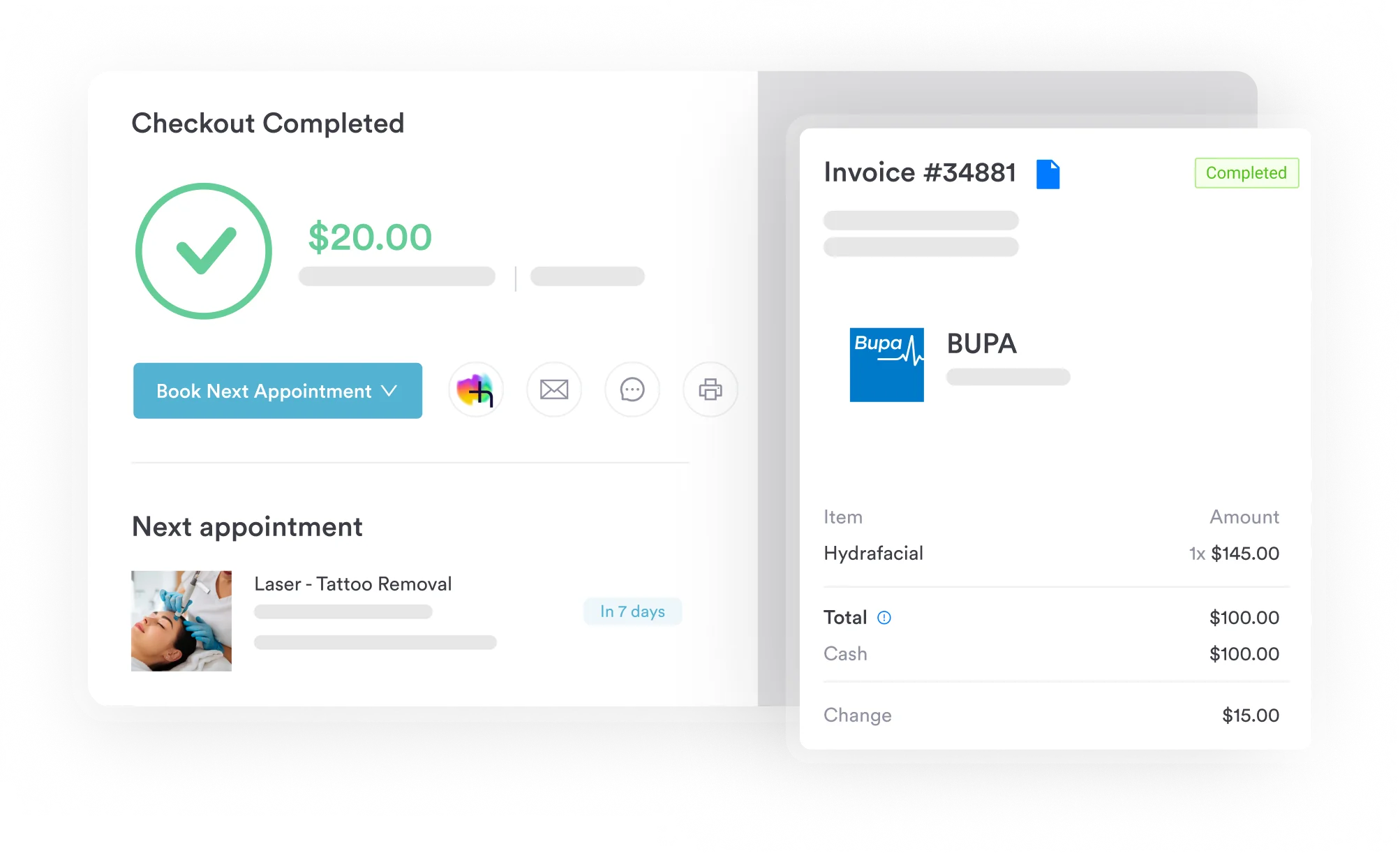
Practices managing both procedure codes and supply codes in the same billing cycle need HIPAA-compliant billing systems that connect clinical notes to claims submission. That connection is the practical difference between a clean claim and a rework queue. Pabau’s pre-submission checks surface missing details before claims go out rather than after they come back denied.
Run a monthly audit of all splint claims returned with denial reason codes. The most common are invalid-code edits, from billing A4570 to Medicare instead of the Q-code crosswalk, and medical necessity edits from a missing supporting diagnosis. Sorting denials by reason code takes 20 minutes and tells you exactly which part of your intake or billing process to fix first.

Pabau’s claims management dashboard connects clinical documentation to insurance claims, with clearinghouse integrations and pre-submission checks. These help orthopedic, urgent care, and physical therapy practices catch missing details before a claim goes out.

HCPCS Code A4570 is a straightforward supply code once one fact is settled first. It has not been payable to Medicare or Medicare Advantage since July 1, 2001. Medicare claims need the matching Q4001-Q4051 crosswalk code, selected by splint type, patient age, and body region. A4570 itself is reserved for the commercial payers and state Medicaid programs that still accept it directly.
Beyond that payer check, the rest of the claim setup is familiar. Attach the correct ICD-10 diagnosis code, bill one unit per splint dispensed, and keep the supply code separate from the CPT application code. Where practices lose reimbursement on splint billing is almost always this payer-and-code mismatch, not a documentation shortfall.
Pabau connects supply code documentation to the clinical record at the point of care. That helps billing teams confirm whether A4570 or the Q4001-Q4051 crosswalk applies before a claim goes out. Book a demo to see how Pabau supports insurance claims for orthopedic and urgent care practices.

Need to understand how medical billing works end-to-end? What is medical billing covers the full claims lifecycle from patient intake to payer remittance.
Managing claim denials across multiple supply codes? Denial codes in medical billing explains the most common reason codes and how to respond to each one.
Need the documentation trail for a supply-code claim? Superbill documentation covers what to capture so the supply and procedure codes match at audit.
HCPCS Code A4570 is used to bill for a splint supplied to a patient. It is a Level II HCPCS supply code under the DMEPOS category. Orthopedic, urgent care, and physical therapy providers use it to report the splint material dispensed during a clinical encounter. Common indications include fracture immobilization, sprain stabilization, or post-surgical support.
No. CMS declared A4570 invalid for Medicare use effective July 1, 2001, per CMS Program Memorandum AB-01-60, and it has remained non-payable since. Medicare and Medicare Advantage plans require the Q4001-Q4051 crosswalk instead, selected by splint type, patient age, and body region. Some commercial payers and state Medicaid programs still accept A4570 directly, so verify the specific payer’s preferred code before billing.
The most common ICD-10-CM codes paired with A4570 include fracture codes, such as S52.201A for ulna fracture. Sprain codes, such as S93.401A for ankle sprain, are common too, along with post-surgical status codes such as Z98.890. Always use the most specific code that matches the documented diagnosis, including the correct laterality and encounter suffix.
A4570 is a supply code that reports the splint material dispensed to the patient. CPT codes such as 29125 (short arm splint, static) or 29515 (short leg splint) report the clinical service of applying the splint. Both can be billed on the same claim, though some payers bundle the supply into the procedure fee. Confirm payer policy before billing both on the same claim.
A4570 is classified under the DMEPOS (Durable Medical Equipment, Prosthetics, Orthotics, and Supplies) supply category, but it is not payable under Medicare. Medicare and Medicare Advantage claims use the Q4001-Q4051 crosswalk instead. Billing those codes does not require DMEPOS supplier enrollment. They go to the local Part B Medicare Administrative Contractor under the treating practice’s NPI, alongside the CPT application code.
A4570 itself does not have a 2026 Medicare fee schedule rate, because CMS does not pay it. The matching Q4001-Q4051 crosswalk code carries the Medicare rate instead, and that rate varies by geographic payment locality and updates each January. Use the CMS DMEPOS fee schedule files at CMS.gov to find the current rate for the specific Q-code and region billed.



