

CCSD code G5100: Bypass of duodenum billing guide
CCSD code G5100 bills a bypass that leaves the duodenum in place CCSD code G5100...

Last Updated: Oct 16, 2026
A4285 is the HCPCS Level II code for polycarbonate bottle for use with breast pump, replacement.
A claim for a replacement breast pump bottle comes back denied, and the code wasn't even the problem. That's the story behind most HCPCS code A4285 rejections. The supply itself is simple. One bottle, one unit, one claim line.
What trips billers up is everything around it. The missing order, the wrong quantity, the claim sent to the wrong DME MAC.
Let Pabau's smart automation suggest the right codes, reduce claim denials, and keep your practice compliant—effortlessly.
Automate repetitive tasks and focus on what matters most—your patients.
Reduce coding errors and ensure compliance with the latest regulations.
Clean claims, fewer denials, and faster reimbursements.
Powerful insights and reporting to help your practice thrive.
HIPAA compliant SOC 2 certified GDPR-compliant Trusted by 4,000+ clinics worldwide

HCPCS code A4285 describes a replacement polycarbonate bottle for use with a breast pump, billed one unit per bottle under the DME benefit
A4285 is a Level II HCPCS supply code maintained by CMS, billed to a DME MAC under Medicare Part B rather than a physician fee schedule carrier
Missing a valid order is the most common denial reason for A4285 claims, so confirm documentation before submitting
Pabau’s claims management software helps DME suppliers track A4285 authorizations and documentation requirements across payers
HCPCS code A4285 is the billing code DME suppliers use for a replacement polycarbonate bottle supplied with a breast pump.
The Centers for Medicare and Medicaid Services (CMS) maintains it as part of the HCPCS Level II supply code set. It covers one bottle per claim line. If a patient needs two bottles, the supplier bills two units on that same line, not two separate claim lines.
The official descriptor is: Polycarbonate bottle for use with breast pump, replacement. The billing unit is still each bottle, though. Submitting A4285 with a quantity of two tells the payer two bottles were supplied, so quantity accuracy directly affects reimbursement and audit risk.
A4285 sits within the A42xx range of HCPCS codes, a cluster dedicated to breast pump equipment and supplies. Knowing the range helps billers locate adjacent codes quickly when a patient needs the pump itself, a cap, or another accessory.
Good patient care coordination workflows keep these supply relationships documented so nothing gets missed at billing time.
Medicare Part B covers breast pump supplies, including replacement bottles, under the durable medical equipment benefit.
Coverage runs through Local Coverage Determinations (LCDs) issued by each DME MAC jurisdiction. So “Medicare covers A4285” holds up as a general statement. Your DME MAC may still apply its own frequency or quantity limits on top of it.
Medicaid coverage varies considerably by state. Some state plans mirror Medicare’s DME benefit, while others apply tighter quantity caps or require prior authorization for replacement supplies.
Commercial payers vary too. The ACA’s preventive services mandate requires coverage of breast pumps, but individual plan language decides whether replacement parts like the polycarbonate bottle are included. Verify coverage through your OB-GYN clinic software and payer portal before assuming a commercial plan will cover a replacement supply.
Postpartum teams running pelvic health software for follow-up visits often field these same replacement requests. Keeping the ordering and billing paths connected saves a step and keeps documentation from splitting across two systems.
Payer obligations connect to broader HIPAA compliance duties that any DME supplier billing government programs has to maintain. Claims submitted to the wrong contractor, or that don’t meet coverage criteria, will deny regardless of good faith.
Reimbursement for A4285 comes from the DMEPOS fee schedule that CMS administers. Rates vary by geographic locality.
A supplier in a high-cost metro area typically sees a higher allowable amount than one in a rural region. The CMS Physician Fee Schedule and DMEPOS fee schedule lookup tool lets suppliers check the current allowable by code and locality first.
CMS updates the DMEPOS fee schedule every year. Published rates reflect 80% Medicare payment after the patient’s 20% coinsurance, and the supplier collects the remainder from the beneficiary or a secondary insurer.
Check the current CMS fee schedule file directly for A4285’s dollar amount, since figures published by third-party tools can lag the official update.

Pabau’s claims management tools help DME suppliers and practice billers track authorizations, manage documentation, and submit clean claims for supply codes like A4285 across multiple payers.

Supply billing leaks revenue quietly, and medical practice management software catches unbilled items before they’re written off.
Billing A4285 correctly takes more than entering the right code. The claim needs supporting documentation, the correct quantity, and submission to the right contractor. Most denials on this code trace back to a missing order or an incorrect quantity, not the code choice itself.
For Medicare, the minimum documentation to support an A4285 claim includes a Standard Written Order (SWO) from the treating practitioner and proof the item was delivered. The supplier also needs evidence the patient has a covered breast pump on file, billed under E0602, E0603, or E0604.
CMS retired the Certificate of Medical Necessity (CMN) requirement DME-wide, effective January 1, 2023. Medical necessity for a replacement bottle is now established through the information documented in the patient’s medical record, not a separate CMN form. Keep that chart documentation current, since a DME MAC can still request it during a post-payment review.
Using digital intake and order forms standardizes how practitioner orders and patient acknowledgments get captured, cutting the risk of a missing field that triggers a denial. Paired with compliance management tools, suppliers can build documentation checklists specific to A4285 that the billing team follows on every claim.
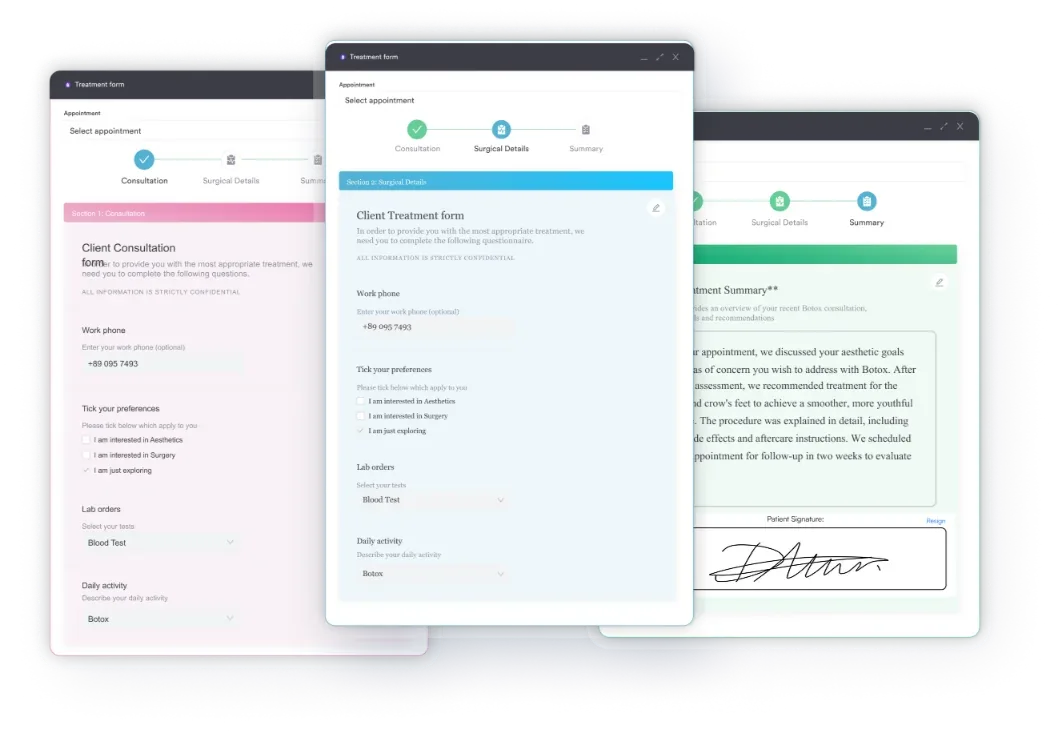
Well-structured standardized medical forms for DME supply orders remove ambiguity from the documentation process and give auditors a clear paper trail. For HIPAA-compliant claim submission, every document in the patient’s supply file needs to meet the 837P transaction standards for electronic records.
Check your DME MAC’s active LCD before billing A4285 for Medicare. Some jurisdictions publish specific replacement frequency guidelines for breast pump supplies. Billing beyond the allowed frequency without documented medical necessity is a common audit trigger for this code range.
A4285 doesn’t exist in isolation. Billers working with breast pump patients regularly run into the codes below, and picking the wrong one is a common source of rejections.
The line between A4284 and A4285 trips up a lot of billers, since both sit in the A42xx range but cover different items. A third code.
When billing the pump itself, bill E0602, E0603, or E0604 depending on the pump type. Replacement supply codes like A4285 are accessories, and shouldn’t be bundled with the initial pump claim unless the payer explicitly allows simultaneous billing.
Check that your prescription and order management documentation clearly specifies the pump model, since that determines which supply accessories apply.

Competitors covering A4285 list the descriptor and fee schedule data, but they rarely get into what actually goes wrong on a claim. These four patterns account for most of the A4285 rejections DME billing teams see.
This is the most frequent denial trigger. A written order needs to exist before the supply goes out, not after. A retroactive order written to backfill a submitted claim won’t hold up under review. Build a pre-delivery checklist into your workflow. No order on file means no supply goes out.
A4285 bills per bottle. Entering “1” when two bottles went out underpays the claim and creates a mismatch against the delivery record. Entering “2” when only one was supplied is an overbilling error that can trigger a recoupment. Match the billed quantity to the delivery manifest, and reconcile before you submit.
DME claims for Medicare Part B need to go to the DME MAC covering the patient’s service area. Not a Part A intermediary, and not a Medicare Advantage plan’s standard mailing address. Submitting to the wrong contractor means a rejection and a resubmission from scratch, adding weeks to the payment cycle. A payer routing table built into your paperless billing workflows heads this off before it happens.
Billing A4285 on the same claim as the initial pump, E0602, E0603, or E0604, is an unbundling error when the payer treats the bottle as part of that initial supply. Some DME MACs expect the replacement bottle billed separately, after the pump has been in service for a set period. Check the applicable LCD’s replacement frequency guidelines and your payer’s bundling rules before combining codes on one claim. Revenue cycle management treats coding, submission and collection as one process rather than three handoffs. Denial codes in medical billing group the reasons a payer refuses, and the group decides the fix.
Run through this before the claim goes out.
The same discipline applies well beyond breast pump accessories. Suppliers see identical quantity-matching problems on tracheostomy care kits billed under A4629. The same holds for intermittent urinary catheters billed under A4351, where a mismatched unit count draws exactly the same scrutiny.
Run a quarterly audit of A4285 claims using your DME MAC’s explanation of benefits codes. Denial reason codes CO-4 (inconsistent with modifier), CO-97 (bundled service), and CO-B7 (provider not certified or eligible for this service on the date of service, often paired with remark code N570) show up most on breast pump supply claims. Each one points to a documentation, credentialing, or routing fix, not a code change.
Billing A4285 accurately comes down to three things. A written order before delivery, the right quantity on the claim line, and submission to the correct DME MAC. Most denials are avoidable with a checklist like the one above.
Claims management software like Pabau gives DME suppliers and practice billers a structured way to track documentation status, payer rules, and submission progress across supply codes like A4285. That structure cuts the manual back-and-forth behind most avoidable denials.
If your billing team still tracks this across spreadsheets and sticky notes, book a demo to see how Pabau brings billing and documentation into one place.

Want to see the same per-unit billing logic applied elsewhere? A4724 covers billing dialysate solution supplies the same way, one unit per claim line.
Billing a DME orthotic next? L0625 walks through coverage and documentation for a lumbar orthosis.
Need a refresher on supply-strip coding? A4252 breaks down billing for blood ketone reagent strips.
HCPCS code A4285 is the Level II supply code for a replacement polycarbonate bottle used with a breast pump, billed one unit per bottle. CMS maintains it under the DMEPOS supply set, and DME suppliers use it when billing Medicare, Medicaid, and commercial payers for breast pump accessories.
Not usually. NU and RR apply to equipment purchases and rentals, like the pump itself under E0603 or E0604, not to accessory codes like A4285. Some DME MACs do want a KX modifier attached when a claim meets that jurisdiction’s LCD coverage criteria, so check the local policy before submitting.
A4284 covers the breast shield and splash protector, while A4285 covers the replacement bottle itself. Both are per-unit accessory codes in the A42xx range, but they describe different parts, so matching the code to the item actually delivered keeps the claim from bouncing back.
Not for each bottle individually, but the supplier needs a current, valid order on file covering the item and quantity being replaced. An order written or backdated after the supply was delivered won’t hold up if the DME MAC asks for records.
Generally yes, under Medicare Part B’s DME benefit, subject to the DME MAC’s Local Coverage Determination for that jurisdiction. Coverage still depends on a valid order, and some jurisdictions cap how many replacement bottles they’ll pay for each year.



