



HCPCS code E0198: Water pressure pad billing guide
HCPCS code E0198 is a water pad for a standard mattress HCPCS code E0198 is the ...

Last Updated: Oct 13, 2026

CPT Code 15876 describes suction assisted lipectomy of the head and neck region, covering the surgical removal of subcutaneous fat deposits via suction techniques.
Medicare generally classifies lipectomy as cosmetic and non-covered. Reimbursement depends on private payer policy and documented medical necessity.
Modifiers 50, 51, and 59 are most commonly applied to CPT 15876. Selection depends on how the procedure relates to other services billed on the same date.
Pabau’s claims management software helps plastic surgery and aesthetic practices attach correct modifiers, generate compliant documentation, and reduce claim errors for integumentary codes.
CPT Code 15876 is the billable code for suction assisted lipectomy of the head and neck. It covers surgical removal of subcutaneous fat from the submental and cervical regions using a suction cannula.
Coders frequently misapply it to trunk or extremity procedures, or submit it without the medical necessity documentation insurers require. Either error results in a denied claim.
This reference covers the official description, applicable modifiers, and Medicare and commercial payer reimbursement for CPT Code 15876. It also covers ICD-10 crosswalk codes, documentation requirements, and the full liposuction code family (15876 through 15879).
CPT Code 15876 is defined by the American Medical Association (AMA) as suction assisted lipectomy of the head and neck. It belongs to the integumentary system section of the CPT code set, within the “Other Repair (Closure) Procedures” subsection. It covers procedures in which subcutaneous fat deposits are removed via suction cannula.
The procedure targets adipose tissue in the submental region (under the chin), the neck, and adjacent head and neck structures. It does not cover the trunk, upper extremities, or lower extremities. Those sites have their own codes in the 15876-15879 family.
CPT Code 15876 applies when a surgeon uses a suction cannula to remove subcutaneous fat from the head and neck area. The most common clinical scenario is submental lipectomy, often called double chin correction. Fat accumulation under the chin and along the anterior neck is removed to improve contour and definition.
The anatomic scope matters for coding accuracy. CPT 15876 covers the head and neck only. If the same operative session includes liposuction of the trunk or extremities, those sites require separate codes (15877, 15878, 15879). Report them alongside 15876 with appropriate modifiers.
Document the anatomic boundaries explicitly in the operative note. Generic references to “head and neck liposuction” without specifying the exact region treated are a leading cause of pre-payment audits for CPT Code 15876.
Reimbursement for CPT Code 15876 varies by payer and geographic locality. The CMS Physician Fee Schedule (MPFS) provides national non-facility and facility rates.
Rates are adjusted by the Geographic Practice Cost Index (GPCI) for each Medicare Administrative Contractor (MAC) locality. Always verify current rates using the CMS lookup tool, as rates change annually on January 1.
For practices billing commercial payers, the FastRVU lookup tool identifies the current work, practice expense, and malpractice RVU values for CPT 15876.
Multiply these by your locality’s conversion factor to estimate the Medicare-equivalent rate before contract negotiations. Since most head and neck lipectomy cases are cash-pay, HIPAA-compliant payment processing keeps collections aligned with the patient record.
Medicare treats suction assisted lipectomy as a cosmetic procedure and generally does not cover it. This is the single largest source of CPT Code 15876 claim denials in practices that bill Medicare. A claim submitted without a valid medically necessary diagnosis code will be automatically rejected.
Exceptions exist under specific Local Coverage Determinations (LCDs) issued by Medicare Administrative Contractors. Check your MAC’s LCD database before billing. For practices that treat conditions like lipedema or post-traumatic lipodystrophy of the neck, a narrow set of medically necessary indications may qualify.
Document the condition, the functional impairment, and the failure of conservative management before submitting. Learn more about how cosmetic surgery clinic operations handle insurance documentation workflows.
Before billing CPT Code 15876 to a commercial payer, confirm prior authorization requirements. Most insurers require pre-authorization for any lipectomy procedure, and submitting without it results in automatic denial regardless of medical necessity documentation quality.
Choosing the wrong modifier is one of the most common CPT Code 15876 billing errors. The decision depends on whether the procedure was bilateral, performed alongside other procedures, or involves a distinct anatomic site. Verify modifier applicability against current AAPC coding guidelines and NCCI edits before submitting.
Key distinction: modifier 51 applies when 15876 is performed alongside another procedure on the same date and is the lower-valued code. Modifier 59 applies when NCCI edits would bundle two codes that were genuinely distinct procedures. Using 59 inappropriately to unbundle procedures is an audit trigger. When in doubt, reference the current NCCI edit table for code pair 15876 before appending modifier 59.
The ICD-10-CM diagnosis code paired with CPT Code 15876 determines whether the procedure is classified as cosmetic or medically necessary. A cosmetic diagnosis results in non-coverage by most insurers. A medically necessary diagnosis requires supporting documentation and may qualify for reimbursement under specific payer policies.
Verify all ICD-10-CM pairings against the AAPC CPT-to-ICD-10 crosswalk before submitting. Payers run automated edits that flag cosmetic diagnosis codes paired with lipectomy procedures for denial or review.
Complete documentation is the difference between a paid claim and an audit finding for CPT Code 15876. The operative note must stand alone. An auditor reviewing the claim should be able to confirm the anatomic site, the technique, and the medical indication without referencing any other document.
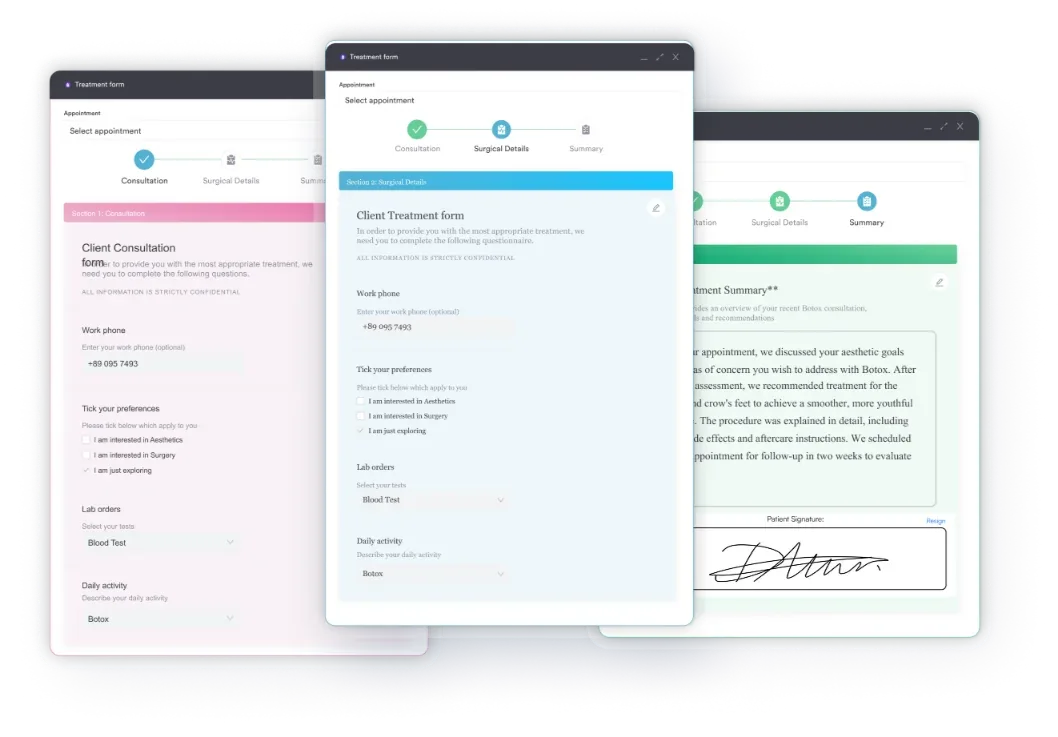
Use intake and consent forms to capture pre-procedure documentation at the point of care. Structured forms reduce the risk of missing required elements before the procedure even begins.
HIPAA-compliant medical record management ensures documentation is stored and accessible for audit purposes.
For practices with multiple sites or high procedure volume, maintaining medical spa compliance requirements across your documentation workflow requires system-level controls. Practices relying on paper records or disconnected note templates consistently have higher rates of incomplete documentation at audit.
CPT Code 15876 is one of four codes in the suction assisted lipectomy family. The only difference between them is the anatomic region treated. Selecting the correct code requires identifying the exact surgical site documented in the operative note. When multiple sites are treated in the same session, report each applicable code with appropriate modifiers. This is covered in more detail in the plastic surgery software guide for multi-procedure billing workflows. Claim scrubbing catches the mismatches that would otherwise come back as a denial two weeks later.
When billing multiple codes from this family on the same date of service, append modifier 51 to each additional code beyond the primary procedure. The primary code (highest-valued) is billed without a modifier. Additional site codes are billed with modifier 51 and typically reimbursed at 50% of the allowed amount by most payers, though this varies by contract.
CPT Code 15876 generates a predictable set of billing errors. Most are avoidable with consistent documentation practices and coder training. Reviewing your denial patterns quarterly against this list will catch systemic issues before they compound into significant write-offs. A solid compliance checklist for aesthetic practices should include code-specific denial review as a standing item.
Run a quarterly denial analysis specific to CPT Code 15876 and your other integumentary codes. Sort denials by reason code. If CO-4 (procedure inconsistent with modifier) and CO-97 (bundling) appear repeatedly, your modifier selection process needs a protocol review before the next billing cycle.
Plastic surgery and aesthetic practices billing CPT Code 15876, including those built on skin clinic software, face a specific documentation challenge. The operative note, modifier selection, and diagnosis code pairing all have to align before the claim is submitted.
A single mismatch triggers denial. Manual workflows, where coders reference printed checklists and reconcile against paper operative notes, create friction at every step.
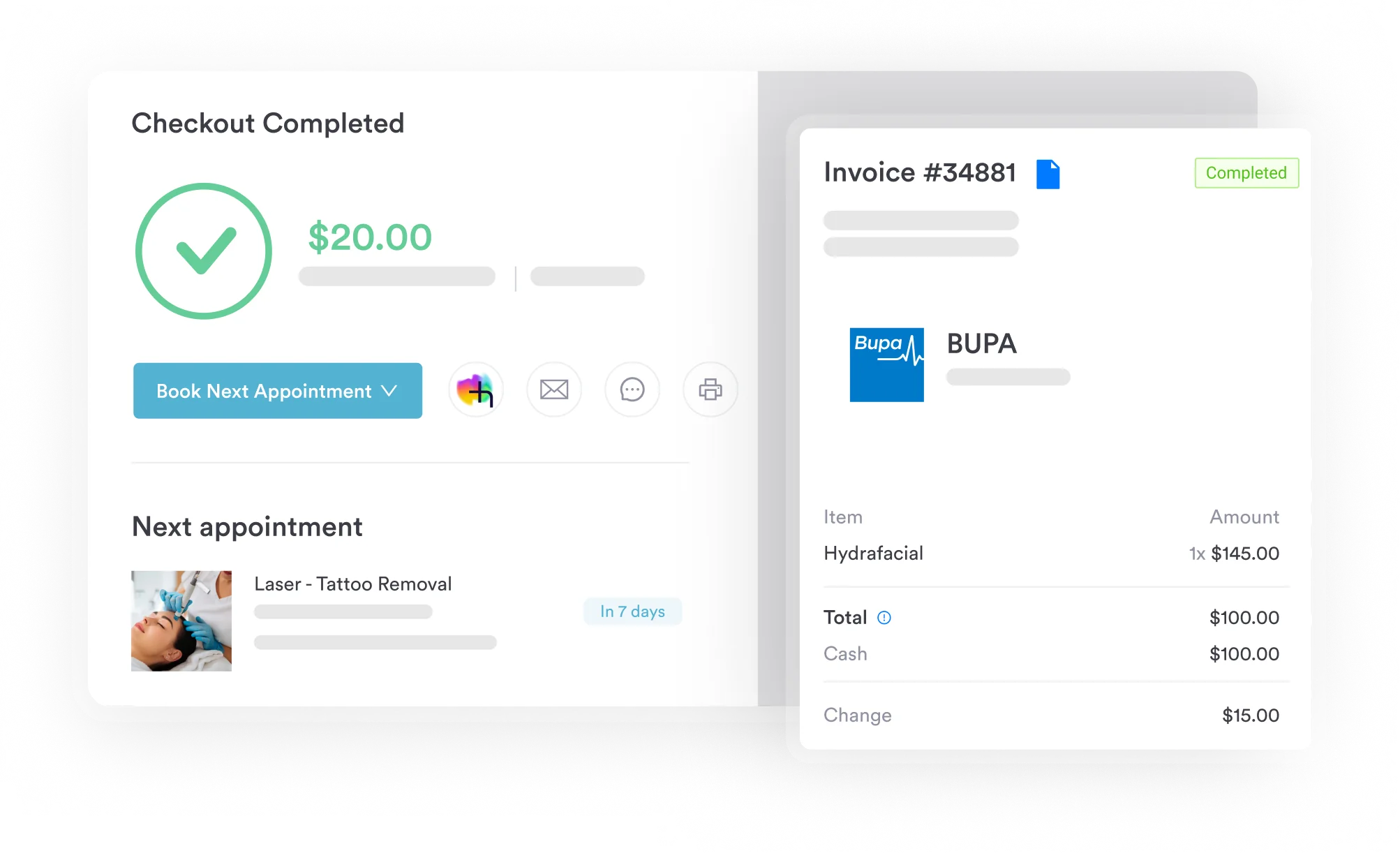
Pabau’s claims management software gives plastic surgery practices a structured environment for attaching CPT codes, modifiers, and diagnosis codes to each procedure. This happens at the point of care, not as an afterthought.
When a provider documents a head and neck lipectomy, the billing team sees the operative details in the same system. This reduces the transcription errors that produce wrong-site code selections.
Practices using plastic surgery EMR software built for aesthetic workflows also benefit from structured clinical note templates. These templates capture the specific elements integumentary system billing requires: anatomic site, technique, aspiration volume, and medical necessity language.
When those fields are built into the note template, incomplete documentation becomes visible before the operative session ends, not after the claim is denied.
Practices managing high volumes of cosmetic procedures alongside occasional insurance-billed cases benefit from plastic surgery billing workflows on an integrated platform. This reduces the overhead of maintaining separate systems for cash-pay and insurance claims.
Practice management software connects scheduling, documentation, and billing in one record. That means operative details are already in the system when the billing team codes the claim.
Smaller practices comparing options can see how Pabau compares in this best small practice EMR roundup. The Intrigue Cosmetic Clinic case study shows how one aesthetic practice put a similar workflow into practice.

From claims management to compliant operative documentation, Pabau helps aesthetic and plastic surgery practices reduce denials and bill integumentary procedures accurately. Book a demo to see how it fits your workflow.

CPT Code 15876 is a straightforward code with a narrow anatomic scope. Most billing failures come from avoidable errors: wrong site code, missing modifier hierarchy, and insufficient documentation for insurance review. Getting these right requires consistent pre-submission checks, not just accurate code selection.
Plastic surgery and aesthetic practices billing integumentary codes at volume benefit from Pabau’s integrated documentation and claims workflow. It connects operative notes directly to the billing team’s view, so anatomic site, modifier, and diagnosis code align before the claim leaves the practice. Book a demo to see how it works in a plastic surgery environment.

Coding a middle ear infection too? Bilateral otitis media code applies when documentation confirms both ears are affected but not the condition type.
Coding an ear infection tied to another disease? Right ear otitis media code explains the etiology-manifestation sequencing this code follows for FY2026 claims.
Coding bilateral ear inflammation tied to another disease? Bilateral otitis media manifestation code covers why this H67 code requires the underlying systemic disease to be sequenced first.
CPT Code 15876 is used to bill suction assisted lipectomy of the head and neck. This procedure removes subcutaneous fat from the submental region, cervical area, and adjacent head and neck structures using a suction cannula. It covers only the head and neck anatomic site. Trunk and extremity lipectomy use codes 15877 through 15879.
Reimbursement rates for CPT Code 15876 fee schedule vary by payer and geographic locality. Medicare generally does not cover lipectomy as a cosmetic procedure. Commercial payer rates are negotiated and typically expressed as a percentage of the Medicare Physician Fee Schedule (MPFS). Use the CMS MPFS lookup tool or a current RVU calculator to identify the Medicare-equivalent rate for your locality. Use that rate as a baseline for contract negotiations.
The most commonly applied modifiers for CPT Code 15876 are modifier 51 and modifier 59. Modifier 51 applies to multiple procedures, when 15876 is a secondary procedure on the same date. Modifier 59 applies to a distinct procedural service, when NCCI edits bundle two genuinely separate procedures. Modifier 50 (bilateral procedure) is uncommon for head and neck cases. LT and RT may be required by some payers for laterality. Verify against current NCCI edits before applying modifier 59 to avoid unbundling violations.
Medicare generally does not cover CPT Code 15876 because suction assisted lipectomy is classified as a cosmetic procedure. Exceptions may exist under specific Local Coverage Determinations (LCDs) for medically necessary conditions such as lipedema or post-traumatic lipodystrophy of the neck. Check your Medicare Administrative Contractor’s LCD database and document the functional impairment and failure of conservative management before submitting a claim to Medicare.
CPT 15876 covers suction assisted lipectomy of the head and neck only. CPT 15877 covers the same procedure performed on the trunk, including the abdomen, flanks, back, chest, and hips. The anatomic site documented in the operative note determines which code applies. If both the neck and trunk are treated in the same session, report both codes with modifier 51 on the lower-valued code.
Insurance coverage for CPT Code 15876 liposuction billing depends on the payer and the documented indication. Most commercial payers and Medicare treat the procedure as cosmetic and deny coverage. Coverage is possible when the procedure addresses a medically necessary condition with documented functional impairment. It also requires prior authorization and a medically necessary ICD-10 diagnosis code paired with the claim. Review each payer’s specific coverage policy before submitting.



