CPT Code 25210: Excision of a single carpal bone
CPT Code 25210: Official descriptor and quick-reference data CPT Code 25210 is a...

Last Updated: Nov 26, 2026
W0630 is the CCSD code for patellectomy, the surgical removal of all or part of the kneecap (patella). UK private insurers use it for a standalone excision, partial or total, with repair of the extensor mechanism.
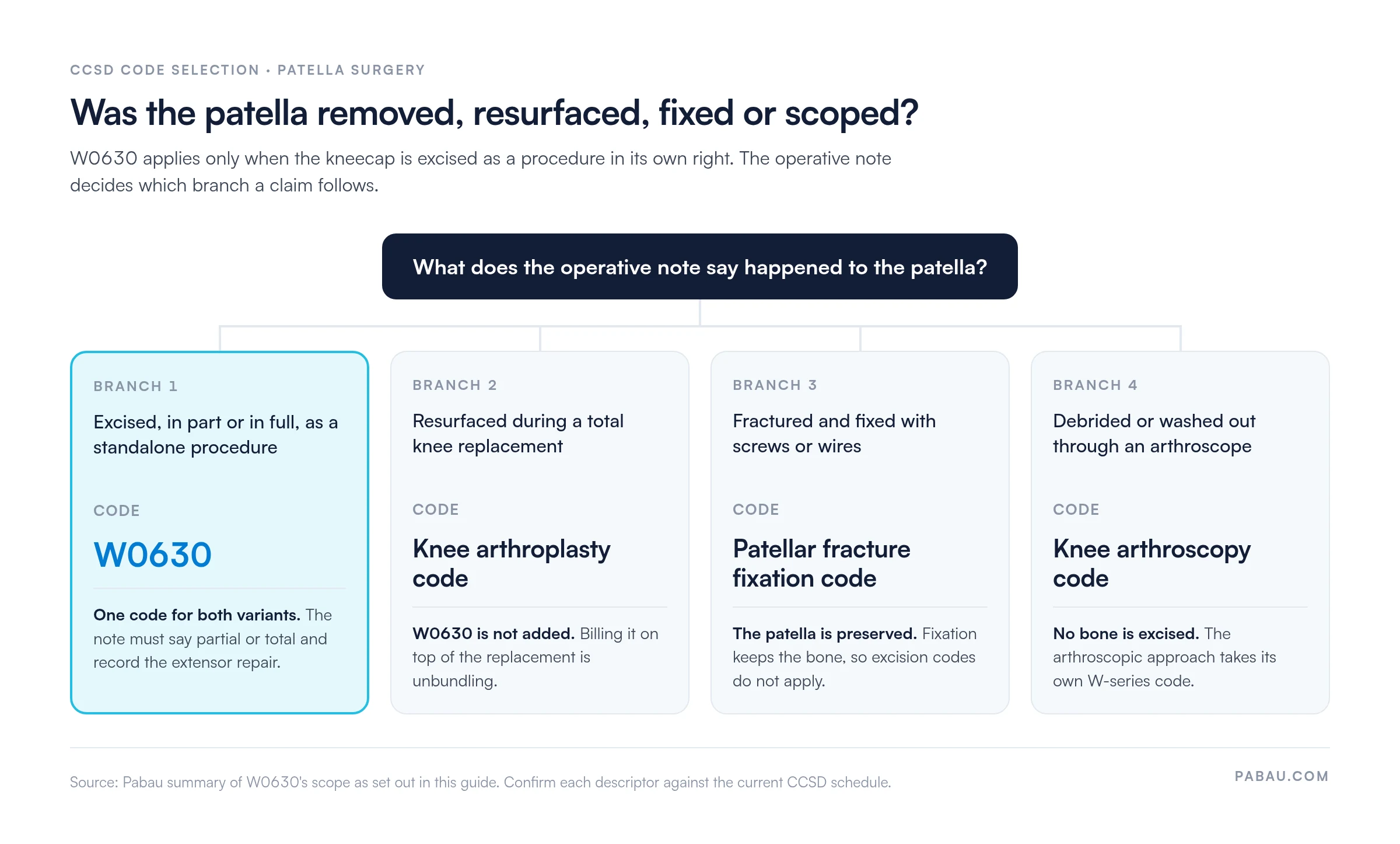
The code sits in the knee repair and reconstruction section of the CCSD schedule. Patellar resurfacing during a total knee replacement is billed under the arthroplasty code, never as W0630. Because one code covers both variants, the operative note must state which one was performed.
Let Pabau's smart automation suggest the right codes, reduce claim denials, and keep your practice compliant—effortlessly.
Automate repetitive tasks and focus on what matters most—your patients.
Reduce coding errors and ensure compliance with the latest regulations.
Clean claims, fewer denials, and faster reimbursements.
Powerful insights and reporting to help your practice thrive.
HIPAA compliant SOC 2 certified GDPR-compliant Trusted by 4,000+ clinics worldwide

CCSD code W0630 covers patellectomy, the surgical removal of all or part of the patella as a standalone procedure.
Patellar resurfacing during a total knee replacement belongs to the arthroplasty code, so W0630 is never added on top of it.
The operative note must state partial or total excision, and the claim must carry a matching ICD-10 diagnosis such as S82.0, M17 or M22.4.
Bupa, AXA Health and Aviva expect pre-authorization before an elective patellectomy, and a request made after surgery rarely rescues the claim.
Pabau’s practice management software files the operative note, imaging and pre-authorization reference against one episode of care, ready for the claim or an appeal.
CCSD code W0630 covers patellectomy, the surgical removal of all or part of the kneecap as a standalone procedure. The CCSD (Clinical Coding & Schedule Development) schedule sets the standard procedure codes for UK private healthcare. Four major private insurers sit on the group behind it. W0630 sits in its bones and joints chapter, under knee repair and reconstruction.
The code applies when a consultant orthopedic surgeon excises the patella, in part or in full. The surgeon then repairs the extensor mechanism so the knee can straighten again.
W0630 does not cover patellar resurfacing during a total knee replacement (TKR). That work belongs to the relevant arthroplasty code. If the patella is only reshaped or capped during a TKR, W0630 does not apply, and the operative note must make that explicit. Cutting a long bone such as the femur or tibia is a different procedure again, billed as an osteotomy under CCSD code W1080.
A patellectomy removes some or all of the patellar bone to relieve pain, restore function, or manage trauma that has left the kneecap beyond reconstruction. The procedure follows a consistent sequence, and a coder who knows it can check the operative note against it before choosing W0630.
The operative note must state which variant was performed. Without a clear statement of partial or total excision, the insurer may query or deny the claim for insufficient procedural documentation.
W0630 covers both total and partial patellectomy within a single code. The CCSD schedule does not assign a separate code to each variant. So the clinical distinction lives in the operative note, not in the code. Insurers read that note to assess medical necessity and to confirm the procedure matches the pre-authorization they granted.
Because both variants share the same code, billing staff should never try to tell them apart by choosing another code. The clinical detail belongs in the documentation, not in an alternative code the CCSD schedule may not even contain.
UK private insurers assess medical necessity before they authorize payment for a patellectomy. The indication in the consultant letter and operative note must match an accepted clinical scenario. Orthopedic and sports medicine practices see these presentations most often.
Pre-operative imaging (MRI or plain radiograph) referenced in the consultant letter should support each indication. The diagnosis code paired with W0630 on the claim must match the documented indication, not a broader or different knee diagnosis.
W0630 sits within the CCSD musculoskeletal W-series. Knowing the codes around it prevents the most common billing error. That error is choosing a resurfacing or arthroplasty code for a patellectomy, or the reverse. Check current descriptors against the official CCSD schedule before each submission, because codes and descriptors change between releases. Pabau’s UK private billing reference collects guides to other CCSD codes, including more W-series orthopedic procedures. In the forefoot, for example, code W0860 covers a cheilectomy of the big toe joint on one side.
Two scenarios cause most of the coding confusion. In the first, a surgeon resurfaces the patella during a total knee replacement, and the billing team submits W0630 next to the arthroplasty code. That is unbundling, because resurfacing within a TKR is included in the arthroplasty code.
In the second, a comminuted patellar fracture is fixed with screws, and a coder who sees “patella” and “surgery” picks W0630. The correct code is the fracture fixation code, because the patella was preserved. In both cases, an operative note that uses exact procedure terms settles the question before the claim reaches the insurer.
The diagram below maps each patella procedure to the code family that covers it, so the operative note’s wording points straight to one branch.
A complete W0630 claim bundle holds every document an insurer may request during adjudication. Keeping the operative documentation digitally against the patient record cuts the risk of a missing attachment and makes retrieval quicker during an audit or appeal.
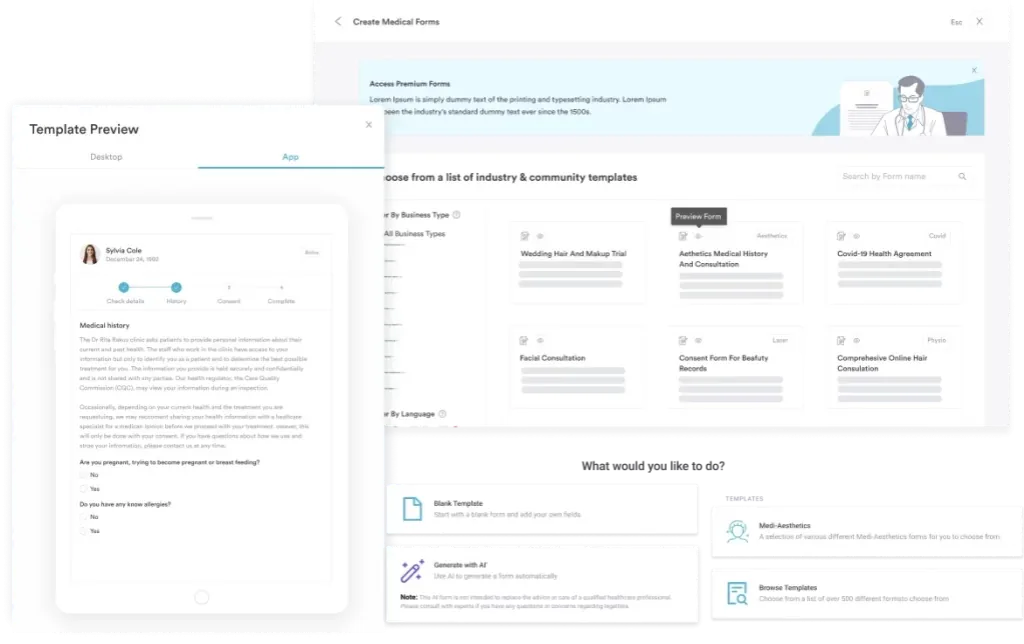
Pabau timestamps every document upload and links it to the episode of care. That gives practices a defensible audit trail from pre-operative assessment through post-operative follow-up.
Before submitting a W0630 claim, run a documentation checklist against the operative note. Confirm the note names the patellectomy variant (partial or total) and records the extensor mechanism repair. Then check that its ICD-10 diagnosis matches the pre-authorization indication. A five-minute review at this stage prevents weeks of denial correspondence.
All major UK private medical insurers require pre-authorization before an elective patellectomy. An emergency patellectomy after an acute patellar fracture follows a different pathway. Even then, the insurer must be told promptly, usually within 24 to 48 hours of the procedure. The Bupa CCSD procedure codes guide covers the Bupa-specific authorization workflow in detail.
Confirm current pre-authorization requirements with each insurer before you send a request. Policies and timelines change, so treat the table above as typical practice rather than a guarantee.
Healthcode is the main electronic billing portal for UK private healthcare. Most independent hospitals and consultant practices use it to send CCSD-coded claims to Bupa, AXA Health, Aviva and other insurers. Healthcode validates each claim against the CCSD schedule before it reaches the insurer, which catches code-structure errors early.
Pabau’s medical billing software tracks submission status and outstanding claims for private practices. It also keeps the documents each Healthcode stage asks for in the same patient record.
Denial patterns for W0630 are consistent across Bupa, AXA Health and Aviva. Most denials trace back to one of five root causes, and each one is preventable at the documentation or pre-submission stage.
A denied W0630 claim is not automatically a lost claim. Most UK private insurers run a formal appeal process. A focused appeal letter with the right evidence has the best chance where the denial is about documentation rather than a policy exclusion.
Keeping appeal evidence in your practice management system means you can retrieve it straight away, rather than digging through paper files or scattered email threads.
Bundling rules decide which charges you can bill alongside W0630 and which are included in the patellectomy itself. Mistakes in either direction cause problems. Over-bundling leaves legitimate charges unclaimed, while unbundling an included component triggers insurer audit flags and possible clawback demands.
The Healix CCSD fee schedule and unbundling guidelines show which ancillary charges are included and which are separately billable across the W-series orthopedic codes. Confirm with each insurer, as bundling rules vary between Bupa, AXA Health and Aviva.
In many orthopedic practices, patellectomy details travel by hand. The surgeon dictates the operative note, someone types it up, and the billing team reads it days later to pick a code. A note that never says “partial” or “total” comes back as an insurer query weeks after surgery.
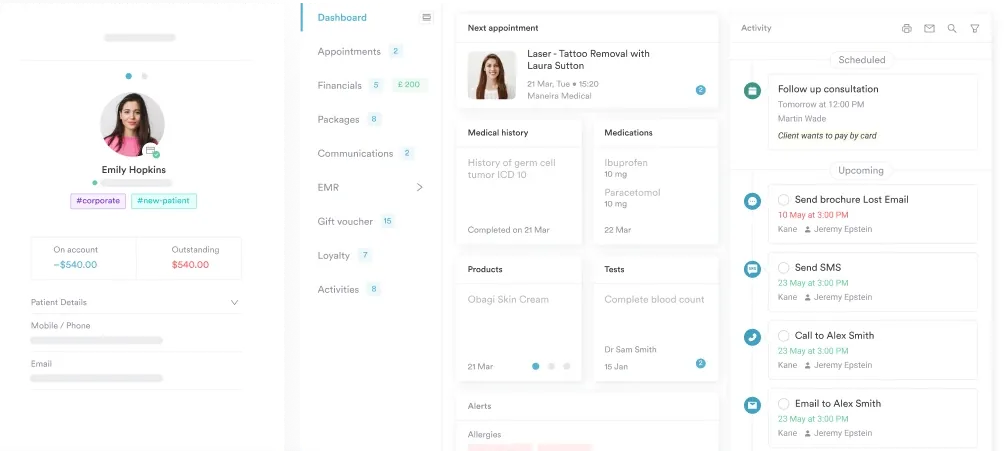
Pabau keeps the pieces of a W0630 claim on one patient record. Consent forms, imaging reports, the operative note and the pre-authorization reference sit against the same episode of care. Claims then go to insurers through Healthcode from that record, with the diagnosis code the surgeon documented.
The result is a claim bundle that is complete before it leaves the practice. If an insurer still denies it, you can build the appeal pack from one place instead of from email threads and paper files.

Pabau keeps operative notes, consent and pre-authorization references on one patient record, and sends CCSD-coded claims through Healthcode. See how it works for your orthopedic practice.

W0630 is one of the easier CCSD codes to pick, because one code covers both partial and total patellectomy. The risk sits in the paperwork around it. Check three things at the coding stage, not after a denial. The operative note names the variant and the extensor repair. Pre-authorization was in place before elective surgery. The diagnosis on the claim matches the indication the insurer approved.
Make those checks routine and a W0630 claim goes out once, instead of returning as a query weeks later. Book a demo to see how Pabau handles CCSD billing for orthopedic practices, from pre-authorization to payment.

Looking for Bupa-specific CCSD coding guidance? Bupa CCSD procedure codes covers Bupa’s code lookup, fee schedule structure, and submission workflow for UK private practice.
Want the pre-auth and Healthcode steps for another CCSD code? CCSD code M0222 billing guide walks through pre-authorization and Healthcode submission for a renal procedure.
Want to see how private practices manage claims end to end? Medical billing software for insurance claims covers how Pabau tracks insurer claims from submission to payment.
CCSD code W0630 covers patellectomy, the surgical excision of the patella (kneecap) in full or in part. It applies to a standalone patellar excision. It does not cover patellar resurfacing performed as part of a total knee replacement.
Both partial and total patellectomy are coded as W0630, because the CCSD schedule has no separate code for each variant. The operative note must state which variant was performed, so the distinction lives in the documentation.
Yes. Major UK private medical insurers, including Bupa, AXA Health and Aviva, require pre-authorization before an elective patellectomy. After an acute patellar fracture, an emergency procedure needs prompt insurer notification, typically within 24 to 48 hours.
Five reasons come up most often. The coder bills patellar resurfacing within a TKR as W0630, or the operative note is incomplete. An elective case may lack pre-authorization, or its ICD-10 diagnosis may not match the documented indication. The fifth is billing W0630 alongside an arthroplasty code when the patellar work was part of the joint replacement.
W0630 can be billed alongside the anesthetist’s fee and separately billed radiology and physical therapy charges. It cannot be billed with a total knee arthroplasty code when patellar resurfacing was part of that replacement, because that is unbundling. Check implant and prosthetic material charges with the insurer before adding them to the claim.