CPT Code 27030: Hip arthrotomy for drainage
CPT Code 27030: Official descriptor and procedure overview CPT Code 27030 carrie...

Last Updated: Nov 24, 2026
T5540 is the CCSD code for fasciotomy of limb, the operation that releases a tight fascial compartment in an arm or leg. UK private insurers use it to pay surgeons for the decompression, most often for acute compartment syndrome after a fracture or crush injury.
The code sits in CCSD chapter 16, Bones, Joints & Connective Tissue/Tendon Muscle. The fasciotomy wound is usually left open, so its later closure or skin graft is billed under a separate code.
Let Pabau's smart automation suggest the right codes, reduce claim denials, and keep your practice compliant—effortlessly.
Automate repetitive tasks and focus on what matters most—your patients.
Reduce coding errors and ensure compliance with the latest regulations.
Clean claims, fewer denials, and faster reimbursements.
Powerful insights and reporting to help your practice thrive.
HIPAA compliant SOC 2 certified GDPR-compliant Trusted by 4,000+ clinics worldwide

CCSD code T5540 covers fasciotomy of limb within chapter 16 (Bones, Joints & Connective Tissue/Tendon Muscle) of the CCSD schedule. It is used in UK private healthcare billing.
Acute compartment syndrome after a fracture, crush injury or vascular compromise is the main indication. The wound is usually left open and closed at a later, separately billed session.
Emergency fasciotomy can’t wait for prior authorization, so insurers such as Bupa and AXA Health expect notification after surgery. Check each insurer’s window directly.
Pabau, a practice management platform, records the operative note in structured digital forms, so T5540 claims carry the detail insurers check before they pay.
CCSD code T5540 is the code for fasciotomy of limb in the Clinical Coding & Schedule Development (CCSD) Group schedule. AXA Health’s chapter 16 schedule lists it under 16.3 Fractures, in the “Other (eg POP)” subsection, as a major procedure.
Major UK private medical insurers use the CCSD schedule to process and pay private procedure claims. They include Bupa, AXA Health, Aviva, Vitality, WPA, Healix, Cigna and Allianz Care. You can check the current descriptor and chapter notes on the CCSD official schedule.
T5540 sits in CCSD chapter 16, Bones, Joints & Connective Tissue/Tendon Muscle. Our full list of CCSD codes shows its neighbors in that chapter. The Bupa CCSD code guidance explains how one insurer applies the schedule.
A fasciotomy of the limb is an operation to relieve raised pressure inside a muscle compartment. The surgeon makes one or more longitudinal incisions through the skin and the fascia beneath it, so the compartment can expand. One compartment or several may be released, depending on the limb affected.
These are the steps coders should look for when reviewing an operative note for T5540:
That open wound matters for billing. The later closure or split-skin graft (SSG) is billed under its own wound closure code at the second session, not as part of T5540.
Acute compartment syndrome (ACS) is the primary indication for fasciotomy of a limb. ACS develops when pressure inside a closed fascial compartment rises high enough to cut off blood flow to the muscles and nerves within it. Without urgent decompression, irreversible muscle necrosis and nerve injury follow within hours.
Before applying T5540, coders should confirm that the operative note documents one of these indications:
An elective release for chronic exertional compartment syndrome may also be coded T5540. The operative note must then make clear the procedure was planned, not an emergency, because that changes the prior authorization rules.
A thin operative note is a common reason a T5540 claim fails audit or is refused on first submission. UK private insurers, including Bupa and AXA Health, expect the note to cover these elements before they release payment:
If compartment pressure was measured, record the absolute pressure and the delta pressure (diastolic blood pressure minus ICP). Most surgical guidelines cite a delta pressure below 30 mmHg as the threshold for surgery. Including that calculation shows the reviewing payer a thorough clinical justification.
Pabau’s digital forms let you build a structured operative note template that prompts surgeons for each of these elements at the point of care.
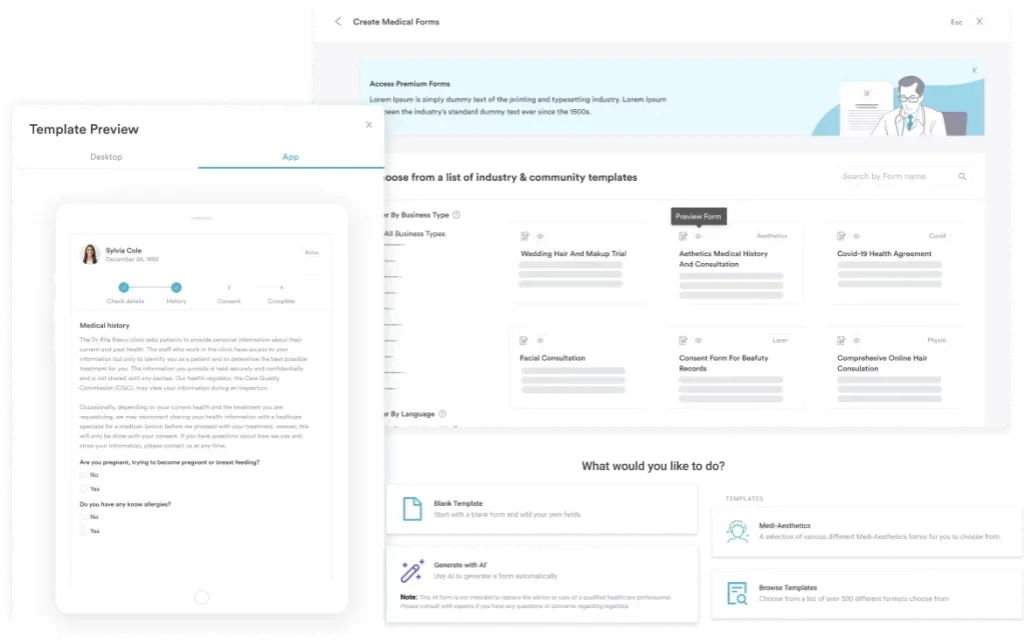
Build a T5540 operative note checklist into your clinical documentation system, and have surgeons complete every field before the note is finalized. A complete, structured note gives the insurer’s medical assessor fewer reasons to send the claim for manual review.
Several codes appear alongside T5540 in a typical surgical episode or at later follow-up sessions. The table below lists the most common, with guidance on when each is billable as a separate procedure and when bundling applies.
Fasciotomy on more than one limb in the same episode, such as both legs after vascular reperfusion, falls under each insurer’s rules for repeated procedures. Most UK private insurers expect T5540 once per limb. The first limb is paid at the full schedule fee and the second at a reduced percentage.
Bilateral billing rules are insurer-specific and change with schedule updates, so verify the current rules with each insurer before submitting. The Bupa procedure fee schedule guide shows how Bupa handles bilateral and multiple-unit procedure claims.
Fasciotomy for acute compartment syndrome is almost always an emergency, so prior authorization cannot be obtained in advance. Most UK private insurers allow a retrospective authorization window instead, typically 24 to 72 hours after surgery. The exact window and the documentation required vary by insurer, and the timeline below shows where each deadline falls.
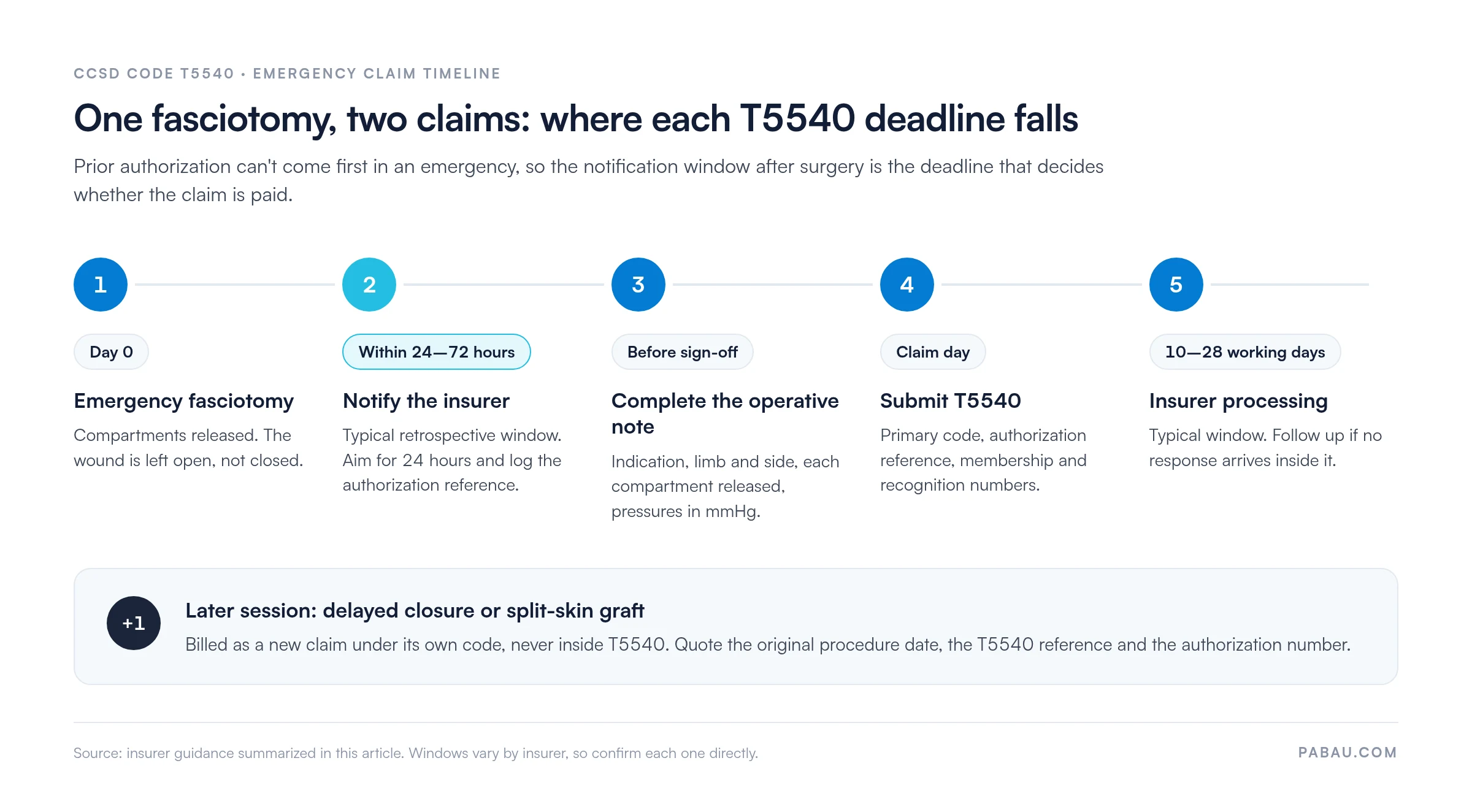
Missing the retrospective notification deadline is one of the most avoidable causes of T5540 denials.
An elective fasciotomy for chronic exertional compartment syndrome typically needs prior authorization in advance. Submitting an elective procedure without it is a denial trigger, whatever the clinical need.
T5540 claim denials follow predictable patterns. Most are preventable with better documentation and tighter authorization workflows before the claim goes out.
Unbundling rules govern which secondary codes may be submitted alongside T5540 and which are inclusive within the primary procedure fee. CCSD unbundling rules are insurer-specific, so treat the following as general guidance. Always check each insurer’s current schedule before submitting.
A return to the operating room to debride a large fasciotomy wound takes its own code, such as S5712 for wounds over 25 cm².
Fasciotomy wounds are left open at the index procedure, so closure happens at a later, separate operative session. That closure is billed as a new procedure on a new claim. It may be a delayed primary closure, a split-skin graft (SSG), or vacuum-assisted closure followed by an SSG.
A split-skin graft to a limb wound is typically claimed under S3500. The documentation should state the original procedure date and the T5540 code reference, and confirm the wound being closed is the fasciotomy wound. That link lowers the risk of the closure claim being queried as an unrelated procedure.
The anesthetist attending a T5540 procedure bills independently, typically using time-based CCSD anesthetic codes for the operative episode. That fee sits outside T5540 and is not included in the surgeon’s claim.
An assistant surgeon also bills independently under the relevant CCSD assistant code. Insurers differ on whether assistant fees are reimbursable for fasciotomy of limb, so confirm with Bupa, AXA Health and the other relevant insurers.
Track retrospective authorization deadlines by insurer in your practice management system. A task reminder set within four hours of an emergency fasciotomy gives your billing team time to contact the insurer well inside most notification windows.
Seven steps take a T5540 claim from the policy check to payment. Pabau’s claims management software keeps the authorization reference on the patient’s case and sends UK claims through Healthcode.
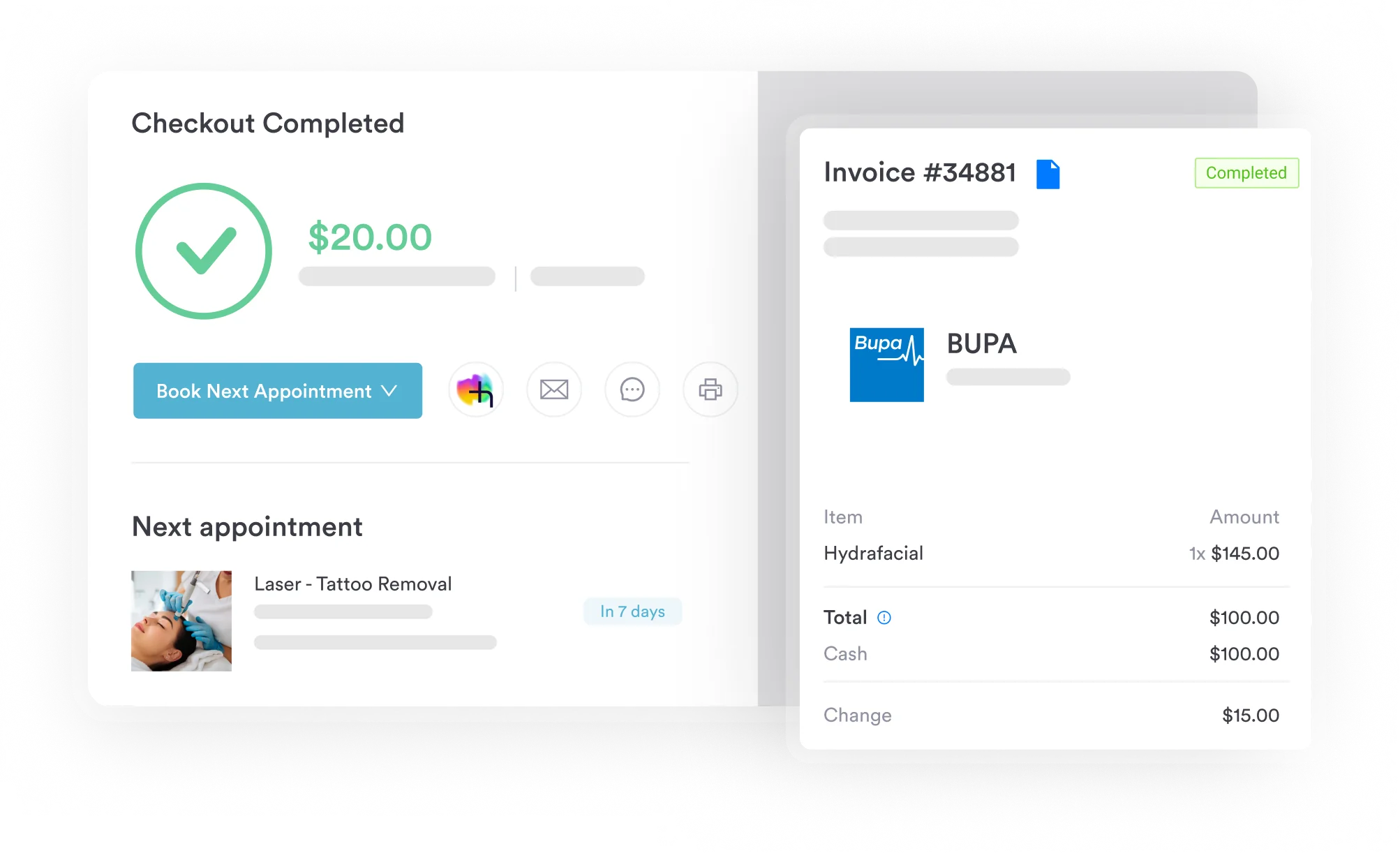
Keep an audit trail of authorization references, submission dates and denial responses for every T5540 claim. That record is what a denied claim needs if it goes to formal appeal.
In many private practices, a T5540 claim is pieced together from three places. The operative note sits in a typed letter and the authorization reference lives in someone’s inbox. The claim then goes out from a separate billing tool. When one piece goes missing, the claim stalls.
Pabau keeps those pieces on one patient record. Surgeons complete the operative note in a digital form, with the compartments, laterality and pressure readings as set fields. The authorization code and dates sit on the patient’s case, and Pabau warns the team when one is missing.
Claims then go to UK insurers through Healthcode and BUPA from the same record. Your billing team spends less time chasing surgeons for detail. The closure claim can also cite the index T5540 episode without anyone digging through old letters.

Pabau holds the operative note, the insurer’s authorization reference and the claim on one patient record. Your team can send the claim knowing the detail insurers check is already there.

The fasciotomy itself is rarely what an insurer questions on a T5540 claim. The queries land on the paperwork: a late notification, a note that skips the compartments, or same-session debridement billed twice.
So set up two habits before the next emergency, not after it. Have a named person notify the insurer within 24 hours, and give surgeons a note template with every required field. The closure or graft claim then follows cleanly, because it can point back to a complete index record.
To see how Pabau keeps the operative note, the authorization reference and the claim on one patient record, book a demo.

Need a broader CCSD billing reference for Bupa procedures? Bupa CCSD code guidance covers how Bupa structures its procedure code schedule and common billing rules.
Looking for Bupa’s current fee schedule? Bupa procedure fee schedule guide explains how fees are set, updated, and queried for UK private practice billing.
Closing the fasciotomy wound with a graft? CCSD code S3500 covers split autograft of skin to the trunk and limbs, billed at the later session.
Returning to the operating room for debridement? CCSD code S4183 covers wound debridement and primary suture, with its own documentation rules.
CCSD code T5540 describes fasciotomy of limb. The surgeon makes one or more long incisions through the skin and fascia to release a muscle compartment and lower the pressure inside it. The code is used in UK private healthcare billing and sits in chapter 16 of the CCSD schedule, Bones, Joints & Connective Tissue/Tendon Muscle.
Yes. When fasciotomy is performed on two limbs in the same episode, T5540 is reported once per limb on separate claim lines. The second unit is usually paid at a reduced percentage of the schedule fee, and the rate varies by insurer. Check each insurer’s current bilateral rules before submitting.
Not in advance for an emergency fasciotomy, because the surgery can’t wait. Most UK private insurers, including Bupa and AXA Health, accept retrospective notification, typically within 24 to 72 hours of surgery. An elective fasciotomy for chronic exertional compartment syndrome needs prior authorization in advance. Confirm the notification window with the insurer before submitting the claim.
The most common error is missing the insurer’s retrospective notification window after emergency surgery. Next come operative notes that omit the compartments released, the laterality or the confirmed indication. The third is billing same-session wound debridement separately alongside T5540 at the index procedure.
Secondary wound closure is billed as a separate procedure at a later session, not as part of T5540. Fasciotomy wounds are left open at the index operation, so the delayed closure or split-skin graft is its own billable episode. Quote the original T5540 procedure date and authorization reference on the closure claim to avoid insurer queries.
Wound closure and split-skin graft codes often follow at a later session. Fracture fixation codes appear when the fasciotomy accompanies trauma surgery, and the anesthetist bills a separate CCSD anesthetic fee code. Same-session wound debridement is usually inclusive, so confirm the insurer’s unbundling rules before billing it separately.