
Pabau Engage inbox

Pabau Engage is here: every patient conversation in one inbox.

Learn more
Book a demo Book a demo
☰
CCSD Code

CCSD code T1620 – Paralysed diaphragm plication


Code Definition

T1620 is the CCSD code for plication of a paralysed diaphragm, the operation that folds and sutures a slack hemidiaphragm to restore its dome. UK private insurers use it for open and thoracoscopic plication alike, and Bupa places it in its MAJOR+ 2 band.

The code needs documented paralysis, usually phrenic nerve palsy confirmed on a sniff test. Repair of a ruptured diaphragm (T1500) and congenital hernia repair (T1640) carry codes of their own.

Group
8 Thorax and intra-thoracic organs
Category
Chest Wall
Band
MAJOR+ 2
Billable
No
Code also known as
diaphragmatic plication, diaphragm folding surgery, phrenic palsy plication
Save time. Improve accuracy. Get paid faster.
Automate coding with Pabau

Let Pabau's smart automation suggest the right codes, reduce claim denials, and keep your practice compliant—effortlessly.

  • AI-powered code suggestions
  • Real-time compliance checks
  • Faster claims, fewer denials
Why practices choose Pabau
Save hours every week

Automate repetitive tasks and focus on what matters most—your patients.

Improve accuracy

Reduce coding errors and ensure compliance with the latest regulations.

Get paid faster

Clean claims, fewer denials, and faster reimbursements.

Grow with confidence

Powerful insights and reporting to help your practice thrive.

HIPAA compliant SOC 2 certified GDPR-compliant Trusted by 4,000+ clinics worldwide

Key takeaways

Key takeaways

CCSD code T1620 covers plication of a paralysed diaphragm, and Bupa places it in its MAJOR+ 2 band at £725.

Open thoracotomy and VATS plication both take T1620, and Bupa’s schedule lists no robotic-assisted variant of the code.

Repair of a ruptured diaphragm (T1500) and congenital hernia repair (T1640) have their own codes, so the record must document paralysis.

Bupa, AXA Health, Aviva and Vitality typically expect pre-authorisation before the operation goes ahead.

For bilateral plication, confirm with the insurer how to claim T1620 for each side before you submit.

CCSD Code T1620: Definition and clinical scope

CCSD Code T1620 is the UK private healthcare code for plication of a paralysed diaphragm. Its official descriptor, “Plication of paralysed diaphragm,” comes from the Clinical Coding and Schedule Development group. That group’s schedule sets the standard procedure codes for UK private healthcare, and Bupa, AXA Health, Aviva and Vitality sit on it.

The code sits in CCSD chapter 8, Thorax and intra-thoracic organs, among the chest wall procedures. Bupa places T1620 in its MAJOR+ 2 complexity band, with a listed fee of £725 in its February 2026 schedule.

T1620 applies to the surgical plication of a flaccid, paralysed diaphragm. It does not cover repair of a ruptured diaphragm or diaphragmatic hernia repair, which have codes of their own. Before assigning T1620, the coder needs documented diaphragm paralysis in the record. Without it, the insurer may query medical necessity or decline the claim.

What plication of a paralysed diaphragm involves

Diaphragm plication folds the slack, paralysed hemidiaphragm on itself and holds it in tension with rows of non-absorbable sutures. This restores the dome position the paralysed muscle can no longer hold. It reduces paradoxical movement and lets the lung on that side expand more efficiently.

The procedure follows a predictable sequence, though technique details vary by surgeon and approach:

  1. The patient is positioned in a lateral decubitus position, with the affected side uppermost.
  2. Surgical access is obtained via open thoracotomy or thoracoscopic (VATS) port placement.
  3. The paralysed hemidiaphragm is identified and assessed for the degree of elevation and paradoxical movement.
  4. The diaphragm is grasped and plicated by placing rows of interrupted non-absorbable sutures through the full thickness of the muscle, progressively flattening the dome.
  5. The surgeon confirms under direct vision that the diaphragm sits at the correct level. The ports or chest are then closed, usually with a pleural drain in situ.

Bilateral plication, where both hemidiaphragms are addressed in the same or staged operative episodes, is rarer. It carries extra documentation requirements, covered in the bilateral billing section below.

Clinical indications for diaphragm plication

Surgeons plicate the diaphragm when a paralysed or thinned hemidiaphragm causes breathlessness that imaging confirms. Insurers reviewing a T1620 claim check that the indication is documented. The principal indications are:

  • Symptomatic unilateral diaphragm paralysis: Dyspnoea on exertion, orthopnoea, or exercise intolerance caused by paradoxical diaphragm movement, confirmed by imaging or fluoroscopy.
  • Phrenic nerve palsy: Paralysis secondary to cardiac surgery injury (the most common iatrogenic cause in adults), thoracic trauma, cervical spine surgery, or idiopathic phrenic neuropathy.
  • Bilateral diaphragm paralysis: Less common, often associated with neuromuscular disease. Plication is considered when the patient would otherwise depend on ventilatory support.
  • Diaphragm eventration with functional impairment: Eventration is a structural thinning of the muscle, and surgeons correct it with the same plication technique. Bupa’s schedule lists no separate eventration code, so confirm the coding with the insurer first.

UK private health insurers expect a standard diagnostic workup before they authorise plication:

  • Fluoroscopic sniff test: the standard dynamic assessment of diaphragm movement.
  • Pulmonary function tests: spirometry, including FEV1 and FVC, in supine and upright positions.
  • Chest imaging: confirmation of an elevated hemidiaphragm.
  • Specialist referral letter: from a respiratory physician or thoracic surgeon, which most insurers want in the pre-authorisation bundle.

Open vs thoracoscopic plication: Does the approach change the code?

No. CCSD Code T1620 applies whether the surgeon plicates through an open thoracotomy or by video-assisted thoracoscopic surgery (VATS). The descriptor names the procedure performed, not the access route.

Surgical approachCCSD codeNotes
Open thoracotomyT1620Traditional posterolateral approach, with a longer recovery
VATS (thoracoscopic)T1620Minimally invasive approach; the same code applies
Robotic-assisted thoracoscopicT1620Bupa’s schedule lists no robotic variant of T1620, unlike T1500 (T1501) and T1640 (T1641)

Bupa’s schedule adds robotic-assisted codes for several neighbouring diaphragm procedures, but not for plication. If robotic assistance was used, confirm with the insurer that T1620 alone is the right claim.

If the surgeon only inspects the chest and does not plicate, the claim moves to a different code. An exploratory thoracotomy is T0320, and a diagnostic thoracoscopy is T1100.

Adjacent CCSD codes and how to avoid miscoding

T1620 sits beside several diaphragm and phrenic nerve codes, and picking the wrong one is a common reason a claim stalls. The table lists the codes most often confused with T1620, with the band and fee Bupa’s schedule gives each.

CCSD codeDescriptorBupa band and feeUse T1620 instead when…
T1620Plication of paralysed diaphragmMAJOR+ 2, £725N/A (this is the target code)
T1500Repair of rupture of diaphragm (robotic: T1501)CMO 1, £921The diaphragm is intact and the operation corrects paralysis rather than a tear
T1640Repair of congenital diaphragmatic hernia (robotic: T1641)MAJOR+ 5, £845No hernia defect is repaired and only the paralysed muscle is plicated
G2320Transthoracic repair of diaphragmatic hernia (acquired) (robotic: G2321)MAJOR+ 1, £698The record shows paralysis with no acquired hernia
A3400Phrenic nerve pacing implantationMAJOR 1, £475The operation works on the diaphragm muscle itself, not the phrenic nerve

Laid out by band, these diaphragm codes span £475 to £921, and T1620 sits in the middle of that range. It is also the only plication or repair code here without a robotic-assisted twin.
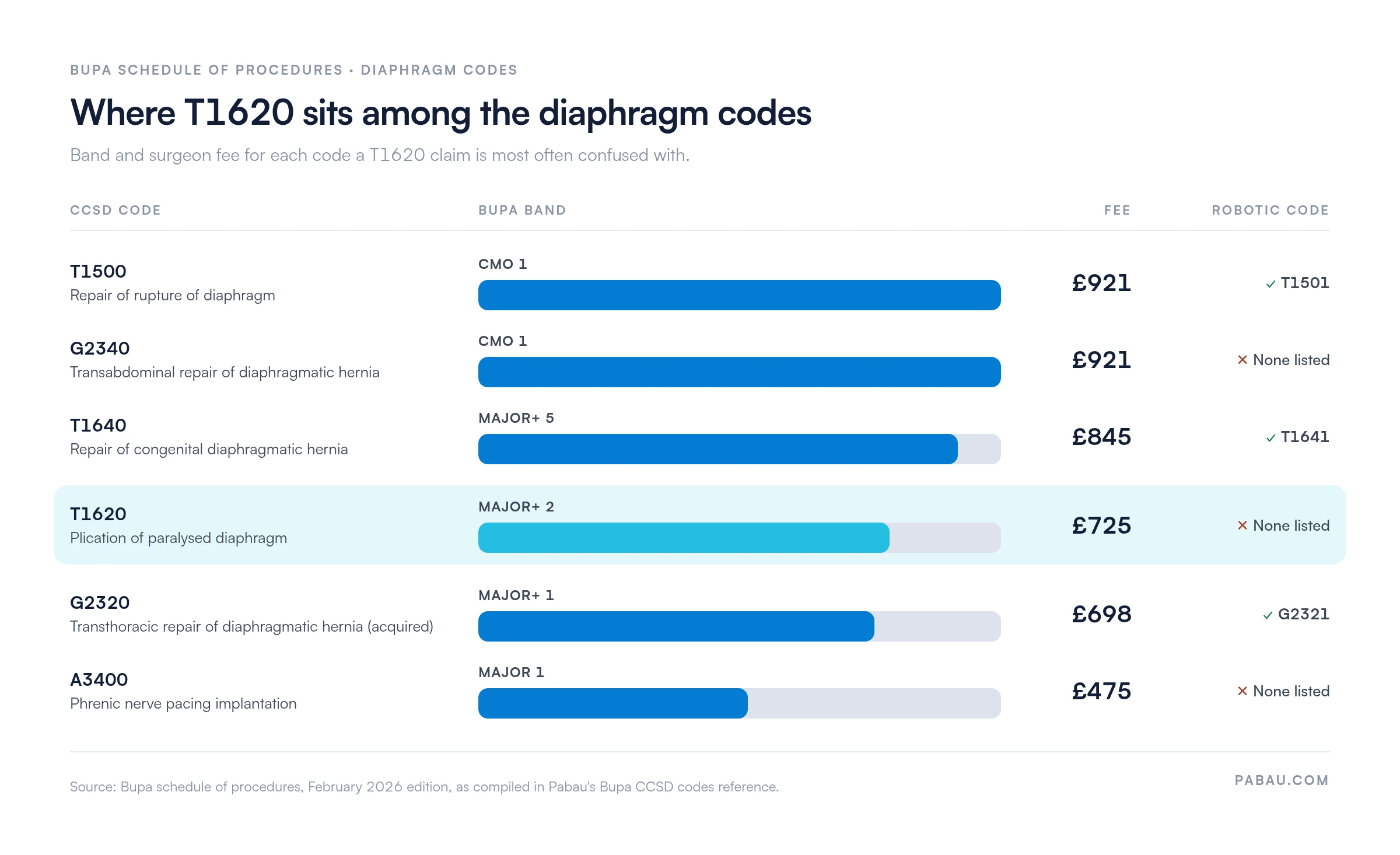
Bar chart of Bupa bands and surgeon fees for diaphragm codes
T1620 sits mid-range among the diaphragm codes and, unlike T1500 and T1640, has no robotic-assisted variant. Bands and fees come from Bupa’s February 2026 schedule.

Check every neighbouring code against the current schedule before submission, because descriptors, bands and fees change between editions. Our full CCSD code library lists the other thoracic codes in chapter 8.

ICD-10 diagnosis codes to use alongside T1620

UK private claims pair each CCSD procedure code with a WHO ICD-10 diagnosis code, and the diagnosis must justify the procedure. These ICD-10 codes pair most naturally with CCSD Code T1620:

ICD-10 codeDescriptorNotes
J98.6Disorders of diaphragmPrimary code for diaphragm paralysis where a more specific code is unavailable; verify against the current NHS ICD-10 edition
G58.8Other specified mononeuropathiesUse when the aetiology is documented phrenic nerve injury or palsy; often the primary diagnosis for post-cardiac-surgery cases
J96.0xAcute respiratory failureSecondary code for bilateral or severe cases presenting with respiratory compromise; not typically the primary code alone
Q79.1Other congenital malformations of diaphragm (eventration)Use only when eventration is the documented diagnosis; pairing it with T1620, a paralysis code, invites an insurer query

Verify every ICD-10 code against the current NHS Classifications Browser before submission. UK coding follows WHO ICD-10, so a code that exists only in the US ICD-10-CM is not valid on a UK claim.

Pro Tip

Code the documented aetiology, not just the anatomical finding. When the operative note states phrenic nerve palsy after cardiac surgery, G58.8 (other specified mononeuropathies) supports the claim better than J98.6 (disorders of diaphragm). A more specific diagnosis code lowers the risk of a medical necessity query.

What the operative note must include for a valid T1620 claim

An incomplete operative note is one of the most common reasons a T1620 claim stalls. Insurers often ask for the note on major thoracic claims, so it needs to cover each of these points:

  • Confirmed diagnosis of diaphragm paralysis: The note must state the diagnosis explicitly, not merely describe an elevated hemidiaphragm on imaging. Reference the fluoroscopy or sniff-test findings.
  • Laterality: Specify right hemidiaphragm, left hemidiaphragm, or bilateral. A note that says “diaphragm plication” without laterality leaves the coding ambiguous and may be queried.
  • Surgical approach: Open thoracotomy or thoracoscopic (VATS), with the port placement or incision site.
  • Plication technique: Describe the suture material, suture pattern (interrupted, mattress), and number of rows placed. This shows the surgeon plicated the diaphragm rather than performing a lesser diaphragmatic procedure.
  • Intraoperative confirmation of position: Document that the diaphragm was confirmed at the correct anatomical level before chest closure.
  • Complications and drain placement: Note any intraoperative complications and confirm chest drain insertion if applicable.
  • Surgeon’s attestation: The operating surgeon signs and dates the note. Add the GMC registration number to the invoice where the insurer requires it.

Pabau, a practice management platform with a built-in form builder, lets you create a structured operative note template for diaphragm plication. The template prompts for each required field before the note is finalised.
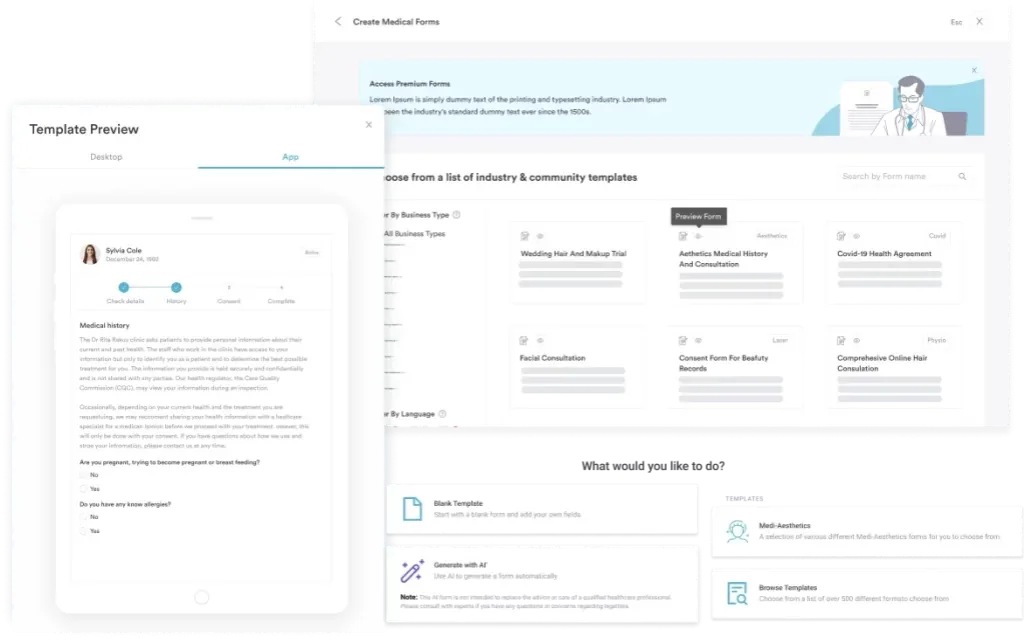
Pabau form builder showing the template library and a medical history form preview
Pabau’s form builder starts from a blank form or the template library, so a plication note can require laterality and suture technique before sign-off.

Prior authorisation requirements for diaphragm plication

UK private health insurers treat diaphragm plication as major elective thoracic surgery, and they typically require pre-authorisation before it goes ahead. Without it, the insurer may decline the claim regardless of clinical need.

The table summarises the general position of the main UK insurers. Requirements change, so check the current Aviva procedure guidelines and each insurer’s equivalent before you book the operation.

InsurerPre-authorisation required?Typical supporting evidenceReference
BupaYes (standard for major thoracic surgery)PFT results, fluoroscopy report, specialist referral letter, proposed CCSD code(s)Bupa code search
AXA HealthYesClinical history, imaging, PFTs, consultant opinion letterAXA procedure codes
AvivaYesSpecialist referral, objective evidence of functional impairmentAviva fee schedule
Vitality HealthYesRefer to the current Vitality provider manualCheck the current Vitality provider portal
WPAYesClinical justification and a specialist letterCheck the current WPA provider terms

Our Bupa CCSD code guide explains how Bupa structures its schedule, bands and fees across procedure codes.

Billing bilateral diaphragm plication under CCSD

Bilateral plication covers both hemidiaphragms, in one operation or in staged procedures. Coders often hesitate here, because CCSD publishes no universal bilateral rule that applies across every procedure code.

The practical guidance below still needs confirming with each insurer before submission:

  • Same operative episode: Submit T1620 twice on the same claim, once for each hemidiaphragm. Add a clear note in the operative details field that both sides were plicated in the same sitting.
  • Staged bilateral procedures: Submit T1620 as a separate claim for each operative episode. Reference the first procedure in the clinical notes sent with the second claim.
  • Operative note requirement: The note must state “bilateral” explicitly and document the plication of each side separately, including laterality confirmed intraoperatively.
  • Insurer confirmation: Before your first bilateral T1620 claim with an insurer, call its provider line. Ask whether it accepts the code twice or wants a specific instruction. Bilateral rules under CCSD vary between insurers.

CCSD Code T1620 claim denials: Common reasons and fixes

T1620 claims fail for a predictable set of reasons, and most are avoidable with the right documentation in place before the procedure date:

Denial reasonWhat goes wrongThe fix
No pre-authorisationProcedure carried out before insurer approval was obtainedObtain pre-authorisation before the procedure date, every time
Missing medical necessity evidenceClaim submitted without PFT results, fluoroscopy report, or specialist letterAttach objective evidence of diaphragm paralysis and functional impairment to every claim
Wrong diagnosis codeICD-10 code for eventration (Q79.1) submitted alongside T1620 (a paralysis code)Match the ICD-10 code to the documented diagnosis; paralysis and eventration are distinct
Incomplete operative noteNote lacks laterality, suture technique, or surgeon attestationUse a structured template covering all required fields before the note is signed
Wrong code selectedA rupture repair (T1500) or hernia repair code used instead of T1620Confirm the documentation supports paralysis, then use the adjacent code table above
Unbundling queryAdditional CCSD codes submitted alongside T1620 that the insurer considers part of the main procedureCheck the treating insurer’s bundling rules before adding supplementary codes

How Pabau supports CCSD billing for thoracic procedures

A T1620 claim depends on three linked steps: the pre-authorisation, the operative note and the claim itself. When one of them slips, the claim comes back and someone has to chase the paperwork after the operation.

Pabau keeps all three on the patient record. Its private healthcare claims management sends claims to UK insurers through Healthcode and Bupa, from the same record that holds the operative note.
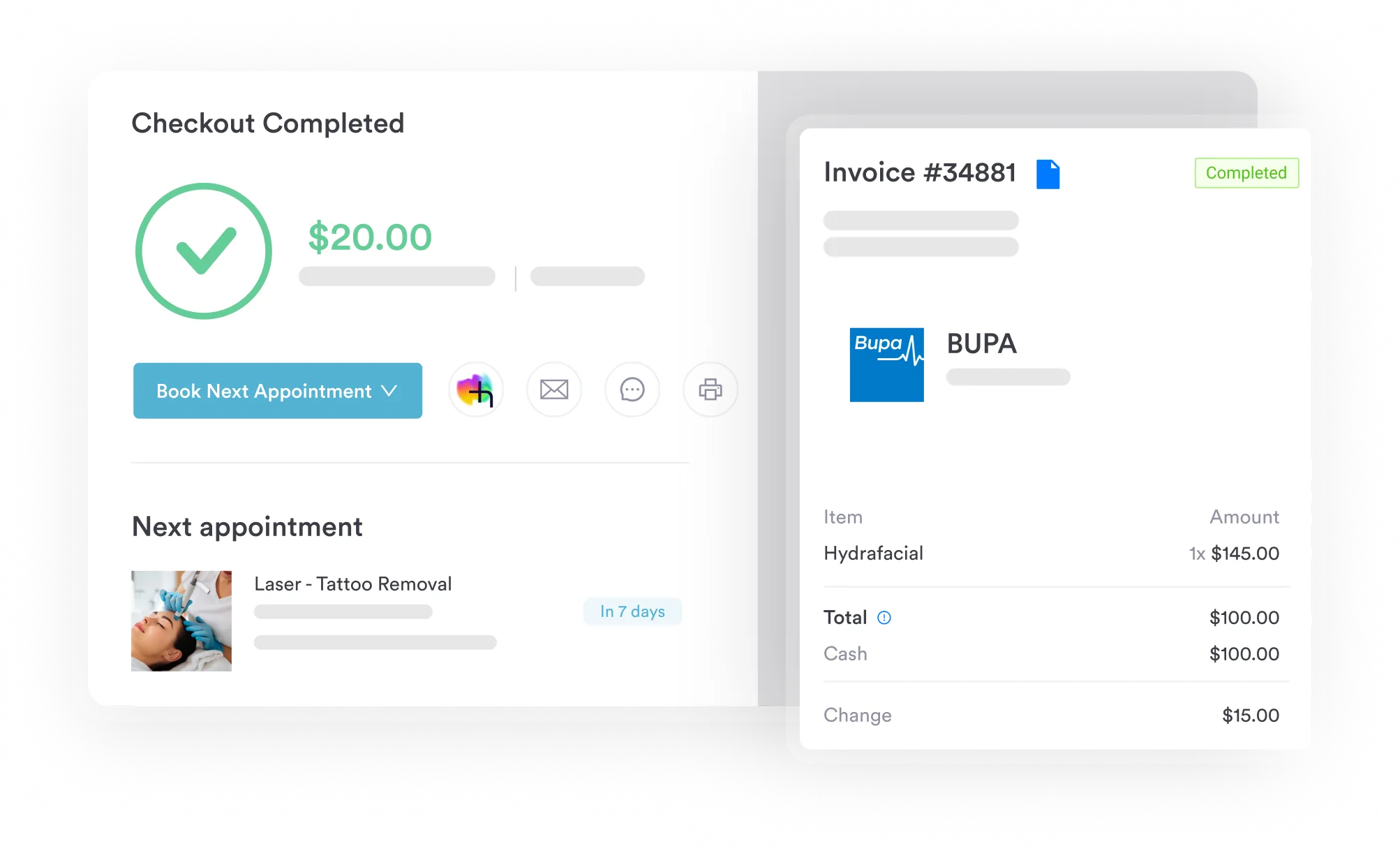
Pabau checkout screen with a completed invoice billed to Bupa
Pabau raises the invoice against the patient’s insurer, here Bupa, so the T1620 claim goes out from the same record as the operative note.

For a thoracic practice billing T1620, that means:

  • Pre-authorisation tracking: The authorisation code, dates and sessions sit on the patient’s case, and Pabau warns you when one is missing. The team sees a missing approval before the patient reaches theatre.
  • Structured operative notes: A plication template prompts for laterality, approach, suture technique and attestation. The note then covers what the insurer asks for before anyone signs it.
  • Claims from the patient record: The claim is raised from the same case that holds the authorisation and the operative note.

Manage CCSD billing from referral to claim

Pabau helps thoracic surgery practices track pre-authorisation, build structured operative notes and send CCSD claims to UK private insurers from one patient record.

Pabau practice management dashboard

Conclusion

T1620 rarely fails on the code itself. Claims stall when the record cannot prove paralysis, when pre-authorisation was never confirmed, or when the diagnosis code describes something else.

Settle those three before the operation date. Code the aetiology with G58.8 or J98.6, keep Q79.1 for documented eventration, and check the band against Bupa’s current schedule. Book a demo to see how Pabau keeps pre-authorisation, the operative note and the insurer claim on one patient record.

Continue your research

Continue your research

Need a broader view of CCSD billing in private practice? Bupa CCSD codes explains how the CCSD schedule structures procedure codes for Bupa claims, including bands, fees and submission tips.

Coding another chest wall procedure? CCSD code T0133 covers chest wall tumour excision without reconstruction, including its Bupa band and the documentation insurers expect.

Was the chest only inspected thoracoscopically? CCSD code T1100 covers diagnostic thoracoscopy with or without biopsy, and when it is claimed on its own.

Frequently asked questions

What does CCSD Code T1620 cover?

CCSD Code T1620 covers plication of a paralysed diaphragm. The surgeon folds and sutures a flaccid hemidiaphragm to restore its position and reduce paradoxical movement. It applies to unilateral and bilateral plication, and to open and thoracoscopic approaches. It does not cover repair of a ruptured diaphragm (T1500) or diaphragmatic hernia repair.

What Bupa band is CCSD code T1620 in?

Bupa places T1620 in its MAJOR+ 2 band, with a listed fee of £725 in its February 2026 schedule. Check the current schedule before quoting a fee, because bands and fees are revised between editions.

What is the difference between diaphragm plication and diaphragm repair?

Diaphragm plication folds and sutures a paralysed muscle to restore its tension, and T1620 covers it. Diaphragm repair restores a diaphragm torn by injury and takes T1500 instead. Submitting one code when the other procedure was performed is a common miscoding error that triggers denial.

Is diaphragm plication the same as diaphragm eventration surgery?

No. Eventration is a structural thinning of the diaphragm muscle, often congenital, while paralysis is a loss of contraction, most often from phrenic nerve injury. Surgeons use a similar or identical technique for both. Bupa’s schedule lists no separate eventration code, so confirm the coding with the insurer before claiming T1620 for eventration without paralysis.

Which UK private insurers require prior authorisation for CCSD T1620?

Bupa, AXA Health, Aviva, Vitality and WPA all typically require pre-authorisation before diaphragm plication. Without it, the insurer can refuse the claim outright. Get written authorisation that confirms the CCSD code and ICD-10 diagnosis before the procedure date, and keep the reference number for the claim.

Can T1620 be billed bilaterally if both hemidiaphragms are plicated?

Bilateral plication is generally billed by submitting T1620 twice, once per hemidiaphragm. The operative note must document bilateral plication and the laterality of each side. CCSD publishes no universal bilateral rule, so confirm the billing instruction with the insurer before your first bilateral claim.

Does the surgical approach (open vs VATS) affect the CCSD code for diaphragm plication?

No. CCSD Code T1620 applies whether the plication is performed by open thoracotomy or thoracoscopic (VATS) approach. Bupa’s schedule lists no robotic-assisted variant of T1620, so confirm with the insurer how to claim a robotic case.


Avatar photo
Anja Dodevska
Content Writer

Anja Dodevska writes about healthcare, dermatology, and the day-to-day realities of running a medical practice for Pabau. She enjoys breaking down complex topics into clear, accessible content and has a soft spot for the often-overlooked aspects of clinic life. When she's not writing, she's exploring cafes, walking her dog, or spending time with friends and family.
×

