CPT code 59618: Cesarean after attempted VBAC billing guide
CPT code 59618 bills a cesarean after a VBAC attempt CPT code 59618 is the globa...

Last Updated: Nov 4, 2026
G4440 is the CCSD code for therapeutic oesophago-gastro-duodenoscopy (OGD) with insertion of percutaneous endoscopic gastrostomy/percutaneous endoscopic jejunostomy. One code covers both tubes, whether the endoscopist seats it in the stomach (PEG) or in the jejunum (PEJ).
G4440 sits in Chapter 10 of the CCSD schedule, Endoscopic GIT Procedures. It cannot be billed with G4410, G4430 or G6500 on the same episode. A gastrostomy placed under fluoroscopy without an endoscope is not coded as G4440.
Let Pabau's smart automation suggest the right codes, reduce claim denials, and keep your practice compliant—effortlessly.
Automate repetitive tasks and focus on what matters most—your patients.
Reduce coding errors and ensure compliance with the latest regulations.
Clean claims, fewer denials, and faster reimbursements.
Powerful insights and reporting to help your practice thrive.
HIPAA compliant SOC 2 certified GDPR-compliant Trusted by 4,000+ clinics worldwide

CCSD Code G4440 covers therapeutic OGD with PEG or PEJ insertion, so both tube positions bill under one code.
The OGD passage is integral to G4440, so it is never billed with G4410, G4430 or G6500 on the same episode.
Insurers generally expect pre-authorisation for G4440, so confirm each payer’s current rule before the list is booked.
A radiologically inserted gastrostomy (RIG) uses no endoscope and is never coded as G4440.
Pabau, the practice management platform we build, keeps consent, procedure notes and insurer claims in one patient record.
CCSD Code G4440 is the Clinical Coding and Schedule Development (CCSD) code for therapeutic OGD with insertion of a percutaneous endoscopic gastrostomy or jejunostomy. UK private medical insurers all work from the CCSD code schedule. G4440 sits in Chapter 10, Endoscopic GIT Procedures, alongside diagnostic and other therapeutic OGD codes.
The official descriptor reads: Therapeutic oesophago-gastro-duodenoscopy (OGD) with insertion of percutaneous endoscopic gastrostomy/percutaneous endoscopic jejunostomy. That single descriptor covers both procedures. A PEG places the feeding tube into the stomach, while a PEJ places it into the jejunum. Both use an endoscope passed through the upper GI tract, so the CCSD schedule treats either one as a single episode under G4440.
However, the code applies only to endoscopically guided tube placement. Radiologically inserted gastrostomy (RIG), performed under fluoroscopic guidance by interventional radiology, is a separate procedure. Therefore, submitting G4440 for a RIG procedure is a miscoding error that insurers will identify on clinical review. A later operation to close a persistent gastrostomy tract is a separate episode too, billed under G3440 rather than G4440.
Both PEG and PEJ insertion follow a broadly similar endoscopic pathway. The stages matter for documentation. For example, insurers may request the operative report, and it needs to show an endoscopic approach to justify G4440 over a diagnostic code.
Payers require documented medical necessity. According to NICE guideline CG32 on nutrition support in adults, gastrostomy feeding suits patients who need long-term enteral nutrition. It applies when oral intake is inadequate or unsafe. The most common private practice indications are:
The British Society of Gastroenterology (BSG) has published guidelines for enteral feeding and PEG insertion, covering indications, contraindications and documentation standards. In addition, referencing BSG guidance in the referral letter strengthens the clinical justification when submitting to private insurers.
G4440 covers both PEG and PEJ insertion because the parent procedure in each case is a therapeutic OGD. The two differ in the final tube position, while the code used to bill the episode stays the same. The table below therefore summarises the differences that matter for billing and clinical documentation.
Chapter 10 of the CCSD schedule contains several OGD codes that are easy to confuse with G4440. The biggest billing risk is unbundling, which means billing a diagnostic OGD code alongside G4440 on the same episode. The endoscope passage is integral to the therapeutic procedure, so a separate diagnostic scope on the same day is not billable. G4440 cannot be billed with G4410, G4430 or G6500 on the same episode, since each is a different OGD code. To help, the chart below matches what the operative report shows to the right code.
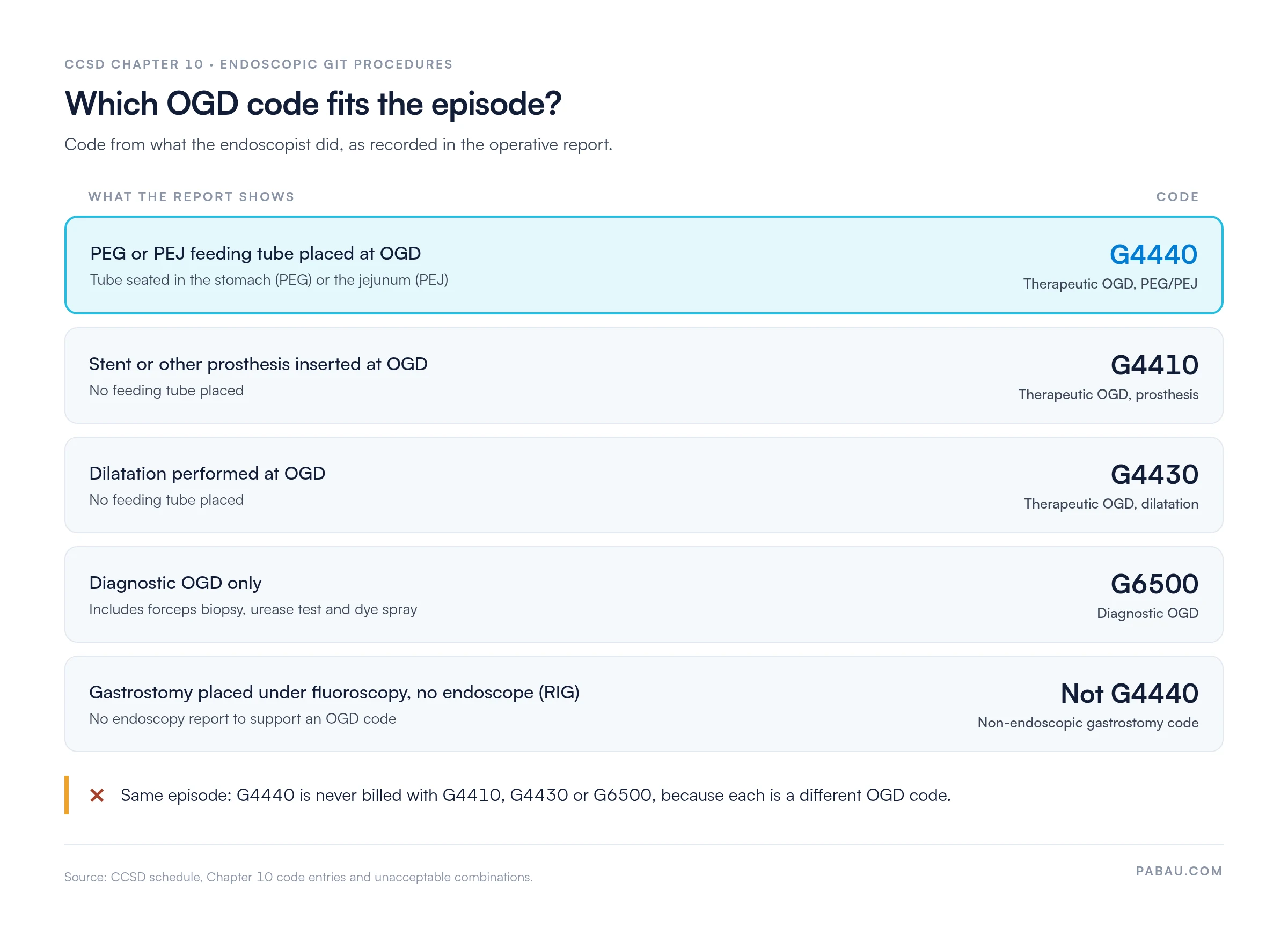
Next, the table below sets out how each related code differs from G4440.
Verify the CCSD code against the current schedule before submitting. CCSD updates its technical guide regularly, so code descriptors or bundling notes can change between editions. Check the CCSD website for the latest published schedule.
Radiologically inserted gastrostomy uses fluoroscopic guidance rather than an endoscope. Also, the operator is usually an interventional radiologist rather than a gastroenterologist. G4440’s descriptor specifies “percutaneous endoscopic”, so the code does not apply to RIG procedures. A G4440 claim for a RIG draws a clinical query or denial once the insurer finds no endoscopy report.
Insurers generally expect pre-authorisation for G4440 before the procedure, so confirm each payer’s current rule. Requirements vary by insurer, but most requests cover the same core elements. These are the diagnosis, the clinical indication, and confirmation that the treating consultant has assessed the patient.
Consultants billing under Bupa CCSD codes should check the current pre-authorisation pathway on the Bupa provider portal, as requirements change. In addition, the table below lists the documents and contact routes for four main insurers. Confirm current requirements directly with each payer before proceeding.
Incomplete documentation is a frequent reason G4440 claims are queried or denied. Insurers therefore expect a clear paper trail from clinical need through procedure to outcome. Digital consent and procedure forms also help confirm each document is on file before a claim is submitted. Gather the following documents before the claim is raised:
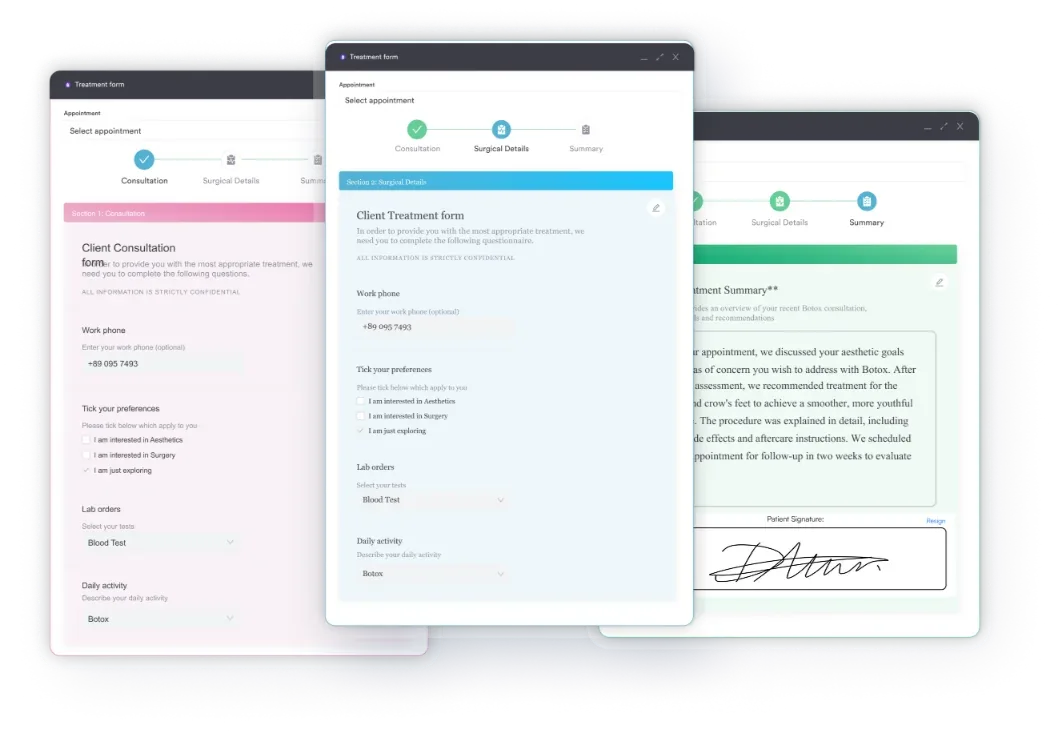
Whether anaesthesia can be billed separately alongside G4440 depends on who delivered it and how. The governing principle in the CCSD schedule is that the procedure fee includes routine conscious sedation given by the performing endoscopist. A separate anaesthesia code is right only when a consultant anaesthetist provided an independent professional service.
Bundling rules vary by insurer. For example, some payers include certain sedation services in the procedure fee regardless of who delivered them; others do not. So confirm the specific payer’s position before submitting a dual claim. Also, submitting an anaesthesia code without supporting documentation from the anaesthetist is a common audit finding.
G4440 claim rejections follow a clear pattern across private insurers. Each of the issues below has a direct fix that your team can build into the pre-submission workflow. In addition, running pre-submission checks in error-checking claims software cuts avoidable rejections.
G4440 sits in the therapeutic OGD section of the upper GI endoscopy chapter. Each insurer sets its own fees, not CCSD. The CCSD schedule supplies the code, and each insurer’s fee schedule sets what it pays recognised consultants.
Specific fee figures are not published here because insurer rates change. Instead, consultants should check the current code wording on the CCSD website and verify rates with each insurer. Bupa, AXA Health, Aviva and Vitality each publish fee schedules or fee-finder tools for recognised consultants.
In many private gastroenterology practices, the pieces of a G4440 claim live in different places. The consent sits in a paper file, the endoscopy report in the hospital system, and the authorisation reference in an email. The claim goes out when someone has chased all three.
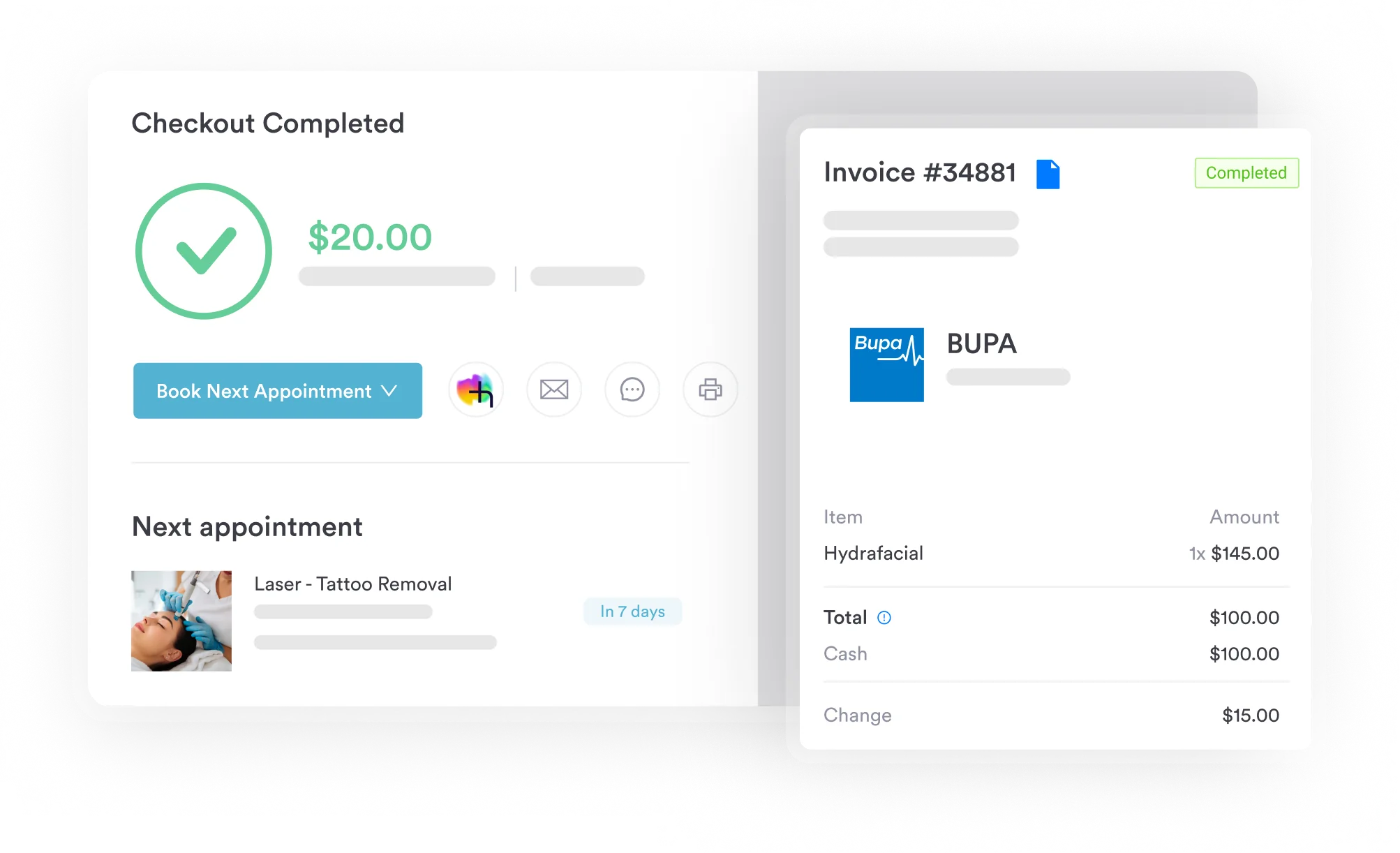
Pabau holds them in one patient record instead. Patients sign digital consent forms before the list, and procedure notes are written against the appointment. The claim then goes to the insurer through Healthcode from that same record.
As a result, the practice sees fewer queries about missing documents and spends less time chasing paperwork after the procedure.

Pabau keeps the consent, endoscopy report and authorisation reference in one patient record, so G4440 claims reach insurers complete.

Code G4440 from the operative report, not the booking note. If the report shows a PEG or PEJ placed at OGD, G4440 is the only OGD code on the invoice. If it shows fluoroscopy and no endoscope, G4440 does not apply.
The work that protects the claim happens before the procedure. First, confirm the insurer’s authorisation rule, and make sure the consent and referral letter name the indication. As a result, a claim built that way rarely comes back for a second round.
Book a demo to see how Pabau keeps consent, procedure notes and insurer claims together for private gastroenterology practices.

Need a starting point for CCSD billing in private practice? Bupa CCSD procedure codes covers the structure of the Bupa code schedule, recognition requirements, and how to navigate the Bupa provider portal.
Looking to reduce claim rejections across your private caseload? Claims management software explains how pre-submission checks and digital claim workflows reduce avoidable denials.
Closing a gastrostomy tract after the tube comes out? CCSD Code G3440 covers how closure of a gastrostomy is coded and documented.
Looking up another CCSD code? CCSD codes collects the procedure code guides for UK private practice billing.
CCSD Code G4440 covers therapeutic oesophago-gastro-duodenoscopy (OGD) with insertion of a percutaneous endoscopic gastrostomy (PEG) or percutaneous endoscopic jejunostomy (PEJ). Both variants share the code because each one is a therapeutic OGD performed endoscopically.
Yes. Both PEG and PEJ insertion are billed under G4440. The code descriptor explicitly names both procedures. The distinction between them (intragastric vs post-pyloric tube position) is documented in the operative report but does not change the CCSD code used.
Insurers generally expect pre-authorisation for G4440, and that includes Bupa and AXA Health. Confirm each payer’s current rule through its provider portal before booking the procedure. A claim without a valid authorisation reference risks non-payment.
Yes, when a consultant anaesthetist provided an independent service, such as a general anaesthetic or supervised propofol sedation. Routine conscious sedation given by the endoscopist is included in the G4440 fee. The anaesthetist bills their own CCSD anaesthesia code, and the endoscopist bills G4440. Confirm the specific insurer’s bundling rules before submitting a dual claim.